


Consider an arrangement  of
of  squares
  . Consider also an
-dimensional vector space
. Consider also an
-dimensional vector space  over
over
 . Let
. Let
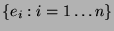 be a
basis of . Let
be a
basis of . Let
 such that
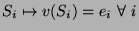 .
.  is a bijection.
 is
the vector
is
the vector  as defined above.
is the
length of its sides, denoted  .
.
 of
an arrangement of squares generated by a line
of
an arrangement of squares generated by a line  parallel to the
baseline such that
parallel to the
baseline such that
 cuts . More
precisely,
cuts . More
precisely,
 the perpendicular distance of
the line from the baseline is strictly between the perpendicular
distances of the boundaries of . The vector and
length of a cross-section X are defined respectively as:
the perpendicular distance of
the line from the baseline is strictly between the perpendicular
distances of the boundaries of . The vector and
length of a cross-section X are defined respectively as:
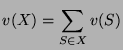 and
and 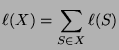
 , of an
arrangement of squares such that each boundary of each square in
is concurrent with precisely one other boundary of a square in .
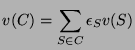
The vector of a cycle C is defined as:
, of an
arrangement of squares such that each boundary of each square in
is concurrent with precisely one other boundary of a square in .
The vector of a cycle C is defined as:
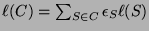
 , chosen such that the
length of C,
, chosen such that the
length of C,
 , is zero. Existence of such a set
 is obvious by
definition of a cycle.
is obvious by
definition of a cycle.
 , of an
arrangement is the vector space over
spanned by
, of an
arrangement is the vector space over
spanned by
 , where
 and
and
 are the sets of all cross-sections and
cycles in respectively.
are the sets of all cross-sections and
cycles in respectively.
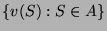
of squares  , ...,
  , let
be a vector space over
with basis
, let
be a vector space over
with basis
 . Then
 ., is a subspace of the space with basis
 . Hence
dim
. Hence
dim  .
.
Take firstly the case  . There is at least one non-zero
cross-section, so
dim
. There is at least one non-zero
cross-section, so
dim  . Hence
for .
. Hence
for .
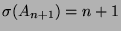
Now take an arrangement  of squares, satisfying
 . Add a new square
  to to form a new arrangement
 .
.
As the new square has a free boundary it is not in a cycle. Therefore
the set of cycle vectors remains unchanged. As the new square has a
free boundary it divides an equivalence class of cross-sections into
two. Pick a basis of consisting of  cross-sections (
 ) and
) and
 cycles (
 ) of ,
 , such that
  is
the vector of the cross-section from the class divided into two. For
every other cross-section
is
the vector of the cross-section from the class divided into two. For
every other cross-section  of , either is a
cross-section of or
of , either is a
cross-section of or
 is a cross-section of
. It is obvious that
is a cross-section of
. It is obvious that
 spans the same space as
 , which is linearly independent, hence
forms a basis for an
, which is linearly independent, hence
forms a basis for an  -dimensional space. Also, if were
to be replaced by
in this basis, it would still span
the same space and hence still be a basis. Therefore
dim
-dimensional space. Also, if were
to be replaced by
in this basis, it would still span
the same space and hence still be a basis. Therefore
dim
 .
.
The argument runs similarly to case 1, except
that the free boundaries divide two equivalence classes of
cross-sections. This generates four cross-sections from the previous
two, but those cross-sections span a three-dimensional subspace, hence
dim .
 span
span 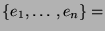 span
span
 , where
and
are
sets of all cross-sections and cycles in respectively. As
creating a new cycle does not destroy any old cycles,
, where
and
are
sets of all cross-sections and cycles in respectively. As
creating a new cycle does not destroy any old cycles,
 (being the set of all cycles in ) =
 ,
where is the vector of the new cycle. However,
,
where is the vector of the new cycle. However,
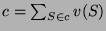 , which is a linear combination of
 and
the vector of the new square
and
the vector of the new square
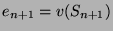 . Hence
 span
span 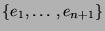 .
.
The set
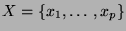 of the vectors of all
cross-sections of is linearly dependent (as it contains the zero
vector). Thus there exist
of the vectors of all
cross-sections of is linearly dependent (as it contains the zero
vector). Thus there exist  , not all zero, such that
 :
:
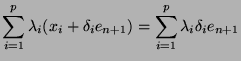
 if the cross-section represented by contains
and
if the cross-section represented by contains
and
 otherwise. Thus
  is a linear
combination of vectors of cross-sections so long as
is a linear
combination of vectors of cross-sections so long as
 . If
. If
 , then pick another
set of such that
. Such a
set exists, because otherwise the square will be in a cycle.
Hence is a linear combination of the cross-sections of
. Thus
, then pick another
set of such that
. Such a
set exists, because otherwise the square will be in a cycle.
Hence is a linear combination of the cross-sections of
. Thus
 spans all cross-sections of
, so
spans all cross-sections of
, so
 .
.
Hence by induction
dim 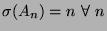 . QED.
, let
be the set of all
cross-sections. Then for all squares  and for some
 ,
,
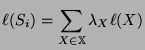 is bijective it is possible to define a linear function
 of the form
  for some
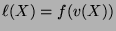 for cross-sections , and
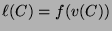 for cycles . Let
be the set of all cycles in .
for cycles . Let
be the set of all cycles in .
As  |
 |
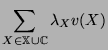 |
|
 |
|
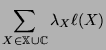 |
 by definition
 , so:
, so:
Now consider a rectangle which is tiled by finitely many squares. Without loss of generality it is possible to uniformly scale the rectangle so that one of the side lengths is rational, and to rotate the rectangle so that the side with rational length is parallel to the baseline.
It is obvious that the sides of each square tile in the rectangle have sides parallel to the sides of the rectangle, otherwise they would leave gaps in the tiling pattern. QED.
be the set of all cross-sections in the arrangement
of all tiles with irrational side length within the rectangle. Then
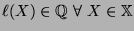
The length of any cross-section through the arrangement of all tiles
in the rectangle is rational, as the length of the side of the
rectangle parallel to the baseline is rational. It is possible to
remove a square with rational sides from that arrangement and still
have all cross-sections of rational length, as
is closed
under addition. Hence by induction (and using the fact that there are
only finitely many squares), it is possible to remove all
squares with rational sides but still have every cross-section having
rational length. The remaining squares have irrational side length.
QED.
Hence by Lemma 2, for each square , is the sum
of rational multiples of rational numbers and hence is rational.
Hence by contradiction no such square exists. Therefore each square
tile in the rectangle is rational, hence the side perpendicular to the
baseline also has rational length. QED.