|
Darren Peets Candidate for UBC Board of Governors |
|||
     |
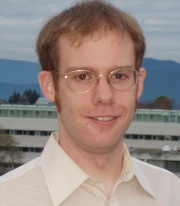 Darren Peets (me) |
 |
While BoG is UBC's highest governing body and student board members have, in theory, a great deal of power, in practice it's been extremely difficult for students to bring their own issues. For something to get on the agenda, it generally needs the support of the UBC administration. Very few (if any) student-initiated motions have ever made it to BoG. That said, UBC is currently facing a governance review that could leave it in a municipality. Key elements of the administration consider the current lawless state to be infinitely preferable, and this means there is a very strong incentive for them to prove that the current system can work. The next year or two should offer unprecedented opportunities for students to bring their own issues. It will require substantial time and effort, but the door will be open. This webpage summarizes my take on several key issues, and gives examples of things I'd push for. I apologize for the length, but many of the issues are quite complex and even this doesn't do them justice. |
|
|||
|
|||
University BoulevardFour years ago, when UBC consulted the campus community on the University Boulevard Neighbourhood Plan, the opposition to it was near-universal. While most of us thought the main entrance to campus was ugly or uninspiring and needed a lot of work, what was proposed (and ultimately passed) was not considered to be an improvement. Two years back, after building one building, UBC ran an architectural competition to make the rest at least look nice. This came with a poll of the campus community, marking the first instance of meaningful consultation on the area (although a "none of the above" option was removed from the poll at the last minute) and also the first time that students actually saw things they liked in the plan. I'd characterize the competition's winner as a five out of ten, up against a two and a one. (If you're procrastinating, there's a 45-minute student-filmed documentary on the competition. I'm in it, being sarcastic and irritating administrators.) Since the competition, the lead architects have walked away from the plan, the costs have gone through the roof, some of the more popular elements have been "value engineered" out, and the proposed buildings have started to look more and more like Buchanan with shoeboxes sticking out. Just this month, splotches of brick were added for visual interest. The question that needs to be asked here, and which was never answered four years ago, is "why are we doing this?" The original motive seemed to be profit, which is no longer possible, the proposed bus terminal can't hold the electric trolleys and may not be able to hold all the diesel buses, and we're replacing the knoll with a concrete slab that might have a roof over it if $7M can be found behind a seat cushion somewhere. Students need 24-hour study space, and they like open, green areas. I should also note at this point that I don't consider the bus terminal site suitable for housing, because it would be half a block downwind of Chemistry, next to the Pit, and atop the second-busiest transit transfer point in BC. I haven't heard any call for a central commercial area (there seems to be a preference for food outlets to be more evenly distributed around campus, for convenience). If there's nothing open in the evenings and the area is dead, perhaps we ought to try keeping UBC Food Services' cafeteria in SUB open later. I have trouble imagining that outside companies will do well there anyway, when competing outlets in the SUB don't pay property or income tax, let alone rent. |
|||
|
|||
Campus Development in GeneralWhen new academic or research buildings are built, concerns over costs tend to make the buildings look utilitarian if not downright ugly, and add-ons like rain protection over adjacent sidewalks are among the first things cut. The areas around a building are far more heavily used than its interior, but tend to be ignored. If you'll excuse the pun, we need to think outside the box. Open space is not just leftover land that hasn't been built on yet, it's what makes our campus attractive and enjoyable. It needs to be prioritized above buildings. (One consequence of this approach is that buildings would tend to be taller and narrower, to leave more space at ground level). As far as non-academic buildings go, I think it's difficult to argue that building faculty or staff housing would be bad. The problem is that half of the housing is too expensive to be bought by anyone associated with the university. This leaves us with residents who never realized that a university can be loud and obnoxious, and who try to stop students from behaving like students. Arts County Fair and rock concerts are loud. Students are sometimes drunk. The stadium and parking lots have bright lights. Students will occasionally run around screaming, optionally naked. The idea of residents with no ties to UBC trying to make UBC conform to their impression of what a university is worries me a great deal. To accommodate new residents, we're cutting down a few acres of 90-year-old douglas-fir forest. The money made on land leases will be put into the endowment, where it could potentially be used to support scholarships, research chairs, landscaping, or the construction of new buildings. Is this a fair trade? If this is being done on behalf of students, some effort should be made to check whether students actually want it done on their behalf. Another issue here is that students have very little say in how this money is allocated. My priorities would be scholarships and particularly bursaries, followed by funds for campus beautification (public art, rain protection, puddle extermination, nicer architecture,...), but UBC really needs to find out what your priorities are. One complaint against market condos is that our student residences are packed. We have nowhere near enough space in any residence, but land that could be used for more student housing is being used for profit instead. Until student residence demand can be met, and in the absence of a mandate from the students to continue, I don't believe we should be building condos for people who have no connection to UBC. The vast majority of UBC's endowment has come from alumni donations. Pissing off students by building unpopular condos is shortsighted, and I suspect the loss in future alumni donations will ultimately outweigh the short-term profit. Right now, UBC operates in a regulatory vacuum. Standards of community consultation, building codes, etc. are far more lax (or less existent) than in Vancouver or other local municipalities. The only municipal body with power over UBC, the GVRD, is easily confused or bullied into leaving UBC alone, and has very little interest in having to solve UBC's problems. Quite a few things have to change, and many of them likely will change as a result of an upcoming governance review. The process must have strong student input, and its recommendations must be enacted. |
|||
|
|||
Student HousingWe don't have enough of any form of student housing. To point out particular gaps, we can't guarantee space to new students from out of town, no residence allows pets, very few units are suitable for couples, and the family housing is in short supply and is severely run-down. In the case of families especially, lack of access to affordable housing can force students to drop out of school. I'd like to see the older parts of Acadia replaced at a higher density, and I'd hope to add a large grad student residence south of 16th and several other residences around campus, in locations like the current diesel bus loop (when a bus terminal replaces it) and along Thunderbird between East and Wesbrook Malls. Another problem with Housing is a unilateral attitude. Every year, rent is increased by 5% and the contract terms are made more restrictive, on the basis that anyone who doesn't like it will vanish and be replaced by someone who doesn't know any better. A 5% rent increase would not be permitted under the Residential Tenancy Act, and many of the contract terms would not be either. While there are certainly reasons for restrictions in Totem and Vanier, to stave off anarchy and wanton destruction, most students mature as they age. Restrictions on alcohol and overnight visitors are completely inappropriate for graduate students and students living with partners and/or children, for instance. Changes to the contract need not even be mentioned to residence councils, residents, student societies, or BoG -- they just happen. There needs to be a consultation requirement (as there is for tuition and student fees), and a process to let students request changes to the contract. |
|||
|
|||
TransportationOne of the greatest problems we face is an inability to get students to campus, which is largely TransLink's jurisdiction, not BoG's. We need to build a bus terminal that will be bright and open, have excellent sight-lines, and be staffed with security so people feel safe using it. It needs to be large enough to accommodate the buses it needs to, it has to allow enough buses and people to pass through it, and it needs to be able to accommodate trolleys, even if there won't be room for them until we replace the 99 with something rail-based. UBC needs something rail-based, most likely an underground SkyTrain line along Broadway from VCC-Clark. At present, UBC Loop is second in BC in boardings and unboardings, after Broadway at Commercial. The 99 route is well over capacity, and its capacity can be at most doubled, because there just wouldn't be enough time or space between buses. When the RAV line opens, the 99 will be carrying more passengers per day, going by that line's (likely inflated) ridership projections. This is not a want, this is a need, and it needs to be a very high priority. Since neither TransLink nor UBC has the money required to build it, the provincial government needs to be lobbied. One way that I've proposed to help TransLink grasp how serious our situation is, is to hold a TransLink board meeting on campus. Board members start each meeting by saying how they got there, so they almost all take transit, and meetings typically start at 9am on a Friday. If the meeting were held in the Grad Centre or some other far-flung building, TransLink directors would get to wait while 2000 students ahead of them crammed onto buses, then stand for half an hour, and finally walk half the length of campus (or wait for a C20), just like students do every day. For maximum effect, I'd try to host this meeting in September. Note that this is largely outside the BoG portfolio. Finally, I should say what I think about parking. Most buildings need loading zones, and disabled-accessible parking spaces need to be scattered around campus, but I believe most drivers should be required to park at the edge of campus and walk/cycle/bus in from there, and that surface parking (aside from the forms listed above or possibly parking for people with legitimate medical excuses) is an inexcusable waste of land. Every building should be accessible by exactly one road from the outside world, and the rest of campus should be vehicle-free and should not look like disused roads. |
|||
|
|||
ChildcareUBC has a waitlist of about 1300 children for roughly 300 spaces. We don't know how long the wait is now, but three years ago it was three years long (the list has more than doubled in that time). A student doing a two-year Master's degree, for instance, simply won't get their child in, and anyone hoping to get a child into daycare promptly would need to register several years before they conceive. Not only is this situation unreasonable, it prevents students from completing their studies. This too needs to be a priority. With the help of the AMS, UBC should soon be building another 100+ spaces -- helpful, but only a tiny fraction of what's required. |
|||
|
|||
TuitionAt present, tuition increases are capped at 2% per year. While it would be nice if tuition decreased, this would require either increased provincial funding or massive cuts. The former shows up a couple sections down under Lobbying, while the latter, for me, is a non-starter -- we've been cutting for 20 years. I would have a great deal of difficulty accepting even a 2% increase without the provincial government also chipping in to cover inflation. Also, I'll push for any tuition increases to happen in September, instead of May as has been the case for most of the last 5 years. This institution needs to look itself in the mirror and decide whether it's an educational institution or a bank, and therefore whether tuition ought to change with the school year or the fiscal year. |
|||
|
|||
University Ombuds OfficeMost universities have an independent ombuds office to handle disputes between students and the university. UBC doesn't. This gap is filled by the AMS and GSS, using student society fees that could be better spent lobbying senior levels of government, providing services to students, or renovating. The student societies also aren't in a position to enforce rulings on the university. Something needs to change here. |
|||
|
|||
Provincial LobbyingUBC has several needs that can only be addressed with provincial help. I've already mentioned our transit problem, but I'd also like to change the composition of BoG, get adequate funding, and replace the central steam plant. Of the 21 people on BoG, three are students (two from Vancouver), and eleven are appointed by the provincial Cabinet. The appointees bring valuable viewpoints and insight, but I see no reason why they should be a majority. It's not for provincial control, because under the University Act their first duty is to UBC, not the province. With only three student seats, adequately representing all students and finding all potential flaws with any proposal can be a nearly-impossible task. Changing the University Act to rebalance BoG will be difficult and slow, but it can be done -- two years back, I helped start a push to allow international students to sit on BoG, and the Act was changed in March to do just that. At the moment, UBC is facing a massive deficit. In part, this is because the provincial contribution has not been keeping pace with inflation, while tuition increases have been capped. The province needs to provide stable, adequate funding, and should be looking to increase the proportion of a student's education that it funds (currently 70%). I don't believe tuition should be free, because that can lead to career students permanently avoiding the "real world", but it's currently high enough that students trying to pay their own way by working part-time typically have great difficulty doing so, and students taking out loans graduate with unmanageable debts. The steam plant point is a bit esoteric: 70% of UBC's energy consumption is natural gas burned in the steam plant. It's old, not especially efficient, and can be expected to get extremely expensive in a few years, as we start running out of natural gas. The best scheme I can come up with to replace it is a large and spread-out array of geoexchange heat pumps, warm water lines instead of steam, and heat pumps in the buildings. There may be better ways of heating the campus, but we need to start at least looking at this, and we probably won't be able to afford anything without provincial help. The steam plant's lack of improvement is one small aspect of a sustainability approach that improves the small things while missing some of the big ones. |
|||
|
|||
Why No Hydrant?Many people have asked why I'm running as a human instead of as the Fire Hydrant. First, Hydrant only had one new joke (about a new source of revenue from parking fines), and I didn't want it to campaign on stale jokes. Second, we have a new president who seems to be very student-friendly, so it's not as funny and getting it elected could needlessly hurt that relationship. Third, I've met the BoG candidates each year, and I've generally felt that I could do as good a job as any of them. In a couple cases, they've admitted that I would have done better. I hate campaigning as a serious candidate, having to tell everyone that I'm the best thing since sliced cheese and they should all vote for me, but I got talked into it by some ex-BoG reps and other assorted student politicians. I'm sorry I can't entertain you as much this year, and I hope you can eventually forgive me. Rest assured that I'm no less sarcastic without Hydrant. |
|||
| Vote online Jan 24-29, 2007, or bring your student card to vote by paper ballot Jan 31. | |||
|
This website standards-compliant before
ads.
| |||