Maintaining Full Speed |
 |
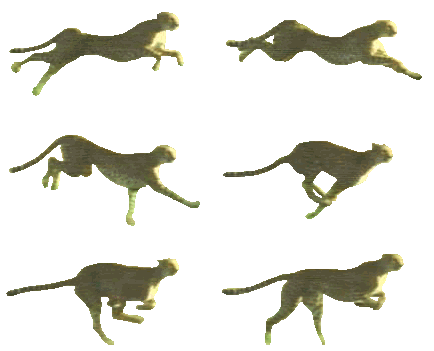
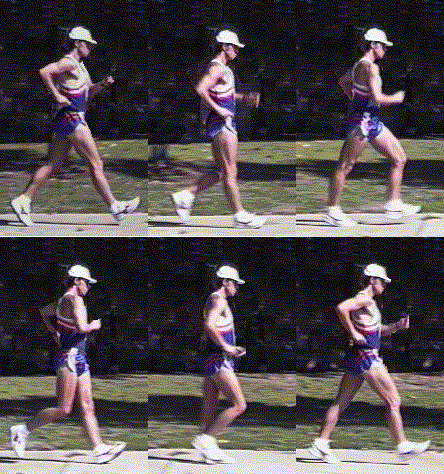
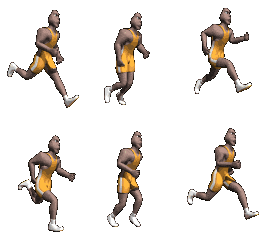
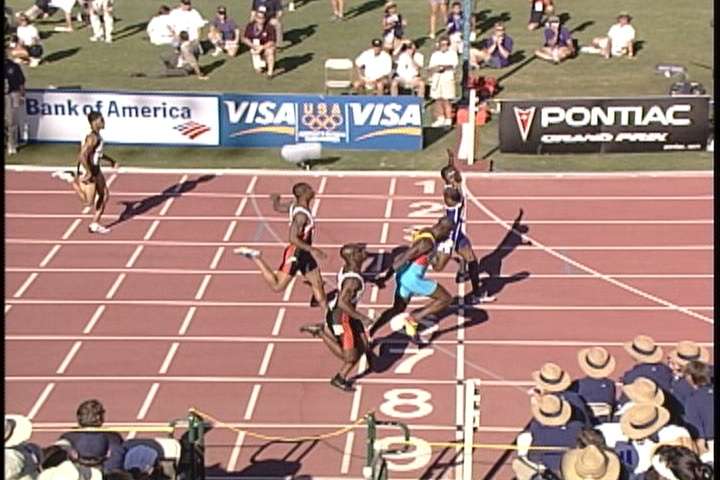
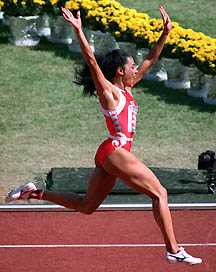
| Speed is a skill which can be acquired and developed through training. Track coaches call this aspect of the of the running process... the lift phase. Why? Because the body has completely recovered from what the brain perceived as falling; the torso completely erects, the intensity in rotation of the arms and shoulders decrease, along with the lift of the knees established from the start. Track coaches emphasize lift and "turnover" during this phase. The lift that track coaches are talking about is...horizontal lift. Horizontal lift involves full rotation of the shoulders and brisk pumping action of the arms needed to maintain peak turnover rate. Peak turnover rate equals peak speed. The cheetah is the epitome of peak speed. Its speed is not predicated on a great start. It is predicated on an efficient start...one which allow cheetahs to transfer kinetic energy from recovery to full speed. Speed involves one covering maximum distance in the least number of steps. Cheetahs have been clocked 68-71 miles an hour. Its prey doesn't have a chance if its escape strategy involves straight ahead speed. The cheetah stalks its prey and charges from distances up to 90 meters (or 300 ft.) However, if its prey employs a strategy which involves quick changes in direction; these quick changes nullify the cheetah's straight ahead speed. Cheetahs possess great speed, but such speed can only be maintained for short of periods of time. As is the case with all anaerobic performers, cheetahs utilize large amounts of carbohydrates and need hours to recover and replenish such energy stores. The quality of speed is based on the runner's ability to accelerate to... and maintain peak speed. The cheetah as previously mentioned has been clocked at 68-71 mph; humans at 22-23 mph. Obviously there is a significant difference in speed but animated illustrations depict similarities in the mechanism of speed. Notice the effectiveness and efficiency of stride length and stride rhythm. Stride frequency is the skill of turning the stride over by increasing the speed of the runner's shoulder rotation and simi-circular pumping of the arms. The cheetah and runner's ability to increase stride frequency determines the quality of speed people describe as "a fast runner." Remember! Like the cheetah, full speed can only be held for short periods of time before the runner decelerates. How slow one decelerates determines how fast they run. Therefore, the athlete should simply try to maintain speed, not try to increase speed. The more familiar you become with your natural speed, and your natural ability to accelerate, the easier it will be to allow the process of deceleration to take place, as beautifully illustrated by Florence-Griffith Joyner. Conclusion: Walk at steady rates with maximum stride length, jog at steady rates with maximum stride length, and run moderately at steady rates with maximum stride length. The treadmill is an excellent way of emphasizing stride length and stride frequency. Stride frequency is the rate the stride turns over until the process of deceleration sets in. Deceleration is the natural process of slowing down. |
 |
 |
 |
|
 |
 |
 |
 |
|
 |
|
 |
| Sport of Application, click below: |