 |
|
|
|
|
|
|
|
|
|
|
|
|
|
|
|
|
|
|
|
|
|
|
|
|
|
|
|
|
|
|
|
|
|
|
|
|
|
|
|
|
|
|
|
|
|
|
|
|
|
Our Trip to Germany - Page Three |
|
|
|
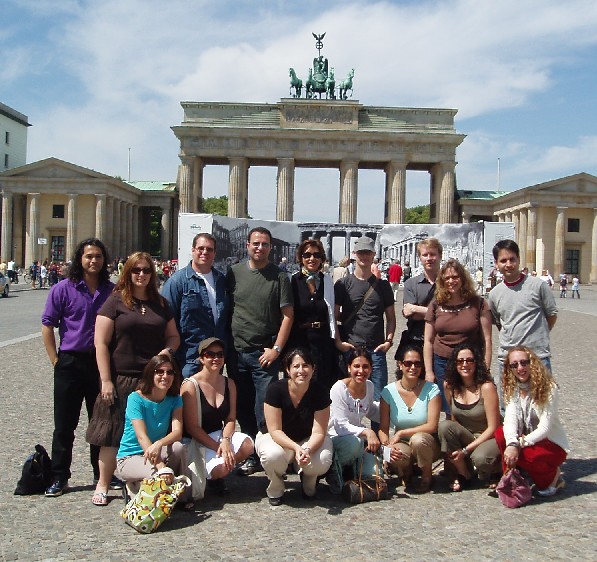
Most of the trip we were in Berlin. Below is the entire group in front of the Brandenburg Gate. Back row from left: Eric, Kelly, Brian, Dov, Avid, Matthew, Lars, Lisa, Payam
Front row: Leslie, Rachael, Rachel, Nora, Lida, Niloofar, Becky |
|
|
|
 |
|
|
|
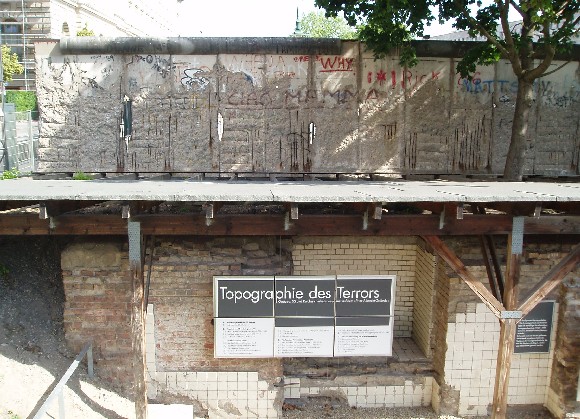
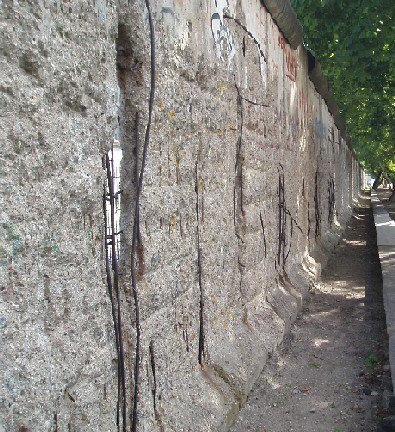
Below: a remnant of the Berlin Wall, this section directly over a stretch of the basement of the Gestapo headquarters in Berlin (ie the torture chambers)., |
|
|
|
 |
|
 |
|
|
|
|
|
 |
|
|
|
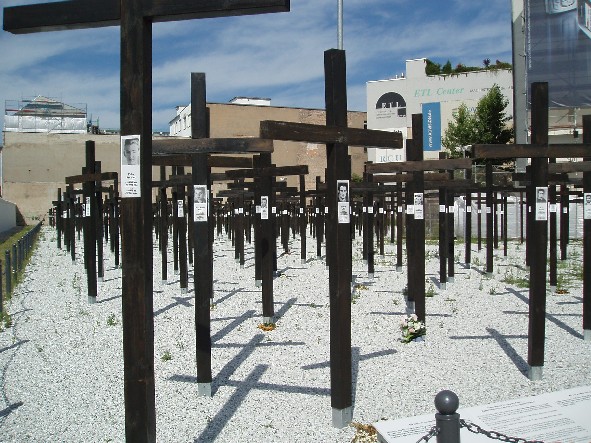
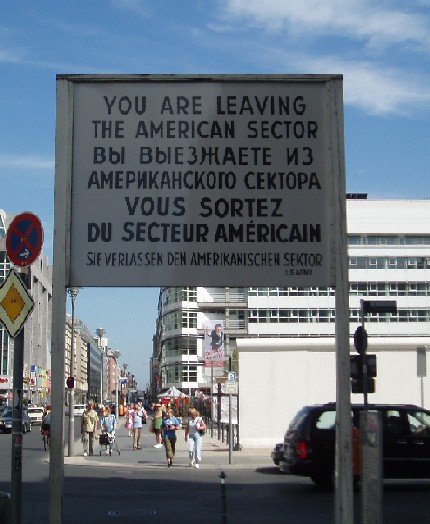
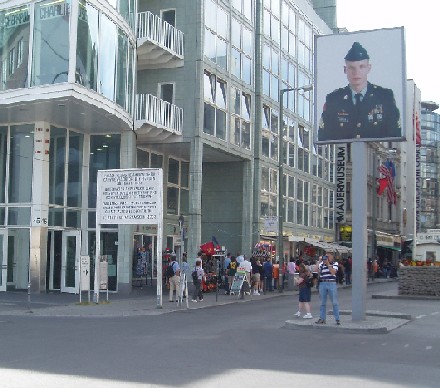
The area formerly known as Checkpoint Charlie. The crosses, commemorating those who died trying to escape East Berlin, were taken down the day after we left Germany. |
|
|
|
|
|
 |
|
|
 |
|
|
|
|
|
|
 |
|
|
|
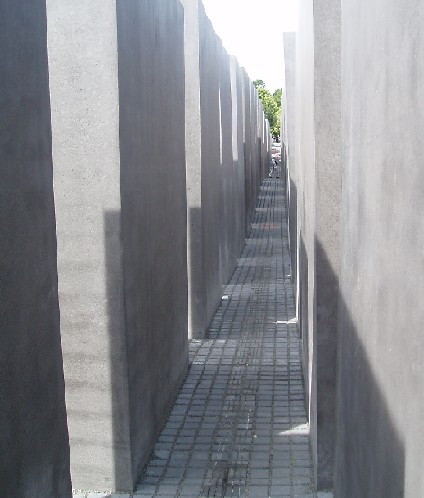
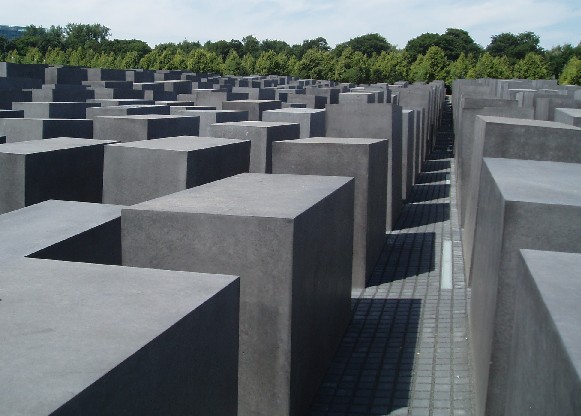
The Shoah memorial in Berlin, below. Designed by Peter Eisenmann, a sort of maze made out of thousands of massive stones. It's extremely controversial, since it doesn't 'symbolize' anything, leaving the interpretation up to the visitor. |
|
|
|
 |
|
|
|
 |
|
|
|
|
|
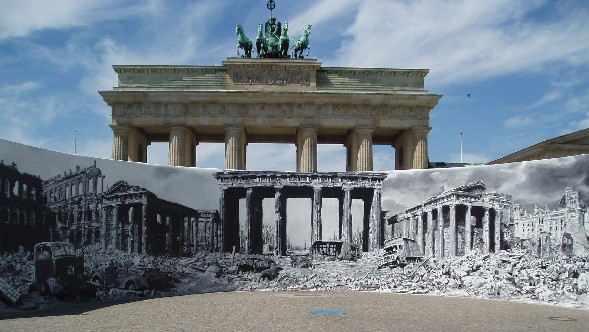
Below: the Brandenburg Gate, behind a photo showing how it looked in May 1945 |
|
|
|
|
|
 |
|
|
|
The Brandenburg Gate was built in the late 1700's by the Prussian authorities as the western gate of Berlin, it was the first neoclassical building in the city. It is modeled after the ceremonial entrance to the Acropolis in Athens, Greece. It is decorated with a number of reliefs, but the most notable artwork is the Quadriga on top. It is a statue of the goddess of Peace, Eirene, a winged woman driving a chariot drawn by four horses. This symbol of peace changed after the German victory over France in 1814 when the woman became Victoria, the goddess of Victory by adding a Prussian eagle on an iron cross to her ensemble. The gate went from being a symbol of victory to a symbol of the Third Reich when the Nazis reached power. It became the starting point for parades down the Stra�e unter den Linden. The Gate was seriously damaged during the Second World War and was restored in the 1950's. East Berlin restored the gate, while West Berlin recast the Quadriga from its original molds. When the Berlin Wall was built, on 13 August, 1961, East Germany removed the Prussian eagle and cross from the Quadriga.
The gate was damaged on New Year's Eve 1989 but has since been restored. A few other interesting pieces of Brandenburg Gate trivia:
When it was first built, only the German Emperor and his guests were allowed to use the central passageway. All others had to use the side passages.
The Brandenburg Gate sways about one centimeter because of the passing of trucks, subway trains, and cars blaring loud music.
When President Kennedy visited the Brandenburg Gate in 1963, the Soviets hung large banners across it so he couldn't see the other side.
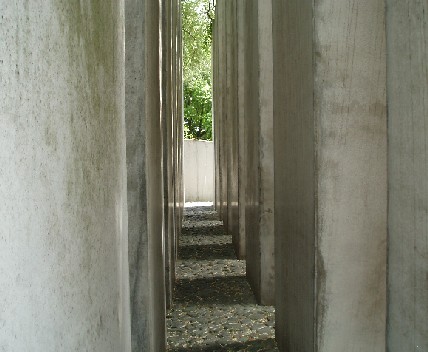
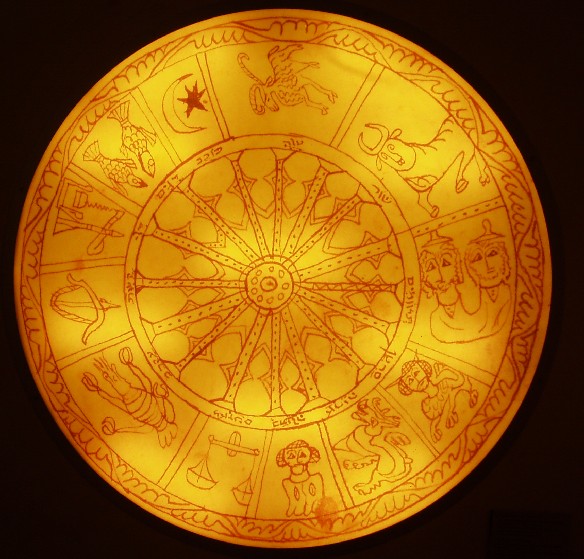
Below: photos from our visit to the Jewish Museum in Berlin |
|
|
|
 |
|
|
|
 |
|
|
|
|
Above: the Garden of Exile and Emigration in the Museum. The garden is made up of 49 pillars, each six metres high. They are arranged in a square of seven rows of seven pillars. Seven is a significant number in Jewish history: the world was created in six days, and on the seventh day - the Sabbath - people should rest.
The 49 pillars - conceived of as 48 plus 1 stones -refer to the foundation of the state of Israel in 1948, and one for Berlin. Olive branches grow out of the pillar tops, and traditionally symbolize peace and hope in Jewish tradition. |
|
|
|
|
|
|
 |
|
|
|
|
|
 |
|
|
|
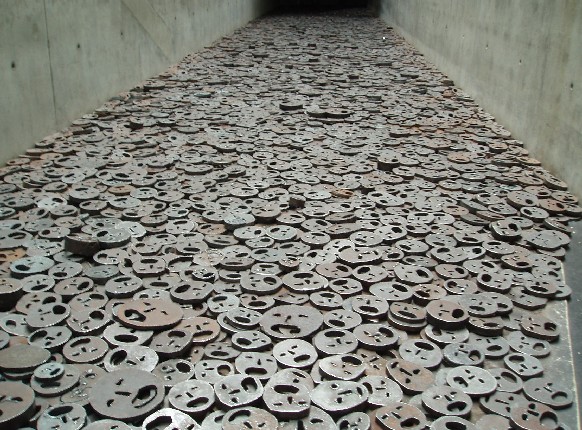
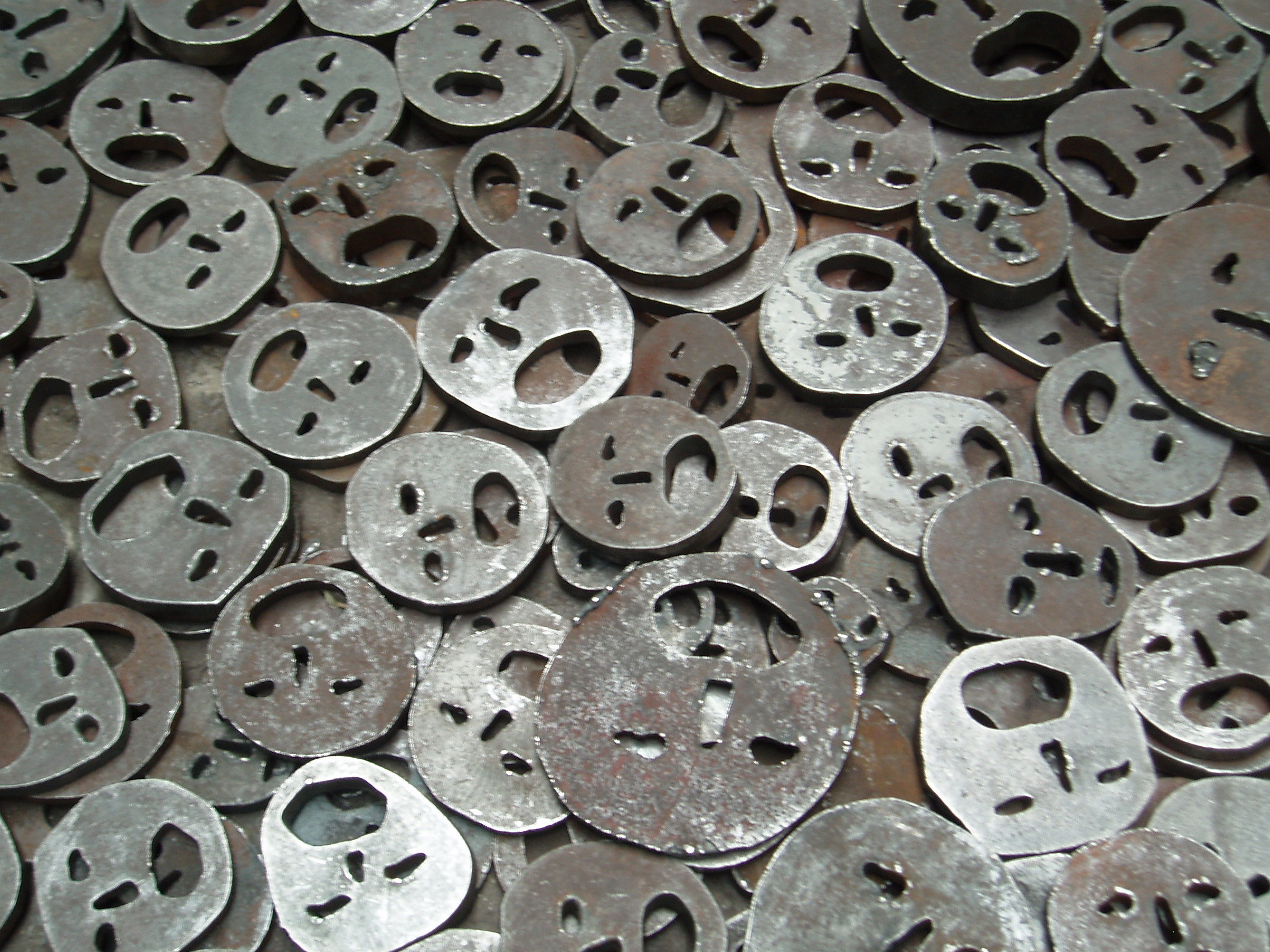
Menashe Kadishman's installation in the Museum, called Shalechet (Fallen Leaves) in the Memory Void, one of the empty spaces of the Libeskind Building. Over 10,000 open-mouthed faces coarsely cut from heavy, circular iron plates cover the floor. And you're meant to walk over them - it's extremely disconcerting, since they make a loud clanging noise when you do so. |
|
|
|
|
|
 |
|
|
|
On to the Next Page of photos from our Germany trip
Previous Page
Our Main Page
Our Around the World Page |
|