 |
|
|
|
|
|
|
|
|
|
|
|
|
|
|
|
|
|
|
|
|
|
|
|
|
|
|
|
|
|
|
|
|
|
|
|
|
|
|
|
|
|
|
|
|
|
|
|
|
|
|
|
|
|
|
|
|
|
|
Our Trip to Germany - Page Two |
|
|
|
We spent several days in Weimar, the heart of the inter-war Republic, and a former East German (GDR) city. So all around the city you can see the juxtaposition of a city that, not only was selected as Millenium European City of Culture,but also has all the remnants of a Communist city, and ten minutes away is a barbaric symbol of the Nazi State, Buchenwald. |
|
|
|
 |
|
|
|
 |
|
|
|
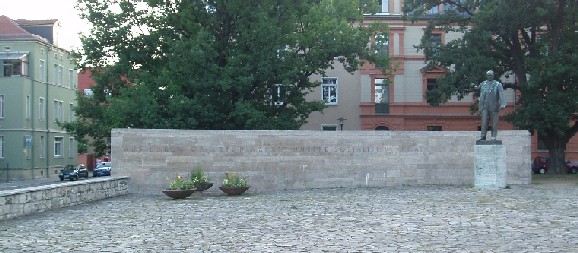
Above is a typical Soviet-style memorial in Weimar, back from the GDR days. It commemorates the victims of fascism.
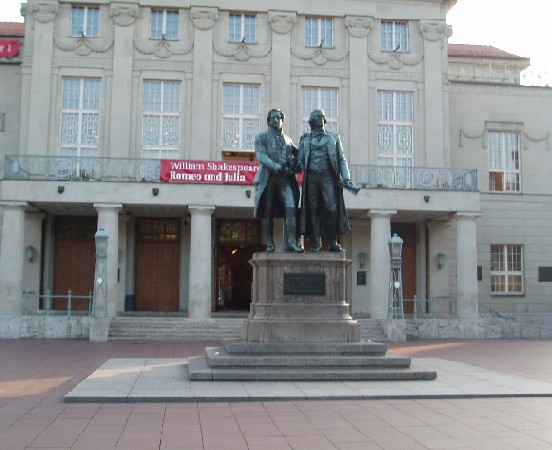
Left, behind the statues of Goethe and Schiller (both local Weimar boys) is the hall where the Weimar Republic was proclaimed in November 1918, as the 2nd Empire fell apart. |
|
|
|
|
|
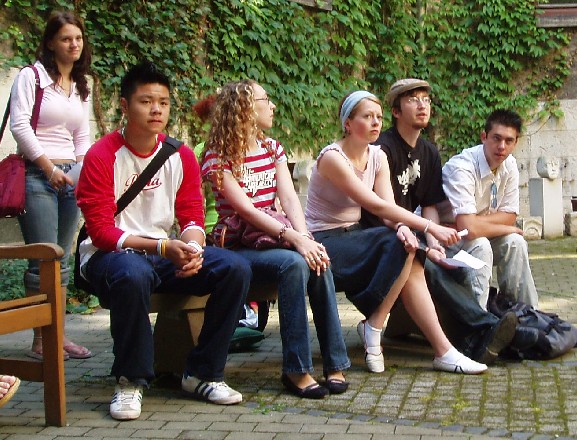
Becky (in the striped shirt) and some of the students from the local Weimar high school, who took us around for the day, and showed us their city.
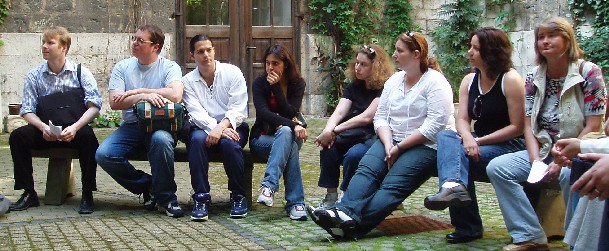
Below, from left: Lars (our guide), Brian, Eric, Nora, Lisa, Kelly, Rachael and the Weimar School history teacher (who later told us about the differences between teaching history under a Marxist/materialist ideology in the GDR and teaching in the new Germany). |
|
|
|
 |
|
|
|
|
|
 |
|
|
|
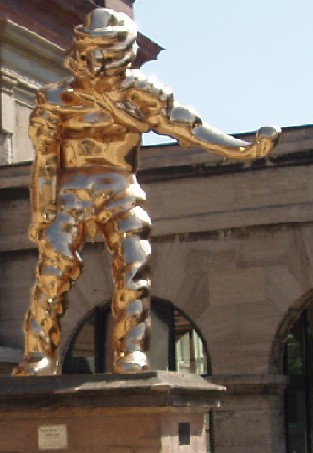
Left: modern art in Weimar, the "Grosser Geist" ('Big Spirit')
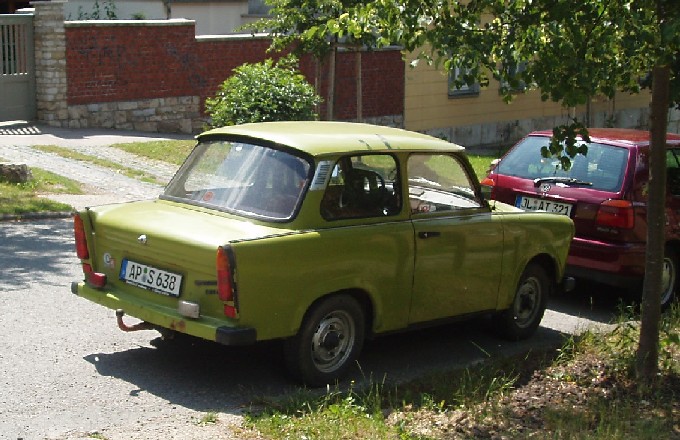
Below left: the Trabant, famed (or notorious) car of the GDR. A few jokes we heard about the Trabant:
Q: When does a Trabant reach its top speed?
A: When it's towed away
Q: How do you measure the Trabant's acceleration?
A: With a calendar
Q: Why does the Trabant have heated rear windows?
A: To keep your hands warm as you push it. |
|
|
 |
|
|
|
|
|
|
 |
|
|
|
|
 |
|
|
|
|
|
 |
|
|
|
|
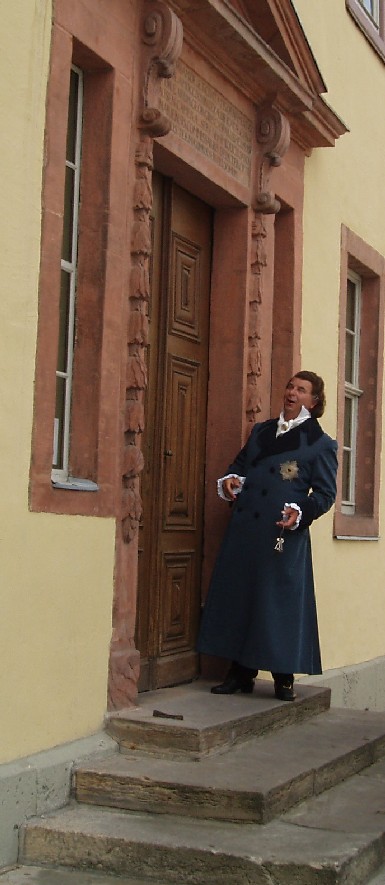
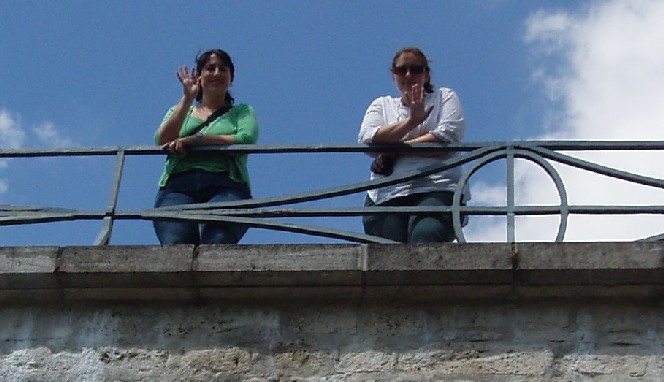
Right: Goethe, apparently.
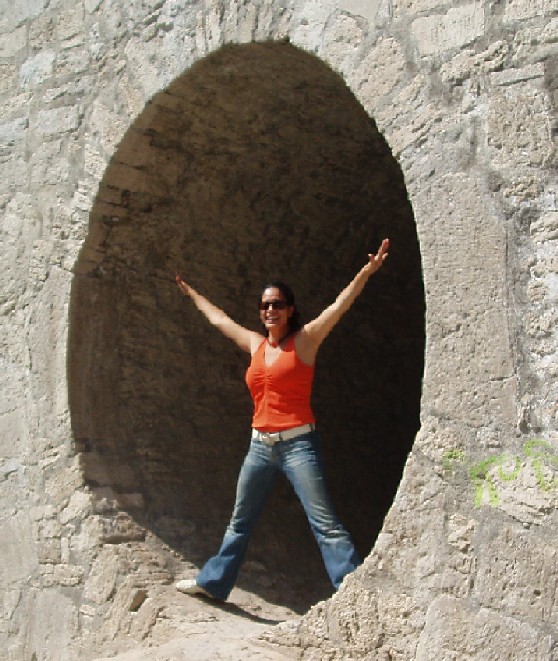
Left: Lida
Below: Rachel and Kelly |
|
|
|
|
|
|
|
|
|
 |
|
|
|
|
|
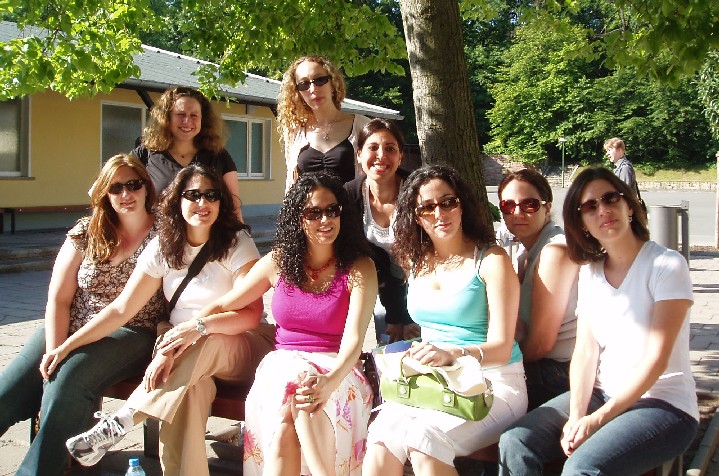
The women of the trip. Back row from left: Lisa, Becky, Nora
Front row: Kelly, Rachel, Lida, Nora, Rachael, Leslie |
|
|
|
 |
|
|
|
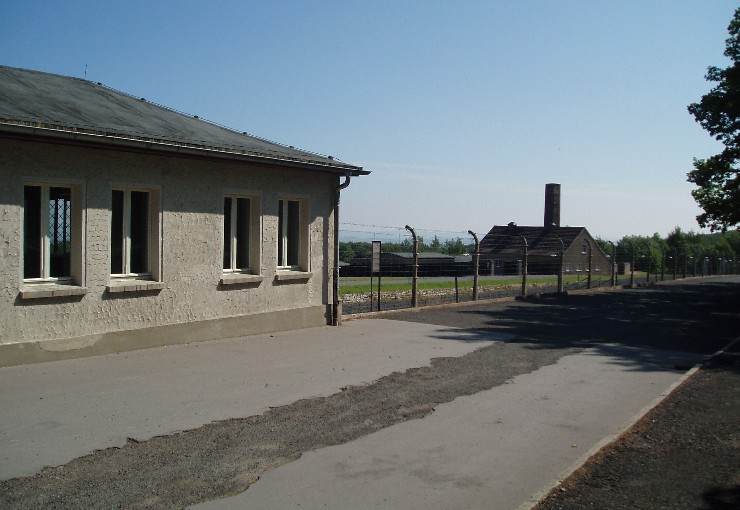
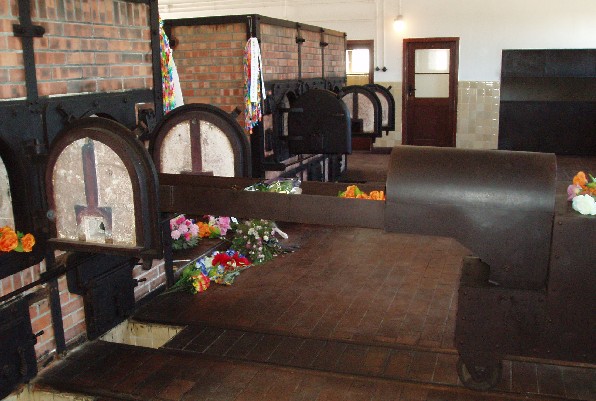
Buchenwald Concentration Camp is only a few miles north of Weimar. Between 1937 and 1945 more than 250,000 people were held captive in the Camp. Some 56,000 people died there. There were mass killings, medical experiments. 28,000 were sent on death marches just before liberation |
|
|
|
 |
|
|
|
|
|
21,000 prisoners, including 900 children, remained in the camp when it was liberated on 11 April 1945 by units of the 3rd US Army. The SS fled and resistance prisoners opened the camp from within.
|
|
|
|
 |
|
|
|
 |
|
|
|
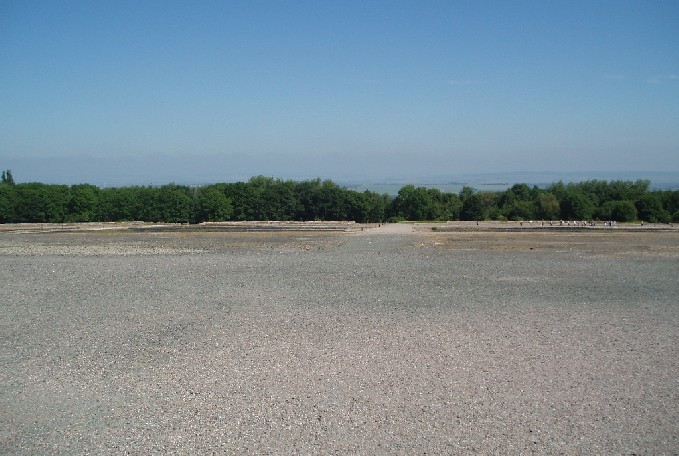
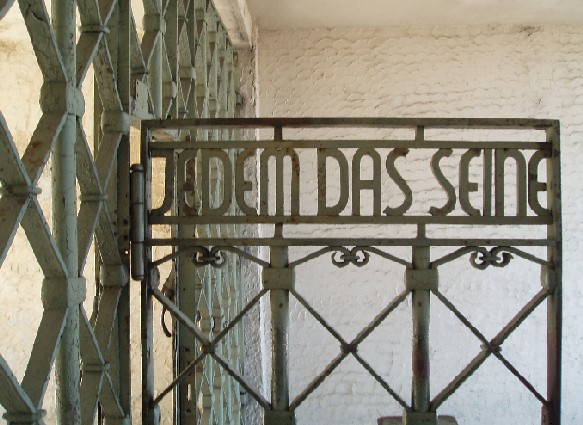
Only a small part of the camp has been preserved. The clock in the gate building reflects the time of liberation in 1945.
The gate has "jedem das seine" ("to each his own" inscribed on it; it is one of the only Nazi camps whose gate wasn't inscribed with "arbeit macht frei" (work will make you free")
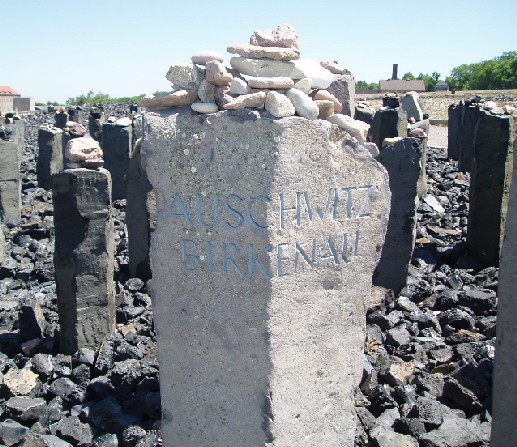
Nearly all the buildings have been replaced by black rocks that delineate the outlines of the buildings. |
|
|
|
|
|
 |
|
|
|
 |
|
|
|
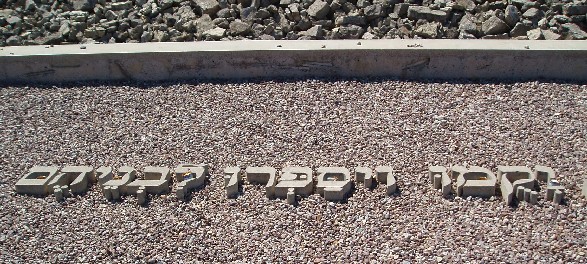
Above: part of the Jewish memorial
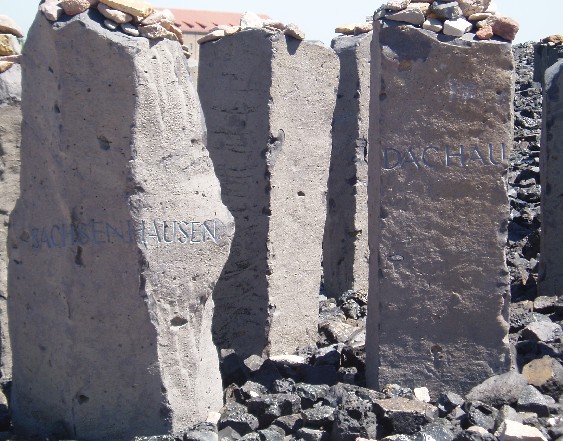
Below: the gypsy memorial |
|
|
|
 |
|
|
|
 |
|
|
|
On to the next page from our Germany trip
Back to the previous page
Back to our Main Page
Back to our Around the World Page
|
|