Field: Fluid Mechanics
Author:
Dr David Ward
Via Fornari 46
20146 Milan
Italy
Tel.( home): 02-48705457
email: [email protected]
Rationale
While researching for my PhD it became apparent that many books dedicated
to fluid mechanics were born out of academic experience i.e. they were
fundamentally written by pure academics for engineering undergraduates
or post-graduates.
Consequently there are very few books truly written by and for people
with a practical fluids problem to be solved or a concept to be revised
or understood, whether these be students, self-learners, scientists or
professional engineers.
There are also parts of fluid mechanics that continue to be taught
using a typical hierarchical and pure mathematical-analytical approach
that inevitably leads to conducting the reader away from the practical
side of this science, a good example are the N-S equations and the vortex
equations. The author therefore proposes a building block approach so that
the N-S equations can be assembled and disassembled (simplified) according
to the type of flow, boundary conditions and assumptions.
Another defect with present texts is that the writing style is aimed
at those with or are about to acquire a strong academic preparation in
engineering, especially mechanical, civil and chemical engineering.
Brief Resumè:
Mechanical Engineer with broad multi-disciplinary work background spanning
several diverse industries. 20+ year experience in both the private and
public sectors with particular focus on R & D, Advanced Product Design
and Product Engineering. I have worked in the vacuum industry, aeronautical
industry, electro-medical equipment sector.
I am actually working in the domestic appliance industry as Senior
Project Leader in the R & D dept. of Whirlpool Europe and working on
joint R & D and Engineering assignments, including cooking and washing
projects. I am also a freelance writer and president of the Open University
Students Association for Northern Italy.
Previous Publications:
Pipeline papers/articles
A Novel Remote Measurement And Monitoring System for the Measurement
of Critical Washing Parameters Inside a Domestic Washing Machine. This
paper is under review by Prof. Grattan, International Measurement and Control
Journal, London.
I am also preparing a seven part series for Artech Publishing House
regarding glass technology in the appliance industry, The first article
will be published in Feb. 2002.
Estimated length of book:
Approximately 400 pages + 15 chapters + 130 figures + 70 photographs/illustrations
Status (Jan.. 2001):
One chapter (chapter 1) underway
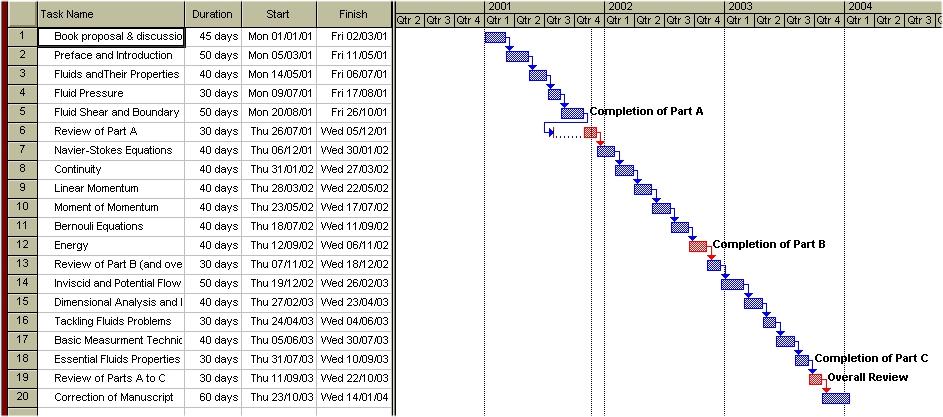
see also planning attached
Planning:
Estimated time to complete book 1: approx. 36 months.
Book 2: 10-12 months depending on number of examples.
Book 3: 10-12 months.
Suggested Reviewers:
Dr W. Kennedy, Dept. of Environmental and Mechanical Engineering, The
Open University, UK.
other reviewers are available on request.
External reviewers i.e. those proposed by the publisher are very welcome.
Market
The principle market concerns not only engineering students especially
undergraduates, but also self-learners and engineering professionals.
The second market involves academics, scientists and post-graduates.
Software
Software: For the time being no SW is planned for any of the three
books although book 2 in particular lends itself very well for this purpose.
Internet and eBooks
Downloadable version is also possible although writing style and presentation
would need to change. This (electronic) version of the book would be chapter
driven with each chapter acting as a building block.
Preamble
The proposed book is the first of three books dealing with fluid mechanics.
A brief description of the three books is provided below:
1. The first text is a fundamentals or introductory textbook suitable for any engineering subject where fluids are studied, it is especially indicated for mechanical, chemical and civil engineering students and professionals.Book one is especially aimed at students, professional engineers, scientists and others that need not only to grasp the major principles behind this fascinating subject but also subsequently apply them with confidence and effectiveness in the real world. The book will therefore appeal to a broad audience ranging from the self-learner to the academic.
2. A FAQ (Frequently Asked Questions), Problem Solving and Solutions book for those who need to solve fluids problems fast, efficiently and effectively.
3. A measurements book aimed at applying knowledge gained in books 1 and 2 and delivering the necessary information to understand, monitor and control situations where fluids behaviour is the key.
1. Problem solving: the reader is first shown how a fluids problem should be undertaken. Starting from defining the problem, i.e. what is known or assumed and what is needed, and illustrating how to apply the science of fluid mechanics before finally discussing the results.Finally book 3 takes the reader through the various measurement techniques that can be used in fluids measurements. The emphasis here is on experimentation and using reliable and simple instruments to quantify and qualify fluids behaviour.
2. A selection of problems and solutions are explained that follow the problem solving techniques described previously.
3. FAQ are developed and answered in a rapid and concise format.
Competition and Related Books
List of Contents
Pages Figs Picts
1. Introduction
35 8
4
- Preface
- Fluids and Mechanics: A strange cocktail
- Using this textbook
- Examples of Historical fluid mechanics and Contributors
- Classification of Fluid Flows
- Laminar, Transition and Turbulent flows
- 2D and 3D flows
- Pipe-duct flow
- Flow over immersed bodies
- Open-channel flow
- Incompressible and compressible flows
- Fundamental laws
- Conservation of Mass
- Conservation of Energy
- Newton's Laws (2nd law of Motion)
- 1st Law of Thermodynamics
- 2nd Law of Thermodynamics
2. Fluids and Their Properties
30 10
5
- Definition of Fluid and Continua (rhelogy link)
- The complete picture
- Compressibility and Incompressibility
- Density and Specific weight
- Viscosity (and the no-slip condition)
- Pressure
- Temperature
- Thermodynamic properties
- Surface tension
3. Fluid Pressure
20 5
3
- Normal stress
- Pascal's law
- Hydrostatic pressure
- Buoyancy
4. Fluid Shear and the Boundary Layer
50 16
8
- Fluid shear and the Boundary layer
- Types of flow: Hagen-Poiseuille, Couette, Unsteady duct etc. flows
- Laminar flows
- Turbulent flows
- Application of fluid shear
- Three dimensional flows
- Definition and qualitative description of the boundary layer
- Inside the boundary layer
- Laws governing the boundary layer
- The boundary layer tool kit
5. Navier-Stokes Equations
25 10
4
- Building the N-S equations from Newton's 2nd Law
- Stripping down the Equations of Navier Stokes
- Application of the N-S equations
- CFD and the N-S equations
6. Continuity Equation
20 4
2
- Conservation of mass
- Control volume analysis
- Deriving the continuity equation
- Fixed, non-conforming control volume
- Moving, non-conforming control volume
7. Linear Momentum
20 4
5
- Newton's 2nd Law
- Deriving the linear momentum equation
- Application of the linear momentum equation
- Deriving the moment of momentum equation
- Application of the linear of momentum equation
8. Moment of Momentum
25 5
3
- General form of the Moment of Momentum Equation
- Uni-axial and One-dimensional Flows
- Angular Momentum
- Application of the moment of momentum equation
9. Bernoulli Equations
30 5
5
- Derivation of the Bernoulli Equation
- Energy version of the B. E.
- Pressure version of the B.E.
- Application of the Bernoulli equation
10. Energy
20 5
6
- General form of the energy equation
- Differential form of the energy equation
- Uni-axial one-dimensional flows
- Applications of the energy equation
11. Inviscid and Potential flows
30 10
5
- Inviscid flow
- Euler's equation of Motion
- Bernoulli equation for irrotational flows
- The velocity potential
- Uniform flow
- Source and Sink
- Vortex
- Doublet
12. Dimensional Analysis, Modelling and Similarity
20 10
5
- Why model? and how.
- Dimensions and Units
- Dimensional analysis and Reasoning
- Dimensional quantities
- Fundamental and derived units-dimensions
- Checking equations with dimensional reasoning
- Using the Buckingham or Indicial method
- Using the group method
- Using dimensionless groups
- Definition and explanation of typical dimensional groups
- Examples of dimensional analysis
- Similarity
- Geometric, dynamic and kinematic similarities
- Ideal versus Real
- Similarity for compressible and incompressible flows
- Examples of similarity
13. Tackling Fluids Problems
25 5
5
- Defining the problem
- Problem Solving strategies
- Problem solving tools:
- Examples
14. Basic Measurement Techniques
25 15
10
- Closed and Open flows
- High, medium, low and ultra-low pressure
- Dynamic and Static pressure
- Flow velocity
- Flow rate
15. Essential Fluid Properties, Equations
and Laws
25 15*
* includes 5 tables
Totals: 395 pages, 127 figures and 70 pictures