 |
|
| Speed cars |
| Radio controlled speed cars are just that, designed to go as fast as possible. People have built rocket powered and gas turbine driven RC cars, but for the purist the wheel driven type is the most appealing, as the cars are more comparable to normal RC racing and toy cars. There are not really any regulations governing how anything should be done as not many people try speed car running. Some people run their cars on cycle velodromes, others on full-size super speedway tracks, others down drag strips. |
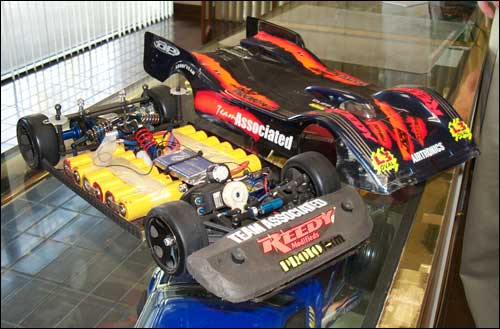
| RECOGNISED MILESTONES Fastest electric 1:10 Car: Associated Electrics modified RC10L3O Driver: Cliff Lett Spec: 24 cells, 2/3 sub-C size Aveox brushless motor Modified GTP body with large buggy wing Speed: 111mph Fastest 4WD touring car 1:10 Car: AE RC10TC3 Driver: Cliff Lett Spec: 14 cells, sub-C size Reedy brushed racing motor armature (6T?), machined can and neo mags. LRP IPC V7.1 controller Protoform Chevy Monte-Carlo SS body with large buggy wing Speed: 96mph Fastest 4WD nitro car 1:10, possibly Car: Hopped up HPI Super Nitro RS4 Driver: Steve Pond Spec: Nova-Rossi .21ci nitro engine 35% (?) nitro content glow fuel HPI Toyota GT-one body with reduced wing Speed: 101mph There are many other cars which have gone close to or even faster than these, but these are the best documented and most recognised. Some of the articles are still available to read at RC Nitro and RC Car action. |
| Cliff Lett's record-setting speed car went 111mph |
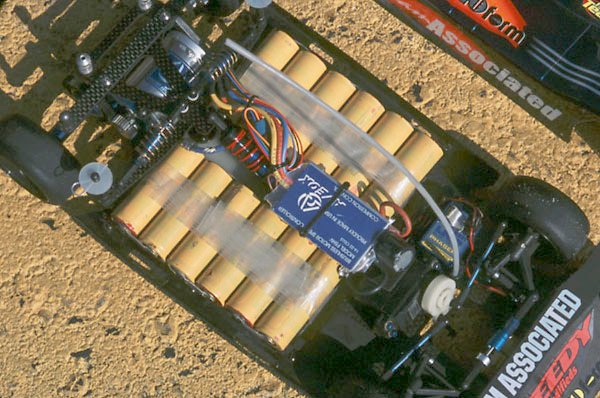 |
| What it takes to go 111mph. Notice the radio equipment is kept away from the power system - also, the inter-wishbone damper and cut centre-front chassis plate. The foam at the front supports the leading edge of the body. Check out that gearing! |
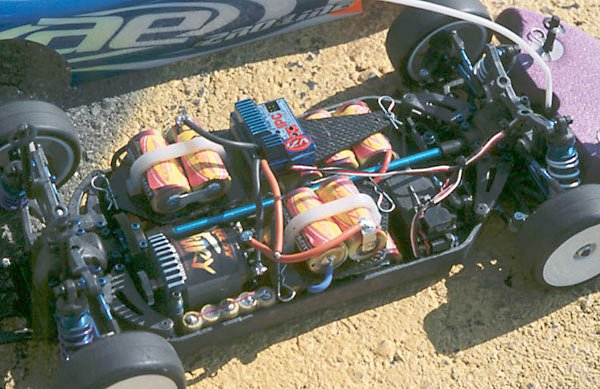 |
| The TC3 is possibly more impressive - way down on power compared with a 24 cell brushless system and yet only 15mph off the pace!? Shows the rate of increase in the drag forces as the speed starts getting high. Why didn't he use a brushless motor then? Maybe to show what more conventional gear could do in an off-the-shelf car. Apparently disengaging the 4WD had little impact on the speed, so they left it. My guess is that compared to the drag of road and wind zipping past at nearly 100mph, the drivetrain friction was negligible. |
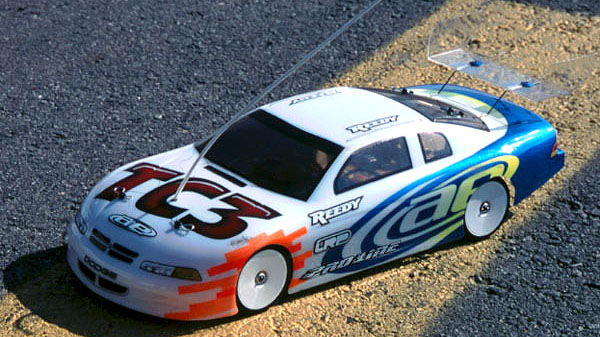 |
| Ready to tear it up. Ideally the aerial and wing would not be present, but you have to keep that aerial away from the high-current power system. The wing stabilised the car but also slowed it down quite a lot - if there was a way of losing it then the run would benefit... |
 |