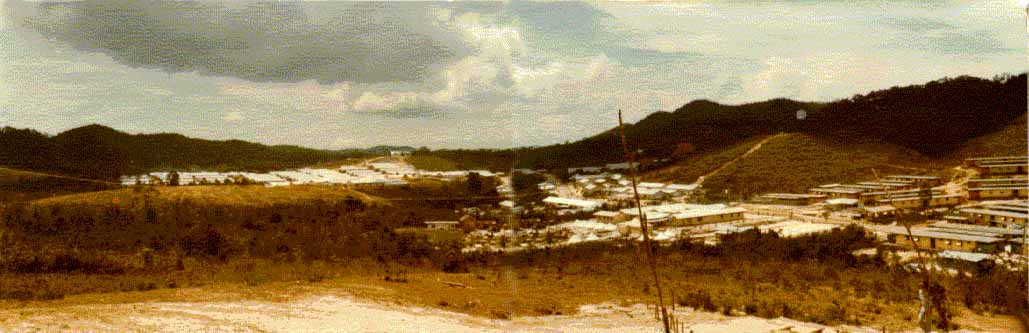
Galang Site 1 - 1980s
courtesy of huynh thai nam
Stretching about 2 miles between Khmer Village and Site 3, Site I was less crowded and not as dynamic as Site II because a majority of Site I residents were either screened out, waiting for screening, or could not afford to move to Site II. People who got refugee status often moved to Site II, where UNHCR Offices were locate, to have immediate access to UN and Local authority facilities. Also, Site II was known for ready connections that could help speeding up their resettlement plan.
There were some offices in Site I, the most notoriously infamous one is Screening office, where people were called in to be interviewed. There were some UN facilities to serve asylum seekers, especially ones who wanted to come back to Vietnam.
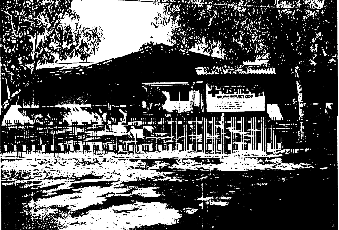
There was also a small hospital run
by PMI (Indonesian Red Cross) where we could come to see a doctor, receive
some minor treatments, and get mailed any time hearing our names being
announced on the camp PA system. The Vietnamese Representative also occupied
a block in the hospital premises to certify document, translated documents,
and perform other discipline matter. They served as a board bridged the
local authority and Vietnamese refugee community.
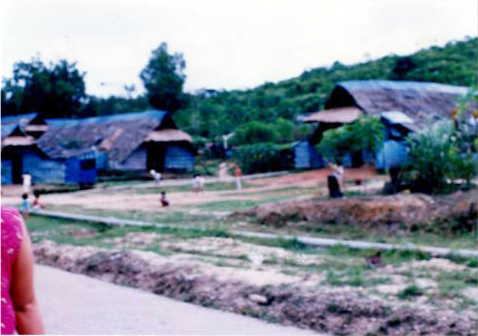
next to Site I hospital is Zone 4
in which 8 long A-frame shelter were built with thatch roof, and forest
woods. With time and weather, the leaves got rapidly rotten and residents
patched them up with plastic sheets to keep the rain out.
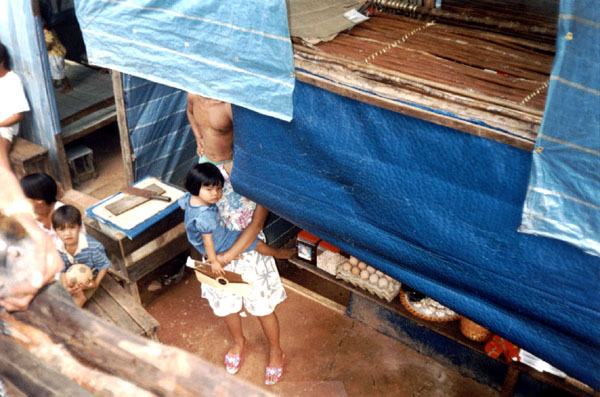
courtesy of nguyen hoang
a peak inside an A-frame hut
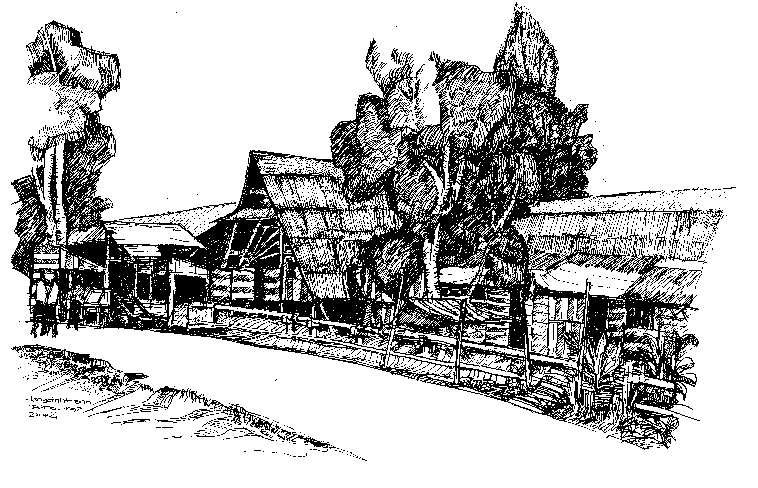
There were grocery stores, coffee
houses, and even a movie theater in this strectch of road shown in the
line sketching above. Together with some of my closest friends, I had some
best memories about this area. I believe that they know what I am talking
about when reading this.
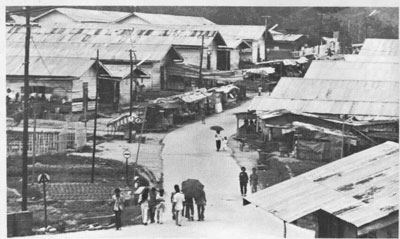
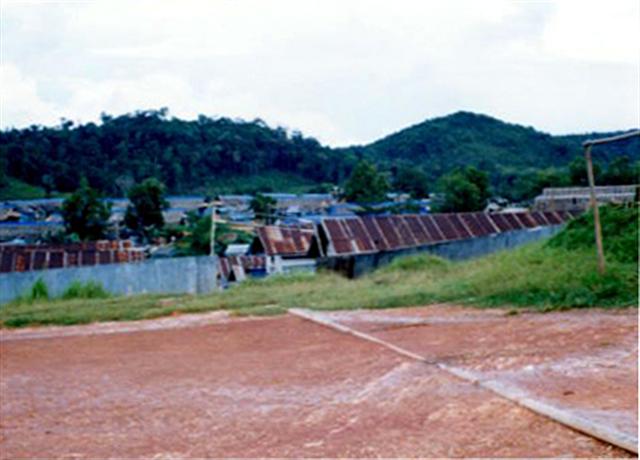
Zone 3, with 22 wooden barracks surrounding
by a metal sheet fence, was the most concentrate zone in Site I. I lived
in barrack 12 for all my whole time here.
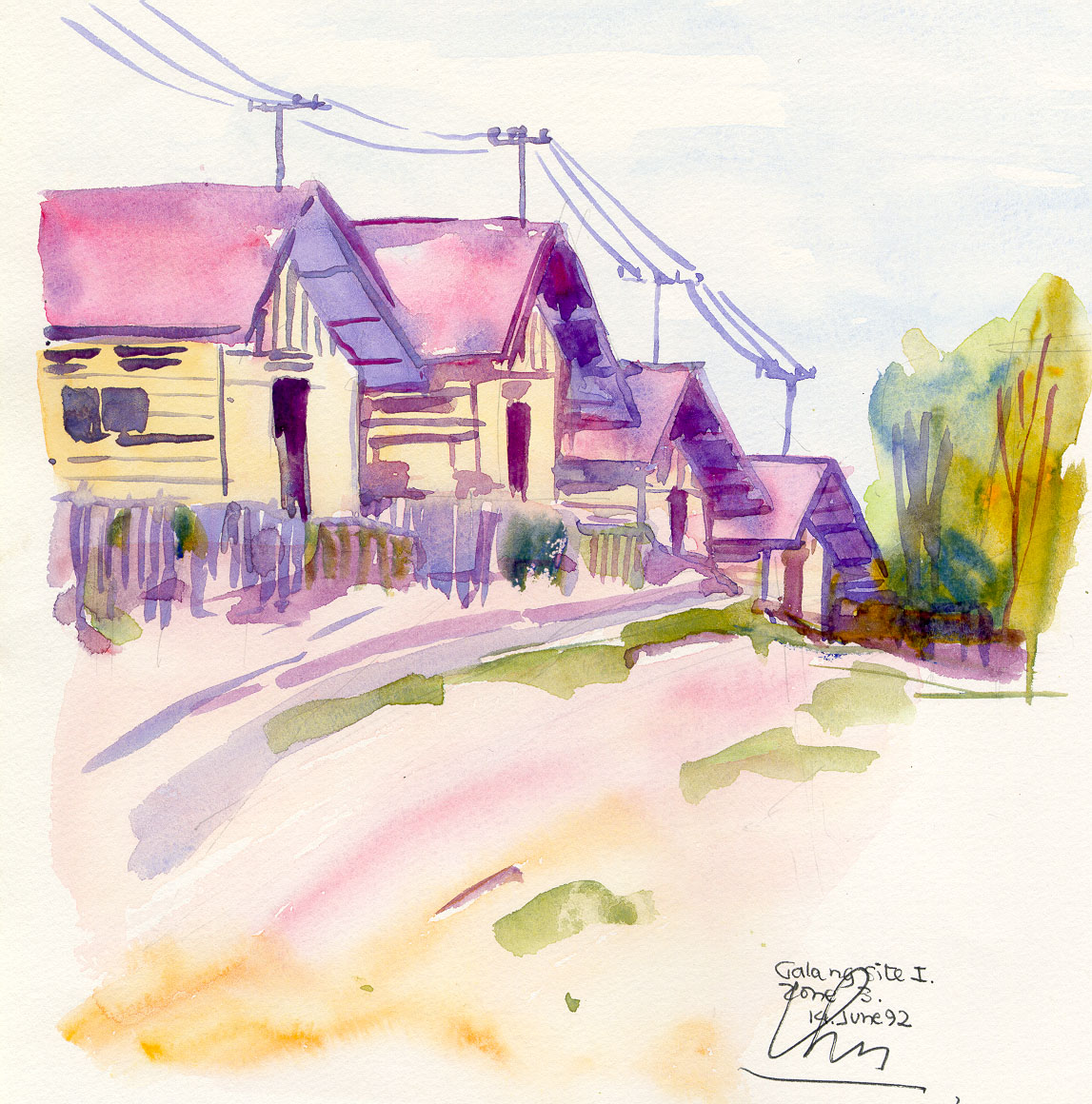
the view seen from my barrack
up toward the gate.