 Home
Irish Dance Central
Fiona's Exchange
Penpals
Links Gallery
Dancer's Dictionary
The Dance Bag
About Fiona
Feis Diary Free Graphics
Message Board
Site Awards
Dancer's Moments E-cards
Kids Activities
Webrings
Email Fiona Home
Irish Dance Central
Fiona's Exchange
Penpals
Links Gallery
Dancer's Dictionary
The Dance Bag
About Fiona
Feis Diary Free Graphics
Message Board
Site Awards
Dancer's Moments E-cards
Kids Activities
Webrings
Email Fiona 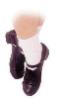  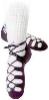 "learn the dancer's lingo..." Whether you are a dancer or not, there are bound to be words you've picked up in dance circles that made you ponder. (As long as your mouth didn't fall open, you are fine). A list of common words and expressions used by judges, teachers, dancers and the like, has been drawn together just for this reason. After each word is the correct pronunciation. I've gathered as much info as possible to make this a semi-complete resource for you, if you have something you'd like to add, please email me!
Feis (fesh) A feis is a festival of competition. They usually feature Irish dancing of all the dance levels, music, and art competitions or exhibits. The plural of feis is "feisanna," which is pronounced "fesh-AH-nuh." You can say "I'm going to a feis" (singular) or "I'm going to many feisanna" (plural).
Feile (fay-luh) A "feile" is a strictyly all-dance competition with no music or art competitions.
Oireachtas (o-rock-tus) Regional Irish dancing championships. (Dancers in the Midwest compete in the Midwest Region Oireachtas, dancers in the West dance in the Western Oireachtas, etc) This is a like a huge feile, with many many more dancers in the higher level, and an extra dose of stress. You can not enter an oireachtas without teacher's permission, and unlike a regular feis, your teacher sends in the entry form, not the dancer.
Oireachtas Rince na Cruinne
(o-rock-tus rin-kooh nuh krin.) World Championships in Irish Dancing, held yearly in Ireland. The ultimate Irish dance!!
Nationals
Like an Oireachtas with Champion-and-above level dancers, only unlike an Oireachtas, people from many regions/countries can compete.
The big "O" A term for the regional Oireachtas.
Recall When someone says they got a "recall" it means that they competed (at a feis or Oireachtas) and were ranked one of the best dancers in their group, and were called back by the judges along with the other best dancers in their group to dance again. This is to narrow down the choice of best dancers.
Solo dance Only one person dances. (solo vs. a figure dance with the standard 2, 4, 6, 8 and 12 dancers)
School costume The dress girls get at about Novice level. All the girls wear matching dresses, you are required to wear them in figure dances at feiseanna and sometimes at performances, if your teacher specifies so. Same for the boys, the most common boy's costume is black shirt with black pants, but colored shirts are popular too.
Solo dress The dresses more advanced dancers wear, usually two or more colors with lots of fancy, shiny applique and embroidery. The dancers who wear them have generally achieved a high level of dance and are therefore looked upon as such. Every dress is different and can be designed especially to the dancer's taste.
Non-certified/registered/accredited teacher The term used to refer to a school/teacher that is not registered with any large Irish dance organisation such as An Coimisiun (in Dublin). Dancers who take lessons from a non-certified teacher are not permitted to compete at feiseanna.
Drill sargeant (easy enough to pronounce) You know what *that* is don't you? Well, every school has at least one. Usually that real mean looking character who keeps stressing "up, up, higher higher" and "I can SEE you even if you think I can't!" and "you call that good turn-out?!"
Ghillies (gill-eez) These are the soft leather shoes that lace up the front and are very quiet. A girl's type of ghillie laces up the front and shows the sock underneath, (see the image at the top, upper right) a boys laces up but shows no sock (looks like a regular shoe made of soft flexible black leather) and boys shoes have hard heels which make a loud noise when clicked.
Lead-around Most commonly done in the softshoe dance, the Reel, but also done in the other dances. A lead-around is a dance step done in a circle, starting at one point, making a circle and ending in place.
Hardshoes/Treble Shoes These shoes are like regular shoes only are constructed firmly and have wedge-shaped toe-pieces made of fiberglass and fiberglass heels. These shoes produce a very loud noise, girls may dress them up a bit by wearing silver buckles. Decorative buckles with rhinestones, colored centers and glitter are becoming very popular.
Ceili/Ceili dance (kay-lee) A Ceili is like a gathering of people, with dancing, music and loads of fun!! Set dancing is done at a ceili, usually danced with a partner and in a specific pattern. Ceili dancing is sometimes called figure dancing as well. Some popular Ceili dances are the Walls of Limerick, Seige of Ennis, etc.
Adjudicator (ad-joodicate-or) A certified judge at a competition.
A.D.C.R.G Certified adjudicator...or, judge. Stands for: "Ard Diploma Choimisiuin Le Rinci Gaelacha", and translated it means "Highest Diploma in Gaelic Dancing."
T.C.R.G Certified dancing teacher/instuctor. Stands for "Teasgicoir Choimisiuin Le Rinci Gaelacha": translation is Gaelic Commission Dancing Teacher. Only dancers from a school that has a certified teacher are allowed to compete at feisanna.
T.M.R.F Certified Ceili dance teacher.
|

