









|
|
|
by the
most venerable Dhammawiranatha Nayaka Mahathera
Namo Tassa
Bhagawato Arahato Samma Sambuddhassa
Homage to the
Buddha, His Teachings and His Noble Disciples!
ForewordThe Ven. Thera Dhammawiranatha, who is Dutch from birth, has been teaching since 1977 and established Buddhayana Centre in 1978. He is amongst the pioneers in the field of the spreading of the Dhamma (the Teachings of the Buddha) in the Netherlands and his unflagging effort is an example to many. He calls himself a convicted Theravadan and has many of the characteristics of one who works as a Bodhisatta for the well-being of all. In his life and works the Ven. Thera Dhammawiranatha is for us a living example of the Teachings of the Buddha. It is our wish that many others, as we already do, may benefit by his teachings, in order to follow the Path to the end of all suffering, to develop themselves and to be a source of inspiration for others to do likewise.
Amongst the many questions regularly asked, that concerning the essence of the Teachings of the Buddha is the most frequent. In this short dissertation an attempt is made towards a systematic explanation of [1] the most important events in the life of the Buddha, [2] the basics of the Teachings, [3] the Texts, in which the Teachings can be found, and [4] how we ourselves can follow the Teachings of the Buddha, in order to attain the same Freedom of mind. It is clear that within the boundaries of this dissertation it is not possible to go into detail concerning the deeper background of the doctrinal aspects. It is rather the intention to give a general impression. May many come to understand the great value of the Teachings of the Buddha - the Dhamma - in order to improve their human qualities and to embark upon the Path to Holiness in order to attain Nibbana.
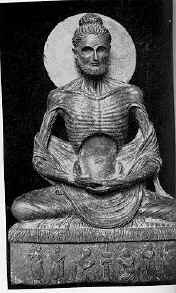
For some 26 centuries the Teachings of the Buddha have pointed the way towards happiness and inner peace for many millions of people in this sorrowful world. But who was Buddha Gotama? The Buddha was born as a human being in North India, the son of King Suddhodana and Queen Maha Maya Dewi. He was given the name Prince Siddhattha Gotama. At his birth it was predicted that the Prince would either become a world leader (universal monarch) or a Buddha (an Awakened One). This would depend upon whether or not he came into contact with the vicissitudes of life - with gain and loss, praise and blame, fame and notoriety, pleasure and pain. By this was meant that upon seeing the three characteristics of life, namely sickness (limitation), ageing (decay) and death (the unescapable end of all compounded things), he would be deeply moved by the consequences that they have for our life. For many years the King took care that the Prince did not come into contact with these, because he did not want him reflect upon the true nature of life. Surrounded by every pleasure and luxury of the time the Prince was kept far away from the unpleasant side of life. He married Princess Yasodhara and had a son, who was called Rahula. Despite all of the Kings precautions it was not possible to safeguard the Prince against seeing ageing, sickness and death. In accordance with the prediction at his birth the Prince met respectively an old person, a sick person and a funeral cortege. Lastly he met a begging-monk (samana). As a result of the first three encounters the futility of life became clear to him and the fourth encounter showed him the serenity of someone who has renounced the world and who has freed himself from the influence of the world. At the age of 29 the Prince (then still a Bodhisatta) renounced worldly life and for six years undertook extremely strict ascetic practices. Eventually he realised that this path of extreme self-denial and starvation was not the way and he discovered the Middle Way. By following this, at the age of 35, he attained Enlightenment, thereby becoming a Buddha. The Buddha himself said of this: "I am called the Buddha because I have understood the Four Noble Truths." For forty five years the Buddha preached the Dhamma unceasingly to all "who had the ears to hear, the eyes to see and the mind to understand" - the Dhamma which is lovely in the beginning, lovely in the middle and lovely in the end. He taught people that, in contrast to what we often think and are led to believe, we ourselves must bring about Enlightenment in our own life and that we are not dependent upon the grace or help of another for this. At the age of 80 the Buddha entered Mahaparinibbana, leaving his Teachings behind as his successor. Some terms Bodhisatta
Why are these Four Truths called noble? Because they can make the practitioner a noble person. When they are practised as they should be practised the practitioner will have the direct personal experience of Freedom of mind and that will make him a noble person.
All compounded things are impermanent (anicca), unsatisfactory (dukkha) and non-self (anatta). These three aspects are called the Three Characteristics or the Three Signs of Life, because all compounded things are ruled by these three. Anicca means transitory, not lasting, subject to change. Everything that has arisen will decay. In fact nothing remains the same for two following moments. Everything is in a constant flux of change. The three phases of arising, existing and passing away can be found in all compounded things; everything has the nature to pass away. That is why it is important to take the last words of the Buddha to heart: "Transient are conditioned things. Try to accomplish your aim with diligence." Dukkha means suffering, discontentment, unsatisfactoriness, that which is difficult to bear up with, etc. It is because everything that is compounded is subject to change that it eventually brings suffering to those who hold onto it. Think here about sickness (in contrast to our idea of health), the passing away of loved and dear ones or pets, or being confronted with unpleasant circumstances. Nothing that is dependent upon conditions is worth holding on to, because by doing so we only bring about calamity for ourselves. Anatta means non-self, without self, not-self, ego-lessness, etc. By anatta is meant the fact that there is neither in ourselves or others a lasting essence, centre or core, that is to be without an essence (sunnata). Therefore anatta does not only mean being unegoistical, although the understanding of anatta can lead to that. Through the illusion of the existence of a self (soul or unchanging personality) and the inevitable accompanying idea of self, arise wrong ideas which gain expression through such things as pride, suppression, exuberance, aggression, violence and war. Although we say that our body and mind are ours, this is not in accordance with reality. We cannot always keep or make the body healthy, young or attractive. We cannot always give our thoughts a positive wending when we are subject to an unhappy or negative state of mind (which in itself shows that thinking cannot be totally controlled by a self). What is there then, if there is no unchanging ego or self? If we examine life we see that there are only physical and mental processes (nama-rupa), which in a complicated mix of conditioning and inter-dependency form our existence. These form the khandhas, or the (five) groups which a non-enlightened person holds onto as being self or belonging to a self: all physical processes that form the body (rupa), the different sorts of feeling (vedana), the six sorts of sensual perception (sanna), the volitional formations or expressions (sankharas) and the different sorts of consciousness (vinnana). Through not understanding the interaction between these five groups, man thinks that there is a self or soul and he attributes the not yet known to an unknown, outside of himself, vague power, to whom he should also give service in order to ensure his safe existence. As a result the ignorant person is constantly in a field of tension between his anxieties and desires, his ignorance and his ideas about reality. The one who understands that this rests upon the illusion of an idea of self, can free himself from all suffering. The way to this is the Noble Eightfold Path, which will bring about the ethical, intellectual and spiritual development of the practitioner. It will now be clear to the reader that these three Characteristics or Signs of Life are included in the Four Noble Truths.
The four lofty states of mind - brahmavihara in Pali (the language in which the Buddha spoke and in which his teachings are recorded) - are four qualities of the heart, which when fully developed raise the individual to the highest spiritual level. These four are:
In every religious, philosophical or ideological system moral guidelines are given which enable the followers or adherents thereof to live morally. In most religious systems these ethical norms are coupled to laws which are attributed to, and determined by, a god or ancient power outside of the individual. This power is also burdened with punishing and rewarding the individual. The Teachings of the Buddha however are a psycho-ethical system in which all the ethical norms are determined by the psychological background or motives for our actions. For those who act out of pure motivations such as non-attachment, friendliness and understanding (wisdom), the gaining of happiness will be something self-evident, just like their own shadow will never leave them. But those who act out of negative motivations such as attachment, ill-will and non-understanding (ignorance), will feel the threat of suffering on their heels. Ethics form part of the Noble Eightfold Path, namely: Right Speech, Right Action and Right Livelihood. The lay follower is offered minimal guidelines in the form of the Five Precepts (pancasila): I will endeavour to withhold from taking (threatening) life ... from taking that which has not been given ... from sensual or sexual misconduct ... from speaking untruths ... from taking mind-clouding substances. From the above it should be clear that in Buddhism there is no place for commandments and prohibitions. Likewise there is no place for a guilt complex. Rather one is encouraged to do good and to withhold from the unworthy actions of deceit, harm and clouding the mind. Right Livelihood means that we should not practise a profession in which we harm other beings such as trading in living or dead (slaughtered) beings, in poison, weapons or mind-clouding substances. When choosing a profession we should take into consideration courtesy, friendliness and helpfulness on the one hand and compassion and wisdom on the other. Lay followers can on their free days, or once or twice a month, take the eight precepts. In this way they learn to control their mind for their own and others well-being. These eight precepts are: I will endeavour to withhold from taking life ... from taking that which has not been given ... from every form of sexual conduct ... from speaking untruths ... from mind-clouding substances ... from partaking of food before 6 o'clock (morning) and after noon ... from beautifying the body and from amusement ... from using beds and chairs which lead to laziness. (Buddhist monks and nuns undertake to follow 227 major precepts, including these eight, and many secondary precepts). As well as these precepts the Buddha also taught us how we can live without actively contributing to the suffering in the world and how we can realize our own happiness in this and future lives, as well as the ultimate freedom from all suffering. In this framework morality is always in the form of compassion for all living beings. These ethical principles are universal laws, which are active irrespective of the individual. Therefore such ideas as "dispensation from a precept" are unknown in Buddhism. We ourselves are responsible for our actions and the results thereof. Everyone can decide for themselves which precepts, and to what degree, they wish to keep. It is not correct to judge the extent to which someone is Buddhist by the degree to which the precepts are followed. It has no value to make such social or spiritual distinctions. To the contrary, it could cause division between people and bring concord in danger. Morality (sila) is not a purpose in itself, but a means of advancing the spiritual development of wisdom, for the purposes of (1) learning to control the opposing forces, (2) the development of conducive qualities, and (3) laying the basis for further mental development, with the ultimate goal of totally freeing the mind from all suffering.
"The mind is the forerunner of all things." Kamma (in Sanskrit karma) or volitional activity is an important concept in the Teachings of the Buddha and points to the law of Cause and Effect. In this life we are confronted with differences between people. One is born into the aristocracy and the other in the slums; the one as a bad person the other as a noble person; some have a long life, others short; some are prone to sickness, whilst others are exceptionally healthy; there are people who whatever they do, have misfortune, but there are also those who seem to have all of the luck in the world. This is not a "godly decree" but the result of previous (own) actions. Everyone creates their own circumstances. That is why the Law of kamma is not a law of punishment and reward, but purely a law of cause and effect, of action and reaction. We can, therefore never give another the blame for our poor circumstances. Another can at the most be a contributory factor. We are our own creators, the builder of our circumstances, the pleasant as well as the unpleasant. We do not have to turn to anything or any one for "grace" except to our own mind. That is why the Buddha points out to both rich and poor that they brought about their own conditions and that they are also doing so now. That is why the rich are encouraged to be benevolent and to help raise the poor out of their misery, and the poor not to passively give into their "lot", but to work for the improvement of their living conditions. Good and bad actions are determined by their psychological background, the motivations. When a person is driven by greed, hatred and delusion, then that action will certainly bring about suffering, while the absence of these three Roots of Suffering brings about happiness and harmony. In accordance with a person's actions, the life-stream which now forms our existence, will after death seek a new identity and thus a new birth takes place. As soon as ignorance and the thirst for life are destroyed there will be no more rebirth. In accordance with the Teachings of the Buddha there is no soul which passes or reincarnates from one life to another, because there is - as we have already seen - no permanent soul or self. Our life can be compared to propelled and propelling energy which is fed and directed by our actions. Just as there is not an identity or entity "electricity" necessary for the current to travel, there is also no soul or self necessary for rebirth. As long as the kammic energy is there, there is rebirth, just like the wick of a lamp keeps burning as long as there is oil in the lamp. In order to stop this energy and to free ourselves from suffering, we should make the effort that leads to the removal of the latent tendencies which are active in our hearts. These are: the belief in a self, the belief that ceremonies and ritual actions will lead to freedom, sceptical doubt, attachment, ill-will, conceit, restlessness and ignorance. The right effort for this is the practice of the Noble Eightfold Path, which means the development of Morality, Concentration and Wisdom.
During the last years meditation has almost become an established concept in our society. But what is mediation in the Buddhist sense? Meditation is not: staring at your belly button, the development of paranormal powers, an attempt to flee reality, a prayer to something or somebody, or a means of fulfilling our hopes and expectations. What then is meditation? The Pali word for this is bhavana, which means mental development or improvement, reflective contemplation. There are two sorts of mental development: Samatha bhavana, or the mental development of inner peace through intense directedness of mind (concentration). Meditating on the Four Sublime States of Mind is such a method. Vipassana bhavana, or the mental development of insight knowledge and wisdom through the application of mindfulness with respect to mental and physical processes. Meditation has, therefore, as its first meaning the removal of hate and ill-will towards ourselves and others. We can distinguish two different methods: 1. becoming aware of the arising of hate and ill-will, followed by the possibility to consider whether or not we want to get swept along with them, and 2. the development of unselfish, universal, pure love (metta). But tranquility meditation on its own is not sufficient to remove our latent hindrances to true happiness. Although hatred and ill-will are (temporarily) removed we remain in the grip of ignorance. That is why the Buddha taught us Vipassana, wisdom meditation, to dispel this. Vipassana is the effort to come to understand life as it truly is. Every time that we become aware of impressions through means of our senses we should make the effort to see through their illusionary nature. We have the tendency to see the things in and around us as being perfect, lasting, satisfying and as self or not myself. An attentive mind however can understand their true nature and learn to see that in reality they are imperfect, subject to change, finally unsatisfactory and empty of an essence. This gives the practitioner the possibility to free themselves from fear, confusion and agitation, and from every other hindrance which hinders them from inner peace and harmony. As such Buddhist meditation is a harmless method to develop mindfulness, in order to come to wisdom, and to learn to see life as it really is. Until the practitioner is really established in the right practice it is important to receive guidance. Meditation teachers in the Buddhist sense are not "gurus"; they are good friends on the Path to Freedom. It is a friendship which ultimately leads to independence. There is in fact only one Teacher and that is the Buddha, with his Teachings as a guide. The Teaching over the Foundations for the arousal, the development and the establishment of Mindfulness is opened by the Buddha with the words: "This disciples, is the only way, that leads to the purification of beings, to the overcoming of grief and lamentation, to the obliteration of pain and suffering, to the attainment of the Right Path and the realisation of Nibbana (the End of all Suffering)." And this clearly shows the purpose of meditation.
The Pali word Nibbana comes from the words nir and wana. Nir is a negative; wana means to weave or to crave and is the power which ensures that we go from one life to another. Nibbana is therefore being free from the bond to the cycle of life and death through the extinguishing of desire. There are three gateways to Nibbana:
Nibbana should be realized in this life, it is not a state which is attained upon death. Nibbana which is perfect, joyful and blessed, has two aspects: a) the enlightened state in this life, wherein the processes which form our existence are still present, and b) Nibbana after death (Mahaparinibbana), where the bonds to the five groups of attachment have fallen away. Nibbana is not a sort of nothing, just because we cannot perceive it with our senses. There is a nice story which illustrates this. There was a turtle, who was friends with a fish, and on his return from being on land his friend the fish asked him where he had been. When he replied that he had been on the land, the fish wanted to know what the land was, but he could not understand that something could be solid, that there was something on which you could stand, because he had never known anything other than his watery surroundings. Who attains Enlightenment? There is no such thing as a self or soul that attains Enlightenment. It is rather the falling away of the illusion of a self that is freedom from suffering. The bond to the cycle of life and death is the flame which springs from one wick to the next. Enlightenment is like the extinguishing of the flame. The flame was there, but we cannot say where it is now. Neither is Nibbana an absorption into a "godly state", a creator. It is the unconditional freedom from all dependence. Nibbana is paramount happiness, and this happiness can by attained by every man or woman!
Now that Buddhism has gained more public awareness during the last years it is possible for those who are interested to study the different Buddhist schools and traditions. For an outsider the many streams and outwardly diverse forms in which Buddhism manifests itself can be confusing. Some can no longer see the Dhamma through the streams! They may be deterred because they were looking for unity in a world where sects and divisions are rampant. Mislead by the emphasis placed on a particular sect, such as "my school is better or higher than your school", they can miss the value of the Dhamma. The Buddha teaches different gates to Enlightenment (bodhi) and every one of them is equally valuable, otherwise the Buddha would not have taught them. We could call this the Vehicle of the Buddha (Buddhayana). Important characteristics in the Teachings are Loving Kindness (metta), Compassion (karuna) and Wisdom (panna). These are central in every school of Buddhism. Since the Buddha's First Teaching, now nearly 26 centuries ago, Buddhism has spread itself across the whole of Asia. Until the advent of Communism in China nearly a third of the world population was Buddhist. Every country developed its own form. Important Buddhist countries are: Cambodia (T), Japan (Z), South Korea (C/Z/T), Myanmar (T), Laos (T), Singapore (C), Sri Lanka (T), Thailand (T) and Tibet (M). Buddhists can also be found in Bangladesh, China, Indonesia, in Pali. The emphasis is placed on the path of the Arahatta-Buddha, but the path of the Samma-Sambuddha is also practised. There is less ritual than in the most other schools. (T)
|