dot
JSUPT at NAS Whiting Field dot
dot
dot dot dot dot dot dot dot dot dot
dot   Home
Journal
Links
Forum
Gouge
Misc
dot dot dot Ground School

NAS Whiting Field

20Oct00 Week1

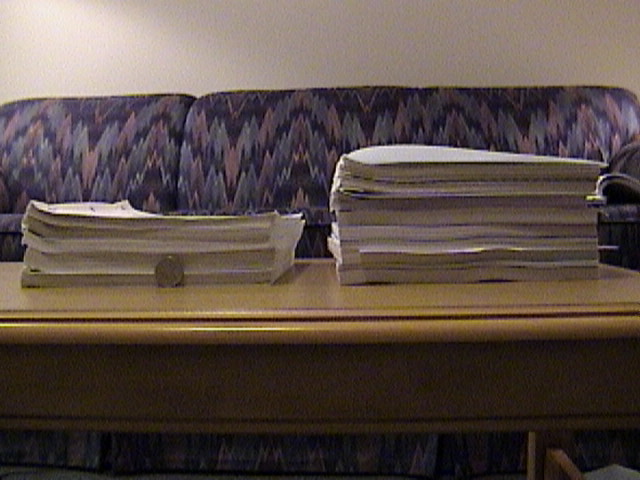
     So now I'm here at Whiting field. Tuesday the 17th we had our inprocesing. We had to meet at 0645 in the main TW-5 building and listen to some briefings. Some people do not start right away....no matter what service you are. Luckily for me, someone couldn't start this week for some reason and I was able to take his place. You also find out what squadron you are in at this time. All USAF go to VT-3. The rest can go to VT-3, VT-2 or VT-6. After the briefs, we got our books. Here is a pic of the primary books stack on the right compared with the API book stack on the left. There is a quarter for height reference. After our book issue, we had lunch then met at medical to turn in our records and fill out a lot of new papers. We were explained that the washout phase is complete and that the flight surgeons will do everything they can to keep us in and give us an up chit. There is a guy with 8 waivers and one that was stashed for 3 years until he was fit to fly again. We then go to our squadrons to get more briefings and fill out more paperwork and get our patches, order our new cloth nametag, and get some more little things like a squadron water bottle, shirt and stickers. The T-shirt is your squadron color and everybody except the Marines get to wear them under their flight suits. The Marines must wear their oh so beautiful puke green t-shirts. We then talked to the commander of our squadron who explained how the grading system worked with the NSS and everything. The minimum is around a 34 and the max is 80. You need a 50 to even consider jets (Navy) or a T-38 (USAF) and a 67+ guarantees you your first choice. Our commander told us the highest yet is a Marine who got a 79.9 NSS and wanted to fly C-130s. Go figure.  
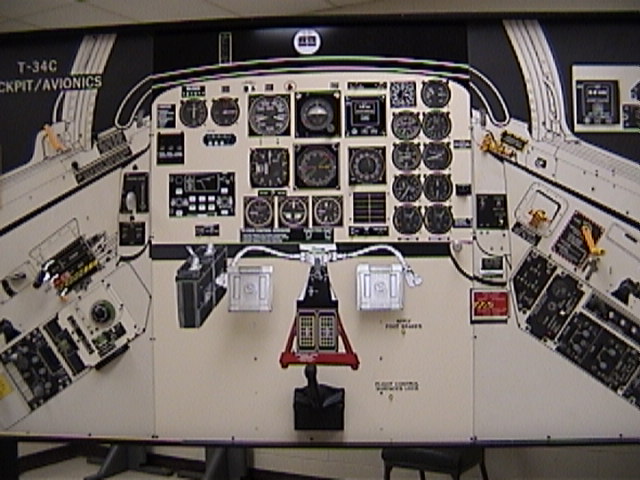
     Wednesday we had our first day of class and were fortunate to have a very good instructor. The instructors through ground school are all civilians which is a big change from API. Our class was divided into two groups and my group had to read chapters 9-15 for the first day while the other group read 1-8. Then we switched the next day and both groups did 16-23 the last day. So if you manage to get a systems book ahead of time you might want to read 1-15 just in case. Don't be afraid of the 23 chapters in 3 days thing. It sounds scary until you see that most of the chapters are two pages long. You will still be studying a lot more than API though. The visual aids in class are very good even though they are from the 70s. When you read the book, there might be a lot that confuses you, but its explained very well in class, especially with those visual aids. I'll try to get a picture up soon.
     Thursday we had our last day of class for systems. In those three days of systems, you will have learned every nook and cranny of the T-34C. It reminded me of API a bit how it alternated between simple and complicated. One minute you are learning how an underspeed causes the flyweights in the prop governor to open the pilot valve downwards to allow high pressure oil to flow through the prop shaft and through the holes in the retainer cup to push the servo piston forward counteracting the feathering spring and the counterweights in order to decrease the angle of the blades so they can maintain their constant 2200 RPM. And the next you learn that pushing down on the stick makes the elevator go down which makes the plane descend. You go from "oh please" to "huh?" several times. The propeller governor is actually the most complicated part. What makes this hard is learning everything in 3 days.  I suggest going out to the preflight aircraft next to the main hangar by the flight line and go over the whole book there. It helps if you teach someone everything in the book. That insures you know everything.
     Today, Friday we had our test and some briefings. The test wasn't bad at all. Its not like API where there is a best answer. There is only one answer that can be right...period. No tricks. There were 3 failures 4 below 90 and the rest above (we have about 25 people)  with two 100s, me being one of them.  After the test we had briefs on how to study for and use the cockpit procedure trainers. We also got our schedule on which CPT procedures we have to know for which day. By next Friday you have to know 35 procedures. It starts off with 9. Day two you need to know 7 more plus a blindfold cockpit test. Then 6 more, then 9 more then 4 more on the last day.  Each day you are responsible for everything before. You do not need to memorize entire checklists. You only need to memorize the parts in which you can't read and tell what's going on at the same time such as the part of engine start in which you need to see if its an abnormal start or not. What sucks is that we start on Monday and the CPT rooms are closed Saturday and Sunday. So we only get good practice tonight and Monday morning unless they scheduled you at 0520. The trainers are all booked up now until 2020 so I'm waiting until then to get in there and start practicing. Each day a schedule is put out with your CPT evaluation time which could be anywhere from 0520 to 2020. Luckily I'm in the afternoon on Monday. We will also have to take lessons on the computer. You have to log on and the system tracks which lessons you have completed. There are certain lessons that have to be completed by certain lectures. There are also videos we need to watch which must be watched prior to certain events. I'm watching the first 3 today which have to be viewed before CPT-1. I still don't understand the whole system and how it works, but as I go I'll try to explain better. As far as I understand it, some classes are taught just on the computer and some in the classroom. For one test we are even given a time window in which to take it. We'll see how it all works out.

30Oct00 Week 2

     Week 2 is finally over. I swear by Wednesday it felt like a month had gone by since Monday. I was falling asleep to emergency procedures at night. 90% of the time I was doing an EP in my head the whole week. This is by far the worst week since I started training back in September. I was scheduled for a CPT everyday of last week. Some people get lucky enough to skip a day and have their CPT-5 moved to Monday. This week was pure firehose. You can be scheduled for a CPT anywhere from 0540 to 2200. Monday I had CPT-1 which was just reading all the checklists. Its all new so they don't expect you to be perfect at it. There are certain parts of the checklists you have to memorize such as engine start and landing. By CPT-1 you should know where everything in the cockpit is. They don't want to see you looking around for stuff like some guys do. Make it a point like I did during systems week to learn the whole plane as you study your systems inside the cockpit. Tuesday I had a 0540 sim. I won't tell you how fun it was waking up for that one. In CPT-2 you are introduced to emergencies. You must do engine fires on ground, abnormal ITT during shutdown and aborted takeoff plus, of course, everything you did on the previous CPT.  The key to CPTs is to do everything calmly and, believe it or not, slowly. They don't like seeing you jump out of your seat and flailing your arms around the cockpit trying to shut down the engine when the fire light goes off. Just sit calmly, state the situation, then tell the instructor the steps to correct the situation while you perform them. Later on that day we had our course rules I briefing. Of course it has to be during the stressful CPT week and not the next one in which we have hardly anything to do. We were supposed to have our course rules drawn out on our charts...but like I had time with all the EP stuff to do. The whole CPT week you are either practicing EPs or doing the computer based training for EPs which take a while, or watching the numerous videos from 1970. The course rules video was a favorite. Especially since they screwed up and made us watch it before the class.  If you want to see a blank stare, look at someone watching the course rules tape. Anyway, after the course rules class, we had a wheels watch brief showing us more fun stuff they had planned. We get to sit in the sun and wave paddles at incoming aircraft. I love the part of the slideshow that said when using the flare gun to waveoff (we actually don't have one anymore) do not hit the approaching aircraft (that's why we don't have one anymore....doh!) The watches are about 3-5 hours long. You are supposed to see if the aircraft's landing gear are actually locked. You can do this two ways. You can look for the "peanut" lights next to each gear which are hard to see while you are next to the plane. or you can look for the downlock in place on the actual gear. Now this plane is comming at you at almost 100mph with the sun sometimes behind it, and at altitude while turning. Unless those gear are REALLY messed up, you ain't seenin' it. You're only hopes are catching the few who missed the flashing wheels light, master caution light, flashing gear handle, and 1000 Hz tone right into their headset, all to warn them that their gear should be down. But maybe, just maybe after missing all that, he'll see that little figure down there on the ground with hand sized paddles waving at him.  
     Wednesday I first had a flight ops tour. We got to see where we get our survival vest thingies, where we can check on the weather and we got to visit the cute girl that works in the tower. After staring at her and missing everything she said, we went over to the classroom to have our course rules II lecture. You actually understand the whole course rule concept when its explained in class. Forget the book until you have gone to class. Don't mark the chart until you've been through both classes, and don't read the book until you have marked the chart so you can follow along better. After that, I had the joy of doing my CPT-3 which was the absolute worst of them all. It has the biggest jump in difficulty of all the stages. The main one here is the engine failure procedures followed by the high and low altitude power loss. If you want to save yourself a lot of grief, know the engine failure procedure before you start CPT week. By itself its nothing, but learning it with everything else going on is a mission. Learn the water ditching variant while you're at it too.  
     Since the hardest part was Wednesday, CPT-4 seemed like nothing. The light was on and I was totally calm and doing everything perfectly. What a difference after CPT-3. I talked to others and they said the same thing happened to them. After CPT-3 its all downhill. The main part of CPT-4 is the precautionary emergency landing. You need to learn the turn, climb, clean, check, determine, deliver, reduce, and the radio talk for it all. Its not to bad at all. A PEL will end up as a HAPL (high alt pwr loss) which you learned from engine failures anyway. The only difference is that with a PEL you make radio calls and you can help yourself with the engine if you get too low. After my CPT-4 I took my EP exam which is a pass/fail test taken on a computer. Its all text, unlike the nice computer based trainer practice tests. I missed one on that which happened to be the same damn thing I messed up on CPT-4 just two hours prior. I now will never forget that you do a PEL after a faulty engine fire warning light. You have until 1445 to start the test and you go at your convenience. The same applies to the course rules test we take the Monday after our third week. 
     Friday was a busy day in that we had our morning completely booked. From 0700-0900 we had more safety stuff like don't buzz Pensacola on your first solo and just basically don't mess up. After that we had a bailout lecture and got to strap on a vest and parachute and everything else, and do a nice flip out of the T-34 bailout trainer. We were casually told that we will probably smash the wing on the way out. Whee.... We then had our G-LOC lecture where we learned that someone at Corpus Christy just recently (within the past 2 weeks) G-LOCed at 1.5 Gs. Normal sitting G tolerance is 4-5 Gs. We saw a lot of cool videos and stuff throughout all the lectures and it turned out to be a good morning. It got even better when we had our weather lecture and were told what to look at for the test. CPT-5 was after and by this CPT we all had it down so it was no problem. CPT-5 is the only one you have to pass. You have to really really really screw up on the others to have to repeat them. But on CPT-5 you need to have a 3 or better on all procedures. I got half 5s and half 4s. CPTs are also pass/fail and do not factor in on your NSS. The only things that go into your NSS are the systems test, the weather test, the INAV test and your flying grades. 
     Today is the 30th of Oct and I've taken the weekend off. I've taken most of today off as well. This week we are on our own to study weather, contact and course rules. We have our weather test Friday and course rules a week from today. Next week I will start flying. I can't believe the time is almost here. I've gotten lazy with the camera but I'll try to take pictures this week.

03Nov00 Week 3

     Well preflight ground school is finally over with. There wasn't much to week three. Monday Tuesday and Wednesday we had off to study as we saw fit. We also had to do 8 computer lessons for weather which took about 5-6 hours in total. Of course you don't do all of them in one day. In addition we had 3 lessons in contact to do but they were just about stalls spins and HAPLs and LAPLs which we already new from CPTs. The weather lessons had to be completed before the weather review on Thursday and the contact before the contact brief on Friday. Its not too much. This was a pretty relaxing week which was much needed after CPT week. For weather you learn about METARs, TAFs, FAs, FDs, UAs, WWs, WAs, WSs, WSTs, PIREPs, weather depiction charts, radar summary chart, surface analysis charts, surface prognostic charts, low level significant weather prognostic charts, winds aloft forecasts and winds aloft prognostic charts, and constant pressure charts. There are a few such as the MWAs, NEXRAD, and satelite photos that we didn't need to know. There are some in which the military versions differ from the civilian ones but the differences are small. Military TAFs don't have PROB and visibility is in meters, not miles. I recommend studying all the civilian versions of the above mentioned weather tools because this stuff can get tricky. FOr private pilot I never learned that RADAT 63017 means that freezing level is at 1700ft MSL with relative humidity at 63%. Or that 620329 meant there was icing(6) its light(2) at 3200ft AGL(032) and its 9,000 feet thick(9). Turbulence would start with 5.  Great fun huh? There are 18 different weather tools for you to know and each one has a bunch of variables and symbology you need to learn. What sucks is that its not standardized. On one chart, a scalloped line might mean overcast while on the next it would mean marginal VFR. There are a lot of examples like that. Then of course you have to know which ones you would look at for forecast or for observed, which are facsimile or which are teletype, and which ones you would look at for certain things....say forecasted turbulence en route or observed ceilings at your destination. Its a lot of stuff, but the good news is that the met review on Thursday lets you know what to concentrate on. I recommend going over ALL the questions in the book, and the questions and answer board type thing outside the classroom. We were told that 12 questions from that board are on the exam word for word. 
     Anyway, Thursday we also had our airsickness briefing where, although the guy tried to make us feel as if we don't need to worry about it, everybody now does. We were given recommendations on how to prevent it, how to cope, and great suggestions like remove your O2 mask first before you puke. It would be cool if you could puke in the pisser especially if you had someone in formation behind you. There is this funnel type thing you pull out from under the seat in the T-34 which you can relieve yourself in if you forgot to go to the bathroom before the flight. The outlet is right under the plane aiming right behind you. We were warned not to pee until we first pushed the lever to open it because the valve opens upwards. People have started to piss, filled it up, pulled the lever and were wearing their piss for the rest of the flight.  And sorry but its not female-friendly. 
     Ok so now its Friday. Today we had our weather test which I thought was trickier than any API test. Its not that its really tricky, its just that sometimes every single answer LOOKS right. You really have to sit there and think about it. There are 50 questions on scantron and you have 1.5 hours to take it. Most people finished in a little over an hour. The test base average is a 90.2 and our class average was a 91.8. Everybody passed this one and there were two 100s, with me being one of them.  After that we had a cockpit resource management brief followed by our contact brief which was just to let us know what to study for our Fam (now called contact) flights. Now all we have left is the course rules test on Monday before we start flying. I'm going to take this weekend also to study our preflight since for some stupid reason we can't use a checklist to preflight the plane.
     I went out and took some pictures today. Here they are:

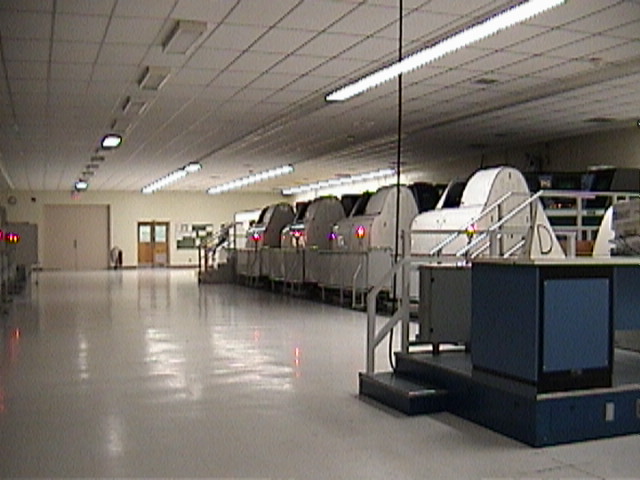
Inside the CPT room (the ones you can see are the movable instrument sims)
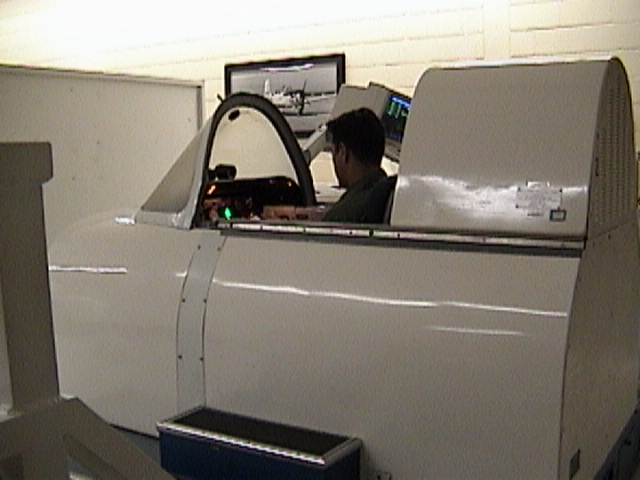
CPT(outside)
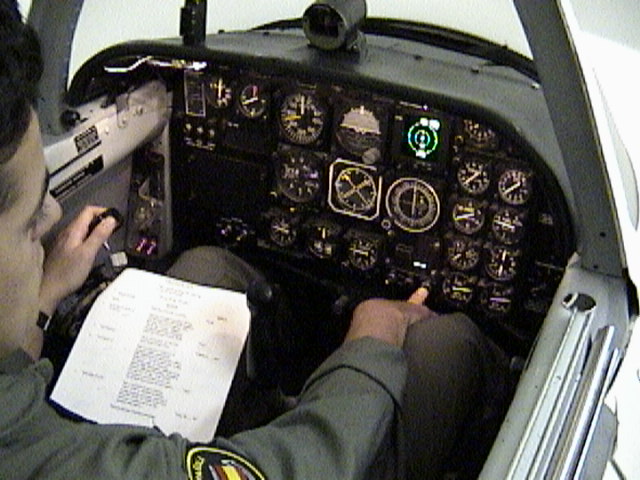
CPT cockpit 1
CPT cockpit 2
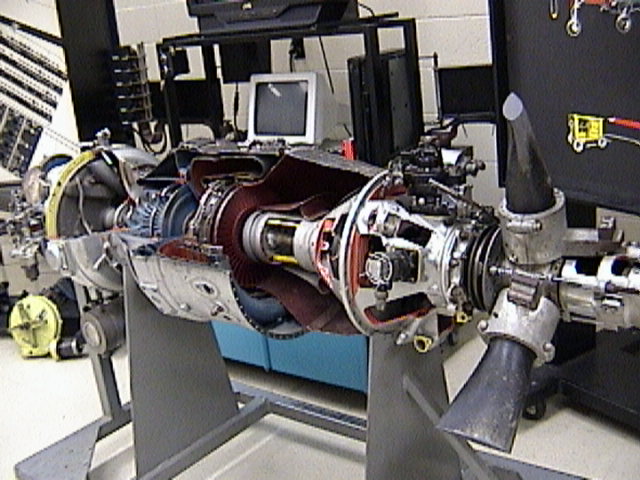
PT6A-25 (whole engine)
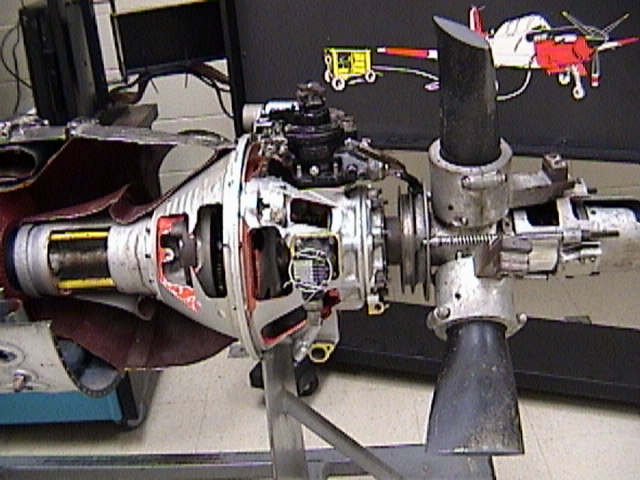
Same but front (reduction gearbox and exhaust)
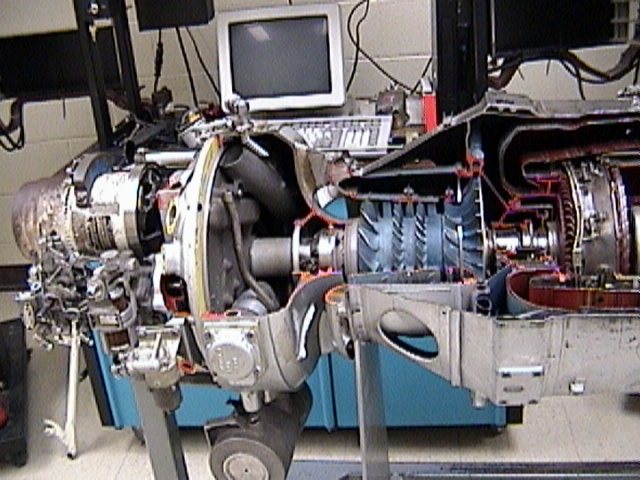
Same but rear (accesory gear box and compressor)
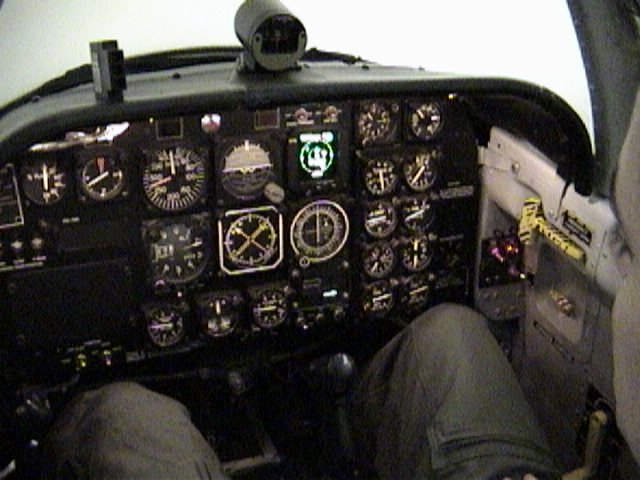
Cockpit reference used in systems class
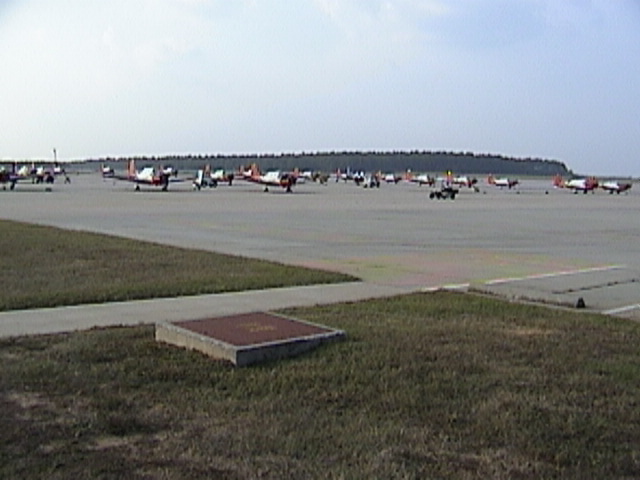
T-34 flightline
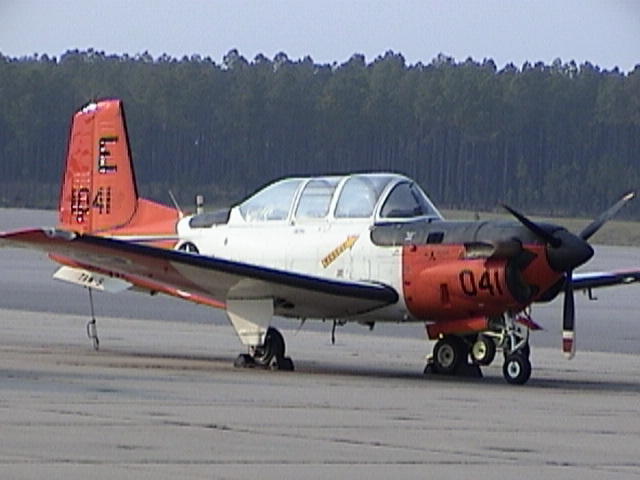
T-34C
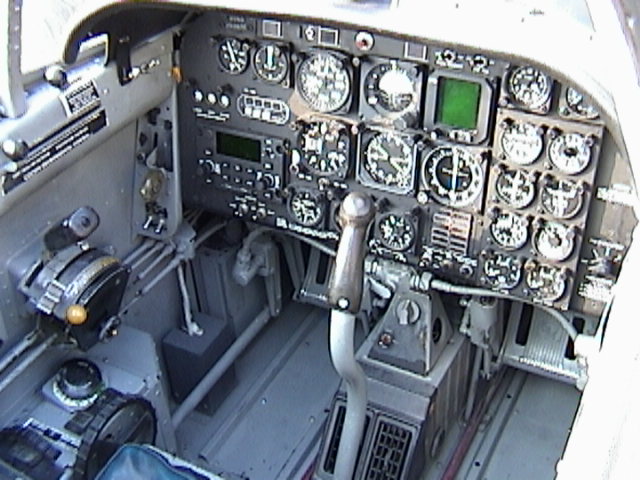
The actual cockpit 

If you have any special photo requests, let me know and maybe if I have time and I don't get lazy I can take one.

Click here for my first week of flying

dot dot
dot dot dot dot dot dot dot dot dot
dot
JSUPT at NAS Whiting Field dot
dot
Hosted by www.Geocities.ws

1