Week 5
4Oct00 TD-22
Well the fun stuff has supposedly started.
Today was the only fun day so far. Monday we had land survival which
taught us what to eat and how we can use our equipment once we hit the
ground. All I really learned was "eat what the monkey eats.....then
eat the monkey." They also showed us some snakes and bug we should
run from but of course I learned with my first safety brief, those water
moccasins are coming for me either way. After that rather dragged out
briefing, I walked over to the API building checking for water moccasins
all the way of course, and had the check out/selection brief which was a
nice reminder that we are almost done. In this brief we got a handout that
laid out the steps to check out of API and into our future training wings.
I am to check into Whiting the Monday after I graduate API and I start
ground school the day after. The rumors I'm getting so far is that we do
systems the first week, cockpit procedure trainers the second and course
rules and weather the third, then start flying about 3 times a week. The
navs and NFOs stay here and do, I hear, 6 weeks of ground before they
start flying.
Anyway, yesterday we had a very long and boring
day of physiological briefings. We learned about visual effects, altitude
effects, stress and drugs, and G-LOC. We started at 0700 and were done by
around 1430. Nothing too exciting. Today however was the fun part. We went
to the same building and first learned how to connect our O2 masks, the
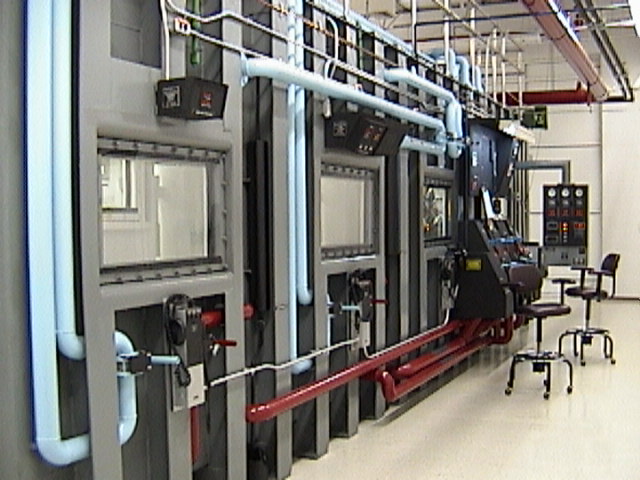
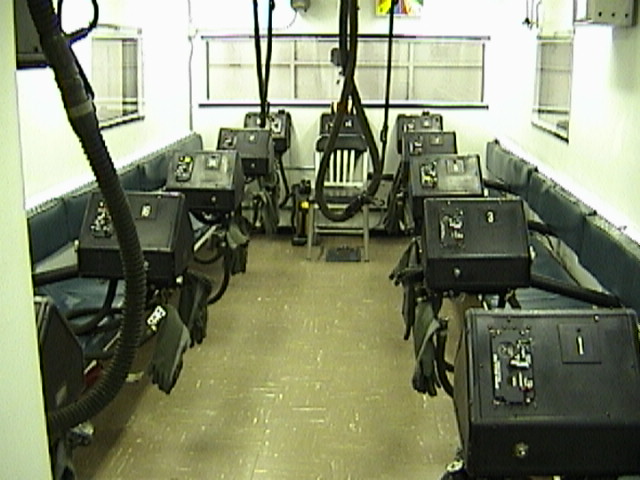
first group then our gear and went into the chamber. You can take a look
at the outside, the inside and
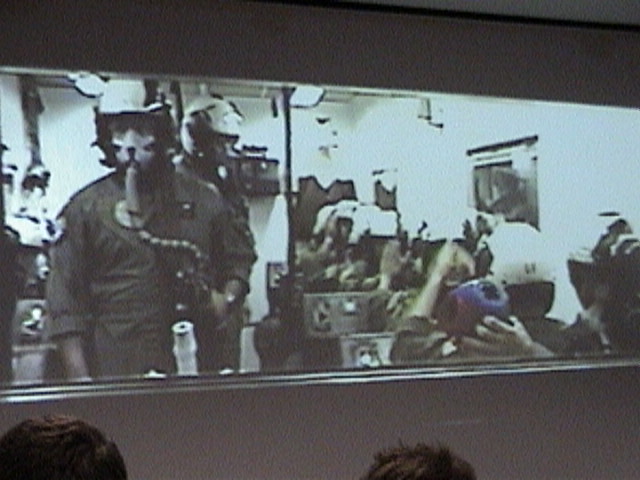
another pic I took while watching the
replay video (I'm the one playing with the shapes ball thing on the lower
right). Watching the replay was awesome and we were constantly laughing at
all the stupid things we did while hypoxic. The way it started was that
they led us into the chamber, got us hooked up then took us to 5000 ft to
make sure everyone could clear their ears and no one had sinus problems.
After that we heard a recording of a hypoxia related mishap in order to
pass some time since we had to be on 100% oxygen for 30 min before we went
up to the proper altitude. In the beginning I hated breathing through that
mask especially since it felt like it was slicing my nose up. I would have
loosened it but if I broke the seal I would be out of the ride. Sometimes
I didn't know if I was hyperventilating or not breathing enough since it
was just weird breathing through it. When the 30 minutes were up, they
took us up to FL350 then brought us immediately down to FL250. There at
25,000 feet, the first group took off their O2 masks so that they could
get stupid and we could laugh at them. They had to do the patty cake and
the guys at the end had to try to put the correct shape in the matching
hole. Needless to say things got laughable. After 3 minutes the patty cake
was impossible to some. Some lasted to almost 4 minutes but then quickly
lost it. One guy was being told to put his mask on but just said ok each
time but just sat there smiling with an empty stare and finally had to be
helped. One of the instructors said he was about 15 seconds from passing
out. Oh, he also had the ball with the shapes and 3 weeks ago someone put
a shape in there that didn't fit anywhere as a cruel joke. 1 minute into
it he was already completely lost with that piece until the instructor
finally told him about it. When it was our turn, I had that ball and about
3 minutes into it, my head was all fuzzy, my vision was suffering and my
hands and feet were really tingling. I was also having trouble finding the
holes for the shapes. I finally just grabbed my mask, turned my O2 on and
treated myself for hypoxia like we were supposed to. Some people don't
notice and are too hypoxic to treat themselves. You'll hear some funny
stories when you do it. We then descended to FL180 and turned of the
lights and took off our masks. We were given a color sheet to look at and
notice how altitude effects our night vision. We then did a rapid
decompression which was pretty cool and made a banging sound with the
whole room fogging up.
After the chamber we learned more about that vest
we put on which has all of our equipment whos name I keep forgetting. We
had to put on blind folds and take out certain items when told to.
We then had a very short lunch then went next
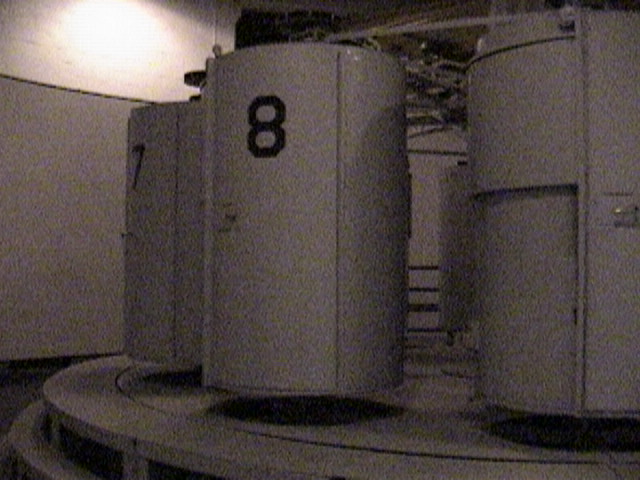
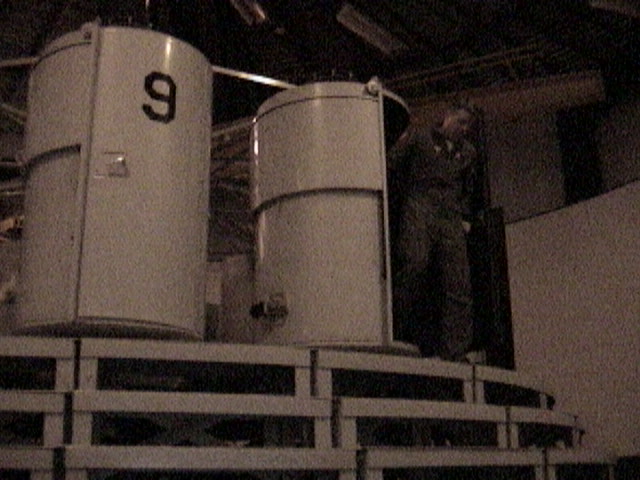
door for the "spin and puke." This is a machine which has 10
large barrels in which you sit in which then spin around to disorient you.
After the little briefing and demonstration of nighttime visual illusions,
we got into the barrels and started spinning. Its not bad at all. Each
barrels has a door that slides up and down to let you see out or not. It
starts spinning and a projector projects stars on the wall. The projector
can stand still, spin with you, against you or faster than you to create
all sorts of visual fun. I recommend leaning forward and looking at the
building's ceiling to see how confused you really are. You have controls
to input what you think is going on. You will swear you are going one way
but are completely wrong. At the end just for fun, they turn all the
barrels inward, lower the window doors and the whole thing spins
fast enough to produce 1.5 transverse Gs. You can see a picture of the
spin and puke here and here.
After that we had our physiology test which had a
very nice review session so everybody passed as they have for the past 6
months. Don't worry about this test. Its 25 questions (you can only miss
3). and its pass fail and doesn't count into your API average. We USAF
guys got our altitude chamber cards (dunno how the USN works) and were set
free a bit past 1600. It was a very long but fun day.
17Oct00 End of API
Thursday was a nice short day
for us. We came in at 0630 and had a few briefs on water survival
equipment such as our life vest and different kinds of rafts. We were also
told we have another test next week on all this stuff. After about 2 hours
of that we went downstairs by the sea wall and got to set off mark 124
flares and smoke and also got to shoot off the pencil flares. If you shoot
off the flare side of the mark 124 after the guy in front of you has shot
off the smoke side, DO NOT touch the other side to your body for support
(you have to do it one handed) because you will stain your flight suit
with an unremovable red ink. I saw this happen to a few people. One thing
I should mention is bring your upchit everywhere you go because each
section of training needs it for their records. Make copies because things
tend to get lost.
Today we went to the dunker building next to the
O-club to do some water egress training. First we started with a couple of
hours of briefings about all the fun stuff that happens when you have to
bail over the water and how to handle your parachute and connectors and
all that. Then we put on full flight gear which was 10 times in better
shape than the crap we used at the first pool during academics. We had to
swim across the pool using the sidestroke, then push off the wall and come
back doing the breast stroke, touch the wall then start treading or drown
proofing (floating face down) for the remainder of the 5 minutes. You are
allowed to take your helmet off, trap air in as you submerge it and use it
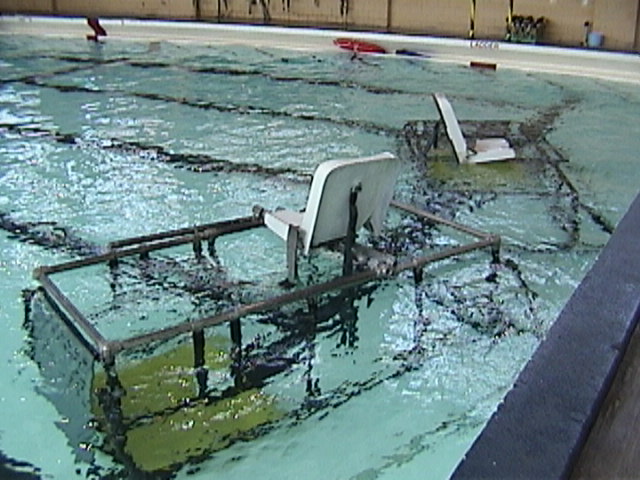
as a floatation device. This really helps. After that we got on the SWET
chairs which are a pair of seats mounted on a structure of metal tubing
submerged in the pool. You sit on one of the chairs and you are flipped
upside down by the instructor pulling a lever. You then have to grab onto
your reference point, release your strap, then pull yourself along the
left side to a door type thing you have to open and get out. The guy on
the other chair is doing this at the same time and going to his left so
you are both converging on each other. Be sure to stay on your side and
you can only use your arms. The first time on the chair, you can open your
eyes and you can come up for air after opening the door. The second time
though, you have blackout goggles and you have to get to the door, open
it, remove the goggles, then stay swimming underwater until you reach the
red line halfway down the pool. Be sure to get a good breath before you
submerge. Its not nearly as bad as the tower jump/swim in the first three
weeks though. Once you get to the deep end, you have to tread water while
inflating your life vest (the CO2 cartridges have been removed). After
this we were done. We have Monday off so we come back Tuesday for the
dilbert and helo dunkers. I believe we are also doing the simulated water
parachute drag and water landing. 3 more days left of API training. Its
gone by so fast. Friday is just signing papers so the end is near. I went
to Whiting today to try and get my books early but they don't give them
out until you check in. I did get to play on the cockpit procedure
trainers though. There is also a preflight T-34C next to the hangar by the
flight line which you can go play around in and learn some procedures. If
you are USAF you can go to VT-3 and check it out and talk to some students
there since that is where all USAF pilots go. We even have our own CPT in
there and the place is almost finished being renovated. I'll have more on
all the Whiting stuff when I get up there.
15Oct00 API
Complete
Due to uploading problems and having to pack and
move to Whiting, I haven't been able to update my journal. Now that
everything is settled I'll finish up the last week.
Monday we had off so we started the dunkers on
Tuesday. We first had some briefings and then got dressed up in much
better flight gear than they had at the regular pool. We were broken up
into groups so each group started with something different. I started with
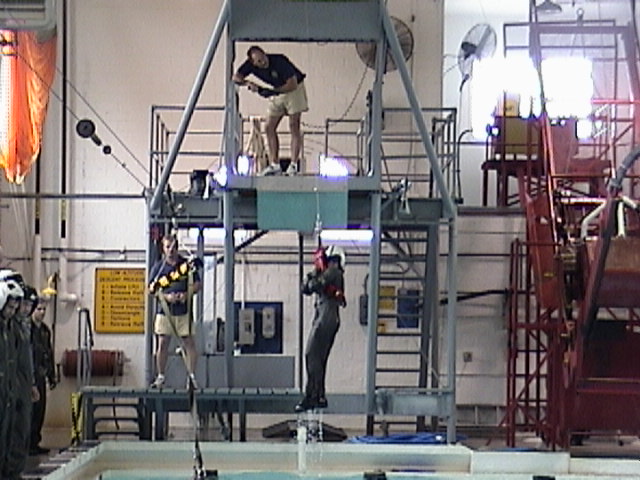
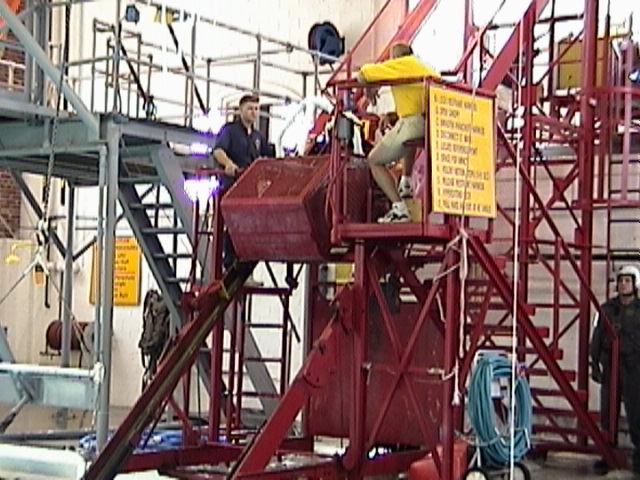
the hoist. I had to jump in with full flight gear, hook myself up and go
up for the ride. Here is a pic. Nothing too
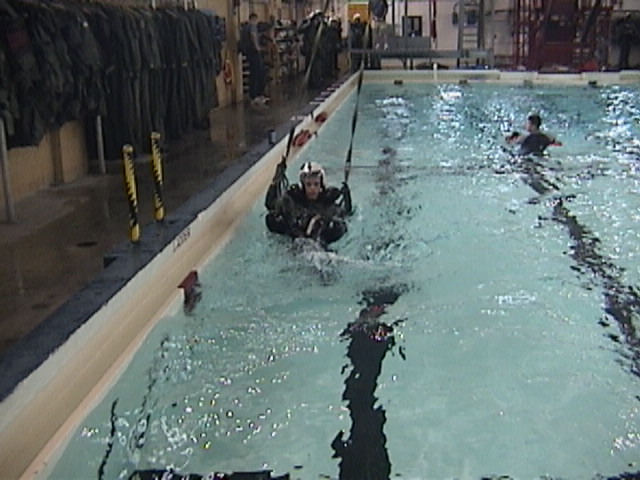
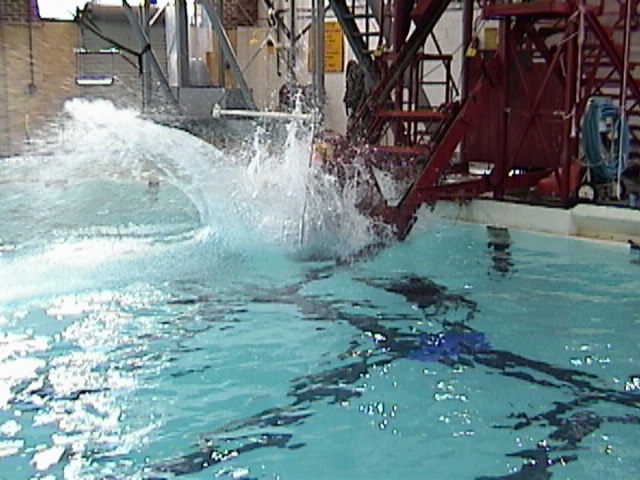
special. After that I did the simulated parachute drag which was a bit
more fun. Its a machine that drags you back and forth in the pool until
you finally release yourself. Here is a pic
of the drag. I was told the record is 23 times across. Most people get
out right after it turns to come back. One girl got stuck and went back
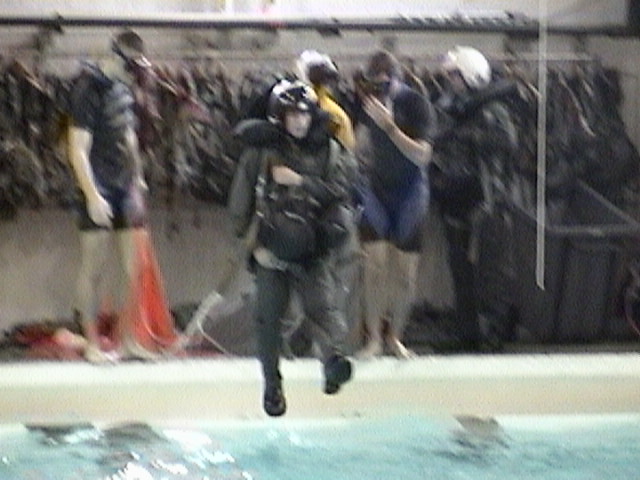
and forth 10 times. That was fun to watch. After that we had to jump in
hooked to a parachute by the last strap which we release right as we hit
the water. Two guys jump in after you pulling the parachute over you. You
have to get out of your harness and get away from the chute. I got tangled
on one of the lines but managed to break free after a little while. Here
is a pic of someone jumping in. After
that we did a different type of hoist and then went on to do the helo
dunker. The helo dunker was fun until I got the pilot seat with the black
outs. You have to do the dunker 3 times. The first time you can go out any
exit, the second time you can go out only by the main exit and the third
time you can only go out the main exit but you have black goggles to
simulate night. There are 6 people at a time in there and you do not want
to be in the cockpit unless its the first dunk. The machine just free
falls like 5 feet to the surface of the water then starts to go down
slowly and starts to rotate to one side slowly also. Once your head goes
into the water, start counting to 12. Its not that long but when you are
trying to get out and people are blocking your way it gets frustrating. My
third try was the scary one. I was in the pilot seat and I tried to hold
onto my reference point with my right hand. Well, the harness it hard to
release with your left hand (front seats have four points), I couldn't
find it so I had to release my right hand, get it off, then try to get out
while being blocked by the other guy who was in the front who was in turn
being blocked by everyone else. So I was stuck and for some reason people
seemed to be taking their sweet time getting out. When I was finally able
to go, something on my suit got stuck on the exit and it took me a few
tugs to wrench free. Needless to say I was the last one out. Luckily the
15 yard underwater swim after jumping off the tower in the first part of
API got me used to that drowning feeling so I didn't freak out. Another
thing that sucks about the trainer is the water going up your nose, but
still didn't feel as bad as the SWET chairs. Those made me feel as if the
water filled up my sinuses....maybe it did.
After the helo dunker, we did the dilbert dunker.
This dunker is only for the T-34 and you go through the ditching
procedures then they slide you into the water with a pretty violent flip.
Its not hard to get out of at all and there is a guy underwater helping
you. Here is a pic. Here
is another.
The next day we did some of our parachute
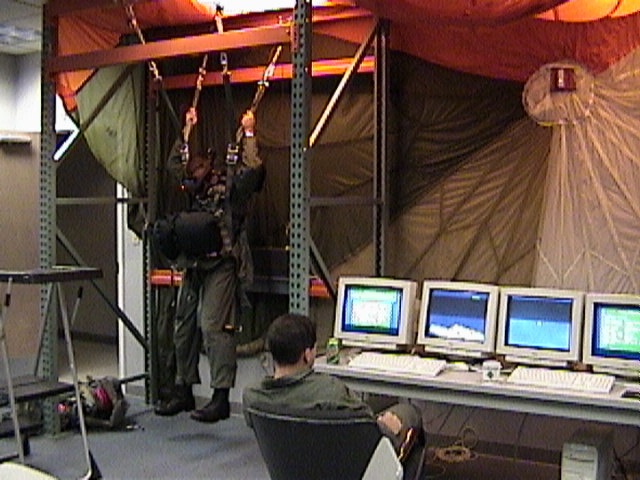
training. My group did the virtual jump first. They strap you to this
virtual reality simulator which has the VR headset and the strings to
pull. Its pretty cool how well it works and you have to go through certain
procedures depending on what type of terrain you are landing in. You get
two different types. This is also the first and only time you get to use
the CO2 cartridge to inflate your vest. Here
is a picture. After that we went over to practice PLFs. You do about
32 PLFs that day each time getting higher and then finally you have to
hang on to something that slides down and let go to simulate the parachute
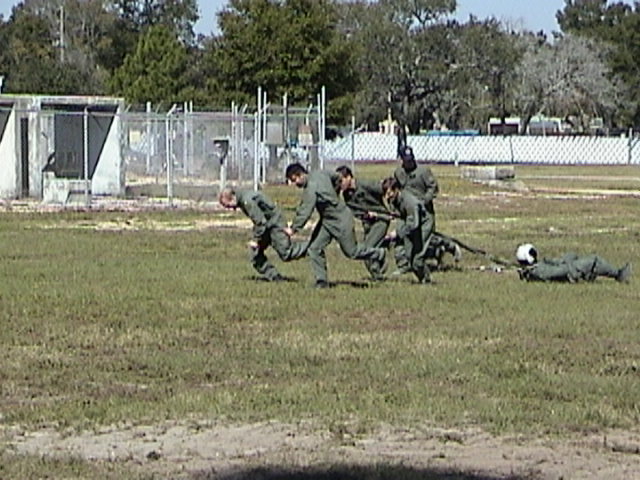
coming down in different directions. After that part you get to drag
and get dragged in the dirt. This is basically the same as the water drag
except you get your own flight suit and boots nice and dirty. Here
is a picture.
After that we had lunch then came back for life
raft organization training. We had to flip the raft over and have everyone
climb in and listen to a small brief aboard the raft. We were right next
to the ramps for this. The water was pretty cold and most of us had wet
suits under our flight suits (it was optional and they supply them). We
then got into a 40 foot open fisherman looking boat and headed out to meet
the coast guard helo that was supposed to lift us 10 feet out of the
water. Well the stupid thing broke down so we turned back and were let out
early. Oh well.
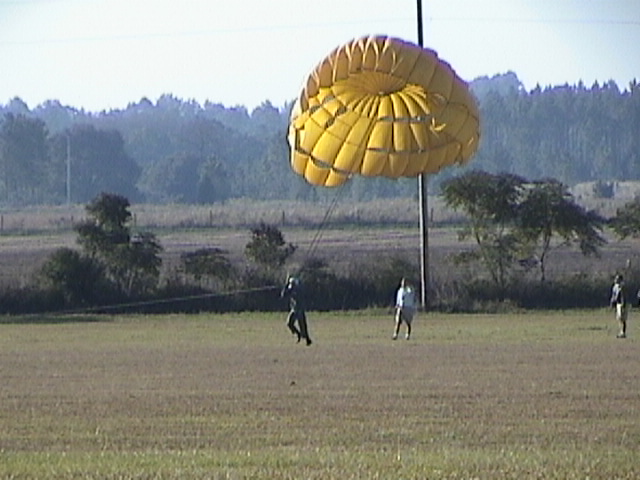
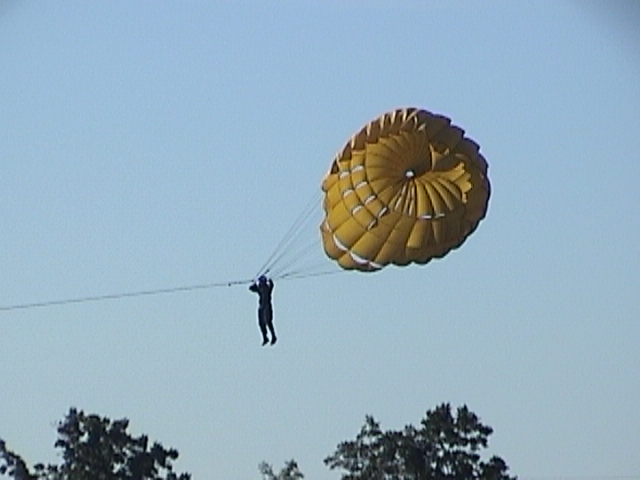
Thursday we met at a grass airfield in Alabama
for some parasailing fun. You in sets of four. You have to run about 100
yards do some more PLFs then go down to get a parachute strapped on. They
also stick a small walkie talkie in your flight suit with an ear piece in
your helmet so you can hear them while you are up there. When you are
ready to go, the guy hooks you up to the tow line tells you how you look
like his 8 year old daughter waiting to get a flu shot and then tells you
to run when the truck starts pulling. So you run and up you go to what
seemed like 200-300 feet. The truck starts slowing down after about 15
seconds and you start coming down the truck moves little by little in
order to slow your fall. You land softer than any PLF you have ever done.
Another truck comes, gets you, then takes you back for round two. This
time the guy notices the smile on your face and sends you up again. You go
up faster and higher the second time or so it seemed. This time though,
the truck stopped quickly and you just drop. I was going backwards when I
hit, but again it was as soft as the first one. The one thing you have to
remember is to keep your eyes on the horizon. DO NOT look down. When you
see your buddies doing the parasail, it will seem as if they are coming
down hard, but its not bad at all. Its MUCH easier than the practice PLFs
although it looks worse. Here is a pic. Here is another.
And
yet another.
Friday was graduation day and all you do is come
in and wait for an hour, then fill out some forms, wait some more, then
the commander guy comes in and hands out your certificates and sends you
on your merry way. That's all for API.
Click here for Primary