

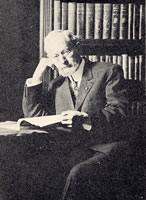
"Where there is no law, but every man does what is right in his own eyes, there is the least of real liberty." -- General Henry M. Robert

Of the majority,
Of the minority,
Of individual members,
Of absentees, and
Of all these together.
The means of protecting all of these rights in appropriate measure forms much of the substance of parliamentary law, and the need for this protection dictates the degree of development that the subject has undergone.
It is the majority taking part in the assembly who decide the general will, but only following upon the opportunity for a deliberative process of full and free discussion. Only two-thirds or more of those present and voting may deny a minority or any member the right of such discussion.
In this connection, there is an underlying assumption of a right that exists even though it may not always be prudent or helpful for it to be exercised. Each individual or subgroup has the right to make the maximum effort to have his, her, or its position declared the will of the assembly to the extent that can be tolerated in the interests of the entire body.
The application of parliamentary law is the best method yet devised to enable assemblies of any size, with due regard for every member's opinion, to arrive at the general will on the maximum number of questions of varying complexity in a minimum amount of time and under all kinds of internal climate ranging from total harmony to hardened or impassioned division of opinion.