
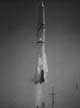
The A4 being deployed and launched
"Is this war ever going to end?" a young reporter called out strongly, his voice managing to rise above the drone of the rest of the white house press to catch Prime Minister Winston Churchill's attention. The room suddenly became silent as reporters strained to hear the answer, hands clutching pencils and pads with eager anticipation. Whatever answer the Prime Minister gave, it was sure to make great copy.
Churchill, sitting next to President Thomas Dewey, paused for a
moment; seeming to deeply consider the question. His face relaxing,
Churchill removed the cigar from his mouth and responded to the
question, staring straight into the eyes of the young reporter who had
voiced the simple, but poignant, question.
"Young man, I cannot tell you when this world war will end.
What I can tell you is this; the free people of the world, united with
righteousness and almighty God on our side, must surely triumph over the
forces of tyranny and evil that seek to dominate us all." Flashes
from several cameras made the Prime Minister squint as he brought the
cigar back to his lips.
President Thomas Dewey, uncomfortable under the glare of bright
lights the video crews insisted on using, could barely suppress a
grimace. Winston certainly had a way with words and the man was no less
well spoken in private conversation. The pressure for the United States
to join the Alliance for Democracy was growing day by day, a rising tide
that Dewey was struggling to hold back. It was a delicate balance,
fighting alongside the British in the war against the Japanese while
distancing the United States from the fighting in Europe and North
Africa. The U.S. was at the same time cobelligerent and semi-neutral
ally of the British Empire.
Dewey was certainly no isolationist, at least not any more, but at
the same time he did not think the American people were ready for a two
front war, especially not one against Hitler's fortress Europe. Oh, the
Third Reich would have to be reckoned with eventually, but Dewey
intended that confrontation to occur after the upcoming election and,
perhaps more importantly, after the Japanese had been brought to heel.
There was always the chance that Hitler would make the decision for him
by taking some provocative action, but Dewey assumed that Hitler was no
more eager to face the U.S. than Dewey was to face the Third Reich.
Churchill would return to Britain without gaining U.S. entry into
the Alliance for Democracy, but his brief visit to the United States
will leave a lasting positive impression on the American people. The
seeds of future Alliance have been planted in the American political
landscape.
In the meantime, war on all fronts continues unabated...
July 18th 1947
In Norway the latest British push manages to capture some land to the east of Narvik, but the Germans retain control of the city itself. Exhausted and badly bloodied, the British halt their offensive to consolidate their positions east of the city.
July 23rd 1947
Germany completes the first successful test of its new A-4 ballistic missile with a range of some 900km. The two-stage missile is launched from a small island in the Baltic Sea and hits within about 2 kilometers of its target in central Poland. Due to its complexity the new missile will be difficult and expensive to manufacture, meaning there will be relatively few of them compared to the A-2 and A-3. The Germans are also beginning to produce the A-2d and A-3c, with much improved guidance systems. The A-2d and A-3c can generally hit within about 500 meters of their intended target, making them more useful as a weapon of strategic bombardment.
Wernher Von Braun is now entirely focused on his beloved A-5. This missile, still years away from flight testing, will have a range of approximately 2000 kilometers and a warhead capacity of one ton. A modified version of the A-5 should be able to place an object into Earth Orbit, possibly even a man into orbit, and this has become Von Braun's passion. The U.S., for its part, has already begun manufacturing the BM-2 Goddard ballistic missile and is exporting it to Britain to the outrage of Hitler. The U.S. is close to a flight test of the BM-3, an enhanced BM-2 with a range of up to 550km.
July 27th 1947
In North Africa - British forces enter Tobruk where ferocious urban
combat erupts for control of the strategic harbor. Italian infantry
armed with anti-tank rockets (both guided and un-guided) are taking a
heavy toll on Wavell's tanks, forcing British and Imperial infantry to
do most of the close fighting in the city. The RAF dominates the skies
over eastern Libya, providing tactical support for British ground forces
and ranging deep into Libya to hammer Italy's supply lines. The other
pincer of the British attack, in the south, has begun to wheel north and
west, having bypassed the bulk of Italian forces in that area.
Hitler orders an acceleration of the timetable for transferring forces to Libya. He wants to have German forces in place before the Italian front in east Libya disintegrates. Italian and German air forces and submarines have stepped up operations in the central Mediterranean to ensure the safety of that line of supply into Italian North Africa.
August 1st 1947
The Free French launch a counter attack in Tunisia, attempting to retake Gafsa. However, the Italians have already managed to reinforce their positions in the city and quickly repulse the relatively weak Free French attack. De Gaulle, angered at the loss of most of his limited tank reserves in Tunisia, orders a halt to any further offensive operations in Tunisia. The goal of Free French forces in that theatre is to hold northern Tunisia until De Gaulle can crush the ongoing rebellion and marshal his forces for a general counter offensive.
August 3rd 1947
Tobruk falls to the 8th army, but not before Wavell suffers relatively heavy casualties. The British push to Tobruk has been at the expense of some 80,000 dead and wounded, comparable to the number of casualties in the recent Norwegian campaign. The Italians, realizing their set-piece defenses in eastern Libya have been breached, begin to a rather hasty retreat to the west. It is not quite a rout - not quite.
August 5th 1947
Anxious to exploit his momentum, Wavell orders his armor forward in pursuit of the retreating Italians. The southern pincer of Wavell's offensive has linked with the 8th army south of Tobruk, but most of the Italian forces have already managed to escape to the west. With Tobruk as a forward supply base, the British can continue to drive into Libya. Churchill is ecstatic, he finally has Axis forces on the run even if it is only the Italians.
August 6th 1947
Churchill gives official approval to plans for an offensive into Indochina from out of Burma. British forces, mostly Indian troops, have been massing in Burma for some time and are readying themselves for offensive operations. The British ultimately want to recapture Indochina and then turn south to liberate Singapore. The Japanese, of course, have other ideas and have been fortifying their positions throughout the region since their probes towards Burma were repulsed.
August 8th 1947
The first elements of the 1st panzer army and supporting units, including Guderian and his headquarters staff, arrive in Tripoli. Luftwaffe squadrons have been arriving for the past week in a steady build up of air power.
August 11th 1947
Italian forces attempt to hold positions east of Gazala but are torn apart by the 8th army's leading armored spearheads. The Italian withdrawal in eastern Libya is degenerating into a total route. Desperate Italian commanders begin to prepare defensive positions east of Benghazi. Mussolini orders the best divisions on the Tunisian front to be transferred east immediately, to the disgust of the Italian commander there who had been preparing for a final drive towards Tunis.
In Algiers, De Gaulle is more than pleased with British progress in Libya. His forces in Tunisia, on the brink of collapse, would now have time to entrench themselves south of Tunis as more reinforcements trickled into that theatre. More important, in De Gaulle's mind, was crushing this pesky Muslim revolt once and for all. Order has been restored in the major cities of French North Africa with tactics that the SS would have heartily approved of. Filthy work, but necessary in De Gaulle's mind. Controlling the countryside was....more difficult. He had already ordered his forces to concentrate on holding the critical lines of supply and communication into Tunisia. De Gaulle has another problem as well. The large numbers of 'rebellious elements' rounded up in the clearing of the major cities were draining far too many resources and manpower. De Gaulle has ideas about what to do about the camps.
{ The Free French have essentially been using 'Ethnic cleansing' to combat the rebellion. Much of the native population of the major cities of French North Africa have been forcibly removed, either into the concentration camps or, more commonly, into the desert to fend for themselves. Only those who publicly swear oaths not to join the rebellion, or who convert to Christianity, are allowed to stay. As for the concentration camps, De Gaulle plans to cut back food and water rations dramatically and then 'let the rest sort itself out'. These tactics may seem harsh but this is a desperate Free France locked in a war to the knife with powerful enemies and facing a rebellion that could threaten its existence. I don't think De Gaulle's regime(and it is a regime, he came to power in a coup) would hesitate to use such tactics in this situation. }
August 14th 1947
British forces capture Gazala and continue to push west. Luftwaffe aircraft have begun to appear in larger numbers and are beginning to challenge the RAF for control of the skies over central and eastern Libya. The British have more aircraft but they have fewer jet aircraft available than the Germans do in the theatre.
August 15th 1947
A Japanese taskforce of two carriers, several battleships(including the lone Super-Yamato class battleship in existence) and cruisers, arrives at Rabaul. The Japanese high command sees the northern Solomons as a crucial strong point against U.S./British offensive operations in the Pacific. As long as the Japanese hold the northern Solomons they can continue to interdict U.S. convoys heading for Australia, Guadalcanal, and the Philippines. If it should fall then U.S. convoys will move freely in the south Pacific and the central Pacific islands will come under much greater threat with an exposed southern flank.
Meanwhile, in the waters around Guadalcanal, the U.S. has managed to mass its largest naval force since the destruction of the fleet at Pearl Harbor. Two Iowa class battleships, the U.S.S. Montana(Montana class battleship), and numerous cruisers have been gathered; not to mention an Essex class carrier and two other, older, carriers. The U.S. has plans of its own for the northern Solomons, and they don't include a further Japanese presence there.
August 18th 1947
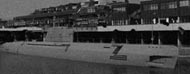
Germany commissions its first type XXVI submarine. Two hundred of these deadly new submarines are scheduled to be built by the end of 1948. Dönitz hopes they will shift the balance back in his favor when they become available in large numbers.
{ The type XXI and type XXIII were never built in large numbers in this ATL. With all the tank, jet, and rocket development going on something had to give somewhere. The type XXVI mentioned above is basically a full refinement of the features of the type XXI and type XXIII. It is a submarine designed for fast, silent, prolonged, underwater travel. It is also very streamlined, thus harder to detect by the sonar of the 1940's. This is a submarine that could, potentially, eliminate the Alliance advantage of surface-scanning radar patrols }

August 19th 1947
Several German squadrons become operational in Iraq and will begin to contest British bombing raids in the near future. The squadrons consist mostly of late-model propeller fighters as well as some Swallow and Predator jet fighters to counter British Meteors. The 'Desert Storm', as the air war over Iraq come to be known, will soon become legendary for its sheer ferocity and for the courage of British jet pilots facing superior German jets and giving as good as they take. The introduction of the Luftwaffe to the theatre, along with upgrades to Iraq's air defense infrastructure, will begin to make RAF bombing in Iraq more and more costly.
August 22nd 1947
With German and British jets clashing over central and eastern Libya, Guderian's newly established Army Group Africa(1st Panzer Army + supporting units) begins moving to Benghazi by rail. The Italians, informed that Guderian is coming to their rescue, have begun to stiffen their resistance to the east of Benghazi. Italian rearguards have been harassing the British advance since the fall of Gazala.
August 26th 1947
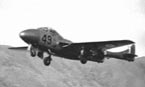
In Norway, Germany opens up a fresh offensive. Some 100,000 German reinforcements have arrived in Norway since the British began their own offensive there earlier in the year. The German attack strikes north and east from out of Narvik, with several sharp maneuvers attempting to surround British and Norwegian forces massed around city. The battle in the skies over Narvik and the entire Norwegian front is more intense than ever as both sides have been moving more and more aircraft into the area. The latest British jet, the Vampire F.MK II , sees it first large-scale use in combat. The Vampire proves to be nearly the equal of the latest German Swallow model but remains inferior to the Predator.
Germany's tactical and medium jet bombers are beginning to become a major factor as they are fast enough to penetrate most of the RAF's interception attempts. The German jet bombers are wreaking havoc on supply lines, mechanized columns, and forward supply depots in both Norway and Libya. In reaction to this the British have begun to accelerate their development of mobile radar-guided AAA as well as anti-aircraft missiles.
{ The Vampire mentioned here is essentially a very refined version of the OTL Vampire MkI of 1946. The British are working on a better jet, the Hawker 'Arrow'. The 'Arrow' will be the rough equivalent of the Hawker 'Hunter' of OTL. The Germans, for their part, have not been sitting idle either. Both the Swallow and Predator have been further developed, with several further refined variants being introduced progressively since 1945. The Germans also now have several jet bombers in operation and many new jet aircraft projects in general. Basically, the Germans are in the process of totally phasing out their prop fighters. The old prop planes will be export-only weapons by the end of 1948. Also, the Americans have something similar to the P-80, but only in limited numbers. The U.S. is concentrating most of its jet research on its ambitious 'Eagle' project. The 'Eagle' is to be a jet fighter superior to the German Predator in overall capabilities. It has no direct analog in OTL but it will probably resemble something like the F-86. The Soviets have no significant jet research going on, they simply can't afford such a luxury. The Japanese are focusing on improvements to their Shinden jet. Britain is nearing deployment of both mobile radar-guided AAA systems and fixed anti-aircraft missiles. Also working in this area are the Germans who are coming under increased pressure from RAF bombing raids on France, the low counties, and northern Germany to a lesser extent. The Germans are close to deploying an anti-aircraft missile and are in the early stages of work on a wire guided air to air missile for use against bombers. }
September 2nd 1947
Argentina begins mass production of MkIV tanks under license and has largely completed establishing fairly strong anti-aircraft defenses around strategic coastal targets. This marks a major hurdle for Argentina, it now has the beginnings of a true military-industrial complex. German money and advisors have played a major role in helping Argentina to establish this arms industry.
September 6th 1947
In the waters off the northern coast of Norway, the Kriegsmarine and the
Luftwaffe unleash a new form of naval warfare. German Ural bombers,
specially converted for this operation, attack a British convoy using
short range TV-guided glide bombs. The bombers manage to destroy many of
the escorting warships and some of the merchant vessels themselves. With
most of the escort vessels destroyed, damaged, or in a state of confusion,
German submarines rip into the line of merchant vessels with volley after
volley or torpedoes. In the end, after fifteen minutes of terror and
confusion, all eighteen merchant vessels in the convoy are sunk - some by
glide bombs but most by a pack of twelve German submarines. Several of the
vessels had been troop transports and some ten thousand British soldiers
are lost in all. Add to that the killed merchant marine sailors and Royal
Navy crewmen and the operation is a slaughter.
Dönitz and Goering are both pleased. In one fell swoop the Kriegsmarine and Luftwaffe have regained much of the prestige they had lost south of Oslo and over Britain respectively. With operation 'Sea Hammer' a stunning success, orders begin to go out to establish more 'Sea Ural' squadrons to be used in anti-ship operations. Churchill calls a halt to any further transfer of troops to Norway until a way can be found to counter the new German tactic. To the Royal Navy leadership the answer to the new German tactic is obvious - convoys moving within range of German heavy bombers are going to need carrier escort and assistance from land based aircraft in addition to existing anti-submarine operations. A new breed of smaller escort carrier, being pioneered by the Americans, seems like the most obvious solution.
September 7th 1947
To the east of Benghazi leading elements of the British 8th army come into contact with forward reconnaissance assets of the 1st panzer army. Guderian's lines of supply from Benghazi are shorter than Wavell's lines of supply from Gazala - giving the German commander a slight advantage. The 8th army and its supporting elements are larger than the German force built around the 1st panzer army, but the British forces are also weary from the hard campaign across eastern Libya and are also outclassed by German weaponry. Wavell rapidly decides to dig in, consolidate his gains, and wait for reinforcements. Guderian, ready to throw his fresh army into action, begins issuing the appropriate orders to launch an offensive designed to recapture the Libyan territory now in British hands. In the air over Libya, neither side retains total control of the skies. The Luftwaffe aircraft are generally superior to those of the British but they are also outnumbered. The Italian air force, licking its wounds from the costly campaign over eastern Libya, has focused its attention on the Tunisian front where the Free French air force presents a much easier foe than the Royal Air Force.
September 8th 1947
In Norway the latest German offensive has succeeded in breaking up the British and Norwegian troop concentrations north and east of Narvik. Alliance forces around Narvik have either been surrounded or forced to abandon their heavy equipment and withdraw northward. The Germans, however, lack the mobile reserves to fully exploit their success. The end result is that 30,000 British and Norwegian troops fall into German hands and Narvik is once again firmly under German control, Alliance forces having been pushed north by some 12 kilometers.
In Free French North Africa the Muslim revolt has largely been crushed, with the remaining active rebels limited to operating in the deep desert. Many of the major cities are virtual ghost towns, with much of the Muslim population forced into the countryside or, for the unlucky ones, into concentration camps. News of the events in Free French North Africa has been trickling out and the Axis Powers are beginning to make use of it as a propaganda tool, casting the Alliance for Democracy as hypocritical and anti-Muslim.
September 9th 1947
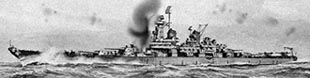
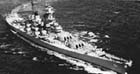
In the Solomons - Japanese and American naval forces wage the eight hour
'Battle of The Slot'. It is the largest naval engagement since The Great
War's Jutland. A huge Japanese taskforce - centered around Japan's lone
Super-Yamato class battleship, two carriers, and several other battleships
and heavy cruisers - had been making its way towards Guadalcanal in an
effort to smash the American naval presence in the area. However, the
Japanese had underestimated the strength of U.S. naval forces around
Guadalcanal. Indeed, the Japanese fleet runs directly into a U.S. armada
based around the U.S.S. Montana, two Iowa class battleships, three
carriers including an Essex class, and numerous cruisers of various types.
The battle ends with a narrow U.S. victory. The Montana is damaged
and will be forced to return to Pearl Harbor for repairs. The U.S.S. New
Jersey is sunk after sustaining no less than twenty three hits from
heavy shells. The U.S. also looses two cruisers and several other
cruisers are damaged to varying degrees. However, Japanese losses are
even higher. The Super-Yamato is heavily damaged and forced to flee
north towards Rabaul. Another Japanese battleship is sunk and four
cruisers are lost and others damaged. Both sides lose numerous
destroyers which had attempted to make torpedo runs against the capitol
ships. The main blow to the Japanese fleet is the loss of both of its
carriers, they having been sunk by U.S. carrier aircraft. The U.S.
looses one older carrier. The savaged Japanese fleet is forced to
withdraw to the protection of Rabaul's harbor.
The main differences in the battle were the accuracy of U.S. radar-directed gunnery and the superiority of U.S. carrier aircraft. Japanese offensive naval capabilities in the Solomons have now been utterly broken. U.S. forces took a beating as well but they will soon be replacing their losses and they have taken the initiative in the northern Solomons.
September 12th 1947
The RAF stages its largest bombing attack on Germany to date. After an initial wave of bombers attacks German radar sites with guided glide bombs, a thousand heavy bombers attack the north German port of Hamburg in a stunning night time raid. The bombers, a mix of aging B-17's, Lancasters, and B-31's, are escorted by long range night fighters and make use of chaff to disrupt the efforts of the damaged German radar network. Despite the glide bombs and chaff, German radar-guided flak and night fighters still take a heavy toll and the RAF loses nearly 200 bombers in the attack for a loss rate of nearly 20%. The raid succeeds in heavily damaging naval facilities and armament factories, and the mix of incendiary and standard bombs sets fire to much of the city's center. Some 100,000 German civilians are killed or wounded in the raid. Hitler vows to redouble bomber and missile attacks on Britain to 'avenge the people of Hamburg'.
Germany begins to further accelerate its anti-aircraft missile program, hoping to deploy radar-guided missiles capable of attacking bombers by early 1948. Hitler is afraid that the German people will turn against him and the Nazi party if the British can continue to stage such massive raids on northern Germany. However, the RAF is not eager to sustain 20% losses on a regular basis.
September 14th 1947
U.S. and British heavy bombers attack several oil fields in the Japanese-occupied Dutch East Indies. The oil fields are moderately damaged and the action sees the first engagements between the Japanese Shinden jet and allied aircraft. The Japanese jets take a heavy toll on U.S. and British bombers and their escorts but there are too few of them to block the raids altogether. These initial raids mark the beginning of a persistent and relentless U.S. and British bombing campaign against oil fields in the Dutch East Indies. This bombing campaign, along with aggressive action from U.S. submarines, will severely disrupt the flow of oil from the East Indies to the Japanese Home islands.
September 19th 1947
Guderian launches his offensive in Libya, sending his panzers surging ahead into the British lines east of Benghazi. Wavell had been expecting the attack but the sheer speed and firepower of the German assault still catches the British by surprise. By the end of the day 1st panzer army has torn several holes in the British lines and panzergrenadiers are flooding through these exposed gaps. In the air, neither side has the upper hand as jets and propeller aircraft clash in the clear desert skies.
In Nuremberg, Hitler and Mussolini are engaged in a discussion of
grand strategy. Germany is the master of Europe. Italy has extended its
territory to include much of southern France, the Balkans, Greece, and
Tunisia. Hitler, wary of the Soviets on his eastern flank, wants the war
with Britain to be brought to a conclusion. His plan : Finish off
Norway, drive the British back into Egypt, and help Italy to capture the
rest of Tunisia, and then sue for peace. Mussolini is not entirely happy
with Hitler’s plan, he wants all of North Africa in order to
make the Mediterranean an 'Italian Lake'. Having no real choice,
Mussolini agrees with Hitler's three point plan. Privately, however,
Mussolini hopes that the British will fight on; thus allowing Italy the
time to capture all of North Africa with the aid of Guderian's panzer
army.
To Be Continued...