 |
|
|
|
|
|
|
|
|
|
|
|
|
|
|
|
|
|
|
|
|
|
|
|
|
|
Antietam (continued) |
|
|
|
For a closer look at each picture, simply click on it. Then click the "Back" button at the top left of your browser screen to return to this page. Enjoy! |
|
|
|
 |
|
|
 |
|
|
|
|
|
|
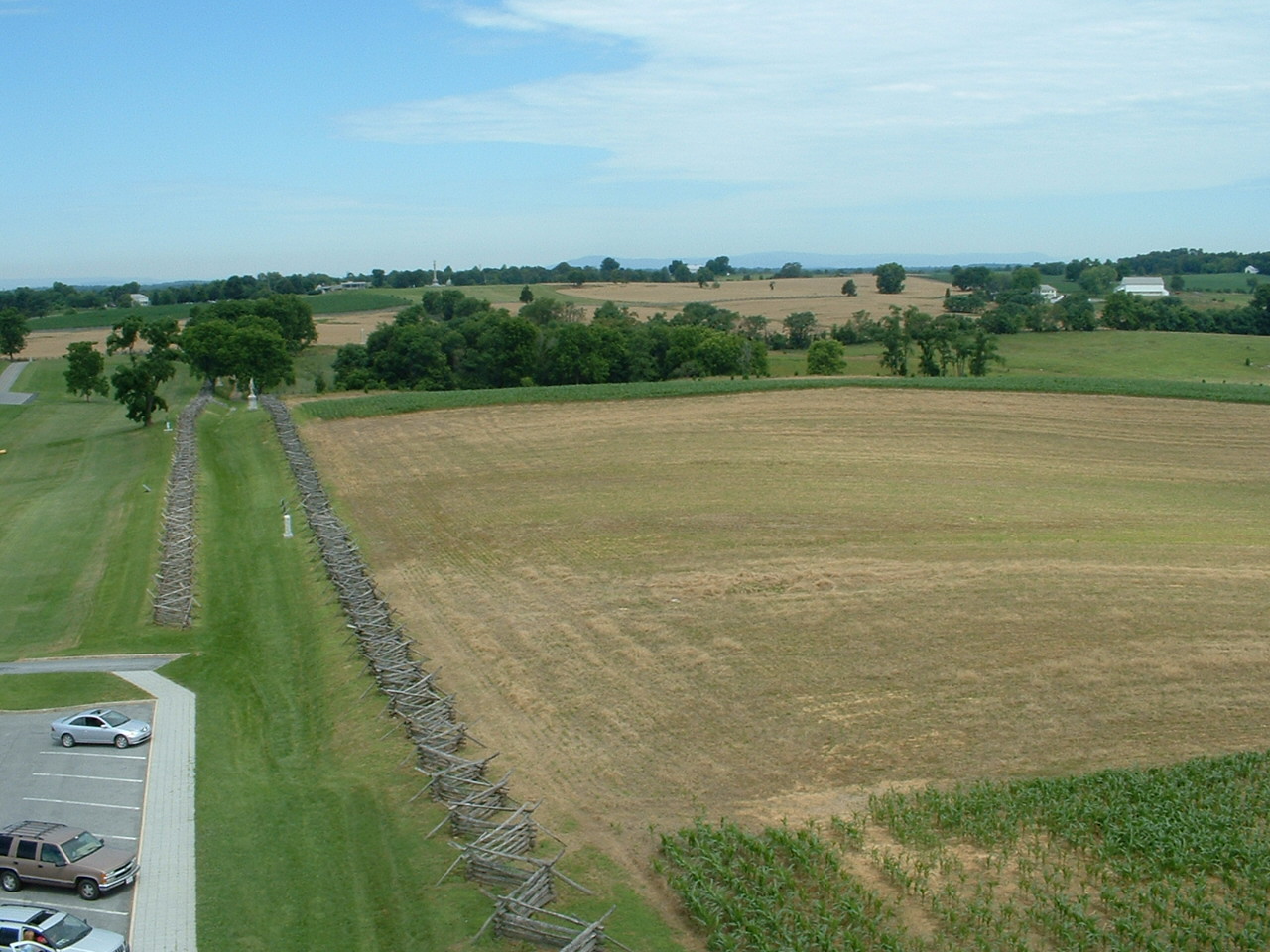
Bloody Lane looking west. The Union attacked from the right. The Confederates were posted along a ridge in an old sunken road separating the Roulette and Piper farms. The 800-yard-long road had been worn down over the years by heavy wagons taking grain to the nearby mill, making an ideal defensive trench for the Rebels. At dawn five brigades of D. H. Hill's troops had guarded this lane, but two brigades had been sucked into the first counter-attack on Hooker's men. They had been chewed up by Greene's division of XII Corps, leaving only two brigades. But there was no threat just then, and the men used their time to improve their positions, piling fence rails on the north side of the road to provide additional protection from the Union forces moving as if on parade across the field to their front. About 9:30am the fighting opened. Firing from behind these improvised breastworks and sheltered in the Sunken Road, the Rebels seemed unassailable. The terrain helped doubly: not only were they protected by the depression, Union troops attacking advanced blind out of the valley and couldn't see their objective. The Confederates repelled four different Union charges against the position. 'For three hours and thirty minutes,' one Union officer wrote, 'the battle raged incessantly, without either party giving way.' Despite Anderson's arrival Sumner's men still had almost a 2:1 advantage, and repeated attacks wore the Confederates down too. (ehistory.com) |
|
|
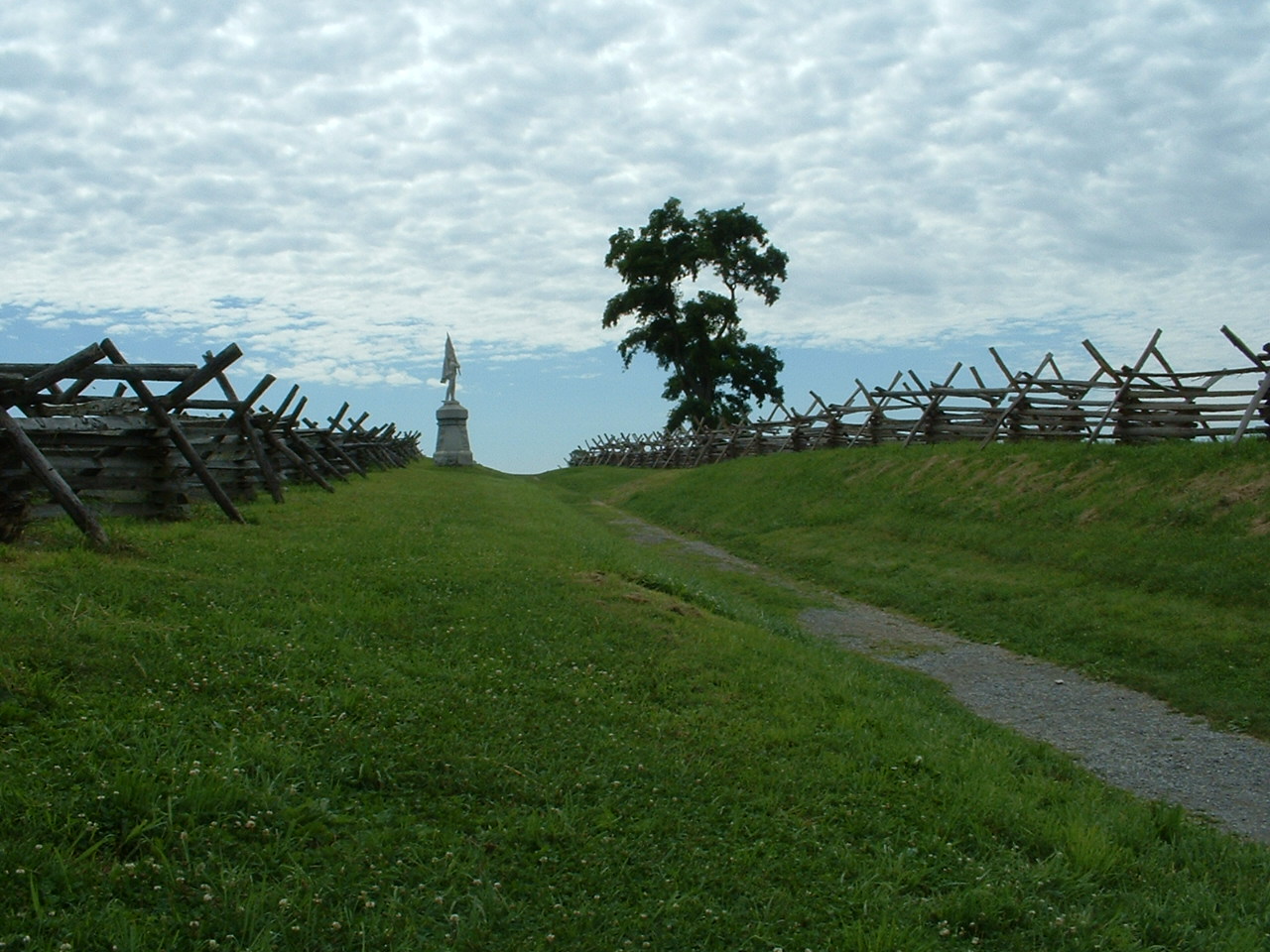
Bloody Lane. Looking east from the extreme west end of the lane. The second phase of the Battle of Antietam began around 10:00 a.m. and would also last four hours. This time the Union assault would be aimed at the Confederate center. Once again McClellan would fail to coordinate his attacks to take advantage of his superior numbers and Lee's weakened center. As the battle moved to the south Lee's center was held by two brigades commanded by Robert Rodes and G. B. Anderson. These brigades belonged to General Harvey Hill's division. These Confederate troops were along a sunken road that ran 1000 yards to both the south and east. As the Confederates attempted to further fortify their concealed position in this sunken lane, they spotted Union forces on the hill above them. These Union troops were part of Sumner's II Corps. As they moved in the direction of the Confederate center, many described their appearance as being parade like. Major General William H. French commanded the lead division of the Union attack. As French's division drew within range of the sunken road, a murderous volley was delivered by the Confederates, and the Union troops seemed to suddenly disappear. A second group of Union soldiers met a similar fate as they attempted to attack the southern position. Both sides quickly brought in reinforcements, and for three hours the slaughter continued with neither side gaining the advantage. Major General Israel B. Richardson's division joined the fight to aid French's division. Near 1:00 p.m., Richardson's men were able to gain the high ground near the road's bend and delivered an enfilading fire upon the remaining 300 Confederates forcing them to fall back to new positions. If General McClellan had continued to push the advantage that these brave men had gained, Lee's center would have collapsed and resulted in the ruin of the army and perhaps the Confederacy as well. General McClellan elected to end the fight in this section stating, "It would not be prudent"to continue the attack. This marked the end of the second phase of the Battle of Antietam. Union officers who viewed the bodies of the Confederates in the sunken road stated that the lane was completely covered with bodies as far as the eye could see. This sunken road became known from this day forward as "Bloody Lane." Casualties: 5,500. (rockingham.k12.va.us) |
|
|
|
|
|
|
 |
|
|
|
|
|
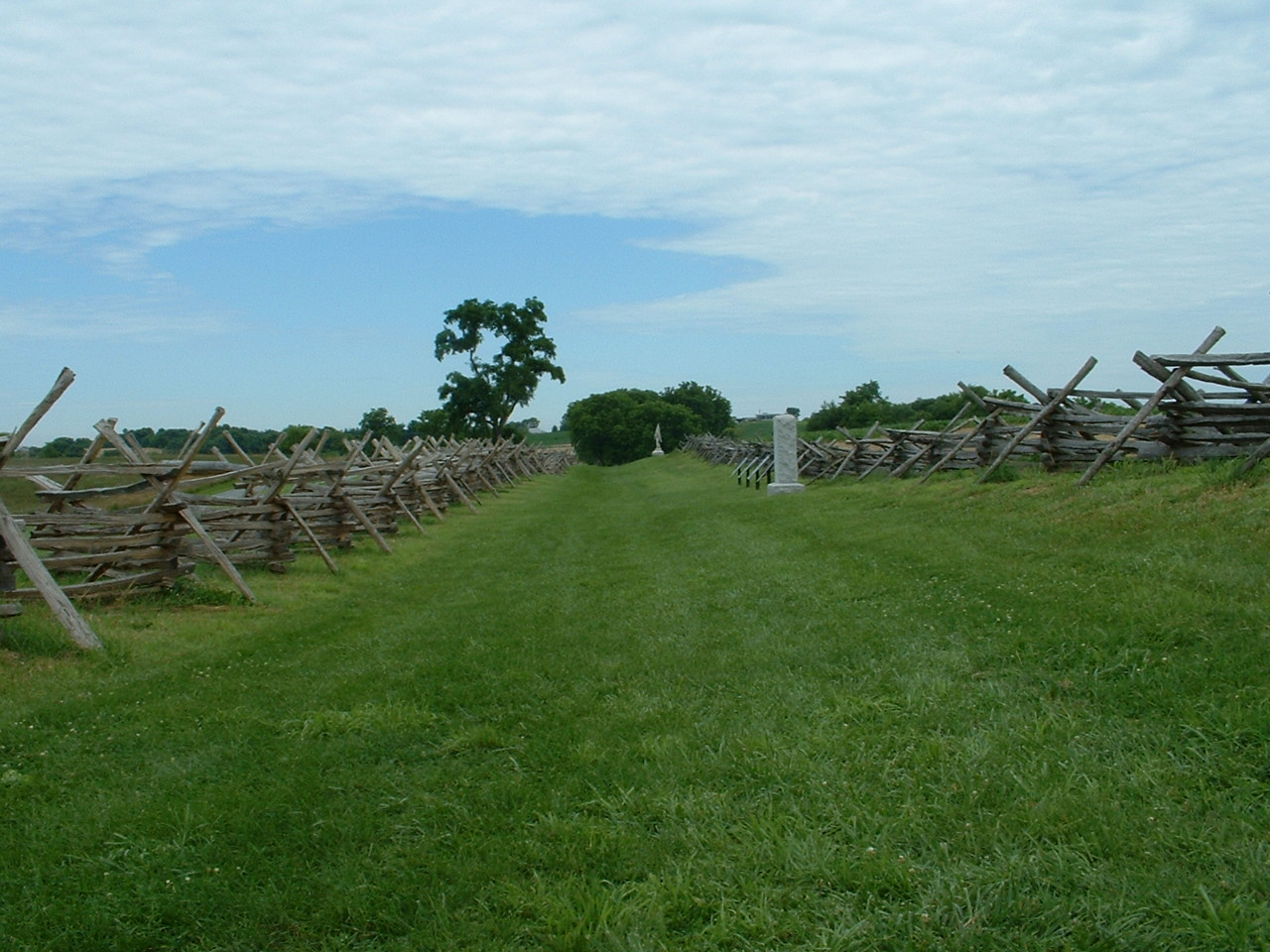
Looking west from the center of Bloody Lane. The Union army attacked from the right. One Union soldier wrote afterward: "Forward we go over fences and through an apple orchard. Now we are close to the enemy. They rise up in the sunken lane and pour a deadly fire into us. Our men drop in every few files. The ground on which we are charging has no depression, no shelter of any kind. There is nothing to do but to advance or break into a rout. We know there is no support behind us on this side of the creek. So we go forward on the run, heads downward as if under a pelting rain." |
|
|
|
|
 |
|
|
|
|
|
|
 |
|
|
|
|
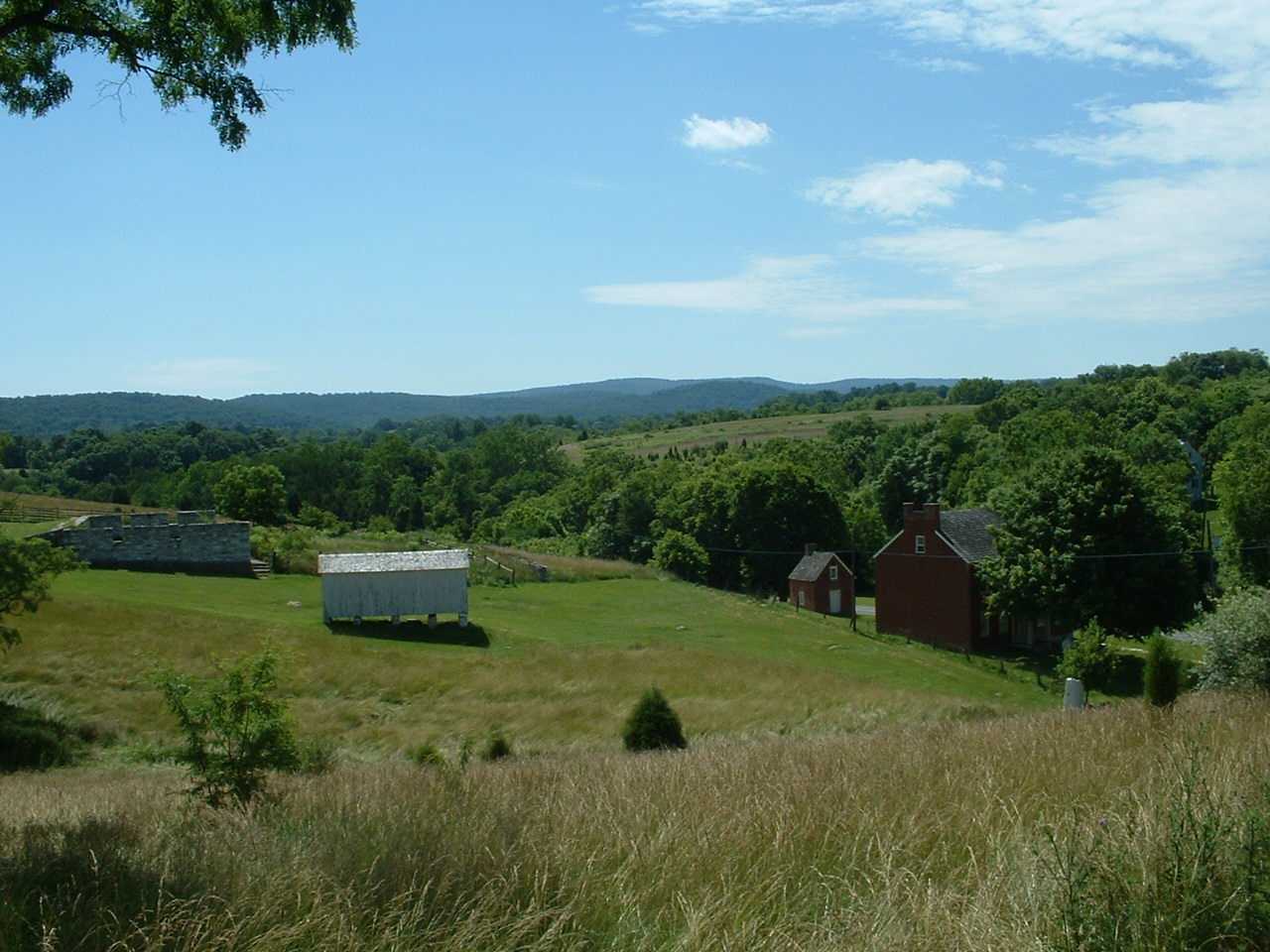
This view is looking southeast. That is the Sherrick Farm in the center and the Otto Farm on the far right in the middle of the trees. The Otto Farm was open fields at the time of the battle. The ground behind the Otto Farm is where General Burnside's Ninth Corp advanced after capturing the Burnside Bridge, which is in the woods in the left center of the photo. |
|
|
|
|
|
|
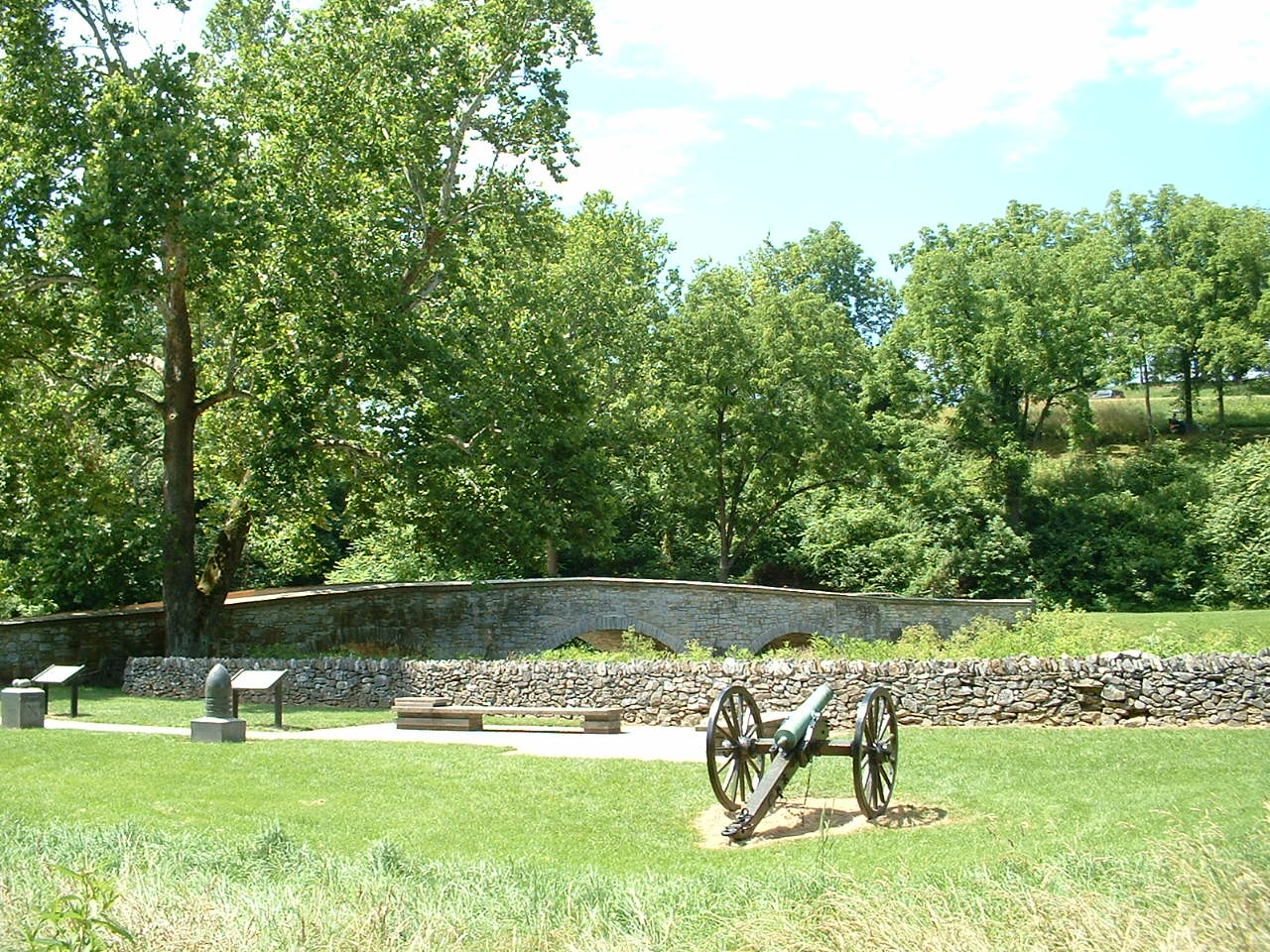
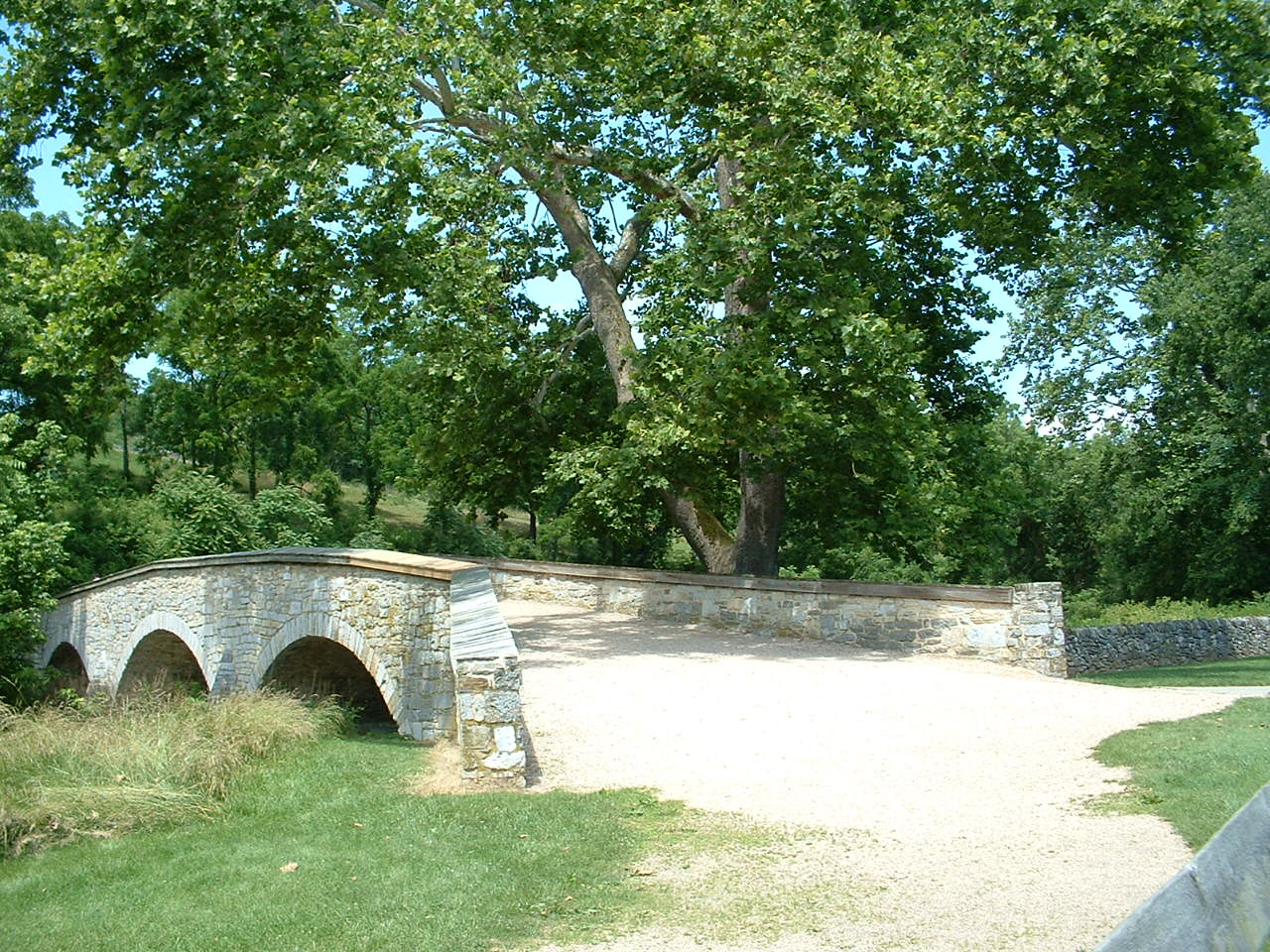
Burnside's Bridge from the Union lines looking up at the Confederate position. The opposite bank, where the Confederates were located, was not as heavily wooded in 1862 as it is now. In fact, the area was being cleared of underbrush and trees the day I was there. Union Major General George McClellan's plans for the Battle included coordinated attacks on the left and right wings of Lee's army. The needed reinforcements which the Federals hoped would be pulled from and weaken Lee's middle, would allow a concentrated thrust to split and destroy the Army of Northern Virginia. However, despite repeated orders to move, Major General Burnside's 12,000 men were held at bay by about 450 determined Georgians perched on the bluffs overlooking the bridge. Describing the ground and the valiant efforts of his tremendously outnumbered men, CSA Brigadier General Robert Toombs reported, "Its chief strength lay in the fact that, from the nature of the ground on the other side, the enemy were compelled to approach mainly by the road which led up the river for near 300 paces, parallel with my line of battle, and distant there from 50 to 150 feet, thus exposing his flank to a destructive fire the most of that distance. At between 9 and 10 o'clock the enemy made his first attempt to carry the bridge by a rapid assault, and was repulsed with great slaughter, and at irregular intervals, up to about 1 o'clock, made four other attempts of the same kind, all of which were gallantly met and successfully repulsed by the Twentieth and Second Georgia."(brothersway.com) |
|
|
|
|
 |
|
|
|
|
|
As the battle at Bloody Lane drew to a close, the Union artillery concentrated a heavy bombardment at the bridge and the hillside. This support allowed the 51st New York and the 51st Pennsylvania to cross the bridge and establish a foothold on the opposite bank. The Confederates were soon forced to retire from the crest of the hill. Once again McClellan had the opportunity to deliver a crushing blow to Lee's army. Once again, delay and lack of coordination proved to be McClellan's downfall as Burnside delayed for over two hours before advancing the attack. (rockingham.k12.va.us) |
|
|
|
|
|
 |
|
|
|
|
|
|
 |
|
|
|
|
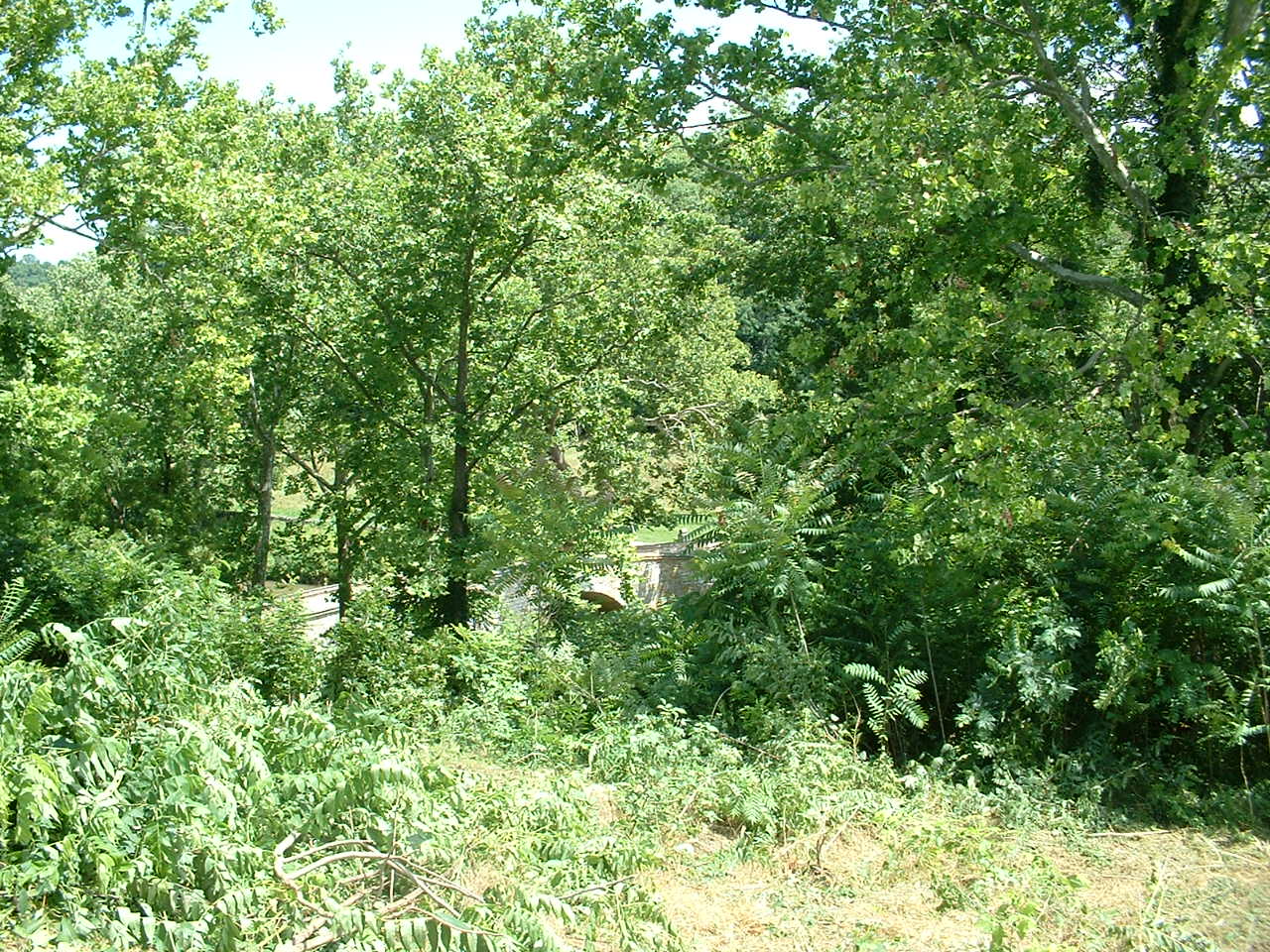
Looking down on the bridge from the Confederate side. It was not nearly this cluttered with growth the day of the battle. You can see some of the trees and bushes that were being cut down the day I was there at the bottom of the picture. As the fog began to clear on the morning of September 17th, a brigade of young Georgia soldier's began to see long lines of advancing Federal troops ordered to take the stone bridge, later known as Burnside's Bridge. The four divisions of Major General Ambrose E. Burnside's IX Corps were ordered to cross the bridge and flank Lee's army, allowing McClellan to unleash his massed reserves and gain Lee's rear. Commanding the few hundred Georgia men along the heights above the bridge was one of Lee's maverick generals, Robert Augustus Toombs. The wooded hillside along the creek provided excellent cover for the confederate defenders. Soon after 9 a.m., the Union assault on the bridge began. Charge after gallant charge was shattered by the sheets of deadly short range fire of Toombs' Georgian's. Against all odds, by repulsing four distinct attacks, the 2nd and 20th Georgia regiments held the IX Corps at bay all morning. They accomplished their mission, buying General Lee's battered army the time needed to recover from the morning's carnage. (johnpaulstrain.com) |
|
|
|
|
|
|
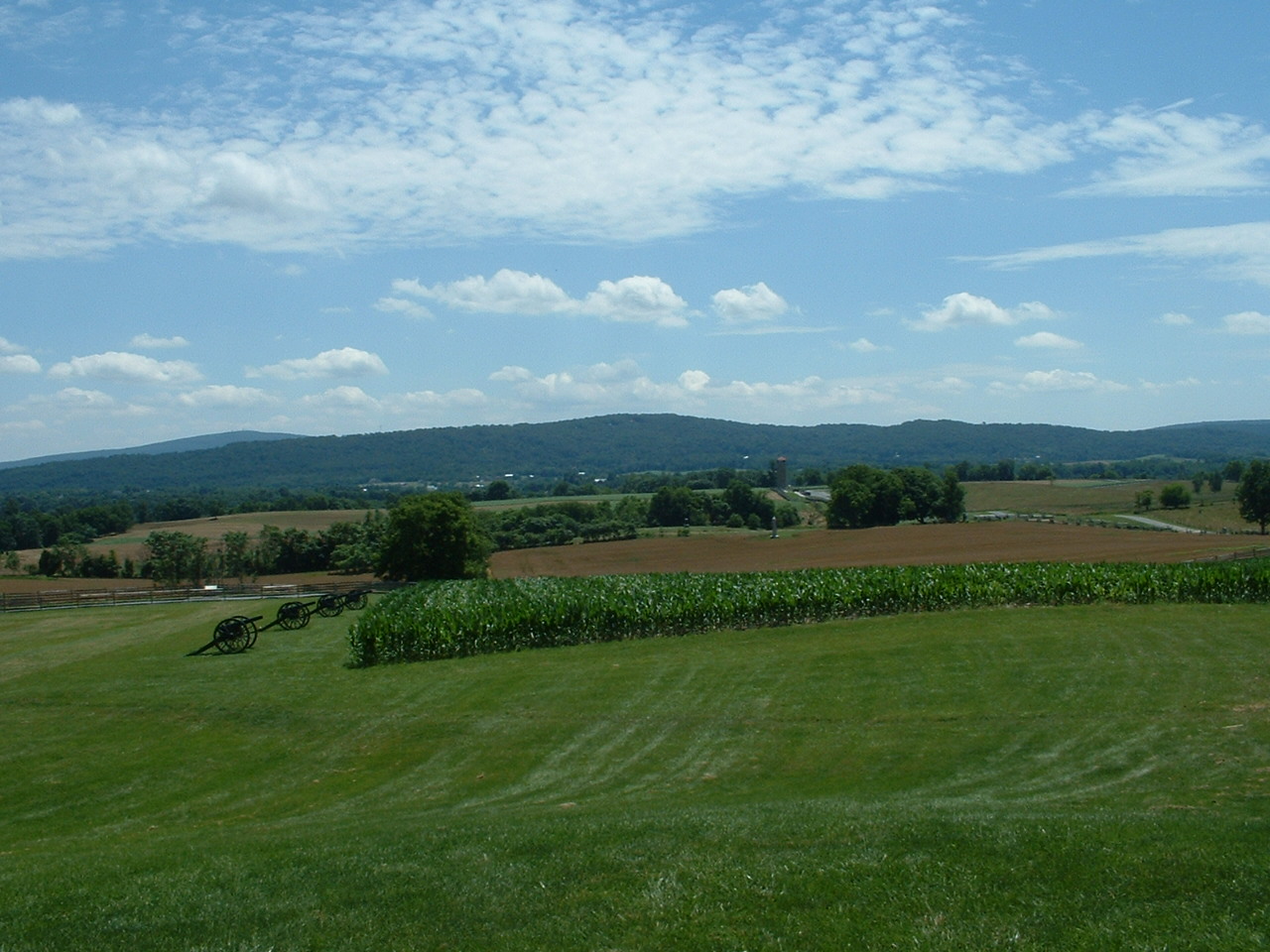
Burnside's Bridge is to the left. Burnside crossed the bridge and came into this area heading for Sharpsburg. At 3:40 p.m. Gen. A. P. Hill's division, left behind by Jackson at Harpers Ferry to salvage the captured Federal property, arrived on the field (from the right) after a march of 17 miles in eight hours. Immediately Hill's 3,000 troops entered the fight, attacking the Federals' unprotected left flank. Burnside's troops were driven back to the heights near the bridge they had taken earlier. The attack across the Burnside Bridge and Hill's counterattack in the fields south of Antietam resulted in 3,470 casualties--with twice as many Union casualties (2,350) as Confederate (1,120). (National Park Service) |
|
|
|
|
|
Be sure to sign the GuestBook by clicking here. |
|
|
|
|
|
E-mail me with your comments and suggestions! |
|
|
|
|
| This concludes our tour of the Antietam battlefield. I hope you enjoyed it and, possibly, learned something along the way. Be sure to click on the links below for tours of other battlefields. Thank you. |
|
|
|
 |
|
|
|
Take the tour of another battlefield: Gettysburg Manassas |
|
|
|