Pruning is undertaken mainly to encourage new growth by removing old growth. It also allows air and light circulation into the plant by discarding tangled, spindly growth and dead wood. Pruning also improves flower production and helps maintain the shape of the plant. Roses can be divided into the following four groups for pruning practices:
- Floribundas, Hybrid Teas, Miniatures, and Dwarfs
- Old and Modern Shrubs (including the David Austin "English" roses)
- Rose Standards (tree roses)
- Climbers and Ramblers
These types of roses are pruned by cutting back the new growth by one-half to two-thirds to prevent them from producing thin, straggly stems. In the first year, prune back all new growth to about 12 inches. In subsequent years, prune back new growth according to its vigor. Moderation is best. Thin, weak stems should be pruned out completely as should any dead or diseased canes. Wherever two stems cross or overlap, remove the weaker stem.
Many of the old species (wild) and shrub roses are best left unpruned, removing only dead or very spindly wood. Modern shrubs, however, can be pruned in similar fashion to hybrid teas except not as hard. I typically prune back no more than one-third the amount of new growth.
Rose standards resent hard pruning, so reduce new growth by no more than one-third. Otherwise, the same basic regimen applies. Remove all dead wood and very weak stems.
These vigorous growers are generally pruned and trained to cover some type of structure (fence, pergola, or trellis). Hard pruning will restrict their growth to resemble that of a large bush. New climbers require no pruning. As new growth appears, often higher up from the old stems rather than from the base, itcan be lightly pruned and trained while still young and pliable. Remove dead and spindly wood each year. Also remove side shoots that are weak, but allow the new growths to develop.
Techniques
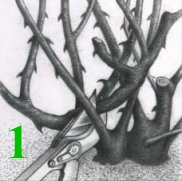
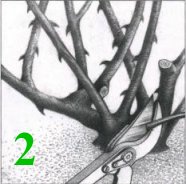
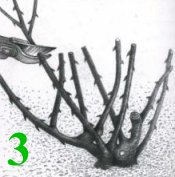
When pruning new growth, make the cut just above an outward facing bud at an angle that slopes back and away from the bud. This allows moisture to run off. Cuts made too close to the bud can damage it, while cuts made more than 1/4 inch above the bud can cause dieback. When pruning out an entire stem, make the cut as close as possible to the parent stem. Old, hardened canes may need to be removed with a narrow-bladed saw. The basic steps in pruning are: (1) Remove dead wood from the plant; (2) Prune out all spindly growth and stems that overlap or grow into the center; and (3) Prune back new growth by one-third to one-half depending on type of plant. See images below.
When to Prune
Most roses are pruned in winter or early spring. If pruning is undertaken in autumn, new growth can be produced which will not have enough time to "harden off" before winter and be prone to damage from frost. The colder the area you live in, the later you should wait to prune. I quit dead-heading the spent blooms in mid-September to help the roses go into dormancy. I live in the Midwest (Zone 5) and wait until very early spring, usually the first part of March, before the roses break dormancy to prune. This way, I can see what winter damage needs to be pruned. In the very late fall, around Thanksgiving, once the plants have gone dormant, I will reduce any growth that is extremely tall (over 4 feet except on climbers) because this tall growth is prone to damage and breaking by winter winds and ice. Anything else is left until spring.

� 1998-2002 Rosebriar Gardens
Send comments or suggestions to: [email protected]