

First Game Played: April, 1901 Last Game Played: September, 1960 Moved to Minnesota |
Logo 1959-1960 |
Also Played as: Minnesota Twins 1961-Present Name Game: After the 1899 season, the Washington Senators of the National League folded in the 12-8 contraction, when the American League began play in 1901 Washington, not wanting to confuse fans with the previous franchise, called themselves the Nationals. But the fans never took to the name and called them the Senators. In 1912, when Griffith was named manager, newpaper writers referred to them as the 'Grifs'. In the early 1950s the team changed logos to one incorporating 'NATIONALS' within it, after the fans continued to reject the name they were officially renamed Senators in 1956. Colors: Red, White and Blue. Manageial History: Jimmy Manning 1901 Tom Loftus 1902-1903 Malachi Kittiredge 1904 Patsy Donovan 1904 Jake Stahl 1905-1906 Joe Cantillon 1907-1909 Jimmy McAleer 1910-1911 Clark Griffith 1912-1920 George McBride 1921 Clyde Milan 1922 Donie Bush 1923 Bucky Harris 1924-1928 Walter Johnson 1929-1932 Joe Cronin 1933-1934 Bucky Harris 1935-1942 Ossie Bluege 1943-1947 Joe Kuhel 1948-1949 Bucky Harris 1950-1954 Chuck Dressen 1955-1957 Cookie Lavagetto 1957-1960 Stadium History: American League Park 1901-1902 Griffith Stadium 1903-1960* *-Called National Park 1903-1920 All-Star Games Hosted: (2) 1937, 1956 World Championships: (1) 1924 World Series: (3) 1924, 1925, 1933 Retired Numbers: None Hall of Famers: (16) Stan Coveleski RHP 1925-1927 Joe Cronin SS 1928-1934 Ed Delahanty OF 1902-1903 Rick Ferrell C 1937-1941, 1944-1947 Lefty Gomez LHP 1943 Goose Goslin OF 1921-1930, 1933, 1938 Clark Griffith MGR 1912-20 President 1920-55 Bucky Harris MGR 1924-28, 1935-42, 1950-54 Walter Johnson RHP 1907-1927 Harmon Killebrew 3B 1954-1960 Heinie Manush OF 1930-1935 Sam RIce OF 1915-1933 Al Simmons OF 1937-1938 George Sisler 1B 1928 Tris Speaker OF 1927 Early Wynn RHP 1939-1948 Rookie of the Year: (2) 1958 Albie Pearson OF 1959 Bob Allison OF Cy Young: None MVP: (3) 1913 Walter Johnson RHP 1924 Walter Johnson RHP 1925 Roger Peckinpaugh SS World Series MVP: None No Hitters: (2) 7/1/1920 Walter Johnson 8/81931 Bob Burke Best Season: 1933 (99-53) Worst Season: 1904 (38-113) Historical Moments: 1899: After 8 years in which the franchise never finished .500 or better the Washington Senators of the National League are one of 4 teams eliminated when the League reduces from 12 teams to 8. 1901: With the NL reducing itself in 1900 Ban Johnson who ran the Western League, a minor league in the mid-west decides to become start a new Major League to compete with NL. Johnson's new league called the American League would have 8 teams including 3 teams in cities that lost franchise after the 1899 season. In the franchise's first season, they finish 61-72 and in 6th place in AL. One of the low points of the inaugural season comes on May 23rd when the Nats had a 9-run lead in the 9th inning with 2-outs and nobody on base for the Cleveland Blues. However, the Blues stage an amazing comeback and take the game 14-13. 1903: Tragedy strikes the Nationals on July 2nd when their star hitter Ed Delahanty died in a fall from a train near Niagara Falls. Delahanty who was in his second season with Washington was hitting .333 a season after batting .376. With the loss of Delahanty the Nats go on to finish in the basement if the American League. While the cause of his fall would never be determined. 1904: The Nationals stumble out of the gates and never recover after losing 13 straight to start the season. The Nats end up finishing the season with a franchise worse 38-113 last place record. 1905-1906: The Nationals come out with new uniforms with their team name written across the chest for everyone to see. The name Nationals has trouble catching on and after the team gets rid of it. Ironically the Nats/Senators would go 52 years before Senators would appear on the uniform long after it had become standard practice. 1907: Walter Johnson makes his debut for the Nationals after pitching on a Minor League team in Idaho. Although not knowing it buy his delivery Johnson would go on to confound batters for the next 21 years and establishing himself as one of the greatest pitches of all time. 1908: On August 21st Nationals catcher Gabby Street participates in a curious publicity stunt when he catches a ball thrown of the top of the Washington Monument. 1909: On July 16th The Nationals, and The Detroit Tigers s played to a 0-0 tie over 18 innings. That game still stands as the longest scoreless game in American League history. Lack of scoring becomes the symbol of the Nats that season as the team goes on to lose 110 games. Pitcher Robert Groom loses a single season record 19 straight games and finishes with a 7-26 record despite a 2.87 ERA. Not even Walter Johnson is immune for the lack of run support as he finishes with a woeful 13-25 record despite an impressive 2.21 ERA. 1910: On April 10th, President William H. Taft became the first President of the United States to throw out the first ball of the major league season. He attended a one-hit Walter Johnson performance on the way to a 3-0 victory over the Philadelphia A's. Johnson would go on to have a 25-17 record with a dominant 1.35 EA. Despite the performance of Johnson, the Nats finish in 7th with a woeful 66-85 record. 1912: Led by a 32-12 record from Walter Johnson who also had a league low ERA of 1.39 the Nationals have their first winning season in their 12 year history. They finish in a distant 2nd Place with a 91-61 record. 1913: "The Big Train" known as Walter Johnson continues to dominate the American League and puts together one of the most dominant seasons in baseball history. Johnson finishes with a 36-7 record, and produces a microscopic 1.09 ERA. Johnson also leads the way with 23 strikeouts, and 11 shut outs. The Nationals do manage to stay in the race for a while too but their 90-64 record is only good for second place behind the virtual World Champion Philadelphia Athletics. 1916: Despite 16 straight road wins and another dominant 25 win season by Walter Johnson the Nats struggle again and finish in 7th place. 1920: : Clark Griffith becomes a club owner and president when he joins Philadelphia grain broker William Richardson in buying controlling interest in the Washington Senators for $175,000. Griffith, unable to get financial help from the AL, mortgages his Montana ranch to raise funds. 1924: On opening day President Calvin Coolidge throws out the season's first pitch, and the Nationals go on to win. This was the usual order of things Johnson wins, but the club goes nowhere. Through out his first 17 seasons Johnson has become the premier pitcher in all of baseball routinely winning more then 20 games and leading the League in strikeouts, and ERA. However in this period the Nats only manage to win 90 twice, and finish with in 10 games of the pennant twice. After another sub-.500 season in 1923 no one expected any thing different in 1924. However, with 2B Bucky Harris taking over as the 4th new manger in 4 years there would be magic in the air over the capital city. In September the Nats were still in the race, but most expected the New York Yankees to pass them up. However, there was something special about this Nats team that was led by Walter Johnson, who won the pitchers triple crown again. With a big series against the Yankees the Nationals shocked all of baseball by sweeping the defending Champions and win their first ever AL Pennant by 2 games. 1924: For the first time in their history the Washington Nationals had made it to the World Series. Their opponent was the New York Giants who were making it to the Fall Classic for the 4th year in a row. In Game 1 would not be decided until the 12th when Ross Youngs delivered a single off Walter Johnson to give the Giants the game. The Nats would bounce back to win a dramatic game of their own on Roger Peckinpaugh's game winning double in the 9th after New York scored 2 to tie the game in the top half of the inning. The Nats would fall again in Game 3 when Bucky Harris' error played a key part in a Giants rally. The Nats would bounce back to tie the series at 2 games apiece in Game 4 thanks to Goose Goslin's 4 hit game which was highlighted by a 3-run Homer. However, the Nats would lose Game 5 as Walter Johnson was hit hard. After the game Johnson apologized publicly for his 2nd Series loss. The loss put the Nats on the brink down 3 games to 2. 1924: With the series returning to Washington the Nats were on the brink, and no one gave them a chance since it looked as if Walter Johnson would not pitch again, after being ineffective in 3 World Series appearances. The 6th game would see a duel between left handed pitchers Tom Zachary and Art Nehrf. The Nats Zachary would eventually get the upper hand when Bucky Harris knocked in 2 runs in the 5th with a single. Zachary would let those runs stand as the Nats forced a 7th game with 2-1 victory. In Game 7 the Nats saw an early lead evaporate as the Giants took a 3-1 run lead into the 8th Inning. However that magic was still hanging over the skies of Washington. The Nats would score 2 runs in the 8th to tie the game at 3. However the Giants looked on the verge of grabbing the lead back right away as they loaded the bases with nobody out. The Nats desperate to hold on called on Walter Johnson to keep the game tied. Looking to atone for his poor performance in Game 5 Walter Johnson would not allow a run to score. The Game would move into extra innings and Johnson was determined to finish the deal himself and held the Giants off the board in the 10th, 11th, and 12th. In the bottom of the 12th Washington Catcher Muddy Ruel would get a 1-out single and was followed by a single from Walter Johnson himself. This set up runners on 1st and 2nd with 1-out. Earl McNeely stepped up in the plate and hit a slow roller down the 3rd base line. As the Giants Fred Lindstrom bent down to pick the ball up that magic that was the 1924 season struck one last time. The ball hit a pebble and rolled away and Muddy Ruel lumbered home with series winning run. The Nationals were World Champions for the first and only time. Even Walter Johnson could not contain himself, as he was teary eyed in the on field celebration that ensued. The following day the Nats were greeted with a heroes parade down Pennsylvania Avenue to the White House where they were greeted by the same President Cooldige that threw out the first pitch of the magical season. 1925: With the Yankees floundering all season long, thanks to injuries and suspensions to Babe Ruth the Nationals have no real challenge and win their second straight pennant fairly easily. In the Fall Classic standing between the Nats and a second straight World Championship was the Pittsburgh Pirates. With Walter Johnson winning twice, ad shutting down the Pirates offense to just 1 run in 2 complete games the Nats take a 3 game to 1 lead. However, the magic that was on the Nationals' side on year earlier vanishes as the Pirates claw back to take the next 2 to force a 7th and deciding game in Pittsburgh. In Game 7 a tired Walter Johnson was battered for 9 runs on 15 hits, as the Nats became the first team ever to blow a 3-1 series lead in a 7 game series. 1927: After his 21st season all with the Washington Nationals Walter Johnson perhaps baseball's greatest pitcher ever retires. Despite playing much of his career on mediocre Washington teams Johnson manages to win 416 games in his career good enough for 2nd al-time. He also closes out his career with a 2.17 career ERA good enough for 7th on the all-time list. Perhaps most impressively Johnson end his career with 3,508 strikeouts which stood as the record for nearly 60 years. In addition Johnson would conclude his career with 110 career shut outs a record that stills stands today. 1928: Nats OF Goose Goslin, injured his arm while horsing around in a non-baseball contest. While this injury didn't prevent him from winning the American League batting championship that year, his throwing ability was permanently impaired. 1932: Walter Johnson is let go as manger of the Nats after just 4 seasons. Even though the Nats manage to win more then 90 in the final 3 years of his tenure the Nats don't even come close to the pennant in a competitive American League. SS Joe Cronin who is married to Owner Clark Griifith's niece is named manager. 1933: The move to make Joe Cronin manager works as the Nationals jump out of the gate and grab a lead of 22 games over the second place Yankees. The surge to the early lead is highlighted by a double-header sweep in the Bronx on July 4th. In one of the games Nats catcher Luke Sewell, tagged out two Yankee base runners on the same play. Dixie Walker caught up to Lou Gehrig, who expected a fly ball to be caught. They were both tagged out at the plate. However,, the Nats would stumble to the finish line despite winning a club record 99 games, and would hold on to win the Pennant by 8 games. The stumbles would continue on to the World Series as the New York Giants easily took care of the Nats in 5 games. It would be the final World Series appearance for the franchise while in Washington. 1934: The Nationals would fall out of the race early, and would wind up in a disappointing 7th place with a 66-86 record. After the season Clark Griffith stuns Washington fans and all of baseball by selling his player-manger nephew in-law Joe Cronin to the Boston Red Sox. 1934: After the 1934 season a number of baseball's greatest players made a tour of Japan. Brought along with them was Nats back-up catcher Moe Berg. Berg had an immense education and was well versed in several foreign languages. One of them happened to be Japanese. However, Berg brought along a movie camera and went up on top of a Tokyo's tallest building and panned the entire city. It seems Berg knowing of the increased tensions between the US and Japan knew that such footage would be valuable to the US in case of war. Berg also asked for photo that other players shot and gave them over to the pentagon. As it turns out the sole reason Berg went was not as an interrupter but as a spy. Berg was well known to have connections in the government at the highest levels. Even President Franklin Roosevelt knew him on a first name basis quite an accomplishment for a reserve catcher. Berg would go on to work in the OSS a pre-curser to the CIA and was involved in a potential suicide mission into the lair of Nazi Scientist. 1945: On August 4, 1945, Bert Shepard pitched 5 1/3 innings and gave up 3 hits for the Senators. What is remarkable about this appearance against the Boston Red Sox is that Bert had only one leg. He lost his right leg while flying a World War II mission over Germany. It would be his one and only major league appearance. 1945: Prior to the start of the season Owner Clark Griffith decides to schedule the season to end a week early so the Washington Redskins could use his stadium, and the stadium would be ready for them before any one else. Griffith made the decision figuring the Nats would not be a contender for the AL Pennant. Looking at the past decade in which the Nats never even come close to a title one can't blame him. However, there was a little magic in the 1945 season. However the Nationals are not only a contender they are in 1st place in September, although their lead over the 2nd Place Tigers is precarious at best. With the season ending early the Nats would have to win every game they could down the stretch. That's why it hurt so much when in the heat of the pennant race; George Binks was playing centerfield for the Senators. Binks chose not to wear sunglasses, even though a very bright sun was dancing in and out of the clouds. In the 12th inning, he lost a fly ball in the sun that allowed the Philadelphia A's to win the game. The Nats then had to sit and watch helplessly as their lead, and pennant hopes vanished in the final week of the season. It would also mark the last time that Washington was a contender for the title. 1954: One of the lone reasons to cheer for the Nats was OF Roy Sievers who despite collecting only 119 hits drives in over 100 runs. However, the woeful 119 hits are more indicative of Washington's failures as the club goes on to finish a distant 6th place with a 66-88 record. 1955: With the hit song "You gotta have heart", the play "Damn Yankees" opens on broadway. It a long suffering fan of the Nationals makes a deal with the Devil for him to be able to help his team beat teh Yankees and make the World Series. Unfortuntley for the real Nats no fan comes forward to make such a deal and teh tema ends the season in the AL basement witha 53-101 record. At the season's end the Nats also lose long time President Clark Griffith who passes away at the age of 85. His sons Calvin woudl take over the responsibilities of running the ball club. 1956: After more then 50 years of insisting the team was officially called the Nationals the team finally decides to change its nickname to the more commonly called Senators. The name change does not do anything to save the sinking ship that is Washington Baseball as the club finishes with another woeful 59-95 record. 1960: Since taking over for his father in 1955 Calvin Griffith began eyeing Minnesota as a new home for the ball club. Sighting an aging stadium, and diminished crowds Griffith pleaded with other owners to allow him to move. However, many of the Nation's Senators did not want to see Washington lose their ball club since many of them enjoyed going to a game after a long week on Capital Hill. This made owners worry that the Senate would take away Baseball's anti-trust exemption. Complicating matters was Griffith's refusal to agree to a new stadium in Washington. The team owned Griffith stadium, and they would get every dime out of it. With a new stadium they would not get such a deal. The Senators also benefited by collecting rent from the NFL Redskins. Thus Griffith also refused to let the skins out of their lease holding up any chance of a new stadium. At the same time expansion was beginning to take shape. With expansion AL owners found a way to make all parities happy. Washington would get one of 2 new expansion teams, and Griffith would be allowed to move to Minnesota. Griffith agreed, but insisted the expansion come a year earlier, and he would be able to keep the club's history despite leaving behind the club's nickname for the expansion team. With that one Washington Senators franchise dies, and beginning in 1961 a new Senators ball club would be born. Odds and Ends: Unofficaial Team Motto: "Washington first in war, first in peace, last in the American League. Spring Training History: Phoebus, VA 1901 Washington, DC 1902-1904 Hampton, VA 1905 Charlottesville, VA 1906 Galveston, TX 1907-1909 Norfolk, VA 1910 Atlanta, GA 1911 Charlottesville, VA 1913-1916 Atlanta, GA 1917 Augusta, GA 1918-1919 Tampa, FL 1920-1929 Biloxi, MA 1930-1935 Orlando, FL 1936-1942 College Park, MD 1943-1945 Orlando, FL 1946-1960 |
�MMI Tank Productions in association with Chris Creamer Properties Inc. Stats researched
by Frank Fleming, all information, statistics, logos, and team names are
property of Major League Baseball. This site is not affiliated with the
Washington Senators or the American League, Major League Baseball. This
site is maintained for research purposes only. All logos used on this page
were from Chris Creamer's Sports Logos Page. Page created on July 5, 2001. Last updated on July 5, 2001 at 3:40 pm ET. |
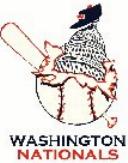
Logo 1949-1955 |
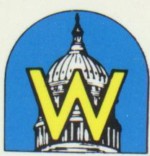
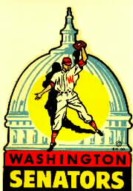
Logo 1956-1958 |
Secondary Logo 1949-1958 |
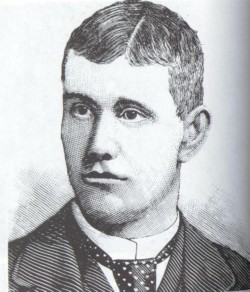
Ed Delahanty 1902-1903 |
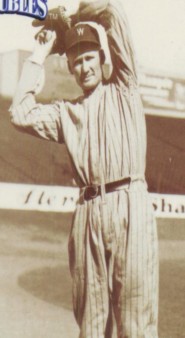
"The Big Train" Walter Perry Johnson 1907-1927 |
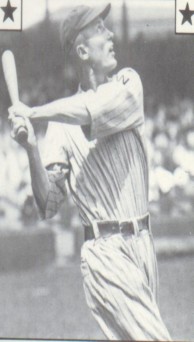
Sam Rice 1915-1933 |
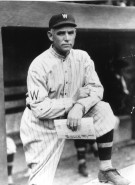
Clark Griffith MGR 1912-1920 President 1920-1955 |
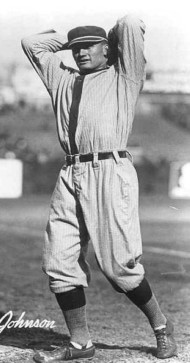
Walter Johnson 1913 Chalmers Award 36-7 1.09 ERA |
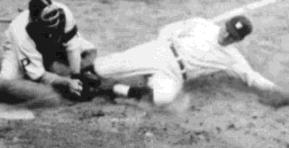
Joe Judge 1915-1933 |
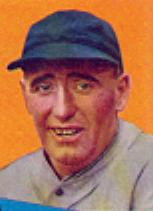
Donnie Bush 1921-1923 |
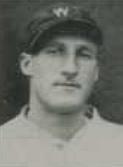
Goose Goslin 1921-1930, 1933, 1938 |
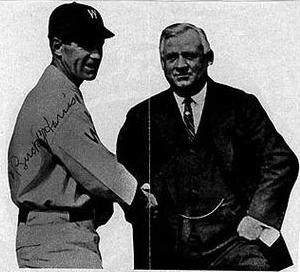
Bucky Harris MGR 1924-28, 1935-42, 1950-54 Shaking hands with John MCGraw prior to 1924 World Series |
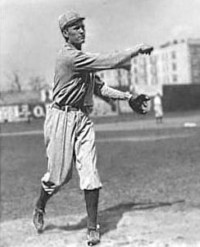
Walter Johnson 1907-1927 1924 League Award 23-7 2.72 ERA |
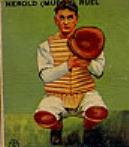
Muddy Ruel 1923-1930 |
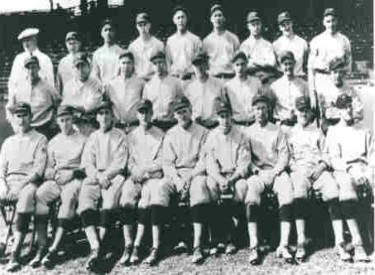
1924 World Champions Washington Nationals |
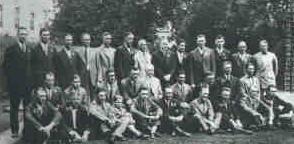
1924 World Champions Washington Nationals at their White House Celbration |
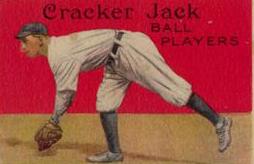
Roger Peckinpaugh 1922-1926 1925 League Award Winner |
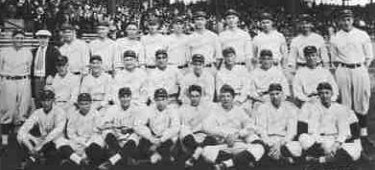
1925 American League Champions Washington Nationals |
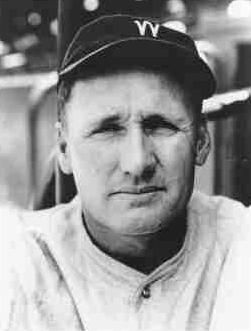
Walter Johnson 1907-1927 416 Career Wins 2.17 Career ERA 3, 508 Career Strikeouts 110 Career Shut Outs |
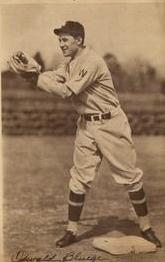
Ossie Bluege 1922-1939 |
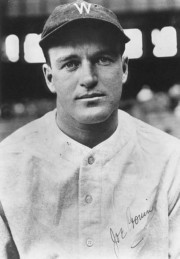
Joe Cronin 1928-1934 |
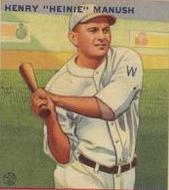
Heinie Manush 1930-1935 |
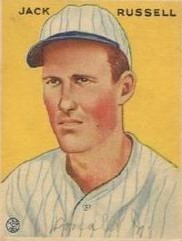
Jack Russell 1933-1936 |
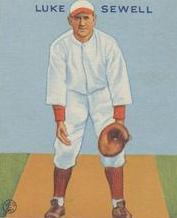
Luke Sewell 1933-1934 |
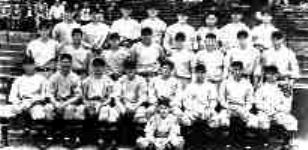
1933 Americian League Champions Washington Nationals |
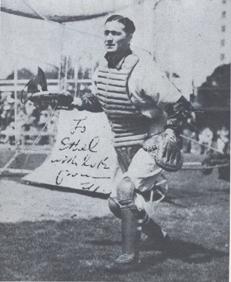
Moe Berg 1932-1934 |
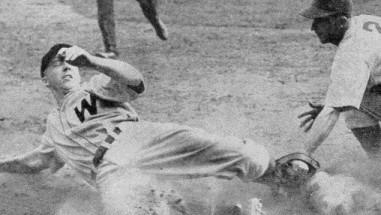
George Case 1937-1945, 1947 |
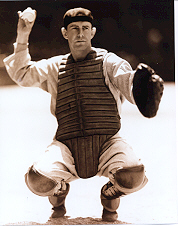
Rick Ferrell 1937-1941, 1944-1945, 1947 |
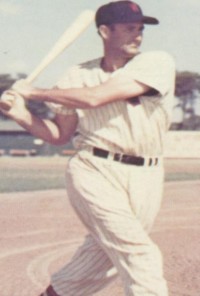
Mickey Vernon 1939-1949, 1951-1955 |
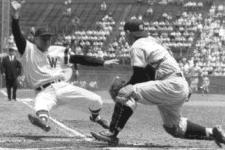
Eddie Yost 1944-1958 |
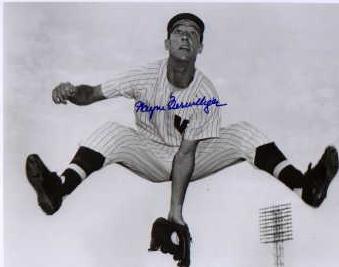
Wyane Terwilliger 1953-1954 |
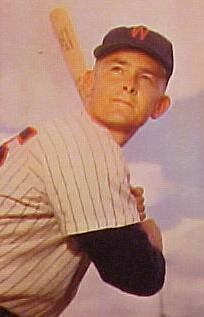
Pete Runnels 1954-1957 |
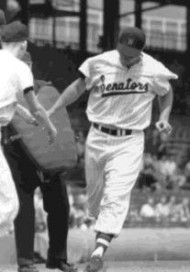
Roy Sievers 1954-1959 |
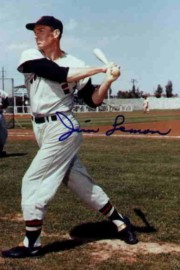
Jim Lemon 1954-1960 |
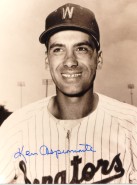
Ken Aspromonte 1958-1960 |
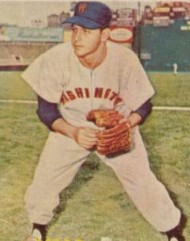
Pedro Ramos 1955-1960 |
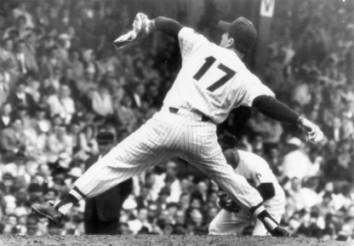
Camilo Pascual 1954-1960 |
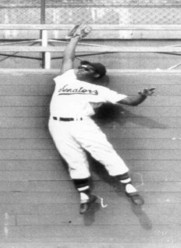
Lenny Green 1959-1960 |
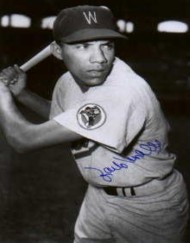
Zoilo Versalles 1959-1960 |
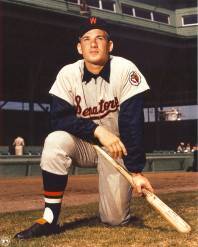
Harmon Killebrew 1954-1960 |
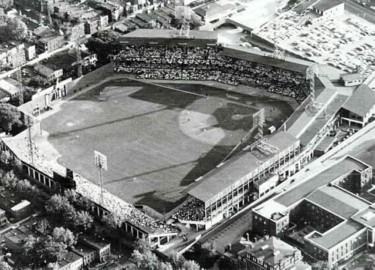
Griffith Stadium 1903-1960 |