

Logo 1987-Present |

Twin Cities Logo 1961-Present |
41st Season First Game Played: April 1961 |
Also Played As: Washington Nationals/Senators 1901-1960 Manager: Tom Kelly 1986- Stadium: Hubert H. Humphrey Metrodome 1982- Address: 34 Kirby Puckett Place Minneapolis, MN 55415 Phone: (612) 375-1366 Web: http://www.twins.mlb.com Nickname: Named after the Twin-Cities; Minneapolis-St Paul area in which they play. Logo: Twins is written in a red calligraphy style with a red underline. The word and underline are both outlined in navy. The script is superimposed over a baseball with the part of the T and S hanging off the edges. Above Twins also on the baseball Minnesota is written and underlined in Navy. Colors: Navy, Red and White Managerial History: Cookie Lavagetto 1961 Sam Mele 1961-1967 Cal Elmer 1967-1968 Billy Martin 1969 Bill Rigney 1970-1972 Frank Quilici 1972-1975 Gene Mauch 1976-1980 John Goryl 1980-1981 Billy Gardner 1981-1985 Ray Miller 1985-1986 Tom Kelly 1986-Present Stadium History: Metropolitan Stadium 1961-1981 Hubert H. Humphrey Metrodome 1982- Pres. All-Star Games Hosted: (2) 1965, 1985 World Champions: (2) 1987, 1991 World Series: (3) 1965, 1987, 1991 Division Champions: (4) 1969, 1970, 1987, 1991 Wild Card: None Retired Numbers: (6) 3 Harmon Killebrew 1B 1961-1974 6 Tony Oliva OF 1962-1976 14 Kent Hrbek 1B 1981-1994 29 Rod Carew 2B 1967-1978 34 Kirby Puckett OF 1984-1995 42 Jackie Robinson (Retired by MLB) Hall of Famers: (5) Rod Carew 1B 1967-1978 Steve Carlton LHP 1987-1988 Harmon Killebrew 1B 1961-1974 Kirby Puckett OF 1984-1995 Dave Winfield DH 1993-1994 All-Star Game MVP: (1) 1993 Kirby Puckett OF Manager of the Year: (1) 1991 Tom Kelly Rookie of the Year: (5) 1964 Tony Oliva OF 1967 Rod Carew 2B 1979 John Castino 3B (co-winner) 1991 Chuck Knoblauch 2B 1995 Marty Cardova OF Hank Aaron Award: None Cy Young: (2) 1970 Jim Perry RHP 1988 Frank Viola LHP MVP: (3) 1965 Zolio Versalles SS 1969 Harmon Killebrew OF 1977 Rod Carew 1B ALCS MVP: (2) 1987 Gary Gaetti 3B 1991 Kirby Puckett OF World Series MVP: (2) 1987 Frank Viola LHP 1991 Jack Morris RHP No Hitters: (4) 8/26/1962 Jack Kralick 8/25/1967 Dean Chance 4/27/1994 Scott Erickson 9/11/1999 Eric Milton Best Season: 1965 (102-60) Worst Season: 1982 (60-102) Historical Moments: 1960: With an expansion team all ready to begin play in Washington in 1961 the old Senators who have played in the Nation's Capital for 60 years gets the go ahead to move to Minnesota, as Metropolitan Stadium built originally for minor league baseball is renovated and expanded for Major League Baseball in the Twin Cities. 1961: With players like Harmon Killebrew, Bob Allison, Camilo Pascual and Jim Lemon Minnesota is excited about getting Major League Baseball, as the Twins are born. However, the team does not experience allot of success that first season and finish in 7th place with a record of 70-90. 1962: With pitcher Jim Kaat coming into his won and Harmon Killebrew leading the League in HRs RBI the Twins reverse their record to 91-71 and finish a close 2nd to the New York Yankees. 1964: Even with Harmon Killebrew leading the league with 49 HRs and Rookie of the Year Tony Oliva winning the batting crown the Twins have trouble wining and finish a disappointing 6th with a 79-83 record. 1965: The Twins jumped out of the gate and did not look back even with Harmon Killebrew missing time with injuries the Twins were the story of the AL. Tony Oliva repeated as batting champion becoming the first player to win it in each of his 1st two seasons. With Mudcat Grant winning 21 games, and Zolio Versalles capturing the League MVP the Twins were well on their way to the AL Pennant. Ironically the Twins would clinch the pennant on September 26th in Washington the city they once called home, as the Twins would go on to win franchise high 102 games. 1965: In the World Series the Twins were matched up against the Los Angeles Dodgers who had one of the best pitching rotations in the history of baseball. The Twins get off to a flying start beating both Drysdale and Koufax in the first 2 games a Metropolitan Stadium to take a 2-0 series lead to Los Angeles. However the Dodgers would bounce back and take the next 3 in LA as the Twins managed just 2 runs in 3 games. Down 3-2 the Twins found home cooking to their liking again as Mudcat Grant stared on the mound and at the plate. Allowing just 1 run and smacking a key 3-run homer the Twins forced a 7th and deciding game. The home cooking would not last to Game 7, as the Twins were mowed down all day by Sandy Koufax, who earned his second series shut out by fanning 10 Twins. 1966: The Twins experience World Series hang over and get over to a very slow start. The slow start would go on to haunt the Twins in September as they fell 8 games short of teh pennant despite 25 wins from Jim Kaat, and sporting the best record in the majors after July 4th. 1967: With super rookie Rod Carew setting the pace Twins find themselves in the thick of one of the tightest pennant races in American League history. The Twins were in the race until the final day of the season when they faced the Red Sox in a game decides it all final game of the season in Boston. The Twins would take an early 2-0, but the heroics of AL MVP Carl Yastrzemski would do them in as the Twins came up just 1 game short. 1968: A season ending injury to Harmon Killebrew during the All-Star game dooms the Twins to a disappointing 7th place 79-83 season. 1969: With Harmon Killebrew winning the AL MVP while leading the league with 49 HR and 104 RBI, and Rod Carew batting a league high .332 the Twins quickly establish themselves as the class of the Western Division in the first season of divisional play. The Twins only real challenge would come form the Oakland A's, however taking 5 of 6 in early September allowed the Twins to cruise to an easy 1st Division title. In the first ever ALCS the Twins faced the Baltimore Orioles. However, the Twins would lose 2 heart-breaking games in extra innings to fall behind 2-0 in the series. In Game 3 not even the site of Metropolitan Stadium would help as the Orioles completed the sweep 11-2. 1970: With Jim Perry winning 24 games and capturing the CY Young the Twins dominate the AL West again while gaining 1st for good in the middle of May. In the ALCS the Twins earned a rematch against the Baltimore Orioles. The series would be over after Game 1 when Orioles pitcher Mike Cuellar victimized Jim Perry with a 3rd Inning Grand Slam. The Orioles would go on to win the game 10-6, and go on to sweep the series scoring an incredible 27 runs in 3 games. 1971: With Twins picthing failing from the start the Twisn fall off their first place pirtch and crash into 5th with a 74-86 record. The lone highlight of the season comes when Harmon Killebrew belts his 500th career HR. 1974: After 21 years with the Senators-Twins franchise Harmon Killebrew is released. Killebrew would go on to play just 1-more season with Royals ending his career with 573 career HR. 1976: After a season of injury and frustration Tony Oliva retires at the young age of 36. In his career Oliva only plays with Twins and wins 3 batting titles and finishes his career with a .304 career average. 1977: In what could be called the "Year of Rod Carew" without protest from anyone in baseball circles. The Twins stellar first baseman tore American League pitching apart en-route to being named the American League's MVP, leading the circuit in average (.388), hits (239), runs scored (128) and triples (16), in addition to collecting 100 RBI and playing a brilliant first base. Moreover, the six-time batting champ was nationally recognized as baseball's best, appearing on the cover of several national publications and featured on network news shows. Despite the heroics of Care, the Twins finish a distant 4th with an 84-77 record. 1978: After a disappointing 73-89 season the Twins stun baseball and their fans by trading Rod Care who had just won his 5th batting title in 6 years to the California Angels. In return the Twins received several young but unproven players including Ken Landreaux. 1979: Led by newly acquired Jerry Koosman who led the team with 20 wins the Twins youth energizes the team to stay in the race for the division title until September. With Roy Smalley leading the team at the plate with 24 Homers the Twins are in a tight 4-way race in a weak Western Division. Eventually the Twins will fade to 4th place but they would finish just 6 games behind the Western Division Champion Angels. 1981: A strike and a poor 41-68 overall put a damper on the season from the start. Then on September 30th and end of an era in Twins baseball occurred as the Twins played their final game at Metropolitan Stadium. Almost 16,000 fans turned out for the finale, played in chilly, rainy conditions - ironically the same type of afternoon experienced for the Twins' 1961 opener at the stadium. 1982: Playing in the first air supported dome stadium in baseball history the Twins started the Hubert H. Humphrey Metrodome era on the wrong foot. The Twins quickly establish themselves as the worst team in baseball by getting off to an embarrassing 16-54 start. However, the Twins youthful core of Kent Hrbek, Gary Gaeitti, Tom Brunansky, and Tim Launder would begin to play better baseball. The Twins would still lose 102 games, but a respectable 44-48 finish gave hope for the future. 1984: Calvin Griffith, who had a 20-year contract with the Metrodome, which stated the club, had to draw an average of 1.4 million fans in any three-year period or he could break the lease and move the team. Griffith was threatening to exercise this option and move the Twins to Tampa, Florida. A group of local civic leaders banded together in an attempt to purchase enough tickets to gain support to keep the Twins in Minnesota. From mid-May to late-June, they administered a ticket buyout. On June 22, prominent local businessman Carl Pohlad stepped forward and signed an agreement in principle to purchase the team from Griffith and his sister, Mrs. Thelma Griffith Haynes, and keep the Twins in Minnesota. This ended the buyout plan, and on September 7, the deal was finalized ending an era of 72 years in which the Griffith family controlled the ball club. 1984: While the team was involved in ownership controversies off the field the Twins managed to put together a string season on the field. Finishing with a .500 record the Twins who are led by Frank Viola who wins 18 games the Twins finish just 3 games out of 1st in a week Western Division. The season was also highlighted by the debut of a 5'8" OF who most think is too small to ever make the majors. That OF would not only make the major but will become Twins baseball for the next decade while putting together a hall of fame career. In his 1984 debut Puckett shows his greatness by debuting with 4 hits in a game in California on May 8th. 1986: Poor pitching dooms the Twins from the start as team falls into 6th place with a dreadful 71-91 record. However, not all new was bad for the Twins Kirby Puckett has a break out year slamming 31 HR, after entering the season with just 4 in his entire career. On September 12th the Twins would change mangers for the 3rd time in 2 years, as the job was handed over to Tom Kelly. 1987: Intent to make sure the Twins were better in 1987, newly appointed General Manager Andy MacPhail acquired Jeff Reardon to fill the need for a closer, and Dan Gladden to provide spark form the leadoff spot. MacPhail also kept Tom Kelly on as manager who's even temperament would keep the team on an even keel. Not much was expected from the team coming off a 91-loss season, but most expected they would improve enough to finish respectfully. On the road the Twins were much like the year before with a pathetic 29-53 record. However at home the Twins were magic winning 56 while losing just 25. Usually an 85-77 will leave a team far behind in any pennant race, but the AL West was weak that year and was good enough to give the Twins their first division title in 17 years. 1987: The final week of the season saw a battle between the Detroit Tigers and Toronto Blue Jays for the eastern division title. With the Twins who won the West seen as such a push over the series was called the real ALCS. Eventually the Tigers would sweep the Jays and go on to face the Twins. Most thought of it was a mere formality, but the Twins would have home field advantage. In their dome there was magic cooking all season. Loud crowds and white towels called homer hankies made life hell for the visitors at the Metrodome. Game 1 turned into a see saw battle as the Twins used 2 doubles to score 4 times in the 8th inning to pull out the opener. Game 2 saw the Twins score 6 runs off St. Paul native Jack Morris to take a 2-0 series lead. In Game 3 the Twins, away from the Homer Hankies experienced a bump in the road wasting a comeback from a 5-0 deficit, to lose 7-6. The Twins would bounce back in Game 4 thanks to solo homers from Kirby Puckett, and Greg Gagne to take a commanding 3-1 series lead. Even on the road the Twins could not be stopped as they trounced Detroit 9-5 in the 5th game to earn a trip to their first World Series in 22 years. 1987: Entering the World Series the Twins remained heavy underdogs facing the St. Louis Cardinals. However like the ALCS the Twins would have the advantage of 4 games at home. In the first game a loud Metrodome crowd sparked the Twins to an impressive 11-1 victory highlighted by a Dan Gladden 4th Inning Grand Slam. The Twins offense didn't miss a beat in Game 2, as 6-run 4th inning enabled the Twins to win 8-4. The series shifted to St. Louis for games 3, 4 and 5. Game 3 was a pitcher's duel between Les Straker and John Tudor, but St. Louis got three in the seventh off Juan Berenguer and went on to win, 3-1. The Cardinals offense broke loose in the fourth game in defeating the Twins, 7-2. Game 5 was another tight struggle, with St. Louis winning, 4-2. The Twins found themselves in the same position, as they were 22 years earlier losing 3 road games and returning home on the brink down 3-2. However there was still magic in the dome, and after falling behind 5-2 the Twins rallied to take a lead 6-5 in the 5th after Don Baylor sparked a 4-run 5th. The Twins would pull away the next inning thanks to a Grand Slam form Kent Hrbek to force a 7th and deciding game. In Game 7 the Twins had ace Frank Viola on the mound, against the Cardinals rookie Joe Magrane. The Twins would fall behind early 2-0 but Viola cruised the rest of the way and the Twins would score 4 times to take a 4-2 lead to the 9th. In the 9th the ball rested in the hands of the Terminator Jeff Reardon who was automatic almost all year true to form he retired all 3 batters he faced and the Twins captured their first World Championship. 1988: With Frank Viola playing his Sweet Music off the mound all year and winning 24 games to earn the Cy Young, the Twins were even better in 1988. However, they would; not even come close to winning the division title, as their 91-71 records was only good for 2nd place 13 games behind the eventual AL Champion Oakland Athletics. Also highlighting the year was Alan Anderson who led the league in ERA in his first full season in the majors. On the field the Twins set a new record committing just 84 errors, while posting a .986 fielding percentage. The fans of Minnesota were also record-setters in 1988. The Twins became the first American League team to draw 3 million fans when 3,030,672 passed through the turnstiles. 1989: With the Twins fading in the race for the division they would make a stunning trade as the clock struck 12 for the trading deadline. Dealing Frank Viola to the Mets the Twins rolled the dice by acquiring 5 young pitchers. With a lack of pitching depth, the Twins had few alternatives other than dealing Viola for what could turn out to be the nucleus of their pitching staff for years to come. In the deal, the Twins acquired a proven, 28-year-old veteran, Rick Aguilera, heralded rookie southpaw David West, considered to be the Mets' top prospect, rookie right-handers Kevin Tapani, a starter, and relievers Tim Drummond and Jack Savage. Despite Kirby Puckett winning the batting title with a .339 average the Twins would fall below .500 and finish in 5th place. 1990: The Twins would fall into the AL west basement with a 74-88 record. Despite their record, the Twins had their share of bright spots. Rick Aguilera was converted from starter to stopper in the bullpen and responded by recording 32 saves. Right-hander Scott Erickson made the jump from AA to the Twins in June and finished the season strong, going 8-4 with a 3.27 ERA. The highlight of the disappointing season came on July 17, in Boston, when they turned two triple plays. In the fourth inning, with the bases loaded and Scott Erickson pitching, former Twin Tom Brunansky hit a sharp grounder to Gary Gaetti at third, who stepped on the bag for the force out, fired to Al Newman at second and his relay to Kent Hrbek was in time to get Bruno at first. In the eighth inning, with John Candelaria on the hill and runners on first and second, Jody Reed hit a one-hopper at Gaetti who again started a 5-4-3 triple play. 1991: Not much was expected for the Twins coming off their last place finish, and when they got off to a 2-9 start no one batted an eye. However the ship was soon righted, and behind the spectacular pitching of Scott Erickson, who won a club-record 12 consecutive games, the Twins soon closed the gap on first place Texas and began to make their move as June rolled around. The Twins began the month by winning their first 15 games, setting a team-record, and finished the month with a 22-6 mark which catapulted them over the rest of the American League West field and into first place. It was the place they would remain for all but two days of the season, until they clinched their fourth West Division title on September 29th. The Twins became the first team ever to go from last place one season to first place the next. Behind the winning were some solid, if not spectacular, seasons from many different players. Erickson became the 10th Twin to win 20 games, as he used his phenomenal first half to push him toward a 20-8 mark. Jack Morris notched an 18-12 record and gave Tom Kelly a proven starter to whom he could give the ball in pressure situations. Young players such as Kevin Tapani, Shane Mack and A.L. Rookie of the Year Chuck Knoblauch each established themselves with terrific seasons and contributed to the success of the team. Chilli Davis was named the league's outstanding designated hitter after hitting a team-best 29 homers with 93 RBI. 1991: The Twins opened the ALCS in the friendly confines of the Metrodome with hometown hero Jack Morris on the mound. The Twins jumped out to a 5-0 lead in the first three innings, and weathered a furious Blue Jays comeback to win, 5-4. The next day, Toronto starter Juan Guzman limited the Twins to just five hits for a 5-2 win. In the process the Blue Jays became the first and to defeat the Twins in the Metrodome in post-season play. The first postseason series played completely indoors moved to Toronto for the next 3 games. Mike Pagliarulo put the Twins ahead by a game with a solo home run in the 10th inning for a 3-2 win in Game 3. The Twins romped in Game 4, 9-3, behind the 13-hit attack of the Minnesota offense and the tough pitching of Morris, who allowed 11 hits, but just three runs. The Twins clinched their third American League pennant with a come-from-behind, 8-5 win in Game 5 when series MVP Kirby Puckett's 8th Inning single put the Twins up for good. 1991: In the World Series the Twins would be matched against the Atlanta Braves who themselves made history by becoming the first NL team to go from last to first in one season. The Twins would have one big advantage in that if the series went 7 games, 4 would be at the Twins home sweet dome. The Twins jumped out to a 1-0 series lead with a 5-2 win pounding Atlanta starter Charlie Leibrandt for four runs in four innings. Homer Hankies were flying as Greg Gagne and Kent Hrbek hit home runs and Jack Morris continued his postseason mastery by allowing just two runs over seven innings. In Game 2, Scott Leius was the hero as his eighth-inning solo home run made a winner of Kevin Tapani, who out dueled Atlanta ace Tom Glavine with just two runs in his eight innings of work. 1991: Arriving in Atlanta up 2-0 the Twins were in failure territory after taking the first 2 series games at home like their 2 previous Fall Classic appearances. Game 3 proved to be the first extra-inning game of the Series and set the tone for the remainder of the gut-wrenching games to follow. Down 4-2 in the seventh inning, the Twins clawed their way back, tying the game on Chili Davis' pinch-home run in the 8th. The game entered the 12th inning still knotted at four but the Twins threatened in the top half of the inning, loading the bases with two outs. However, Tom Kelly was forced to pinch-hit pitcher Rick Aguilera for Mark Guthrie, and Aguilera flied out, ending the threat. The Braves won the game in the bottom of the 12th when Mark Lemke singled home Dave Justice. Atlanta evened the series at 2-2 with another win in their last at-bat, this time on a Jerry Willard sacrifice fly to score Lemke in the ninth inning. The game featured three close plays at home plate, with Twins' catcher Brian Harper blocking away Lonnie Smith and Terry Pendleton, but just missing Lemke with the tag to end the game. Atlanta then gained a 3-2 advantage with a 14-5 drubbing of the Twins in Game 5. They pounded out 17 hits off five Twins' pitchers and went back to Minnesota needing just one win to win the Series. 1991: With the series returning to Minnesota the Twins hoped they could keep their home fires burning to force a 7th game. Kirby Puckett was not about to let the title go quietly. He went 3-for-4, with a leaping catch at the center-field wall to rob Ron Gant of extra-bases. That effort, along with Scott Erickson's gutsy six innings of work, kept the teams tied and they went into extra-innings once again. In the bottom of the 11th inning, Puckett led-off with a home run to give the Twins a 4-3 victory and to send the series to a Game 7. It was one of the greatest individual performances in World Series history and kept Minnesota's hopes alive and on the shoulders of Jack Morris. "Black Jack" did not disappoint. He and Atlanta starter John Smoltz each held their opponents scoreless, and the game entered the eighth inning knotted at zeroes. The Braves loaded the bases in the top of the eighth but Minnesota turned a 3-2-3 double play to get Morris out of the inning. Atlanta returned the favor in the bottom of the inning, getting out of a bases loaded jam with their own twin killing. As the scoreless game entered the 10th inning, Morris continued to hurl a gem of a shutout, and set the stage for the offense to clinch the Series. Gene Larkin's pinch-hit single scored Dan Gladden with the winning run in a 1-0 game to close out the greatest World Series ever. Five of the seven games were decided by one run, five were decided in the last at-bat and three games went into extra innings. The Twins became World Champions for the second time in five seasons, and Morris was awarded the MVP trophy for his brilliant pitching effort. 1992: With Kirby Puckett reaching 200 hits for the fifth time in his career and again reached 100 runs and 100 RBI, while hitting over .300 for the seventh time in nine seasons, the Twins went 90-72, their third 90-win campaign in the last five, and it was accomplished with some record-setting individual and team accomplishments. Despite that, however, the Twins couldn't catch the Oakland A's and finished in second place. 1993: Individual accomplishments from a career Twin, and a returning hometown hero highlight a disappointing 71-91 season. First Kirby Puckett earns the All-Star Game MVP with a homer and a RBI double. Then on September 16th St. Paul native Dave Winfield who signed with the Twins in the off-season gathered his 3,000th career hit in the 9th Inning of Athletics ace reliever Dennis Eckersley. 1994: In their first season in the newly formed AL Central the Twins never factor in the race for first place before the strike prematurely ended the season. However Kirby Puckett collects his 2,000th career hit while leading the AL in RBI. The highlight of the season comes on April 27th when Scott Erickson pitches the 3rd No Hitter in Twins history. The year also sees the end of two eras, 1B Kent Hrbek retires after just 13 seasons, and GM Andy MacPhail leaves the Twins to run the Chicago Cubs. 1995: 3 individual career milestones from Kirby Puckett highlight an awful 56-88 last place season as he eclipses the 200 HR 1,000 RBI, 1,000 Runs marks. 1996: With spring training nearing an end the most popular player in Twins history Kirby Puckett awoke on March 28th with blurred vision. Puckett would never play again and would be forced to retire after it was determined the eye problem was caused by glaucoma, and incurable disease that robs people of their sight. 1996: Prior to the season the Twins brought in St. Paul native Paul Molitor to collect his 3,000th in front off his hometown fans much like Dave Winfield did 3 years earlier. He would collect his milestone hit in Kansas City with a triple off Jose Rosado on September 16th. 2000: Despite finishing 69-93 � the fourth straight 90-loss season � the new foundation continued to solidify. At the plate, Matt Lawton hit .305 and made his first All-Star team; Corey Koskie impressed with a .300 batting/.400 on-base campaign; Jacque Jones showed glimpses of all-around stardom, hitting .285 with 19 home runs while playing a sterling outfield; and shortstop Cristian Guzman, who continued to dazzle with the glove, led the Majors with 20 triples. Odds and Ends: Mascot: TC the Bear Team Song: Here Coem the Win Twins Odd Stat: In 3 World Series appearances the Twins are 11-1 at home, and 0-9 on the road. On The Air: Television: KMSP (Channel 9), Midwest Sports Channel Radio: WCCO 830 AM Spring Training History: Orlando, FL 1961-1990 Ft. Myers, FL 1991-Present On The Farm: AAA: Edmonton Trappers AA: New Britain Rock Cats A: Ft. Myers Miracle A: Quad City River Bandits A: Elizabethton Twins Rookie: Gulf Coast Twins |
�MMI Tank Productions in association with Chris Creamer Properties Inc. Stats researched
by Frank Fleming, all information, statistics, logos, and team names are
property of Major League Baseball. This site is not affiliated with the
Minnesota Twins or the American League, Major League Baseball. This site
is maintained for research purposes only. All logos used on this page were
from Chris Creamer's Sports Logos Page. Page created on July 9, 2001. Last updated on July 9, 2001 at 4:20 pm ET. |
Logo 1961-1986 |
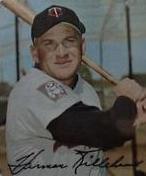
Harmon Killebrew 1961-1974 |
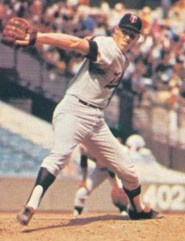
Jim Kaat 1961-1973 |
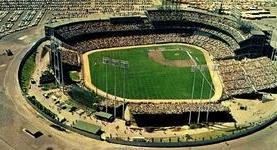
Metropolitan Stadium 1961-1981 |
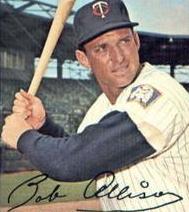
Bob Allison 1961-1970 |
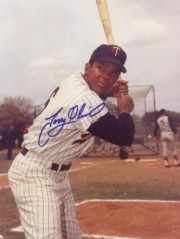
Tony Oliva 1962-1976 |
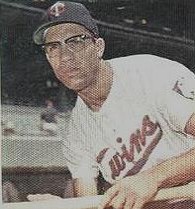
Zoio Versalles 1961-1967 1965 AL MVP |
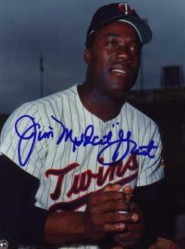
Jim "Mudcat" Grant 1964-1967 |
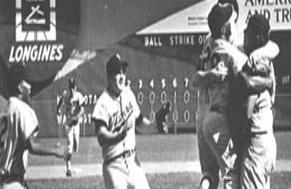
1965 American League Champions Minnesota Twins |
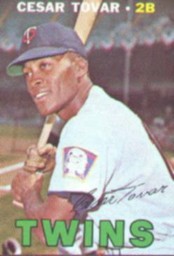
Cesar Tovar 1965-1972 |
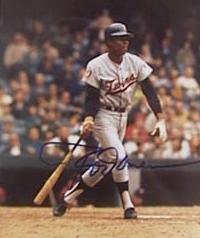
Rod Carew 1967-1978 1967 Rookie of the Year |
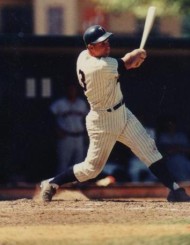
Harmon Killebrew 1961-1974 1969 AL MVP |
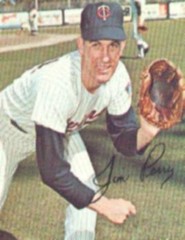
Jim Perry 1963-1972 1970 Cy Young |
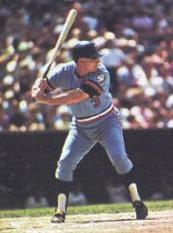
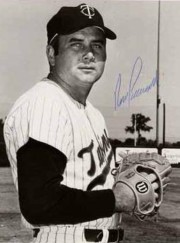
Ron Perranoski 1968-1971 |
Harmon Killebrew 1961-1974 563 Career HR |
Larry Hisle 1972-1977 |
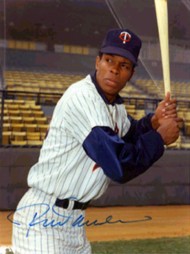
Rod Carew 1967-1978 1977 AL MVP |
John Castino 1979-1984 |
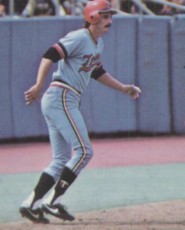
Rob Wilfong 1977-1981 |
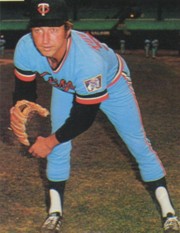
Jerry Koosman 1979-1981 |
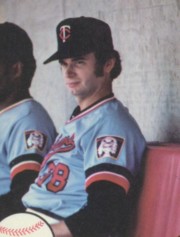
Geoff Zahn 1977-1980 |
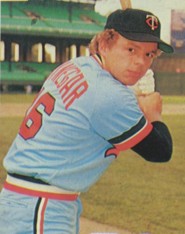
Butch Wynegar 1976-1982 |
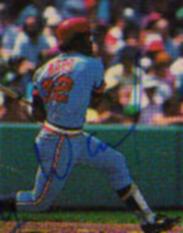
Gary Ward 1979-1983 |
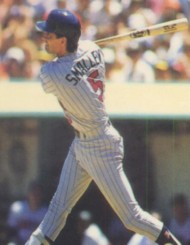
Roy Smalley 1976-1982, 1985-1987 |
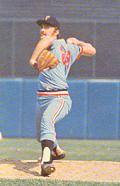
Bert Blyleven 1970-1976, 1985-1988 |
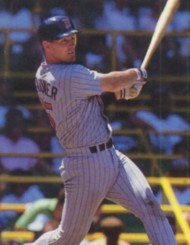
Tim Laudner 1981-1989 |
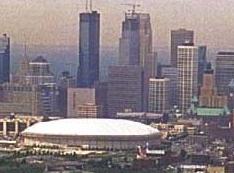
Hubert H. Humphrey Metrodome 1982-Present |
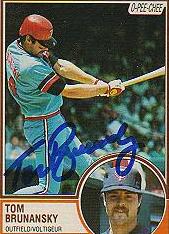
Tom Brunansky 1982-1988 |
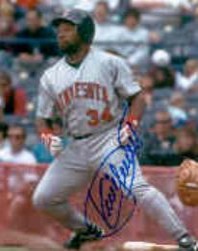
Kirby Puckett 1984-1995 |
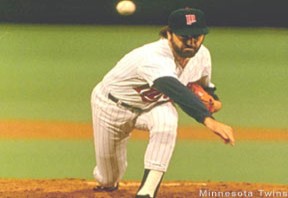
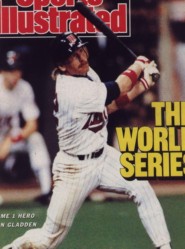
Dan Gladden 1987-1991 |
Jeff Reardon 1987-1989 |
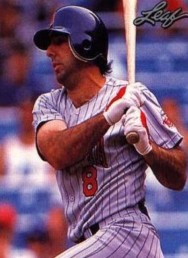
Gary Gaetti 1981-1990 1987 ALCS MVP |
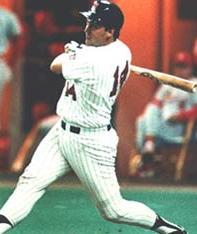
Kent Hrbek 1981-1994 |
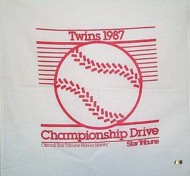
The Homer Hanky |
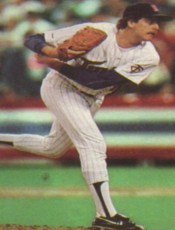
Frank Viola 1982-1989 1987 World Series MVP |
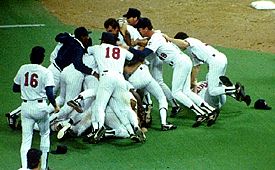
1987 World Champions Minnesota Twins |
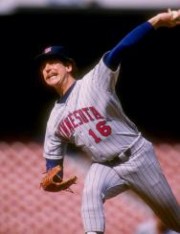
"Sweet Music" Frank Viola 1982-1989 1988 Cy Young |
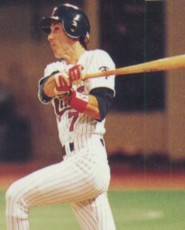
Greg Gagne 1983-1992 |
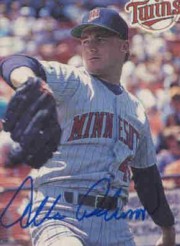
Allan Anderson 1986-1991 |
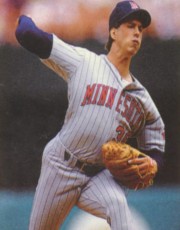
Kevin Tapani 1989-1995 |
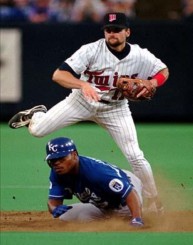
Chuck Knoblauch 1991-1997 1991 Rookie of the Year |
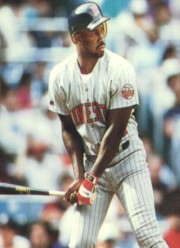
Chilli Davis 1991-1992 |
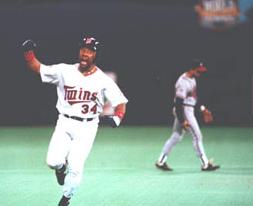
"And We'll see you tommorow night" Kirby Puckett 1991 ALCS MVP 1991 World Series Game 6 Winning HR |
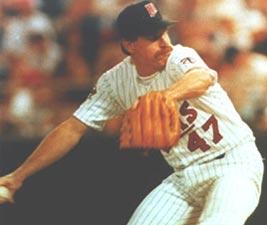
Jack Morris 1991 1991 World Series MVP |
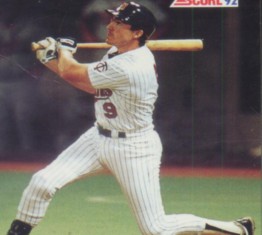
Gene Larkin 1987-1993 1991 World Series Winning Hit |
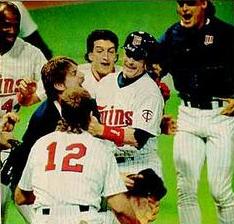
1991 World Champions Minnesota Twins |
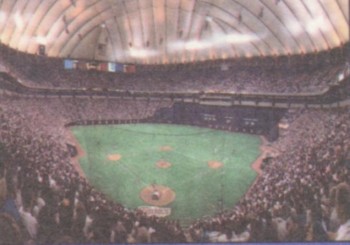
Home Sweet Dome Hubert H. Humphrey Metrodome 1982- Present 11- 1 Postseason Record |
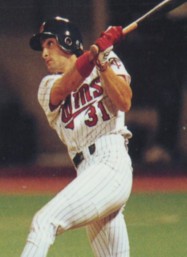
Scott Leius 1990-1995 |
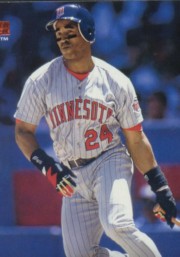
Shane Mack 1990-1994 |
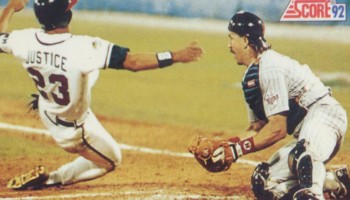
Brian Harper 1988-1993 |
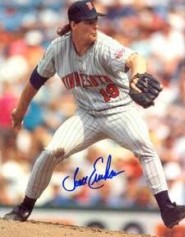
Scott Erickson 1990-1995 |
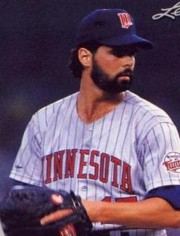
Rick Aguilera 1989-1995, 1996-1999 |
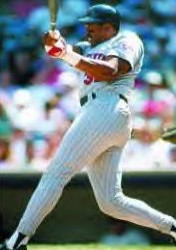
Dave Winfield 1992-1993 |
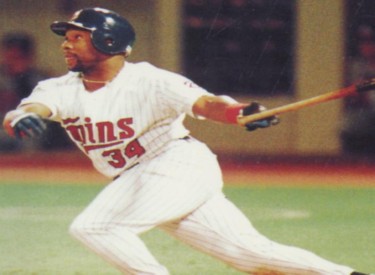
Kirby Puckett 1984-1995 2,304 Career Hits, 1,085 Career RBI .318 Career Average |
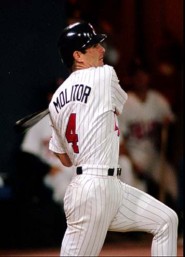
Paul Molitor 1996-1998 |
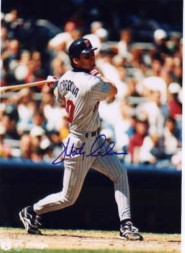
Marty Cordova 1995-1999 |
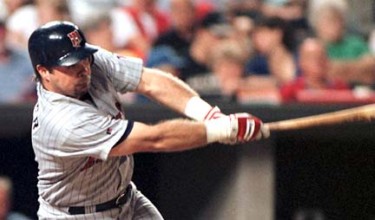
Ron Coomer 1995-2000 |
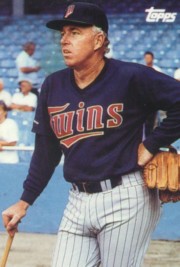
Tom Kelly MGR 1986-Present |
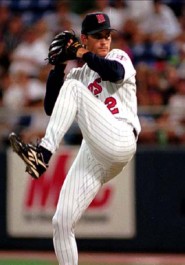
Brad Radke 1995-Present |
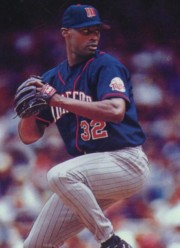
LaTroy Hawkins 1995-Present |
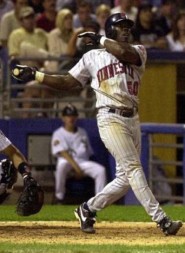
Matt Lawton 1995-Present |
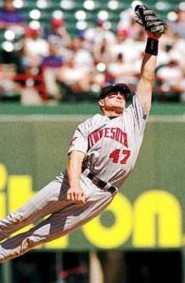
Corey Koskie 1998-Present |
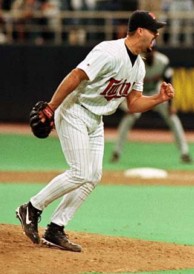
Eric Milton 1998-Present |
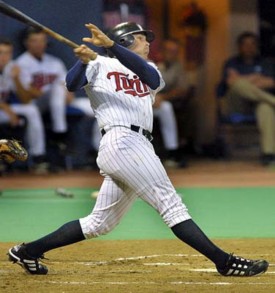
Doug Mientkiewicz 1998- Present |
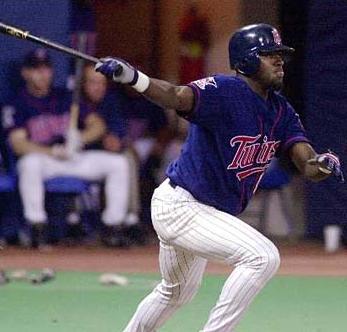
Christian Guzman 1999- Present |
Jacque Jones 1999-Present |
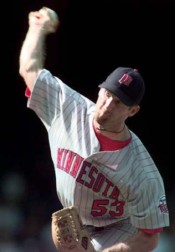
Joe Mays 1999-Present |