

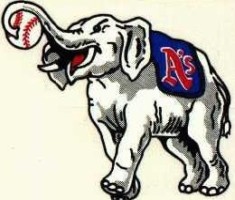
Logo 1940-1954 |
First Game Played April 1901 Last Game Played Sptember 1954 Moved to Kansas City |
Also Played As: Kansas City Athletics 1955-1967 Oakland Athletics 1968-Present Nickname: In the late 19th Century sports fans who worked at various Philly Athletic Clubs came together and formed a baseball team named Athletics (as many similarly formed teams were known as), the team joined the National Association on March 17 1871, and folded in 1875. In 1901 when Connie Mack was given a Philadelphia AL Franchise he paid tribute to Philadelphia's first pro ball team, and named them so. Logo: In 1902 John McGraw manger of the New York Giants referred to the Athletics as the "White Elephants", implying Mack shouldn't be allowed to spend money without supervision. Mack defiantly adopted the White Elephant as the team insignia, and in 1902, the A's won the American League pennant. Team Colors: Blue, White, and Red Managerial History: Connie Mack 1901-1950* Jimmy Dykes 1951-1953 Eddie Joost 1954 *-Replaced for periods in 1937 & 1939 by Earle Mack. Stadium History: Columbia Park 1901-1908 Shibe Park 1909-1954* *-Known as Connie Mack Stadium 1954 All-Star Games Hosted: (1) 1943 World Champions: (5) 1910, 1911, 1913, 1929, 1930 World Series: (8) 1905, 1910, 1911, 1913, 1914, 1929, 1930, 1931 AL Champions: (1) 1902 Retired Numbers: None Hall of Famers: (18) Frank "Home Run" Baker 3B 1908-1914 Chief Bender RHP 1903-1914 Ty Cobb OF 1927-1928 Mickey Cocherane C 1925-1933 Eddie Collins 2B 1906-1914, 1927-1930 Stan Coveleski RHP 1912 Nelie Fox 2B 1947-1949 Jimmie Foxx 1B 1925-1935 Lefty Grove LHP 1925-1933 George Kell 3B 1943-1946 Nap Lajoie 2B 1901-1902, 1915-1916 Connie Mack MGR 1901-1950 Herb Pennock LHP 1912-1915 Eddie Plank LHP 1901-1914 Al Simmons OF 1924-1932, 1940-1941, 1944 Tris Speaker OF 1928 Rube Waddell LHP 1902-1907 Zack Wheat OF 1927 Rookie of the Year: (1) 1952 Harry Byrd RHP MVP: (6) 1914 Eddie Collins 2B 1928 Mickey Cocherane C 1931 Lefty Grove LHP 1932 Jimmie Foxx 1B 1933 Jimmie Foxx 1B 1952 Bobby Shantz LHP No Hitters: (5) 7/27/1905 Weldon Henley 5/12/1910 Chief Bender 8/26/1916 Joe Bush 9/9/1945 Dick Fowler 9/3/1947 Bill McCahan Best Season: 1931 (1907-45) Worst Season: 1916 (36-117) Historical Moments: 1901: When the American League was formed in 1901 a decision was made to place a team in Philadelphia to rival the National League's Phillies. The Shibe family who produced sporting goods, some local sportswriters and Connie Mack, who had played and managed in the major leagues, were chosen to found the Philadelphia franchise. [Mack would serve as the "baseball man" and receive a minority share of the club]. In forming the original A's Mack tried to raid the Phillies roster, but the Pennsylvania Supreme Court ruled in favor of the Phillies, saying the players were not allowed top play for another team. However, in a shrewd move Mack traded the players in question to the Cleveland Blues, and was able to receive talent while the Phillies were unable to recoup their players since Cleveland was out of the court's jurisdiction. The Athletics would finish their inaugural season in 4th Place with a 74-62 record. 1902: As the Connie Mack continues to stack his Athletics with players off other teams and angry John McGraw who quit the American League's Baltimore Orioles for a job with New York Giants calls the A's "White Elephants", and states Connie Mack should not be able to spend money without supervision. Mack would then adopt the White Elephant as the team's logo, while Rube Waddell one of the players Mack lured away form the NL wins 24 games. The A's with Waddell's help would go on to capture the American League Pennant with an 83-53 record. After the season the National League fearful of more defections decided to form a merger with both league's getting equal status and respecting each other's contracts. The merger also forms a World Series to be completed at the end of the season. 1905: With the 1-2 punch of Rube Waddell and Eddie Plank who won 26, and 25 games respectfully the Athletics win 92 games and capture the American League Pennant by a slim 2 games. The Championship earns the A's a trip to their first ever World Series, where they would be facing the New York Giants. The Giants are managed by John McGraw the same man who referred to the A's 3 years earlier as "White Elephants". John McGraw who's grudge against the American League had prompted him to refuse to take part in any 1904 series, was determined to prove that the AL was inferior. The A's who had once been insulted by McGraw's words were determined to make him eat crow again. However, for the Athletics it would not be as Christy Matthewson shut the A's out in Games 1,3, and 5 to capture the series for the Giants 4 games to 1. The win gave the first battle of the Mack-McGraw grudge match to Little Napoleon, but there would be more battles to come. 1906: In a season marred by injuries the A's finish in 4th place with a 78-67 record. The injury situation got so bad for Connie Mack that he had to use one of pitchers Chief Bender in Left Field. However, Bender would take advantage by hitting 2 inside the park homers in one game against the Boston Pilgrims. 1907: The chase for the pennant was a close-run affair. The Chicago White Sox went out in front during the early part of the season with the Athletics and Detroit Tigers in close pursuit. The White Sox faded, however, and the A's took over first place on August 12th. From that point on, the race was a contest between the A's and the Tigers. The chase for the 1907 pennant was a close-run affair. The Chicago White Sox went out in front during the early part of the season with the Athletics and Detroit Tigers in close pursuit. The White Sox faded, however, and the A's took over first place on August 12th. From that point on, the race was a contest between the A's and the Tigers. At this crucial juncture, the A's were having a difficult time of it with their pitching. After the Tigers took the first game, Game 2 went deep into extra innings. With the A's at bat in the 14th, team captain Harry Davis hit a long drive into the overflow crowd in left center field. From all appearances, it looked to be a ground-rule double. But, as Tigers center fielder Sam Crawford went back to the edge of the crowd, a policeman sitting on a soda box along the rope line suddenly arose. According to Detroit, the officer interfered with Crawford, but the A's asserted that he was simply trying to get out of the player's way. However the umpires ruled fan interference and called Davis out. It resulted in the game ending in a 9-9 tie. The Tigers left town with a half game lead, and the disheartened A's were never able to catch-up eventually losing the pennant by a game and a half. 1909: With the growing popularity of baseball in the early 20th century, the need for larger stadiums was apparent. However, since the old wooden structures were unsafe for large crowds, a need to build stadiums differently was also apparent. So in 1909 Shibe Park the first stadium constructed of steel and concrete opened in Philadelphia. On April 12th an overflow crowd of 31,160 witnesses Eddie Plank delivers the first pitch of the game to Red Sox second baseman Amby McConnell, and the contest is underway at 3 PM. The A's get off to a quick 1-0 lead in the first inning and never look back. The team hammers out an 8-1 victory as Plank scatters 6 hits, strikes out 8 and walks 4. The A's would go to finish in 2nd place with a 95-58 record. 1910: The pieces begin to fall in place for the Athletics as the A's form one of the best infields in baseball history. The infield of Stuffy McInnis, Eddie Collins, Jack Barry, and Frank Baker would become known as the $100,000 infield would become the vital cog in the A's line-up, while a strong pitching staff lead by Jack Coombs who won 31 games. Together the A's team became an unstoppable force winning 102 games, en-route to earning a birth to their 2nd World Series. 1910: Going into the World Series against the Chicago Cubs, the A's found themselves short-handed, as Eddie Plank was unable to pitch due to a sore arm. However Jack Coombs, and Chief Bender stepped it up and alternated complete games. The A's would go on to take the first 3 games before the Cubs adverted the sweep with a run in the 9th and 10th innings. However, Connie Mack, and his Athletics would not be denied as Jack Coombs earned his 3rd complete game win of the series to give the Philadelphia Athletics their first ever World Championship. 1911: Frank Baker captures the AL HR crown with 11 HR, earning him the nickname of "Home Run Baker". While Baker is driving the ball out of Shibe Park the A's bat a league high .296, and once again dominate the American League with 101 wins. 1911: In the World Series the Athletics would get a chance to avenge the loss of 1905 against John McGraw's New York Giants. In Game 1 the A's get a flashback as Christy Mathewson dominates again to give the Giants the first game. The A's would bounce back to win Game 2 before facing Mathewson again. In the 3rd game Mathewson continued his dominance shutting the A's out into the 9th inning. However, Frank Baker delivers one of his famous Home Runs to tie the game and send it to extra innings where Harry Davis delivers a 2-RBI single to finally defeat Mathewson and give the A's a 2-1 series lead. After a week hiatus the A's defeat Mathewson again to take a 3-1 lead. In Game 5 with a chance to close out the Giants the A's let a 3-1 lead get away in the 9th as the Giants get back into the series with a 4-3 (1O inning win). However, the A's would erupt to score 13 runs to take the series in 6 games and gain a measure of revenge against John McGraw. 1912: Despite "Home Run" Baker capturing the HR and RBI crowns, and winning 90 games the A's fall into 3rd place 15 games behind the Boston Red Sox. 1913: With Frank "Home Run" Baker once again leading the way in HRs and RBI, the Athletics win 96 games to reclaim the American League Pennant. In the World Series the A's would be matched up once again with John McGraw and his New York Giants. After the A's took Game 1 Christy Mathewson and Eddie Plank hooked up in scoreless pitcher's duel. However, with 3 runs in the 10th the Giants were able to tie the series at one game apiece. However, even Mathewson could not derail the Athletics locomotive as the A's would go on to win the next 3 to capture the series 4 games to 1. Including Game 5's rematch of Plank and Mathewson. 1914: The premier team of the early teens was clearly the Philadelphia Atheletics, and with 99 wins the A's captured the 4th Pennant in 5 years to face the Boston Braves in the World Series. Going into the Series the Athletics were heavily favored. However all was not well with Athletics as the upstart Federal League threatened to steal some of their top players. At the same time Connie Mack stood firm and refused to give his players raises. The A's were clearly distracted as the Braves captured Game 1 by a score of 7-1. The Braves would also capture Game 2 to head to Boston with a 2-0 series lead. The A's would never recover as the Braves would win the next 2 to complete the sweep leading many to believe, (including Connie Mack himself) the team had quit on their manager. 1915: Prior to the start of the 1915 season Connie Mack completely dismantles his team that had dominated the American League and all of baseball for the last 5 years. Not only do the A's fail to contend, but also they finish in last place with a woeful 43-109 record. 1916: The Athletics put together one of the worst seasons in baseball history finishing in last place with an awful 36-117 record. The 117 loses sets a new American League record, and the .235 winning percentage is a 20th century worst. 1925: After 10 years at the bottom of the American League eh Athletics finally manage to gain a measure of respect finishing in 2nd place with an 88-64 record. 1927: With the Athletics forming a core group of talent around Al Simmons, Jimmie Foxx, and Mickey Coherence, Connie Mack acquires Ty Cobb from the Detroit Tigers to help the young players learn how to win. The move helps the A's win 91 games. However, the New York Yankees had one of baseball's greatest teams ever, and capture the pennant by 19 games. 1928: With Ty Cobb collecting the final 114 hits of his career, the young Athletics finally come of age. With Lefty Grove winning 24 games, and Mickey Cochernae capturing the MVP the A's challenge the Yankees all season for the Pennant. The A's would go on to win 98 games, including briefly taking the 1st Place in early September. However, the Yankees were too much to overcome once again, and the A's finished 2 and half games behind the eventual World Champion New York Yankees. 1929: With Jimmie Foxx, and Al Simmons each hitting over 30 HR, and driving in over 110 RBI the Athletics finally get over the hump to capture the American League Pennant. The A's road to the World Series would end being surprisingly easy, as the Yankees beset by injuries, and tragedy were never really a factor in the Pennant race. The A's would win 104 games to capture the first pennant in 15 years by a comfortable 18 games. 1929: In the World Series the Athletics would face the Chicago Cubs. The A's would take the 1st game thanks to a HR by Jimmie Foxx and a complete game 13 strike out performance from Howard Ehmke. The A's would also take Game 2 as Foxx went deep again, to gain a stranglehold over the Cubs with series heading back to Shibe Park. The Cubs would bounce back to take Game 3 to get back into the series. Things would look even bleaker for the Athletics as the Cubs captured an 8-0 lead in Game 4. However, the A's would not be denied, and in the 7th inning the team would put up 10 runs led by Mule Haas' 3-run Homier to win the game 10-8, and take a 3-1 series lead. The Cubs would bounce back the next day to take a 2-0 lead to the 9th inning. However Haas came up big again tying the game with a 2-run Homer. Haas was then followed up doubles from Al Simmons, and Bing Miller to win the World Series 4 games to 1. 1930: With Al Simmons, and Jimmie Foxx dominating the league with their bats, and Lefty Grove dominating from the mound the Philadelphia A's win 102 games to capture their 2nd straight AL Pennant. In the World Series the A's were matched up against a hard nosed St. Louis Cardinals team. The A's would get off to a fast start, as 5 extra base hits in 5 different innings would score 5 runs to give the A's the first game 5-2. The A's would also win Game 2 to take a 2-0 series lead to St. Louis. However the Cards would bounce back to take the next 2 games setting up a key 5th game that would swing the entire series. Game 5 would go scoreless into the 9th before Jimmie Foxx delivered a 2-run homer to give the A's a 3-2 series lead. With the series returning to Philadelphia for Game 6 the Philadelphia Athletics won easily 7-1, to capture their 2nd World Series in a row, and 5th overall. 1931: With Al Simmons, batting .390, and Lefty Grove capturing the MVP with 31 wins, and an incredible 2.06 ERA the Athletics are even stronger in 1931 winning more then 100 games for the 3rd year in a row while establishing a new franchise best with 107 wins. In the World Series the A's were matched up against the Cardinals for the second year in a row. However, the Cardinals would end the A's hopes for 3rd straight title by taking the series in 7 games. 1932: Jimmie Foxx puts together one of the greatest offensive seasons in the history of baseball. His 169 RBI and 58 HRs each lead the league and help Double X won the MVP. It even looked as if Fox would break the single season HR record but towards the end of the season Foxx did not get anything good to hit, and Babe Ruth was able to hold on to his record. Babe Ruth would also defeat the Athletics, as the A's their 94 wins were not good enough to beat the Yankees, who won the Pennant and eventually the World Series. 1933: Connie Mack is chosen to manage the American League squad in the first All-Star Game played at Comiskey Park in Chicago. The game allows Mack to face his old rival John McGraw, who was chosen to manage the NL for the final time. With Babe Ruth hitting the game's first HR Mack is able to get the last laugh against the man who once called his team "White Elephants." 1933: Jimmie Foxx repeats his MVP performance while winning the AL Triple Crown with a .356 average, 48 HR, and 163 RBI. Unfortunately, the A's were not able to finish better then 3rd place with a 79-72 record. 1934: 10 days after the Philadelphia Athletics won the 1929 World Series, their came a devastating stock market crash that triggered one of the darkest periods in American history known as "The Great Depression". The A's were able to weather the first few years of the depression, had continued to make it to the World Series, and contend for the AL Pennant. However, as the Shibes died, Connie Mack purchased additional shares and by the mid 1930's, had acquired majority ownership. Money had always been a concern of the Macks and Shibes who lived comfortably but did not have the enormous wealth of other owners who had vast incomes from non-baseball related enterprises. With fewer fans coming to Shibe Park Mack was forced to sell of all the A's star players, much like he did 20 years earlier. Over 3 years between 1933 & 1935 all of the A's talented nucleus were dealt away, and the team was left with unproven rookies, and veteran castoffs. 1939: In an attempt to draw better crowds at Shibe Park Connie Mack decides to have lights installed, and becomes the first American League team to play night games. In the first night game the Athletics lose in 10 innings to the Cleveland Indians 8-3. 1941: Even though the Athletics were mired in last place, and were one of the worst teams in baseball every year since 1935, Major League Baseball, and the Athletics chose to honor Connie Mack with a special day. The city of Philadelphia, and the state of Pennsylvania even declared May 17th a holiday as the Athletics honored their legendary manger at Shibe Park. 1948: After 13 years of finishing in or near the basement of the American League the Athletics finally manage to crawl back to respectability, as the Athletics would finish in 4th place with an 84-70 record. 1950: After 50 years at the helm Connie Mack decides to retire at the age of 88> In his 50 years as manger, and president of the Philadelphia Athletics the A's win 5 World Championships and 9 Pennants. Although for the finals 15 years of Mack's career the A's consistently finished in last place his spot in baseball's lore was secure. In total Mack managed a Major League Record 7,755 games, while winning a record 3,731games and losing a record 3,948 games. No one has ever approached either record and the 2nd closest in wins John McGraw trails by nearly 1,000 wins. 1951: In Jimmy Dykes' first season as manager the A's finish in 6th Place with a 70-84 record. 1952: The Athletics finish in 4th place with a 79-75 record, while two pitchers gather individual honors. Harry Byrd wins 15 and takes home the Rookie of the Year, while Bobby Shantz lead the AL with 24 wins to collect the AL MVP. 1953: Jimmy Dykes is fired after 3 seasons as manger of the Athletics. In Dykes' final season the A's finish in 7th with a woeful 59-95 record. 1954: Prior to the start of the 1954 season the Athletics had their 2nd new mange in 4 years Eddie Joost, and though they were playing in the stadium it was know named for their legendary former manager Connie Mack. However, that was about the only thing right with the Athletics in Philadelphia. In 1950 Connie Mack's last seasons the Phillies came out of nowhere to win the NL Pennant. It resulted in, more and more of fans becoming fans of Philadelphia's NL franchise. As the A's were mired in another 103 loss last place season talks began to swirl the team would be sold and moved out of the City of Brotherly Love. The talks would end being more then rumors, as the team would be sold Arnold Johnson who intended to move them to Kansas City. Since Philadelphia had a team in the NL that was already more popular, and did not have a large enough fan base to support two teams AL owners had no problem approving the move, and after 54 years the Philadelphia Athletics were no more. Spring Training History: Philadelphia, PA 1901 Charlotte, NC 1902 Jacksonville, FL 1903 Spartanburg, SC 1904 Shreveport, LA 1905 Montgomery, AL 1906 Dallas, TX 1907 New Orleans, LA 1908-1909 Atlanta, GA 1910 Savannah, GA 1911 San Antonio, TX 1912-1913 Jacksonville, FL 1914-1918 Philadelphia, PA 1919 Lake Charles, LA 1920-1921 Eagle Pass, TX 1922 Montgomery, AL 1923-1924 Fort Meyers, FL 1925-1936 Mexico City, Mexico 1937 Lake Charles, LA 1938-1939 Anaheim, CA 1940-1942 Wilmington, DE 1943 Frederick, MD 1944-1945 West Palm Beach 1946-1954 |
�MMI Tank Productions in association with Chris Creamer Properties Inc. Stats researched
by Frank Fleming, all information, statistics, logos, and team names are
property of Major League Baseball. This site is not affiliated with the
Philadelphia Athletics or the American League, Major League Baseball. This
site is maintained for research purposes only. All logos used on this
page were from Chris Creamer's Sports Logos Page. Page created on July 28, 2001. Last updated on July 28, 2001 at 2:10 am ET. |
Logo 1927-1928 |
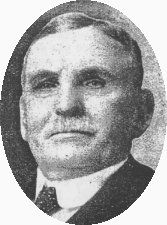
Earl Shibe Founder |
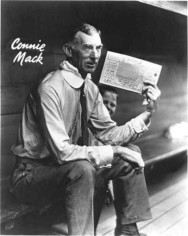
Corneilus McGillicuddy "Connie Mack" MGR 1901-1950 |
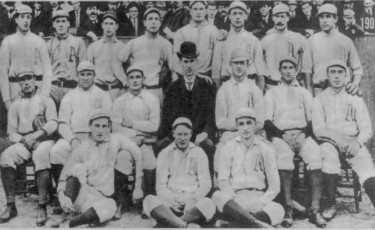
1902 American League Champions Philadelphia Athletics |
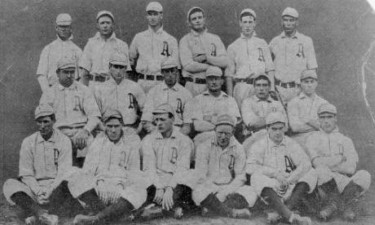
1905 American League Champions Philadelphia Athletics |
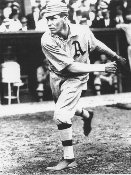
Chief Bender 1903-1914 |
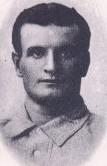
Rube Waddell 1902-1907 |
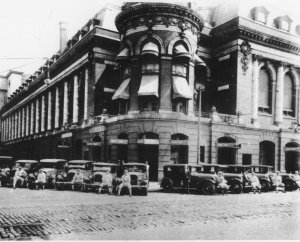
Shibe Park 1909-1954 Baseball's first Concrete and steel stadium. |
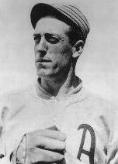
Eddie Plank 1901-1914 |

Jack Coombs 1906-1914 |
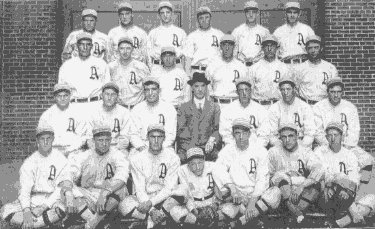
1910 World Champions Philadelphia Athletics |
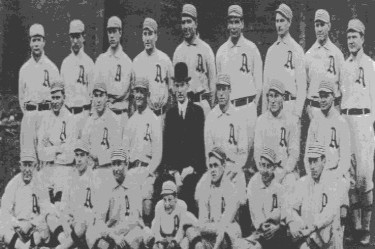
1911 World Champions Philadelphia Athletics |
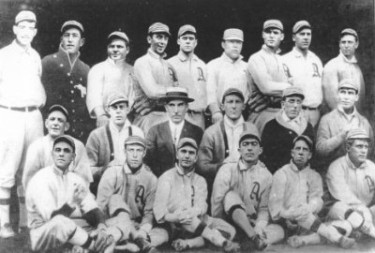
1913 World Champions Philadelphia Athletics |

Harry Davis 1901-1911, 1913-1917 |
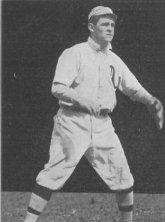
Snuffy McInnis 1909-1917 |
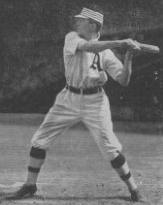
Frank "Home Run" Baker 1908-1914 |
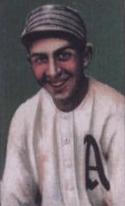
Eddie Collins 1906-1914, 1927-1930 |
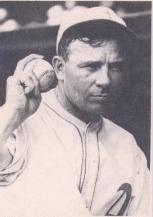
Jimmy Dykes 1918-1932 |
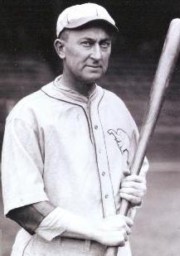
Ty Cobb 1927-1928 |

Bing MIller 1922-1926, 1928-1934 |
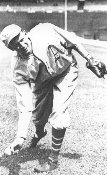
Howard Ehmke 1926-1930 |
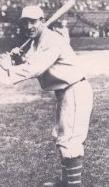
Al SImmons 1924-1932, 1940-1941 1944 |
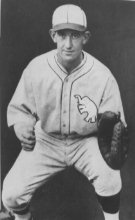
Mickey Cocherane 1925-1933 1928 AL MVP |
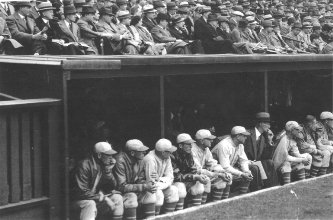
1929 World Champions Philadelphia Athletics |
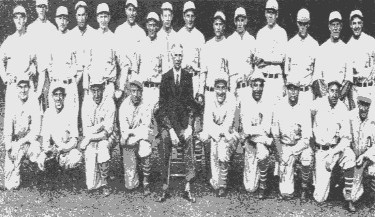
1930 World Champions Philadelphia Athletics |
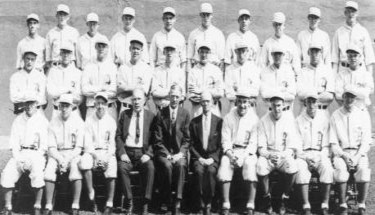
1931 American League Champions Philadelphia Athletics |

George Earnshaw 1928-1933 |
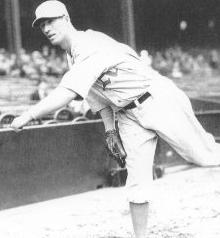
Lefty Grove 1925-1933 1931 AL MVP |
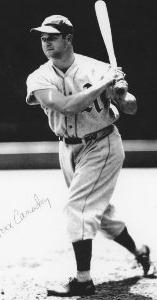
Jimmie Foxx 1925-1935 1932 & 1933 AL MVP |
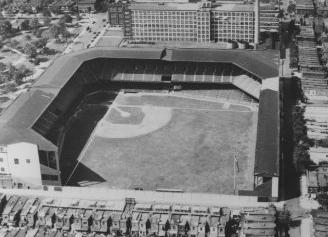
Shibe Park 1909-1954 "The Great Depression" hurts attendence |
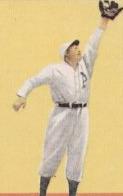
Bob Johnson 1933-1942 |
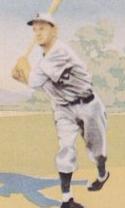
Wally Moses 1935-1941, 1949-1951 |
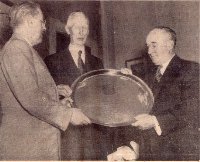
Connie Mack Day May 17, 1941 |
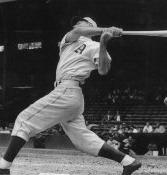
Sam Chapman 1938-1951 |
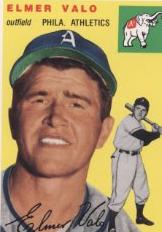
Elmer Valo 1940-1954 |
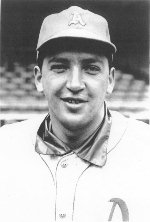
Dick Fowler 1941-1942, 1945-1952 |
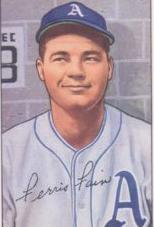
Ferris Fain 1947-1952 |
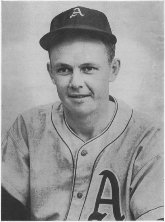
Nellie Fox 1947-1949 |
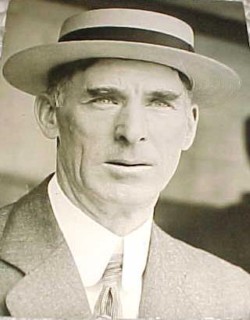
Connie Mack Manager 1901-1950 7,755 Games 3,731 Wins 3,948 Losses |
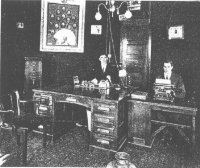
Connie Mack's Office |
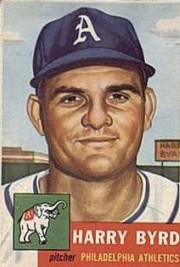
Harry Byrd 1950, 1952-1953 1952 Rookie of the Year |
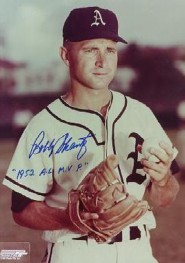
Bobby Shantz 1949-1954 1952 AL MVP |
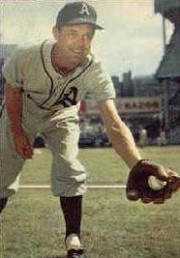
Eddie Joost 1947-1954 |
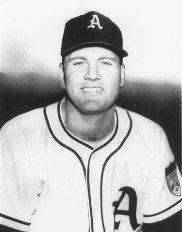
Gus Zernial 1951-1954 |
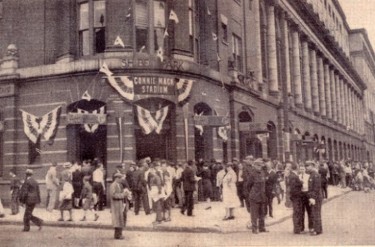
Connie Mack Stadium 1954: A new for the old ballpark |