

Logo 1963-1967 |
First Game Played April 1955 Last Game Played October 1967 Moved to Oakland in 1968 |
Also Played As: Philadelphia Athletics 1901-1954 Oakland Athletics 1968-Present Nickname: In the late 19th Century sports fans who worked at various Philly Athletic Clubs came together and formed a baseball team named Athletics (as many similarly formed teams were known as), the team joined the National Association on March 17 1871, and folded in 1875. In 1901 when Connie Mack was given a Philadelphia AL Franchise he paid tribute to Philadelphia's first pro ball team, and named them so. Elephant Logo (1955-1962): In 1902 John McGraw manger of the New York Giants referred to the Athletics as the "White Elephants", implying Mack shouldn't be allowed to spend money without supervision. Mack defiantly adopted the White Elephant as the team insignia, and in 1902, the A's won the American League pennant. Team Colors: Green, and Yellow (1963-1967) Blue, Red, and White (1955-1962) Managerial History: Lou Bodreau 1955-1957 Harry Craft 1957-1959 Bob Elliott 1960 Joe Gordon 1961 Hank Bauer 1961-1962 Eddie Lopat 1963-1964 Mel McGaha 1964-1965 Alvin Dark 1966-1967 Luke Appling 1967 Stadium History: Kansas City Municipal Stadium 1955-1967 All-Star Games Hosted: (1) 1960 World Champions: None World Series: None Retired Numbers: SEE OAKLAND ATHLETICS Hall of Famers: (4) Jim "Catfish" Hunter 1965-1967 Reggie Jackson 1967 Satchel Paige 1965 Enos Slaughter OF 1955-1956 All-Star Game MVP: None Rookie of the Year: None Cy Young: None MVP: None World Series MVP: None No Hitters: None Best Season: 1966 (74-86) Worst Season: 1964 (57-105) Historical Moments: 1955: Kansas City for years home to the most famous Negro League team the Kansas City Monarchs, and more recently home of the New York Yankees top Minor League franchise was all abuzz as the Philadelphia Athletics had relocated, and decided to make Kansas City their new home. When the A's finally made their home debut 32,844 excited fans turned out to watch the A's beat the Tigers 8-2. There was not much winning that first year, as the Athletics finished in 6th place with a 63-91 record. 1956: Despite playing in a new city the Athletics continue to be one of the worst teams in all of baseball. 1956 is no different, as the A's finish in last place with an awful 52-102 record. Making matters worse is ownership feels it is in the team's best interest to trade off the players who were with them in Philadelphia, to get a new identity in Kansas City. The move backfires, as the Yankees are able to win a few pennants on Athletics cast off including 1952 MVP bobby Shantz. While the Yankees benefit form A's cast-offs the Athletics get burdened by old aging players the Yankees no longer want, and get the reputation as the un-official Yankees farm club. 1958: In a mid-season trade with Cleveland Indians the Athletics acquire a young OF named Roger Maris who becomes an immediate fan favorite, and who's potential is labeled as can't miss. Despite the trade the Athletics cant do better then finishing 7th with a 73-81 record. 1959: After another dreadful 7th Place 66-88 season the Athletics anger their fans, and increase their reputation as the Yankees farm club by trading away their up and coming slugger Roger Maris, and 2 others to the Bronx Bombers. In exchange the A's receive Hank Bauer (who only plays two season before becoming Kansas City's manager), Don Larsen (who in a little over one season goes 2-10.) Norm Siebern (who becomes an adequate OF for the next 4 years), and Marv Throneberry (who only plays 144 games in 1 and half season with the A's). As for Maris he only wins back-to-back MVP awards, while breaking Babe Ruth's single season Home Run record. 1960: Insurance and real estate magnate Charlie Finley purchased controlling interest in the club. He took a strong role in the daily operations of the club, often usurping his manager's function. Finley tried numerous promotions. Some of Finley's promotions included a zoo behind the outfield with a Mule Mascot named Charlie O. He would also have a giant electronic rabbit bring the baseballs to the umpire, and ground crews dressed up in space suits. To help his team win Finley tried anything including moving the fences in and out, and firing managers and broadcasters yearly. None of Finley's moves produce a winner and maintain fan interest would work as the A's continue to be at the bottom of the American League. 1962: After 3 more awful seasons, and diminishing attendance Charlie Finley attempts to move the Athletics to Dallas. However AL owners are unwilling to let him make the move, and he is forced to stay in Kansas City. 1963: In an attempt to draw attention to his struggling team he changes the teams traditional colors of Blue, White, and Red for flashy Green, and Yellow. Finley figures since more games are on color Television fans deserve to see more colors then just Blue, Black and Red. The A's stick out, but continue to play like a sore thumb finish 8th with a 73-89 record. 1964: The Athletics return to the American League basement with a woeful Kansas City worst record of 57-105. The finish allows the Athletics to earn the right to the first draft pick in the following season's draft that was to be held for the first time ever. With the first draft pick in baseball history the A's select OF Rick Monday. 1965: Another awful 59-103 last place season is highlighted by Bert Campaneris who plays all 9 positions in a game on September 8th. The night was billed as "Campy Campaneris Night", and 20,000 showed up at Municipal Stadium to watch. Campaneris didn't get a chance to field at his natural shortstop position in the first, but did assist on a pickoff as a second baseman in the second inning. After an uneventful stay at the hot corner in the third, he moved to left field for the fourth, and caught a fly ball. Campy snared another in center the following inning, muffed a Jim Fregosi fly ball in right in the sixth, but as a first baseman managed to snag a pop-up in the seventh. Campaneris' most challenging assignments came in the final two innings. When he took the mound in the eighth he pitched as well as could be expected. After inducing a fly out from leadoff man Jose Cardenal, Campy allowed two walks, one hit and one run. But he got a break when Angel second baseman Bobby Knoop struck out and catcher Billy Bryan caught Fregosi trying to steal third to end the inning. Campaneris moved behind the plate in the ninth, and the Angels' Ed Kirkpatrick took advantage by stealing second base after a leadoff single. Three batters later, with Kirkpatrick on third and Tom Egan on first, California again tested Campy's arm with a double steal. Second baseman Dick Green took the throw at second and quickly whipped it back to Campaneris in time to nail Kirkpatrick coming home. Kirkpatrick's only shot at scoring was to crash into Campaneris and try to jar the ball loose. Even though Campaneris held on to preserve the 3-3 tie, the collision forced him to leave the field. After he headed off for X-rays, the two teams dueled long into the night. The game didn't end until the thirteenth inning, when the Angels scored twice to win, 5-3. 1965: In another publicity stunt in 1965 Satchel Paige who stared 25 years earlier with the Negro League's Kansas City Monarchs starts one game for the Athletics. Paige, whose real age is unknown, is believed around 60-years old. In his one appearance old Satchel goes 3 innings allowing 1 hit, and no runs. 1966: The Athletics begin to show some signs of life as they manage to play competitive ball for part of the season before finishing in 7th with their best mark (74-86) while in Kansas City. Highlighting the resurgence were two young pitcher named Jim "Catfish" Hunter, and John "Blue Moon" Odom who held AL teams to a 45 1/3-inning stretch of scoreless baseball. The A's also begin to but together a good team on the farm including drafting Reggie Jackson with the 22nd over all pick in the Major League draft. 1967: With the Athletics continually struggling at the gat in Kansas City, and many believing fans in Kansas City are staying away because of Finley himself, owner finally give in and allow Finley to seek a new location for the Athletics. In the A's final year in Kansas City they finish in last place once again with a 62-99 record. The lame duck A's only manage to win 10 of their final 40 games. However, a bright future lay on the horizon in Oakland, at the end of the season Reggie Jackson makes his debut, and with in a few years would become one of baseball's premier sluggers. The A's also continue to develop strong pitching as Vida Blue, and Rollie Fingers were only a few years away from joining the big club. As for Kansas City they would only have to suffer a one-year absence from the Majors as the expansion Royals joined the American League in 1969. Interesting Fact: Prior to the Athletcis moving into Kansas City Municipal Stadium, the city purchased the old scoreboard from Braves Field and installed it at the stadium. Spring Training History: West Plam Beach, FL 1955-1962 Bradenton, FL 1963-1967 |
�MMI Tank Productions in association with Chris Creamer Properties Inc. Stats researched
by Frank Fleming, all information, statistics, logos, and team names are
property of Major League Baseball. This site is not affiliated with the
Kansas City Athletics or the American League, Major League Baseball. This
site is maintained for research purposes only. All logos used on this page
were from Chris Creamer's Sports Logos Page. Page created on July 30, 2001. Last updated on July 30, 2001 at 2:00 am ET. |
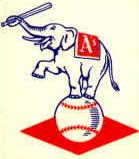
Logo 1955-1962 |
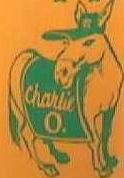
Alternate Logo 1963-1967 |
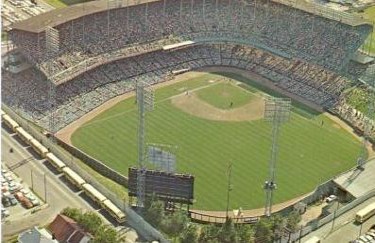
Kansas City Municipal Stadium 1955-1967 |
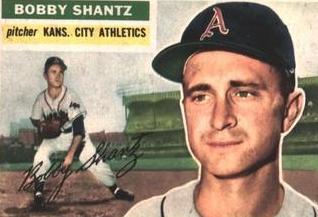
Bobby Shantz 1955-1956 |
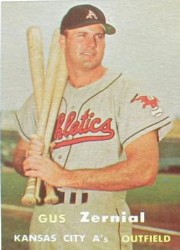
Gus Zernial 1955-1957 |
Art Ceccarelli 1955-1956 |
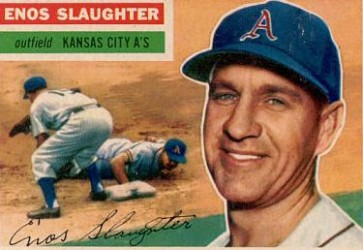
Enos "Country" Slaughter 1955-1956 |
Vic Power 1955-1958 |
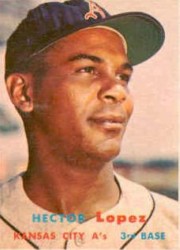
Hector Lopez 1955-1959 |
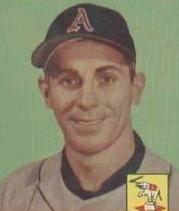
Ray Herbert 1955, 1958-1961 |
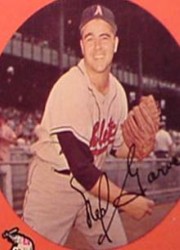
Ned Garver 1957-1960 |
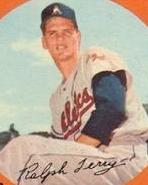
Ralph Terry 1957-1959 |
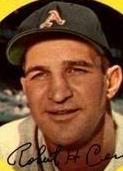
Bob Cerv 1957-1960 |
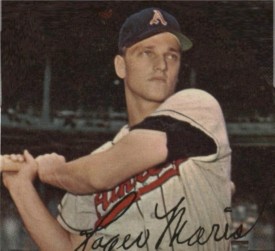
Roger Maris 1958-1959 |
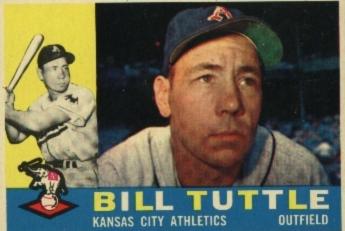
Bill Tuttle 1958-1961 |
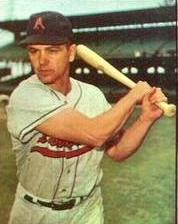
Dick WIlliams 1959-1960 |
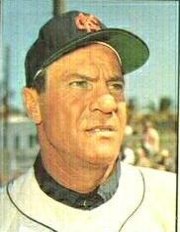
Hank Bauer 1960-1961 MGR 1961-1962 |
Don Larsen 1960-1961 |
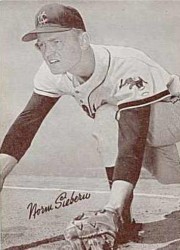
Norm Siebern 1960-1963 |
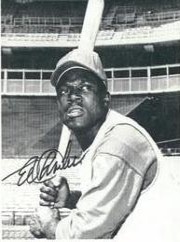
Ed Charles 1962-1967 |
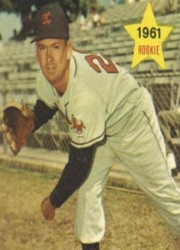
Jim Archer 1961-1962 |
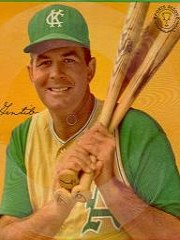
JIm Gentile 1964-1965 |
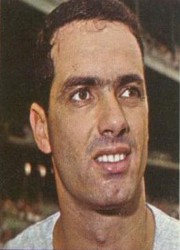
Rocky Colavito 1964 |
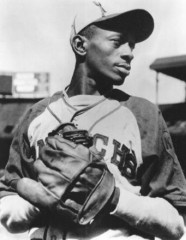
LeRoy "Satchel" Paige 1965 |
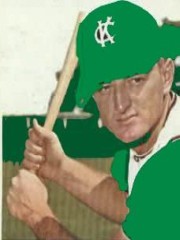
Ken "Hawk" Harrelson 1963-1966, 1967 |
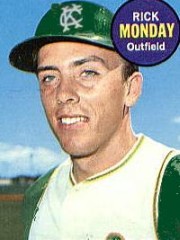
Rick Monday 1966-1967 1965: #1 Draft Pick |
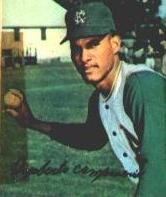
Bert Campaneris 1964-1967 |
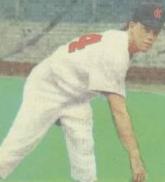
Lew Krausse 1961, 1964-1967 |
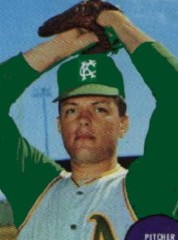
Jim Nash 1966-1967 |
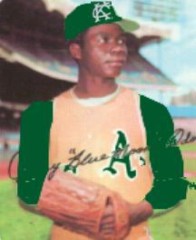
John "Blue Moon" Odom 1964-1967 |
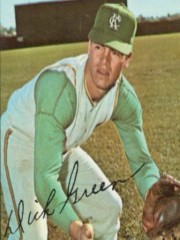
Dick Green 1963-1967 |
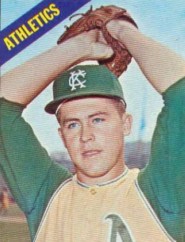
Jim "Catfish" Hunter 1965-1967 |
Reggie Jackson 1967 |