 |
 |
 |
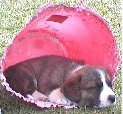
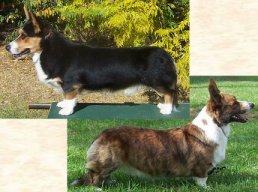
| Although the Cardigan Corgi has a heavy boned long body on short legs and his front legs are slightly bowed, well cared for dogs who are not allowed to become overweight rarely have any physical problems. Growing puppies should not be allowed to run up & down stairs, jump out of the back of the car, on & off the lounge or your bed or be forced to exercise when they wish to rest. |
| This can damage soft growing bones. Let the puppy decide how much exercise he needs. Adults can play as much as you want, go for long walks, swim with you & generally exhaust you, then quite happily 'watch' TV with you. |
 |
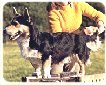
| Brush once a week with a stiff bristled brush. Bath when necessary ie when he gets muddy or smelly. The Cardi will shed coat twice a year, usually in autumn & spring. - at this time he will need brushing every day for a week or two - when the old coat is just about gone, bath him, let him dry & brush thoroughly. If fleas are a problem in your area, one of the 'spot on' flea preparations will work well. Make sure all his bedding is washed & and treated with an appropriate insecticide ( or washed in very hot water) at the same time. If you live in a tick area, check with your vet re appropriate treatment |
 |
 |
| Coat |
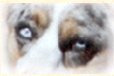
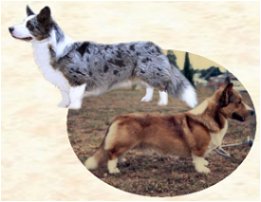
| Eyes Discharge from the eyes requires a visit to your vet. This pale blue (wall) eye is quite normal. It is often occurs in dogs with the merle coat colour It sometimes is seen in black dogs with merle litter mates Sight is quite normal, just as a blue eyed person has normal sight. |
 |
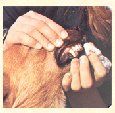
| Teeth If a dog is fed some large bones, meat in chunks so that he has to chew it & not too much mush, he should have reasonably clean teeth for life. If his - breath becomes smelly - teeth become brown - gums become red & sore take him to your vet; his mouth needs attention |
 |
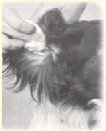
| Ears Cardigans rarely have ear problems - Check regularly for dirt (from romping in the dust) - Check for water after swimming or a bath - Check if he starts to continually shake his head or rub his ear; he may have a grass seed, infection or some other irritation. Clean with a soft tissue or cotton wool on the end of your finger. Do not use cotton buds!! If he moves abruptly you could injure him. - If the dirt shoes even slightly red - take him to your vet - If the irritation does not clear up quickly - take him to your vet |
 |
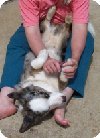
| Feet Dogs naturally grow hair on the under side of their feet (between the pads & toes) to protect their pads. In the wild this hair & their nails are kept short by the harsh surfaces on which they run. Our dog's feet need attention periodically to keep them comfortable (hair trimmed & nails short). How often depends on their genetic makeup & the surfaces on which they run. Some dogs rarely need their feet attended to no matter where they live. A dog who lives inside & runs on soft lawn will need his feet trimming more often than one who regularly goes jogging on gravel roads or runs on the beach. As babies, I teach my dogs to lie on their backs between my legs to allow me to trim their feet. |
 |
 |
 |
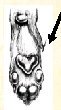
| Don't forget dewclaws! - They should be removed, but not all breeders do. - if not kept trimmed (the same as his toenails) they will grow into the flesh of his leg, causing him much pain & necessitating a trip to the vet & an operation to repair the wound. |
 |
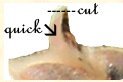
| When trimming nails be careful you don't cut the quick (the blood vessel that runs down the nail): it hurts & will bleed. |
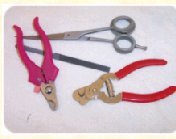
| Suitable nail clippers can be found at vets & pet shops. A small bastard file (probably to be found in any handyman's workshop) can be used instead of clippers to trim nails. Use sharp scissors with rounded points to trim the hair. |
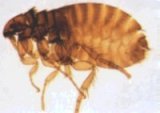
| If fleas are a problem one of the 'spot on' flea preparations will work well. Don't forget to wash his bedding at the same time; washing in very hot water should get rid of any fleas & eggs - or use an appropriate insecticide. |
 |
| Fleas |
 |
 |
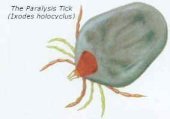
| Many areas of Australia, particularly the coastal & warmer areas, harbour the paralysis tick. These can be devastating; they can kill your dog in the most horrible way. I have seen this happen once despite the best efforts of the vet & I never want to see it again. Check with your vet, who can tell you if ticks are a problem in your area & what precautions to take. He can also tell you the symptoms of tick paralysis - just in case. If an affected dog gets to a vet quickly enough, he usually recovers. Don't forget to check your holiday destination re ticks. |
| Ticks |
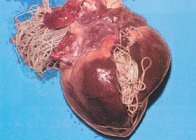
| Many areas of Australia, particularly the coastal & warmer areas, harbour the mosquito that carries heartworm. This is a blood born parasite that eventually lodges in the heart & the arteries around the heart, clogging them and causing the death of the dog. Check with your vet who will advise you on appropriate preventative treatment if it is necessary in your area. If you travel with your dog, it is wise to keep him on heartworm preventative treatment. |
| Heartworm |
 |
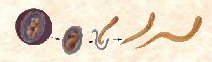
| Dogs suffer from the effects of a number of intestinal worms that can be picked up in a variety of ways. - from the ground through theeir paws - from infected dogs - from fleas - from eating infectec offal (Hydatids; this is a parasite of other organs, particularly the liver - its treatment is included with that of intesitnal parasites) Farm dogs & hunting dogs are particularly susceptable to hydatis infection from scavaging carcases & from eating uncooked infected offal from farm kills. All can be controlled - by keeping your dog on an appropriate worming regime - by making sure that his offal meats (liver, kidney etc) come from the supermarket or butcher, ie that is fit for human consumption & thus uninfected. - by regularly picking up & disposing of faeces in his yard - by keeping him & his enviroment free of fleas |
 |
| Intestinal Worms |
 |
 |
 |
 |
 |
 |
| Don't forget his vaccinations. He must be protected against diseases such as Distemper, Hepatitis & Parvovirus. Your vet will advise you on an appropriate vaccination & check up regime. |