| Compost Page 1 |
 |
| What is compost? Compost generally refers to (vegetable) food waste, sometimes combined with other material, such as manure, leaves, and grass, decomposing to create a natural fertilizer for lawn and garden use. Here we will discuss compost, both wild and domestic. |
| Wild Compost? Does composting occur in nature? Sure composting occurs in nature, but how often do we think of it that way? A more common term for composting in nature is decomposing matter. When something decomposes it is breaking down into simpler components. A leaf for example will break up into smaller pieces over time. Those pieces will become so small that the leaf will turn into dirt with a little help from "decomposers". |
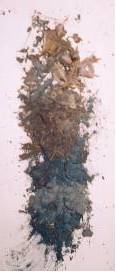
| An example of wild compost is in the photo to the RIGHT. From top to bottom, here we see sediment from the forest floor going through its process, breaking down into dirt. Notice that the top layer is made up of whole oak leaves, pine needles, and small pieces of wood. As you look towards the middle section the material is breaking down into smaller particles and then becoming dirt at the bottom. What makes this possible are the three trophic levels. |
| Still referring to the photo LEFT, we see evidence of the three trophic levels, one being the producers, two being the consumers, and three being the decomposers. Plants and trees are the general producers, and anything that eats from them is the consumer. Plants and trees may produce many types of foods for animals and insects, everything from leaves, roots, seeds, bark, sap, nuts, fruit, nectar, and the wood itself. An entire tree will be produced food. |
| A squirrel may eat an acorn. During the digestion process the acorn is starting to decompose and upon defecation the scat (animal excrement) will help to make up sediment on the ground. Insects, such as caterpillars, may also be examples of consumers. The caterpillars will eat leaves and drop their scat to the forest floor. Other organisms like bacteria and worms may be considered the decomposers. Bacteria are too small to see, but it is clear they are doing their job. A "dead" tree on the forest floor seems to be doing nothing when you stand there and look at it. Though if you return to that same tree few years later you may find that it is a little smaller than the first time you saw it. This is because something is eating it. Bacteria are eating it. Mushrooms and other fungi growing on it are absorbing nutrients, and bugs are crawling over under and through it munching away. If you were to roll a log over you would see plenty of the above. If the bark is still on the log and you were to lift it up you would see a similar process. This tree that was once thought of as dead is actually still full of life. The bacteria, fungi, and insects are all helping to decompose the wood material. The insects actually do more to help out the bacteria. As worms and other insects dig tunnel systems through soil and wood, over and under the bark, they create more surface area, more of a habitat for the bacteria to go to work. These openings provide the opportunity for a fresh supply of water and oxygen needed by decomposers, producers, and consumers. After all the material is completely decomposed it becomes fertile soil where the producers will be sure to grow. Producers create energy. Consumers use that energy, which the decomposers transform into soil. The soil is the foundation from which the producers will grow. There are three essential trophic levels, and one cannot exist without the other. |
| You will find that a decomposing tree or leaf will take about as long to completely break down as it took to grow. A seventy-year-old tree may take up to seventy years to completely decompose depending on climate conditions. |
| Create Your Own Compost! Creating your own compost is simple. Whether you are a gardener or not compost is guaranteed to cut down on the amount of waste (curbside garbage) sent to incinerators and landfills. If you are a gardener, you are guaranteed to have fresh nutrient rich soil to add to your garden and lawn. |
 |
 |
 |
 |