
There are also other islands, where the Uros people live, that float. They're made of floating mats of totora reeds, and move around in the Bay of Puno. They're about an hour.
|
|
|
|
|
|
|
|
|
|
|
|
|
|
|
|
|
|
|
|
|
|
||||||||||||||||||||
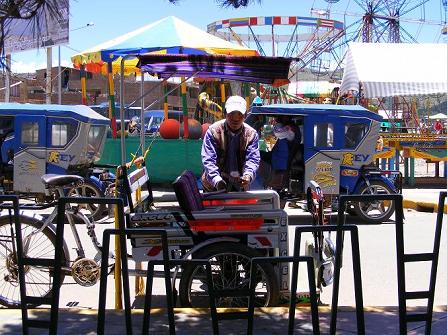
| In addition to taxis and busses, Puno has a couple of other alternative methods of travel. Here the tricycle driver is holding Stanley up, and in back are a couple of 'moto-taxis', a tricycle with a motorcycle engine. | ||||||||||||||||||||
|
||||||||||||||||||||
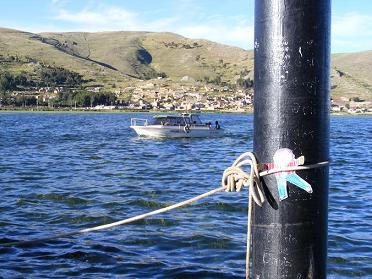
| There are several large islands in the Lake, the most populous being Amantani and Taquile. Boats like these take residents and tourists from Puno to the islands. Taquile is three hours away, and Amantani is four hours. We took a sightseeing trip on this boat, for only half an hour. There are also other islands, where the Uros people live, that float. They're made of floating mats of totora reeds, and move around in the Bay of Puno. They're about an hour. |
||||||||||||||||||||
|
||||||||||||||||||||
|
||||||||||||||||||||
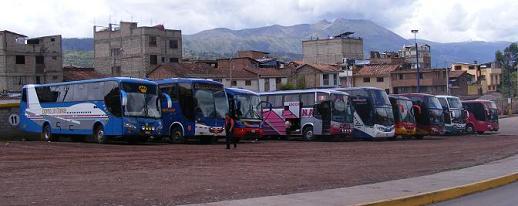
| Leaving Puno we took a big inter-departamento bus (a departamento is like a state). As you can see, these busses are bigger than Greyhound busses, and have two levels. Some carry cargo in the lower level, while others have a second row of passengers. Ours was second from the left. This is the parking area, there is a big terminal where we got all checked in. It's an 8-hour trip. | ||||||||||||||||||||
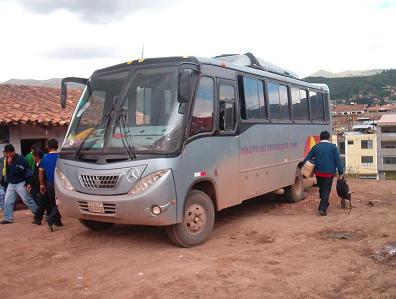
| This is our bus to Paruro, a 35-passenger Mercedes with reclining seats and a stereo that played Peruvian music. | ||||||||||||||||||||
| One Peruvian Sol (their money) is equal to one American Dollar. If the tickets for the big bus were 35 Soles, and for the small one was 5 Soles, and there were six of us, plus 5 soles for the two taxis to carry us from the interdepartamento terminal to the Paruro terminal, how much did it cost to go from Puno to Paruro? Oh, and we hired a tricycle in Puno to carry our luggage from the house to the terminal. He charged 1.5 Soles. | ||||||||||||||||||||
| Next Page => | ||||||||||||||||||||