 |
| Lhasa and Surrounding Area The Jokang, The Potala, Sera and Drepung Monastaries |
|
 |
 |
 |
 |
 |
 |
 |
 |
 |
 |
 |
 |
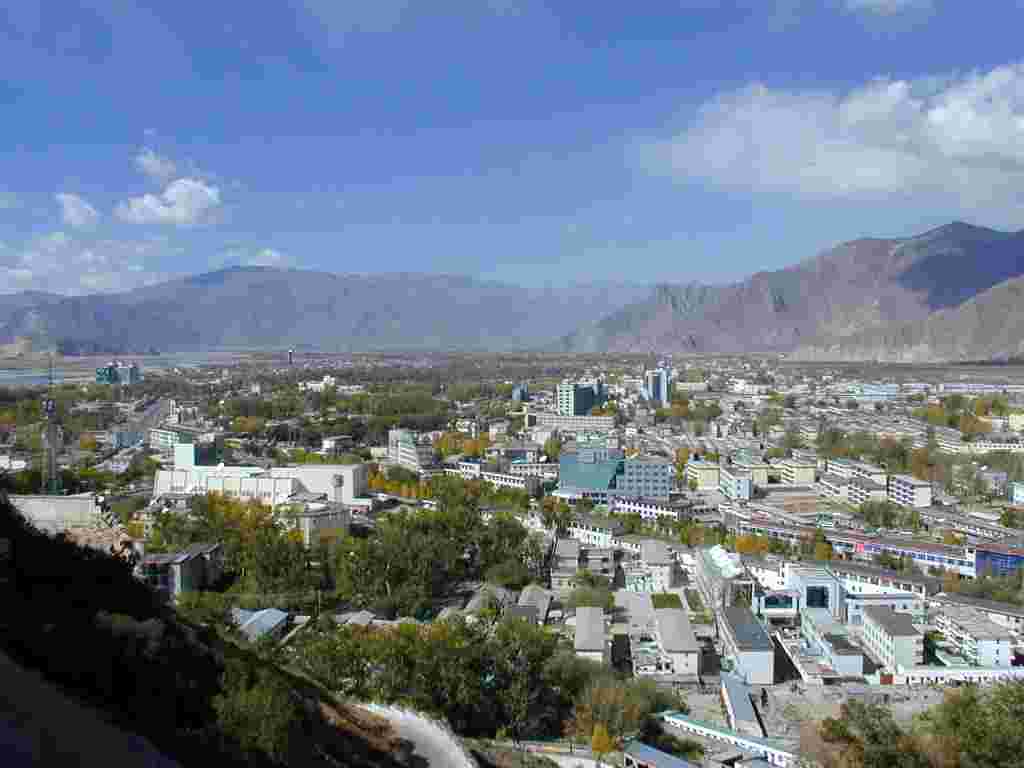
| Lhasa as seen from the roof of the Potala. Lhasa is rapidly becoming a modern city with flashy Chinese discos and department stores... There is even a go-cart center in the square in front of the Potala palace, the old seat of the theocracy... |
| Intro to Tibet.... the mystical kindom of Shangri-La... My experiences in Tibet were at once fascinating and disheartening. A land of tremendous spirit and devotion, but a land changed by 50 years of Chinese occupancy. A land of rocketing literacy rate, but cultural genocide. Walking around Lhasa was suprising. The first indication that there is a cultural problem in Tibet is that there is a small Tibetan district called the Barkhor. It's Lhasa, the Tibetan captial... 50 years ago it was nearly 100% Tibetan, and now there is a small section of the town that is Tibetan. Walk out of this town and you could be in any other town in mainland China. Immigration of Han-Chinese into Tibet is encouraged by the Chinese government, and is a complicated issue since the immigrants see themselves as helping an underdeveloped region of their country... and indeed, the Chinese influence has built tremendous schools (which teach the Chinese viewpoint, naturally), and literacy rate has more than doubled since the Chinese occupation. However it is a country of oppressed people. A theocracy that was unable to practice religion for 30 years from the 50s to 80s. It is a crime to have a picture of the countries exiled spiritual leader, the Dalai Lama (although in their homes the occasional Tibetan will uncover a picture of the Dalai Lama and ask if we have any news on how he is.) Everywhere we travelled permits were carefully checked and the Chinese army influnce was everywhere... We were even chased away from picnicing Tibetans by the police--we weren't to intermingle. The tension was just under the skin of the country. Occasional monks walking by and whispering "Free Tibet" or stories we heard other travellers describe how they were cheered on by the Tibetans or even directly helped to circumvent the Chinese permit laws. Our guide was blacklisted for studying in India and now works under a false name in Lhasa and cannot go home to visit his family... even as his sister was dying. This is the Tibet that was the background of my last two weeks... certainly mysterious, but also very complicated. Perhaps the largest issue that we grappled with as we traversed the country was what could be done now? Under the strain of modernization and Chinese influence, is it too late for a free Tibet? Another question was what can we do to help? Do you stop buying Chinese products or does that just isolate China more? I can't say we solved any of the answers to Tibet's many questions, but awareness goes a long way. I encourage everyone to read some Tibetan history (even the last 50 years) to understand some of these issues which I certainly can't do justice here.... |
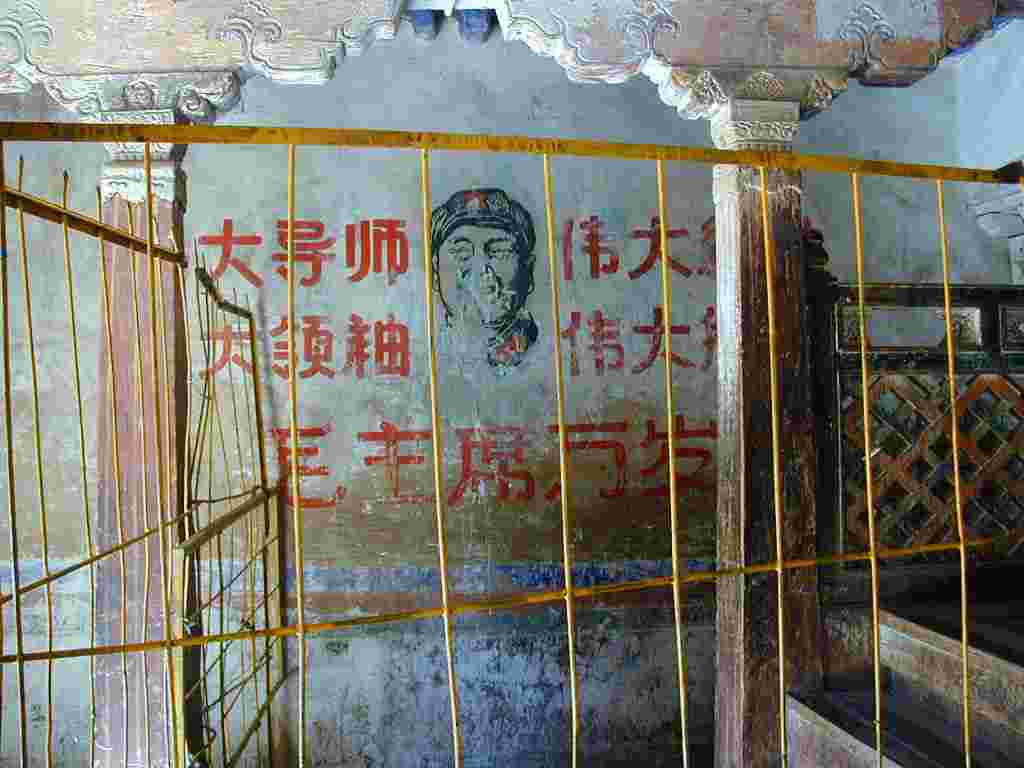
| An unrenovated corridor in Drepung Monastary with a picture of Mao. The bottom symbols say "long live chairman Mao". Most of the 6254 monastaries were destroyed during the cultural revolution, and only a handful are now open and being renovated. |
| The Barkhor and Jokang The Tibetan district, the Barkhor, is a buzzing 3/4 of a kilometer or so in the center of Lhasa. Covered with shops and stalls selling everything from yak meat to religous icons, the Barkhor was a fascinating place to stroll and absorb Tibetan culture. In the center of the Barkhor is the Jokang, the most holy temple in all of Tibetan Buddhism. It is hard to describe the activity of the Jokang. Hundreds and hundreds of pilgrims from all over Tibet circle the Jokang. Some of the more devout actually do the 2 kilometer circuit (or Kora) prostrating themselves every 3 steps! The Jokang itself with it's many shrines was outdone only by the colorfulness of the pilgrims. Each of them carrying offerings or Yak butter to drop in the Yak butter candles to keep them forever full. Although at this point in the trip I barely understood what any of the shrines represented, I do know that the Jokang was the most spiritual place I have ever been if nothing else, then just for the devoutness of the pilgrims. |
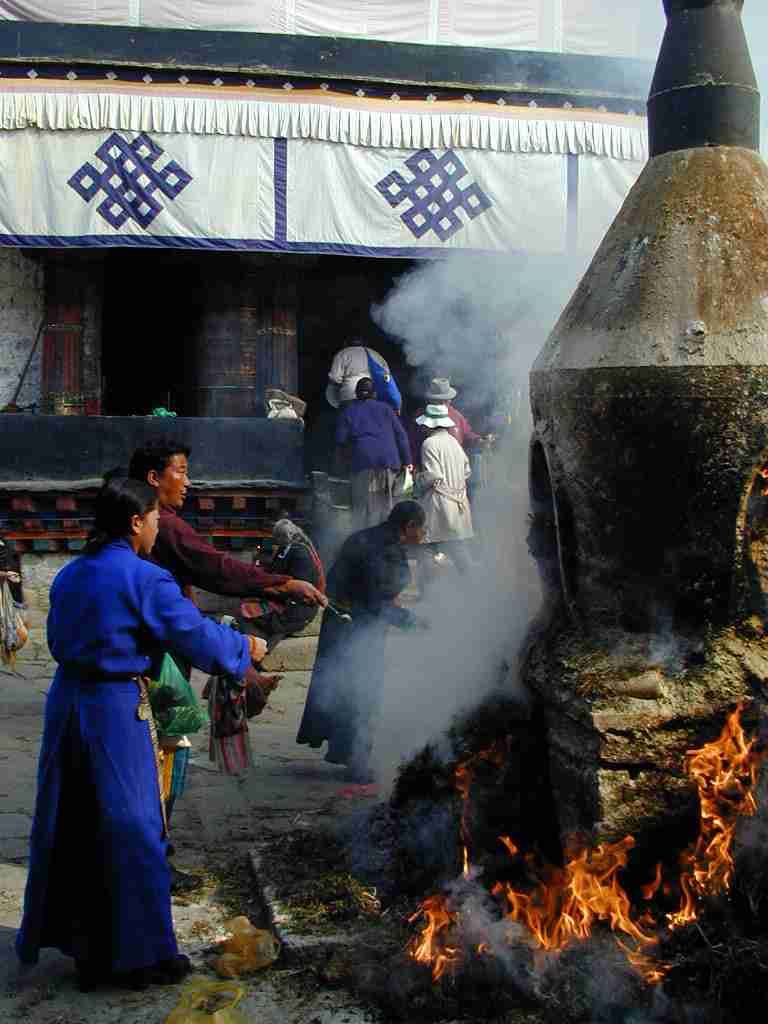
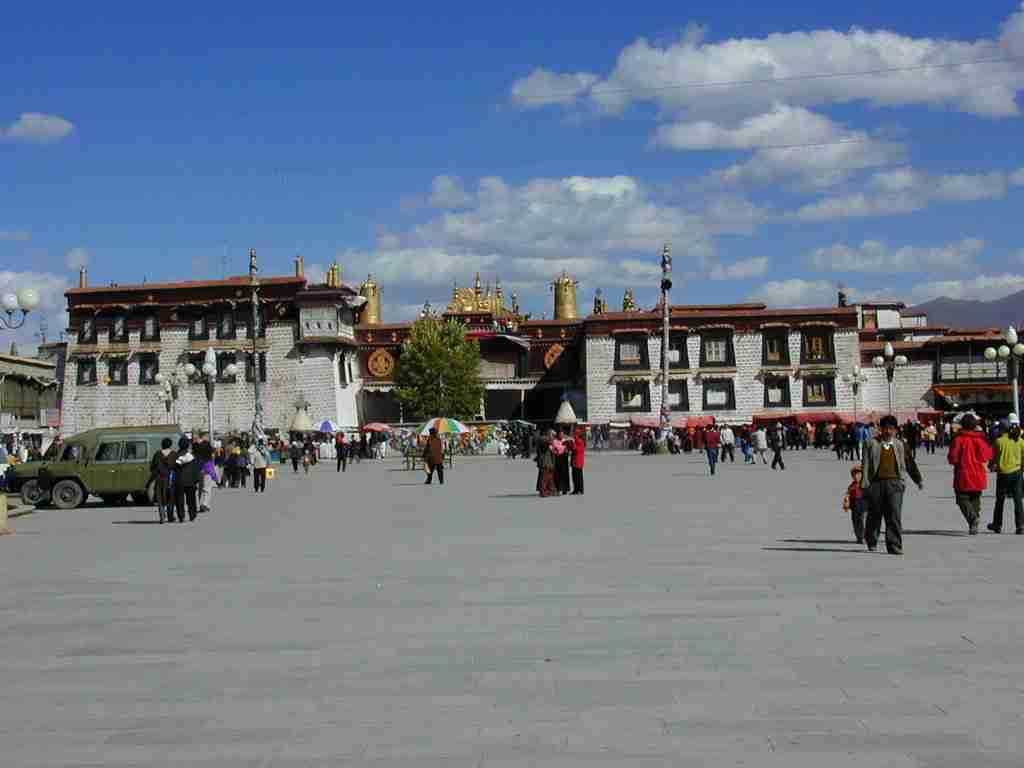
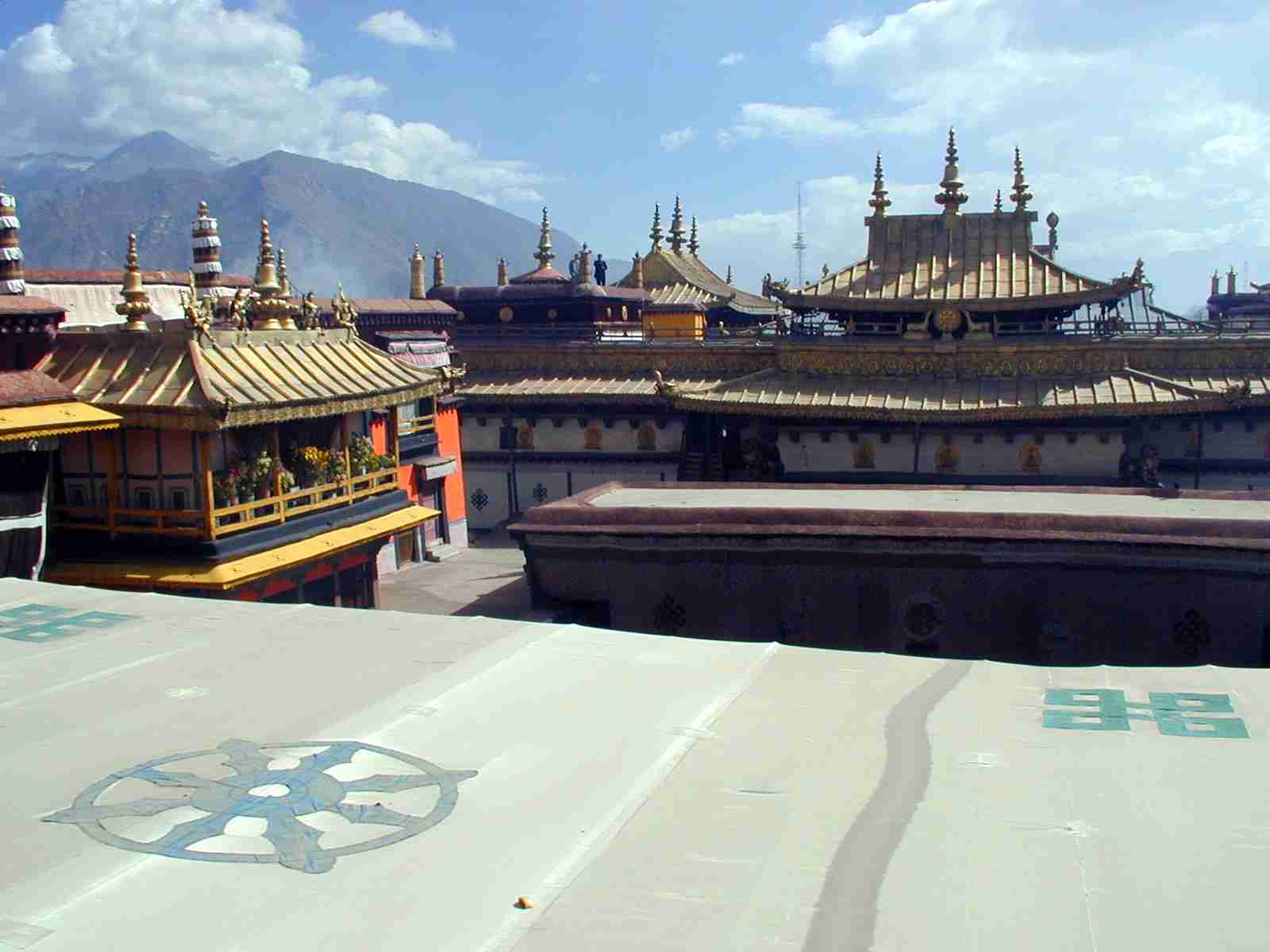
| Above: A small shrine off of the Barkhor with pilgrims burning sage in an overflowing furnace. Below: A view from the roof of the Jokang where I sat for hours getting to know Dan and Carey my first day in Lhasa Right: The Jokang as seen from the front. |
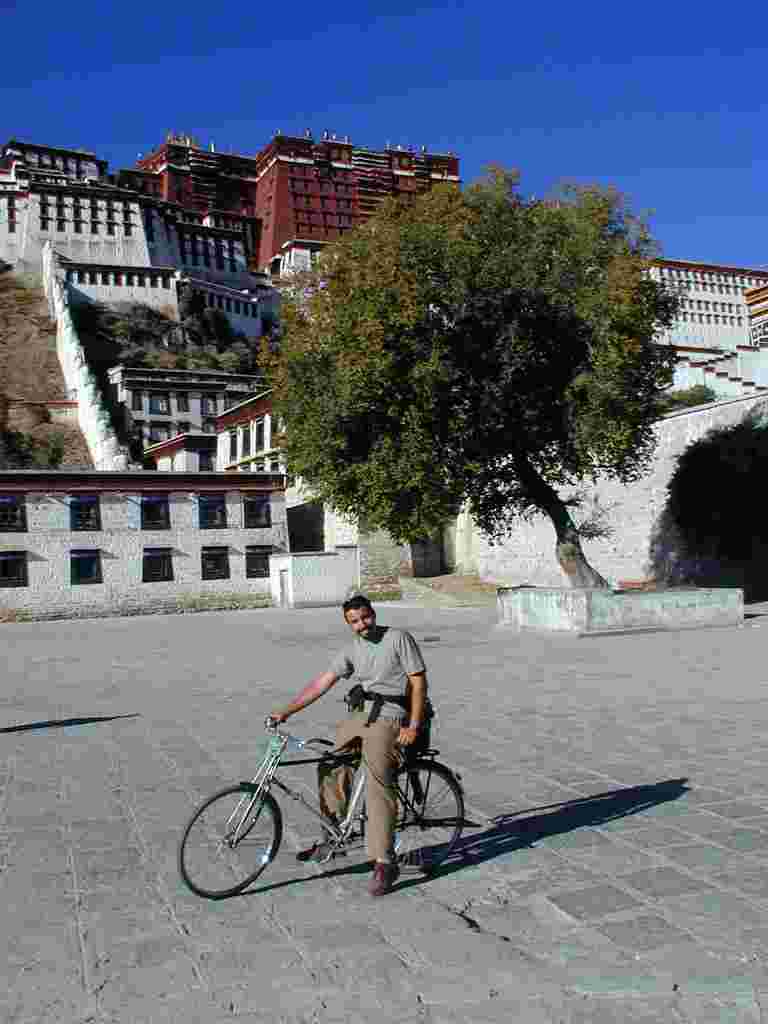
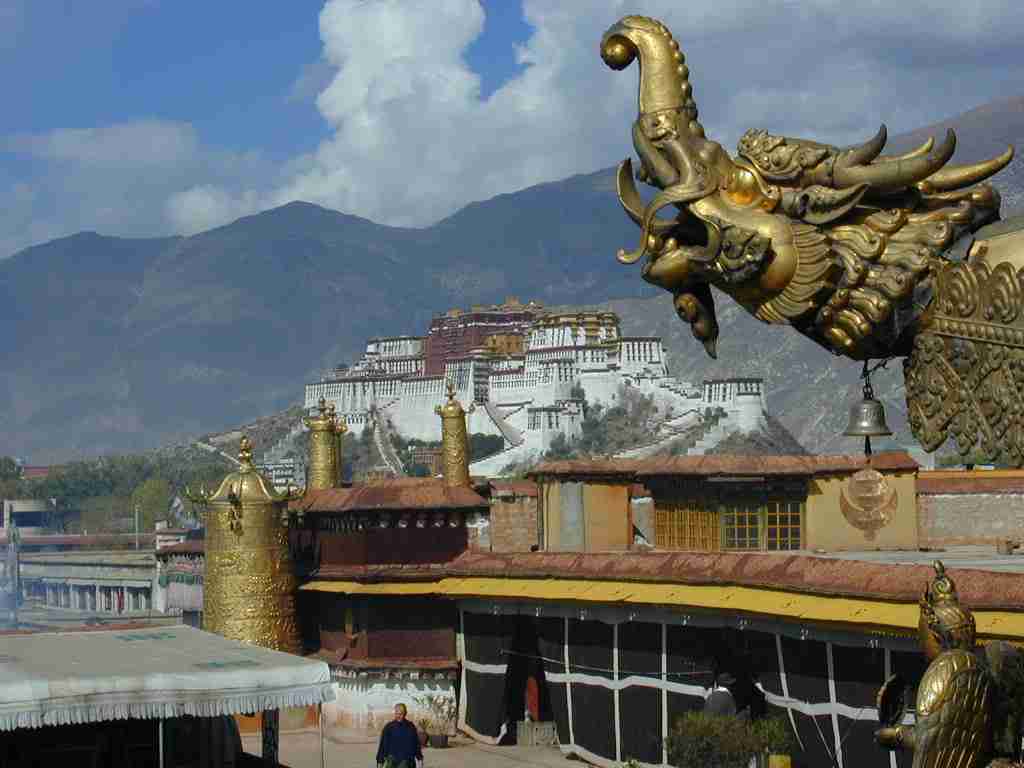
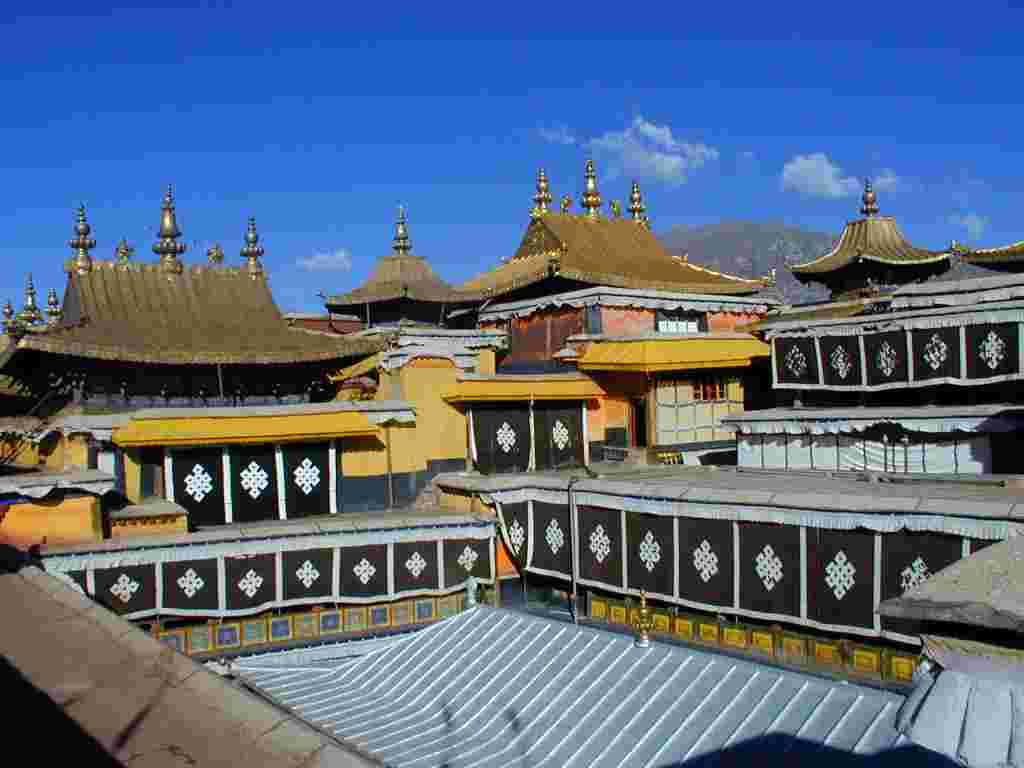
| The Potala palace which sits on a hill overlooking Lhasa was the home of the Dalai Lama and the head of state for Tibet. Now is is effectively a museum and desination for pilgrims to pay homage. Right: View of the Potala from the roof of the Jokang Right Lower: The roof of the Potala Below: We rented bikes to hit the nearby monastaries. Here is a shot of me at the Potala... This didn't exactly cure my need for mountainbiking! |
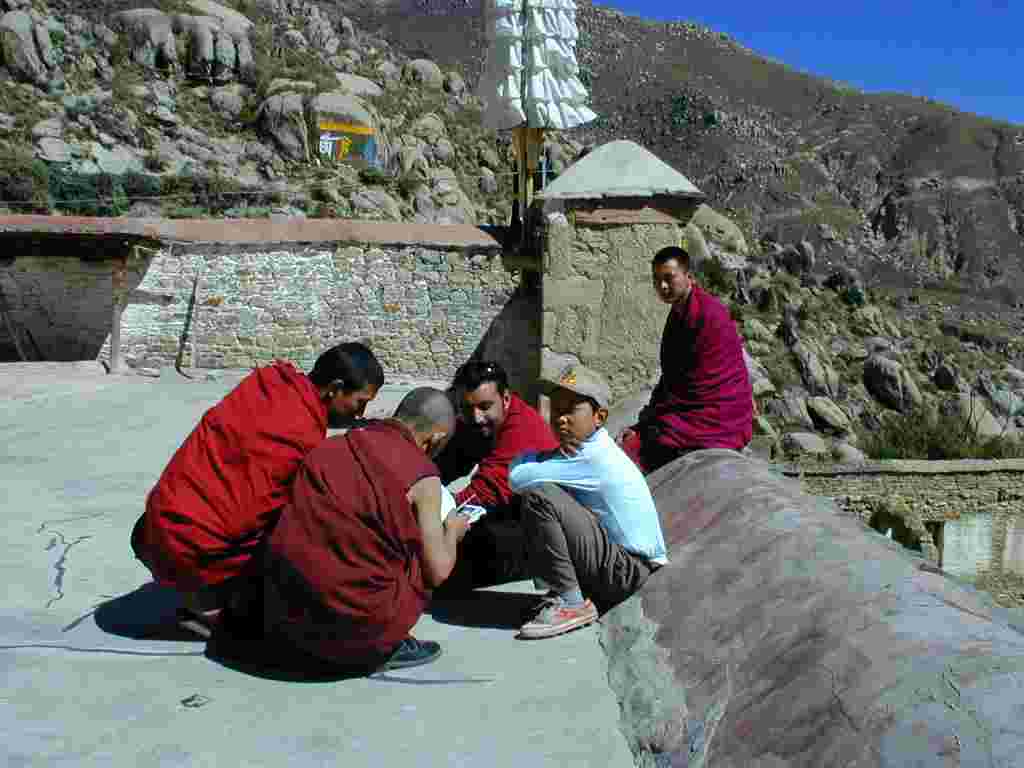
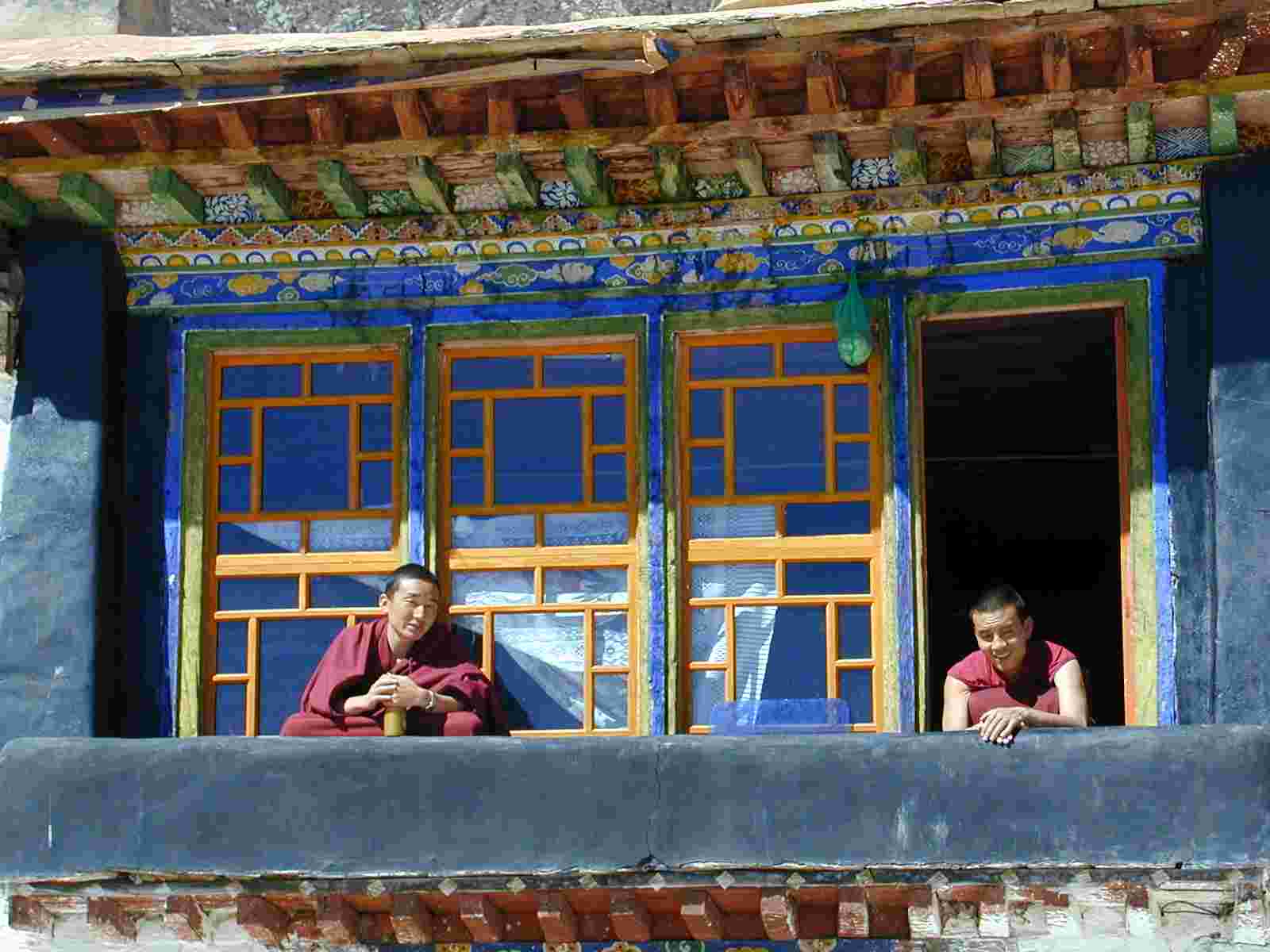
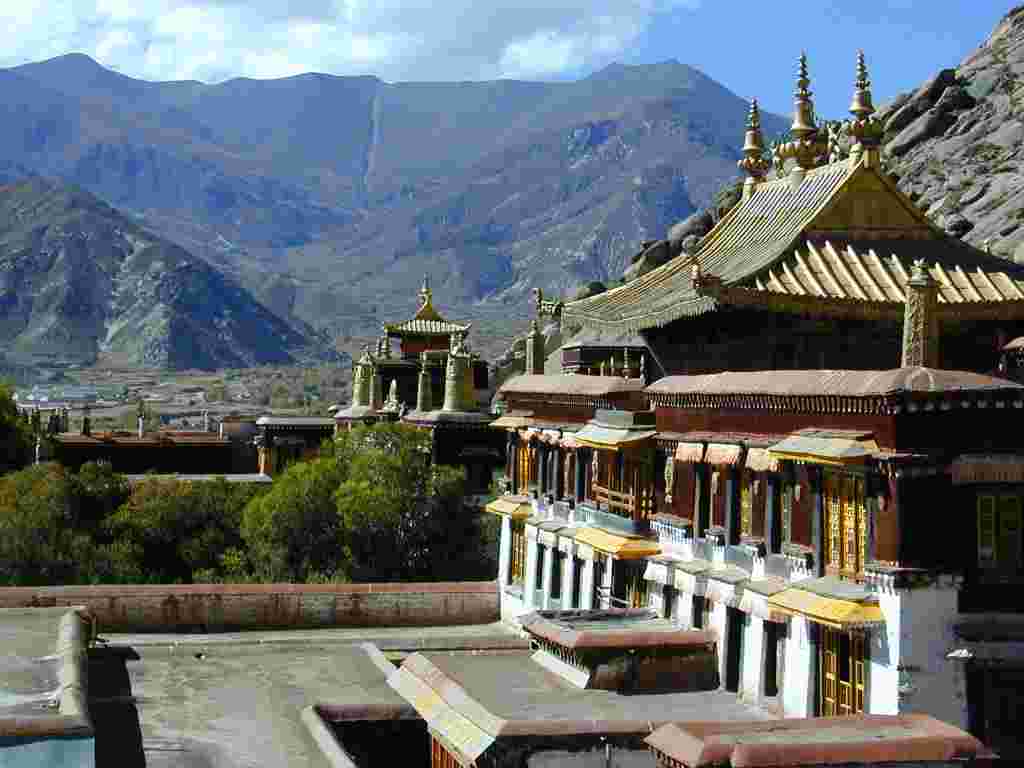
| On the following couple of days, we visited the first of what was to be MANY monastaries. Unfortunately, most monastaries don't allow pictures inside the shrines,so most of my monastary photographs will be only the outside. To the Left is Sera monastary which used to house 5000 monks, and now houses a few hundred. The monastary has many different schools and assembly halls. Drepung monastary was once the world's largest monastary with over 10,000 monks--it now holds about 600, two of which are shown here. to the lower left. Below right are a few monks captivated by the pictures in the religion section of my Tibet book. Tibetan monks are... very informal... friendly and lighthearted... they are easy to approach and interact with... they were even somewhat casual during religous ceremonies we were sitting in on... |
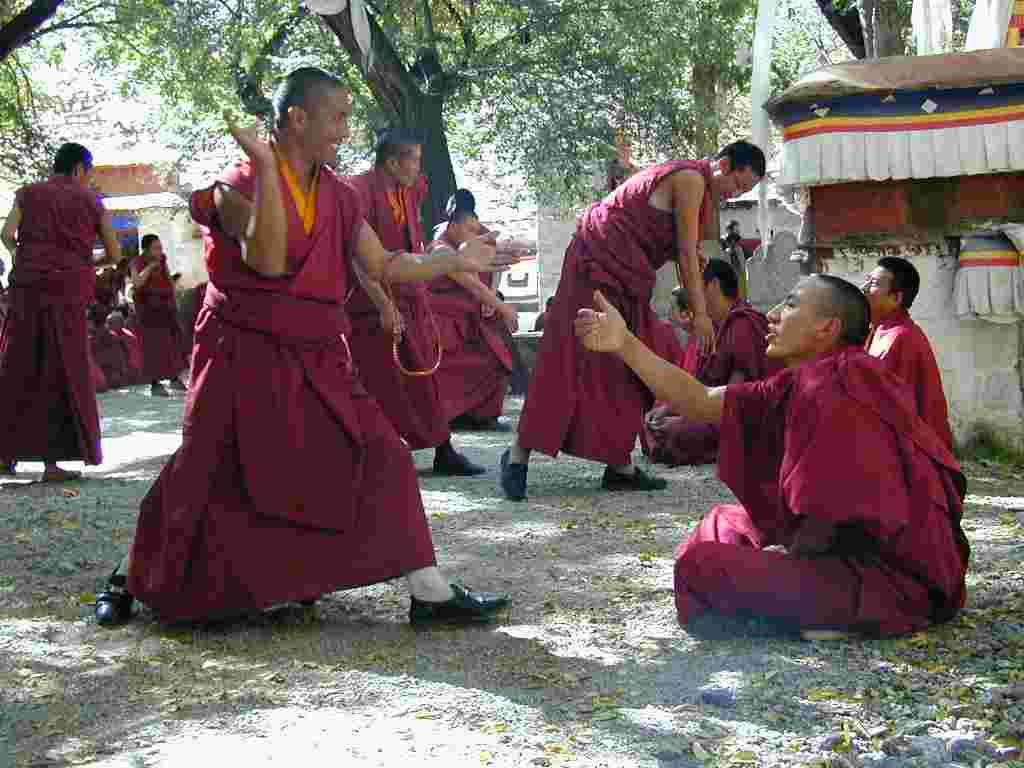
| At Sera monastary we came across the monks in debating practice. The monks take the equivalent of oral exams, and every day they practice their lessons by debating the dharma they have learned. A very active event. During debating the practicing monk will loudly clap and jump forward to make their point. |
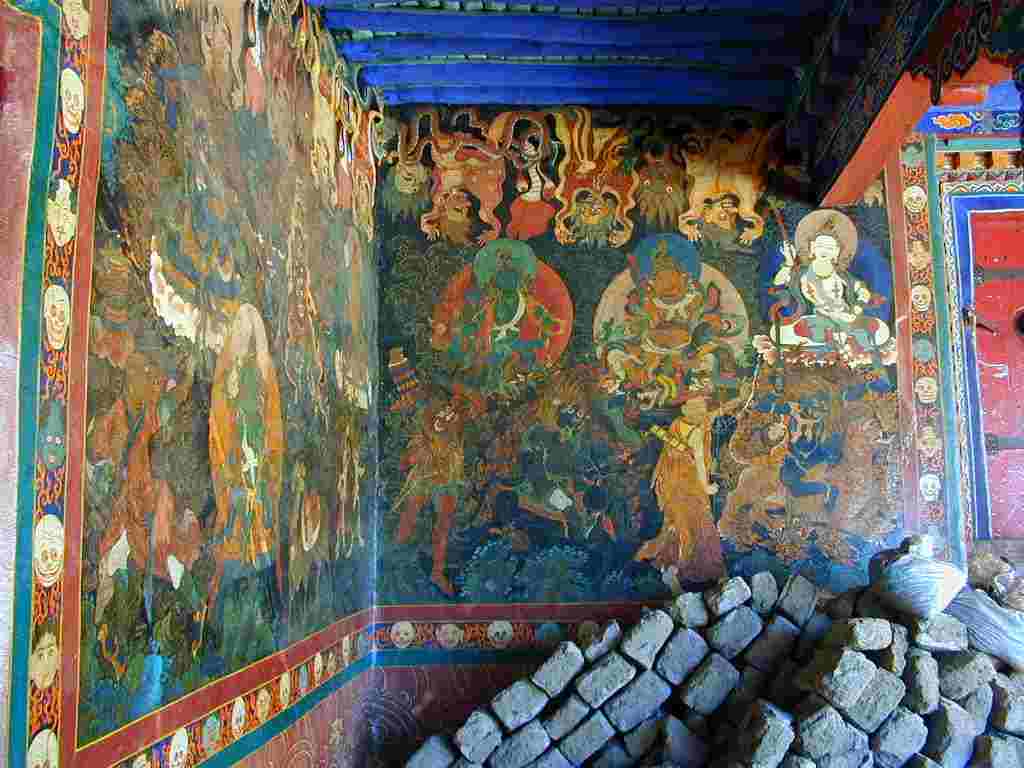
| One of the most fascinating monastaries we went to is Nechung monastary which used to house the Oracle of Tibet who the Dalai Lama consulted. Unlike most monastaries, the iconography was very morbid... you can see to the right the human fillets painted hanging from the ceilings.... |