 |
| Introduction: What is Character? |
 |
 |
| Author John Gardner said characters are the reason people read any story. They must be people with whom your reader wants to spend time, to get to know. They must be someone to care about�either positively or negatively. They might love them, hate them, admire them, or feel their sadness and joys. Peter La Salle wrote, �Out of character, plot easily grows, but out of plot character doesn�t necessarily follow.� Some writing instructors will debate about whether plot or character is more important. What cannot be disputed is that without well-developed characters, your story is just fluff on a blank page. It doesn�t matter how beautiful the prose is or how breath-taking the descriptions, without three-dimensional characters, there isn�t much of a story.
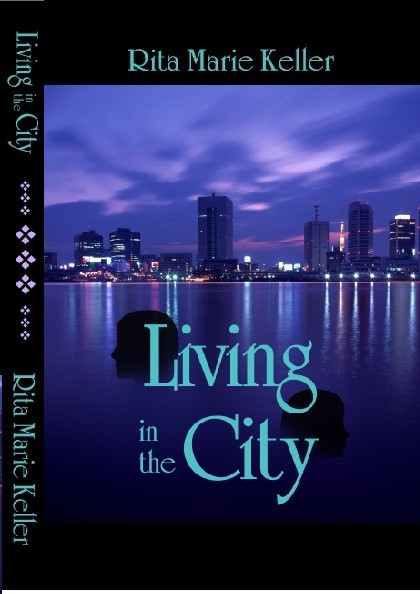
Three-dimensional characters are complex. They have real conflicts and backstories which explain their motivations. Flat characters have no real conflicts and react predictably. They don�t change. Get to know your characters. The more you know them, the more real they will be to your reader. The other reward to getting to know them is they will write the story for you. If you start mixing up reality with fiction, that�s a good sign. I�m joking�partly, anyway. When I was writing my novel, Living in the City, my characters extended beyond the page. The novel was set in a neighborhood similar to the one I was living in at the time. Some of the characters were compilations of traits of various neighbors, others pure invention. It got to the point where I was talking and thinking about my fictional neighbors as if they were real people. They were real. But for a while my husband thought I needed to see a psychiatrist. So what does it mean to know your character? It�s not merely being able to give a physical description about what they�re wearing, or their eye and hair color. Characterization goes beyond physical descriptions. It includes major and minor traits, habits, possessions, and basic morals and values. You will know your character well enough to know his preferences, how he moves through his world, his reactions, his conflicts, and what motivates him. You will also know how he dresses, what he eats for breakfast, what is his occupation, and what he likes to watch on TV. However, knowing all this doesn�t necessarily mean you should reveal all in your stories. A good character is like an iceberg. Two-thirds of it is submerged, but we know the rest is there. When you begin your story, you may not know all these things. You will discover more about your character in your writing process. If you begin with a character sketch, you may discover as you write that your character doesn�t totally fit it. That�s okay. Don�t rewrite to manipulate your character to fit the sketch. Find out what he is saying to you. Your characters should have at least one major trait and several minor traits. How many minor traits you reveal depend on the length of the story. Traits should be significant to the story and consistent with the character. Don�t throw in more traits thinking they are adding to the character development. Traits must be relevant. A major trait is something that molds basic character. For instance: honesty or dishonesty, selflessness or selfishness, worldliness or naivet�, and so on. Minor traits also should be consistent, but they aren�t as significant. For instance some minor traits could be a bibliophile who drinks coffee constantly and likes to sing show tunes. Later in the character and conflict section I will illustrate how to put these traits together. Earlier I mentioned flat characters. They�re cookie cutter characters or stereotypes. Avoid clich�s when creating characters. For instance, don�t make your heroine an Irish red-haired beauty with a fiery temper or an absent-minded professor or a donut eating cop. Give them more depth, traits that many readers can identify with, those they would likely see and accept in others or in themselves. Ernest Hemingway wrote, �When writing a novel, a writer should create living people; people, not characters.� Gone are the days of purely good heroines or purely evil villains that were the staples of Victorian literature. Perfect heroes are not believable, nor are purely evil villains. Even villains must have some redeeming traits. Give your hero some identifiable flaws. In most cases, your main character will grow and change. Robie Macauley wrote in Technique in Fiction: �In real life most people remain pretty much unchanged after they�ve reached maturity. They �grow and change� only in the sense that we get to know them better and better. Over the course of a friendship, or over the course of a novel, we gradually realize the complex reasons behind their characteristic patterns.� Macauley describes four basic character types: 1) The changeless character (Nurse Ratchitt, Nancy Drew) 2) The one-change character (An innocent girl from Kansas moves to Los Angeles in search of a movie career and gets mixed up in drugs and sex.) 3) The changeless but complicated character who is slowly revealed through the story�s events. (Jay Gatsby) 4) The character that is gradually revealed and grows and changes as the events affect him or her. (Scarlett O�Hara) How do we reveal characterization? � through their actions�how they react and speak, how they behave alone and with others � through what the character thinks or feels about himself. � through habits, expressions, mannerisms, and postures � through their setting and environment � how other characters perceive them In the notes and exercises to follow these six weeks, we�ll cover those things. copyright 2002-2007 Rita Marie Keller |
 |