 |
|
|
|
|
|
|
|
|
|
|
|
|
|
|
|
|
|
|
|
|
|
|
|
|
|
|
|
|
|
|
|
|
|
|
|
|
|
|
|
|
History of New Mexico |
|
|
|
In the Beginning - Archaeologists say that humans first migrated to the Southwest, moving southward from the Bering Land Bridge, about 12,000 B.C. Sites such as Sandia Cave and Folsom--where weapon points were discovered that for the first time clearly established that our prehistoric ancestors hunted now-extinct mammals such as woolly mammoths--are internationally known. When these large animals died off during the late Ice Age (about 8,000 B.C.), people turned to hunting smaller game and gathering wild food. |
|
|
|
 |
|
|
|
|
|
 |
|
|
|
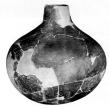
Stable farming settlements, as evidenced by the remains of domestically grown maize, date from about 3,000 B.C. As the nomadic peoples became more sedentary, they built permanent residences, pit houses, and made pottery. Cultural differences began to emerge in their choice of architecture and decoration: The Mogollon people, in the southwestern part of modern New Mexico, created brown and red pottery and built large community lodges; the Anasazi, in the north, made gray pottery and smaller lodges for extended families. |
|
|
|
 |
|
|
|
|
|
|
|
|
|
The Mogollon, whose pottery dates from about 100 B.C., were the first of the sophisticated village cultures. They lived primarily in modern-day Catron and Grant counties. The most important Mogollon ruins extant today are in the Gila River Valley, including Gila Cliff Dwellings National Monument north of Silver City. |
|
|
|
 |
|
|
|
|
|
 |
|
|
|
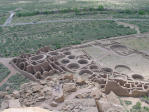
By about A.D. 700, and perhaps a couple of centuries earlier, the Anasazi of the northwest had absorbed village life and expanded through what is now known as the Four Corners Region (where New Mexico, Arizona, Utah, and Colorado come together). Around A.D. 1000, their culture eclipsed that of the Mogollon. Chaco Canyon National Historic Park, Aztec Ruins National Monument, and Salmon Ruins all exhibit an architectural excellence and skill, and a scientific sensitivity to nature, that marks this as one of America's classic pre-Columbian civilizations. |
|
|
|
|
 |
|
|
|
|
|
|
Condominium-style communities of stone and mud adobe bricks, three and four stories high, were focused around central plazas. The villages incorporated circular spiritual chambers called kivas. The Anasazi also developed means to irrigate their fields of corn, beans, and squash by controlling the flow of water from the San Juan River and its tributaries. From Chaco Canyon, they built a complex system of well-engineered roads leading in four directions to other towns or ceremonial centers. Artifacts found during excavation, such as seashells and macaw feathers, indicate they had a far-reaching trade network. The incorporation of solar alignments into some of their architecture has caused modern archeoastronomers to speculate on the importance of the equinoxes to their religion. |
|
|
|
 |
|
|
|
|
|
 |
|
|
|
Next Page |
|
|
|
|
|
 |
|
|
|
Back to New Mexico |
|
|
|
|
|
|
|
|
|
Back to my favorite Countries |
|
|
|
|
|
 |
|
|
|
to Index |
|
|
|