|
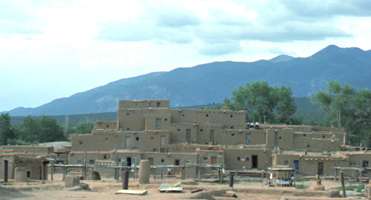
The disappearance of the Anasazi culture, and the emergence of the Pueblo culture in its place, is something of a mystery today. Those who study such things are in disagreement as to why the Anasazi left their villages around the 13th century. Some suggest drought or soil exhaustion; others, invasion, epidemic, or social unrest. But by the time the first Spanish arrived in the 1500s, the Anasazi were long gone and the Pueblo culture was well established throughout northern and western New Mexico, from Taos to Zuni, near Gallup. Most of the people lived on the east side of the Continental Divide, in the Rio Grande valley. |
|
|
Certain elements of the Anasazi civilization had clearly been absorbed by the Pueblos, including the apartment-like adobe architecture, the creation of rather elaborate pottery, and the use of irrigation or flood farming in their fields. Agriculture, and especially corn, was the economic mainstay.
Each pueblo, as the scattered villages and surrounding farmlands were known, fiercely guarded its independence. When the Spanish arrived, there were no alliances between villages, even among those that shared a common language or dialect. No more than a few hundred people lived in any one pueblo, an indication that the natives had learned to keep their population (which totaled 40,000 to 50,000) down in order to preserve their soil and other natural resources. But not all was peaceful: They alternately fought and traded with each other, as well as with nomadic Apaches. Even before the Spanish arrived, a pattern had been established. |
|