| Genuine sea glass is the glass found along the shore, tumbled and broken by the ocean and lakes. Authentic sea glass is a rare find, but lucky beachcombers (or AIA's) may find these jewel like pieces in the gravel and shell patches all along our beaches. A very fortunate few may find bits or even whole bottles lost through the centuries -- from storms and shipwrecks. Sea Glass is naturally beautiful and unique. NO TWO PIECES ARE ALIKE. Jacqueline Ganim-DeFalco says it best when she wrote: "Did you ever wonder where the glass came from, how long it took to form, the origins of such unusual shapes and colors? Author and sea glass historian, Carole Lambert began to unravel some of these mysteries in her 1999 book, the Sea Glass Chronicles. Much of the information relates directly to the stormy coastal maritime history of the great harbors along the coasts of the country with major centers in Maine, Massachusetts, Maryland, California and other deep harbors that were homes to great ships. But, even the south shore of Lake Erie has experienced the riches of sea glass due to all the shipwrecks that were caused as ships entered its shallow waters on their way inland from the St Lawrence Seaway. Pottery from shipwrecks can be traced back to the early settlers. One of the more interesting discoveries is that old pottery from Europe was used as ballast on the ships and was either thrown overboard upon landing or lost at sea. Glass bottles of course have always been a favorite of collectors. Richard LaMotte in Pure Sea Glass - provides even more history of types, sizes, and shapes of bottles that are now just shards of glass with a few letters. Passive collectors of glass are now turning into educated �beachcombers� who know what they are finding. Antique dealers and appraisers are starting to get inquiries on appraising sea glass collections!" |
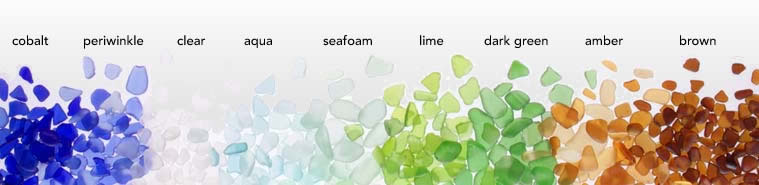
| I use the table below to categorize my sea-glass colors by rarity. EXTREMELY RARE Orange, Red, Turquoise, Yellow , Black, Teal, Gray RARE Pink, Aqua, Cornflower blue, Cobalt blue, Opaque white, Citron, Purple/amethyst UNCOMMON Soft green, Soft blue, Forest green, Lime green, Golden amber, Amber, Jade COMMON Kelly green, Brown, White (clear) |
| HOW IT'S MADE THE surface of sea glass is actually saturated by water, and two of the three components of standard soda-lime glass are leached from the glass, leaving mostly the molten silica (sand) that makes up 75 percent of the glass. As the surface weakens, it is subject to corrosion, pitting and general impact abrasions from wave action against hard surfaces. This gives pure sea glass its unique luster. It can take up to several decades for a thick shard of glass to develop soft rounded edges and at least 50 to 100 years for a thick piece to become a rounded bauble. Sea Glass is formed over many years of being washed up into the sand. The sand acts like a polisher -- with every movement of the water, the glass tumbles around in the sand getting smoother and smoother and eventually creating very unique shapes and textures. |
| TO INCREASE your chances of finding sea glass, here are some tips from Richard LaMotte, author of "Pure Sea Glass": ASK THE LOCAL historical society to learn which waterfront locations had an abundance of tourists, and hence their refuse, during the late 1800s and early 1900s. ASK MARINERS where there was heavy shipping traffic around 1900. Use nautical charts to locate channels near accessible shorelines. COLLECT DURING full or new moons in the fall and early spring after wind and waves have washed over beaches. FOCUS ON THE high- and low-tide lines, where stones or pebbles have gathered into beds. Use your foot or a stick to sift through these fertile zones. |
| LOOKING FOR GLASS TIPS � Hunt in fall, when tidal changes and strong winds churn up the beach. After a storm, check areas near the tide lines and stone beds . � Wear a hat and sunscreen, but remove your sunglasses when searching stone beds. Dark glasses can mute colors . � In the summer, 9 a.m. to 6 p.m. are the best picking times. |
 |
 |