
A Day of Infamy
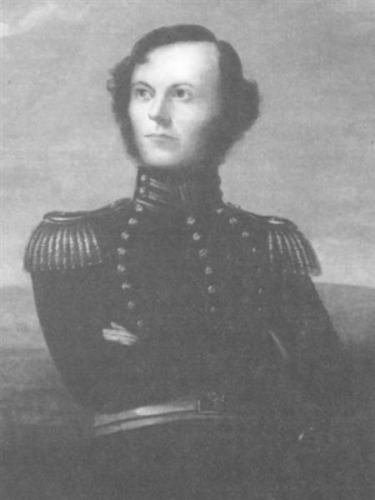
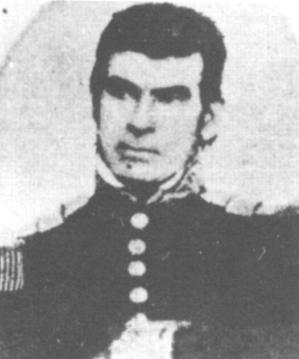



The Texians also had a considerable weakness in the lack of an undisputed supreme commander who could organize their forces. General Sam Houston had been caught up in the political division of the leadership of Texas and had finally gone off to work a treaty with the Indians. In his absence most eyes fell on the Texian commander at Goliad Colonel James Walker Fannin Jr. Most would assume that Colonel Fannin would be the ideal choice. Although he never graduated, Fannin was the only Texian commander who had attended West Point and gain any professional military training. However, Colonel Fannin was troubled by an indecisive streak and a number of subordinate officers who refused to accept his authority and at times bordered on insubordination. His forces were also depleted by the doomed plan to attack Matamoros and with dealing with the local populace, many of whom were Tejano centralists who supported the government in Mexico City.
On February 25, Colonel Fannin received word that the Alamo was besieged by Mexican forces of which the advance column alone numbered over 1,000 men. Fannin immediately made plans to march to the aid of the Alamo, but encountered trouble before he was even out of sight of Presidio La Bahia. A breakdown in transportation and the swift advance of General Urrea convinced Fannin and his officers that they must return to Goliad, leaving the men at the Alamo to face certain death. Goliad, however, was also far from being ideal for facing an attack. A crucial weakness was the lack of scouting forces to gather reliable information while Urrea could depend on local rancheros, loyal to the Mexican government, to report Fannin's every move. Efforts to improve the defenses at La Bahia, which the Texians renamed Ft Defiance, were painfully slow. As Fannin waited for clear orders from the Texas government many of his troops became increasingly insubordinate, especially the combative New Orleans Greys who, along with other U.S. volunteers were constantly on the edge of mutiny.
More bad news came when, on February 27, Colonel Frank Johnson's 32 men at San Patricio (part of Grant's Matamoros invasion force) were surprised and wiped out almost to the last man. On March 2, the rest with Colonel Grant were also overtaken by Urrea and all but destroyed -only six men managed to escape and warn Colonel Fannin at Goliad. Fannin wrote of his plight to Acting Governor James Robinson who ordered him to hold his ground and much like Travis Colonel Fannin hoped that Texian colonists would soon be coming to his aid and reinforcing Goliad. No help came and Fannin became increasingly bitter about the lack of support the troops were recieving from the homefront. The changing government (now being formed as the Republic of Texas) had often incorrect information about what was happening on the southern frontier and finally Fannin was told by Governor Robinson to use his own judgment as to defending or evacuating Goliad. However, before he made any decision General Sam Houston returned from his meeting with the Indians and ordered Fannin to march to the relief of the Alamo. Yet, again, before he could respond Fannin also recieved a call for help from Captain Amon B. King who had gone to Refugio to evacuate Texian colonists.
Recalling the force, Fannin waited for King to return before moving to San Antonio. However, rather than hurry back King engaged his forces in a punitive expedition against Mexican loyalists and Karankawa Indians in the area. When King became trapped by the advance forces of Urrea's division Fannin dispatched his second-in-command, Major William Ward, with his Georgia Battalion to march to his aid. Ward left on March 13 and relieved King late that afternoon, after which he decided to wait till the following day before moving his exhausted men back to Goliad. However, by this time the Alamo had fallen and General Santa Anna had sent reinforcement to Urrea who was rushing ahead of the main body, anxious to grab the opportunity of catching 1/3 of Fannin's forces away from the defenses at Goliad. In the face of this encroaching danger, which they were totally ignorant of, Captain King still refused to go back to Goliad until he had punished his loyalist tormentors. Ward barricaded his men inside the mission at Refugio and repulsed the attacks of Urrea's advance guard, inflicting heavy Mexican losses. King was caught by Mission River, unwittingly almost walking into the rear of the Mexican army and managed to fight off several Mexican attacks before nightfall, again inflicting heavy losses on the enemy. That night, both forces tried to escape. Moving among a herd of cattle Ward's men escaped, but King was not so lucky. His powder had been ruined trying to cross the river and his men were captured by loyalist rancheros under Captain Carlos de la Garza. In obedience to Santa Anna's order that no prisoners be taken all but eight of King and his men were executed at Refugio on March 16, 1836. After detailing some cavalry to hunt down Ward's battalion General Urrea took 900 soldiers and began his march on Fannin at Goliad.