



General Jose Urrea, on the contrary, was moving quickly and sent a force of cavalry ahead of his main body to try to hold Fannin in place at Goliad so Urrea could destroy the remnants of his army. He was also getting help in the form of 500 veterans of the battle of the Alamo when Santa Anna dispatched the Jimenez and San Luis Potosi battalions under Colonel Juan Morales to join Urrea. The forces met on the San Antonio River on March 17 and despite his earlier loses Urrea now had over 1,400 soldiers and 200 loyalist rancheros with which to take Goliad. When Fannin's only cavalrymen reported the arrival of the new battalions, Fannin and his officers decided to evacuate immediately, but just then Urrea's advance cavalry arrived and the mounted Texans were dispatched in a fruitless chase. Just as Urrea had hoped, Fannin believed this was the main body and stopped all plans to evacuate and began to fortify again, digging up and remounting cannon that they had just buried to keep out of Mexican hands.
After losing two days of precious time, Fannin realized his mistake and finally got his troops on the road on March 19 at 9am. Expecting a relatively short march the Texans took more guns than water and more bullets than food. They were further delayed crossing the San Antonio River and by allowing the oxen to graze (though as a rule of thumb, when oxen decide to stop & eat they do so, whether "allowed" or not). The small army stopped within sight of the tree line of Coleto Creek. Little did they know that Urrea's advance forces were only two hours behind them and quickly catching up. The Texan cavalry failed to alert Fannin of the approaching Mexican cavalry and the Texians were overtaken at 1:30pm. As he had learned at West Point, Fannin employed the classic defense against cavalry: forming his troops into a hollow square with his cannon at the corners. However, it was a militarily terrible position to be in. Fannin's men were exposed in open country, in a low area about 16feet bellow the surrounding countryside. There was some talk of moving on to the covering trees along Coleto Creek but before anything could be done, General Urrea was upon them.
Colonel Juan Morales' light infantry, armed with the deadly accurate British Baker rifles, attacked the left side of the square defended by Ira Westover's Texas army regulars; Urrea attacked the right side with the elite grenadiers of the San Luis Battalion which was defended by the Mobile Greys. Colonel Mariano Salas with the Jimenez Battalion attacked the front of the square defended by the New Orleans Greys and the Alabama Red Rovers while Colonel Gabriel Nunez attacked the rear with his cavalry which was held by Burr H. Duval's Kentucky Mustangs and the Refugio militia. Urrea did not have his whole army with him as yet, but he did have the Texans caught in a very poor position. Nevertheless, they managed to hold off the Mexican attacks until dark. Some sniping continued from the trees, but the Texians silenced them. Ironically, Major Ward's Georgia battalion which had earlier escaped disaster was close enough to hear the day's battle, but De la Garza's loyalists were able to keep him at bay.
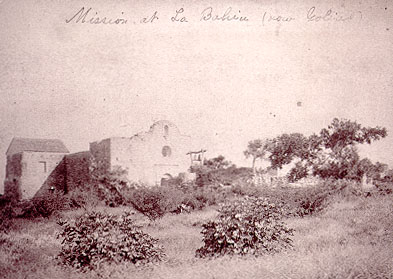
However, Fannin was in a desperate situation, the men were running out of food, and more importantly water, needed not only to drink but to cool the cannon down between shots. Because of the Mexican snipers they could light no fires to warm them in the unusually cold weather and the wounded men could not be treated. They were running low on ammunition and had lost most of their gunners, in fact, Urrea was clever enough to order his sharpshooters to concentrate on taking down the Texian artillerymen as well as their oxen in order to immobilize the Texians. They did improve their position somewhat, but during the night more Mexican troops arrived, bringing Urrea's force up to between 700-1,000 men. Against the wishes of many of the troops, Fannin and his officers decided they had no choice but to seek honorable terms of surrender. The Mexicans insisted on an unconditional surrender, but assured the Texians they would be treated as prisoners of war and eventually paroled back to the United States. The Texians surrendered that day, March 20, and were taken back to Presidio La Bahia, now in Mexican hands.
The Texians were crowded into the tiny chapel, packed in without food or any care for the injured. Only two days later Ward's men surrendered and were also taken to the presidio. General Urrea had continued on to Victoria where he wrote Santa Anna of his victory and the capture of almost the entire Texian force. On March 23 Santa Anna responded with an angry note reminding his subordinate that he had ordered no prisoners to be taken during this campaign. The officer left in command at Goliad, Lieutenant Colonel Jose Nicholas de la Portilla had been ordered by Urrea to be considerate toward the Texians and to employ them in rebuilding the damaged fortress. However, on March 26 Portilla received an order from Santa Anna which rebuked him for showing any mercy and commanding him to carry out the immediate execution of all of his prisoners. The Mexican officers argued all night long before deciding that the President's order had to take precedence.
After removing the few men who had been taken unarmed, the Mexican forces gathered the Texians together and began marching them out on the morning of Palm Sunday, March 27, 1836. The prisoners were taken down three different roads and were told that they were on their way to the coast, soon to be paroled back to the States. Then, roughly half a mile from the presidio, the Mexicans came to a halt, formed ranks, levelled their muskets and fired into the helpless Texians. Survivors were bayoneted or chased down and lanced by Mexican cavalry, though some managed to escape in the confusion. Likewise, those wounded Texians who could not walk wre carried out of the chapel and likewise executed. Colonel Fannin, who had been wounded himself, was also taken out and shot in the head. In all, about 400 Texian prisoners were killed at the Goliad Massacre. Santa Anna was satisfied, but General Urrea was outraged; and he was correct. If Santa Anna had thought such mass murder would frighten the Texians into abandoning Texas, he was sorely mistaken; and when the Texas troops charged to victory against him at the battle of San Jacinto, they did so with the memory of this great infamy fresh on their lips crying out in anger, "Remember the Alamo! and Remember Goliad!" World opinion swung to the side of Texas and on that battlefield at San Jacinto, April 21, 1836, the Texians won their freedom, smashing the Mexican army and taking their humiliated President prisoner. Centuries have past, and old grudges forgotten, but even today, Texas still REMEMBERS GOLIAD.