| ACTC3
Christian Belief |
|

|
|
|
| Seminar
1 |
God
the Creator |
| |
|
1. Before we start
Exercise: Think about a spot on earth that you really like. What do
you like about it? Spend a few quiet moments in prayer giving thanks and
praise to our Creator God for what he has made.
2. The Course
a. The purpose of Theology
The word Theology which essentially means 'the study of God'
comes from the greek work theos meaning 'God', and logos
meaning 'word'. That's what this course is about - the study of God. However,
we hope that this course is more than 'words about God'. Rather, as the
title suggests, Christian Belief goes beyond words about God, and
becomes a study of what we actually believe and live by as followers of
Jesus Christ.
The approach in this course is topical. We will take a specific
Christian topic, such as Jesus Christ or the Trinity, and attempt to understand
that topic and how other aspects of the faith relate to it. This is different
to the specific study of the Old or New Testaments in that we don't approach
it in a linear way starting at Genesis and systematically working our way
through to Revelation. Christian Belief takes us out of that historical
framework and builds up a doctrinal framework.
Saying that, God didn't give us a theology textbook. Our Christian belief
is based on the original scriptures, and is something that from age to
age may need to be revisited so we can discover how each topic relates
to our lives here and now. While we need to avoid simply changing our beliefs
to fit in to society, we have a responsibility to continually think through
our faith so that we can more effectively apply it in a way that relates
to the here and now that we live in.
b. Assignments
The Assignments will look at making topical connections so that we
can engage with people's questions about the Christian faith. Often their
questions are topical in nature. For example, 'what's the big deal with
this Jesus bloke?' or 'What do you think heaven is all about?'
To get the assignment questions, you will need to enrol. If you haven't,
contact the national
office.
3. God the Creator and Other Options
a. Ex Nihilo
By faith we understand that the worlds
were prepared by the word of God, so that what is seen was made from things
that are not visible.
Hebrews 11:3
|
This was picked up by a North African Bishop called Augustine around the
end of the fourth century. His background was a mixture of Platonic and
Manichean belief, so when he discovered this concept, he realised that
here lied a major distinction in the Christian faith; that God created
out of nothing. This was noted by him in this Hebrews passage. The words
that the NRSV translates as 'things that are not visible' was translated
as 'Ex Nihilo' in the Latin, meaning ‘from nothing’.
b. Plato’s Demi-urge
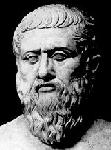 Plato
(427-347 BC) was a Greek philosopher whose view of the world that there
was pre existing ‘stuff’ around, and a Divine Being was essentially a Demi-urge
(urge meaning a craftsman or a do-er) who moulded the worlds together from
this pre existing matter. This Platonic doctrine perceives God as a do-er,
rather than a God who creates out of nothing. When we as humans are being
creative, we are Demi-urging. That is, we are workers, doing from pre existing
materials. The Biblical picture of God is not of a Demi-urge character.
When God created, He breathed and said ‘let it be’ and it was, 'Ex
Nihilo'.
Plato
(427-347 BC) was a Greek philosopher whose view of the world that there
was pre existing ‘stuff’ around, and a Divine Being was essentially a Demi-urge
(urge meaning a craftsman or a do-er) who moulded the worlds together from
this pre existing matter. This Platonic doctrine perceives God as a do-er,
rather than a God who creates out of nothing. When we as humans are being
creative, we are Demi-urging. That is, we are workers, doing from pre existing
materials. The Biblical picture of God is not of a Demi-urge character.
When God created, He breathed and said ‘let it be’ and it was, 'Ex
Nihilo'.
c. Ancient Near Eastern Creation Myths
The Ancient Near East is the term that commonly refers
to what we now know as the Middle East. In the early days of the Old Testament,
there was a whole range of other religions and people groups, and these
groups had their own creation myths or stories of how the world came to
be. Normally these were stories about the Gods interacting, either as in
a fight or as a coming together of divine beings to solve a problem. These
myths normally involved a number of Gods and a degree of disagreement amongst
them. This is contrasted to the biblical picture of a God in complete harmony
saying saying 'let there be'.
d. The Demythologisation of Genesis 1
The Ancient Near Eastern Myths had the view that different
elements of the world, such as the sun and moon, had a God behind them.
Demythologisation (meaning against-the-myths) takes the story
or myth of the God away from the story. In Genesis 1, the Stars, Sun and
Moon are just lights placed there by God for the purpose of day and night.
He brought him outside and said, "Look
toward heaven and count the stars, if you are able to count them." Then
he said to him, "So shall your descendants be."
Genesis 15:5
|
Contrast this to the experience of Abraham in the Near Eastern
world. He was a worshiper of other things before God put his hands on him.
The two towns he went from were Ur and Haran, which we know to be both
moon worshiping centers. When God chose Abraham, He said to him ‘look at
the stars’. Now, when Abraham looks at the moon and the stars, instead
of seeing Gods, he sees descendants. He looks at the stars in a different
way. This is a complete reorientation for Abraham as to what life, worship
and reality is. This is part of the demythologisation process
within the Old Testament. Normal created objects are looked on as being
‘good’, but they are not Gods.
e. Manichaean dualism
Manichism is a religion from across from Persia to the Roman empire
and was of significance in the 3rd and 4th century AD. The key element
to this religion was dualism. This is where you have two
Gods in conflict; one good and one bad. Good things in life come from the
good God, while the bad things in life come from the bad God. It was largely
based on the supposed primeval conflict between light and darkness. In
this line of thought, the role of religion was to release particles of
light that Satan had stolen from the world of Light and imprisoned in man's
brain and that individuals such as Jesus and the Prophets had been sent
to help in this task. Religion was the struggle between good and evil.
The origins of the world can be found in the interaction between good and
bad Gods, which is in stark contrast to the biblical picture of creation
f. Hindu cycles
In Hindu thought, life is a continuous cycle.
The aim is to exit this cycle through achieving enlightenment. What happens
in next life depends on whether the good things you have done accumulates
sufficient good karma. This karma will get you out of the treadmill of
rebirth and into a state of nirvana, which is a blissful state of enlightenment
which is very not-of-this-world. In this system where birth and death are
simply part of a continual cycle, there is no creation; just more of the
same
g. Aboriginal Dream time and the Christian insistence
on Genesis 1:1
Aboriginal cosmology supposes that nature and culture were formed at
the same time, by powers who lived in the world during the Dreamtime.
These powers are still very much present, though they have generally withdrawn
from view. Aboriginal creation myths do not teach creation ex-nihilo,
but of a time where space and time are defined within a dualistic
framework. While there are many different myths within Aboriginal
religion, the Rainbow Serpant is the predominant character within such
myths. It is worthy to note that Christian aboriginal leaders are very
keen to teach the principle of the creator God found in Genesis 1:1, as
it is in such contrast to the experience of the Dreamtime.
h. Evolution and the Big Bang
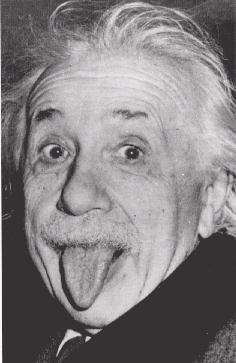 Scientific
theories of evolution, where life gradually evolves, and
and 'big bang' theories where creation happens suddenly Ex Nihilo
are comparatively recent theories. For many Christians, the sudden change
of nothing to something that occurs in the Big Bang theory is viewed as
being very close to the Christian understanding of Ex Nihilo, with the
complicating issues of dating and timing. While Darwin's evolutionary
scheme displays some similarities to the Genesis model, the focus of evolution
is on a gradual change of ‘matter’ than a creation. Some evolutionary theories
have no room for creation or annihilation, only transformation. Einstein's
e=mc2 theory equated matter with
energy. The implication of this is that nothing is ever created or annihilated.
If matter appears, then it has simply been transformed from pre existing
energy.
Scientific
theories of evolution, where life gradually evolves, and
and 'big bang' theories where creation happens suddenly Ex Nihilo
are comparatively recent theories. For many Christians, the sudden change
of nothing to something that occurs in the Big Bang theory is viewed as
being very close to the Christian understanding of Ex Nihilo, with the
complicating issues of dating and timing. While Darwin's evolutionary
scheme displays some similarities to the Genesis model, the focus of evolution
is on a gradual change of ‘matter’ than a creation. Some evolutionary theories
have no room for creation or annihilation, only transformation. Einstein's
e=mc2 theory equated matter with
energy. The implication of this is that nothing is ever created or annihilated.
If matter appears, then it has simply been transformed from pre existing
energy.
4. The Creator and the Creation.
The following diagram is designed to give a sense of some positives about
the bible's teachings, and a few negatives about what is not there. The
implications of this diagram will be looked at in the second
seminar
To follow this image through, please
click here and follow the instructions.
5. Key Biblical Texts
a. God the creator
It was God who created. He did it in the beginning. That's it really!
In the beginning when God created the heavens
and the earth,
Genesis 1:1
|
b. Theophanies/ Angel of the Lord
A Theophany is a visible manifestation of God. There
are several types of manifestations. Theophanies may occur as a direct
message, a message in a dream, a message in a vision, a message by an angel,
or a message in a dream by an angel. The term normally refers to manifestations
in the Old Testament. This variety leads to some confusion in the terms
that are used throughout the Old Testament. In some theophanies, the manifestation
is described as the Lord, while in other times it is described
as an angel of the Lord. However, both characterisations
denote a manifestation of God, in that this seemingly angelic being is
either identified as God or recognised as God, marking it out from other
angels.
The LORD appeared to Abraham by the oaks
of Mamre, as he sat at the entrance of his tent in the heat of the day.
He looked up and saw three men standing near him. When he saw them, he
ran from the tent entrance to meet them, and bowed down to the ground.
He said, "My lord, if I find favor with you, do not pass by your servant.
Genesis 18:1-3
Now the angel of the LORD came and sat
under the oak at Ophrah, which belonged to Joash the Abiezrite, as his
son Gideon was beating out wheat in the wine press, to hide it from the
Midianites. The angel of the LORD appeared to him and said to him, "The
LORD is with you, you mighty warrior."
Judges 6:11-12
c. New Testament references to Old Testament Theophanies
The New Testament makes occasional reference to these manifestations.
For example, the writer of Hebrews has both Abraham and Gideon in mind
when he writes;
Do not neglect to show hospitality to strangers,
for by doing that some have entertained angels without knowing it.
Hebrews 13:2
d. Incarnation
The word incarnation comes from the latin term in
carne, which means 'in the flesh'. In the Christian usage, it essentially
means 'God in the flesh' are refers to the act of Jesus becoming a human
and living his life as a human
In the beginning was the Word, and the
Word was with God, and the Word was God. . . And the Word became
flesh and lived among us, and we have seen his glory, the glory as of a
father's only son, full of grace and truth. . . No one has ever seen
God. It is God the only Son, who is close to the Father's heart, who has
made him known.
John 1:1, 14, 18
e. Angels as servants
Angels exist not as some kind of superior spiritual beings. Rather,
angels are created beings below humanity, who act as servants who help
in the work of salvation.
But to which of the angels has he ever
said, "Sit at my right hand until I make your enemies a footstool for your
feet"? Are not all angels spirits in the divine service, sent to serve
for the sake of those who are to inherit salvation?
Hebrews 1:13-14
6. Who are we? The Doctrine of Humanity
a. God the creator
In the beginning when God created the heavens
and the earth . . . Then God said, "Let us make humankind in our image,
according to our likeness; and let them have dominion over the fish of
the sea, and over the birds of the air, and over the cattle, and over all
the wild animals of the earth, and over every creeping thing that creeps
upon the earth." So God created humankind in his image, in the image
of God he created them; male and female he created them.
Genesis 1:1, 26-27
|
b. The Image of God
The term 'image of God' has become widely used. However, much of what
people include as the 'image of God' does not directly come
from any passages of scripture. Two main points can be seen in this passage.
Firstly, humans are made to be the rulers of the world under God.
They are part of the divine hierarchy of God, humanity and then creation.
This has implications for environmental issues. Despite the fact that it
has been abused, the earth is essentially here for the benefit of humanity.
Secondly, the image of God has both male and female in it.
Somehow, the complimentarity, the differentiation and the unity of male
and female shows us what God is like.
c. The effects of the Fall
In many ways Chapter 3 of Genesis represents a reversal of the created
order in which God had placed creation together in the first two chapters.
The result of Adam and Eve's disobedience (known as the fall) was a fourfold
disharmony, where there had previously been perfect peace and harmony.
1. A Disharmony between people and God
They heard the sound of the LORD God walking
in the garden at the time of the evening breeze, and the man and his wife
hid themselves from the presence of the LORD God among the trees of the
garden.
Genesis 3:8
in contrast to
Then the LORD God formed man from the dust
of the ground, and breathed into his nostrils the breath of life; and the
man became a living being. And the LORD God planted a garden in Eden, in
the east; and there he put the man whom he had formed. The LORD God took
the man and put him in the garden of Eden to till it and keep it. And the
LORD God commanded the man, "You may freely eat of every tree of the garden;
but of the tree of the knowledge of good and evil you shall not eat, for
in the day that you eat of it you shall die."
Genesis 2:7-8, 15-17
|
There was no barrier between the Creator and the creature. He sought a
relationship with them. What he created was to be shared. Humanity was
created to be in harmony with God. However, Adam and Eve's rebellion triggered
a sense of guilt and in their fear of facing the offended they hid from
God. The harmony with God had become disharmony. Their relationship with
God had permanently changed.
2. An internal Disharmony within the Self
Then the eyes of both were opened, and
they knew that they were naked; and they sewed fig leaves together and
made loincloths for themselves.
Genesis 3:7
in contrast to
And the man and his wife were both
naked, and were not ashamed.
Genesis 2:25
|
Chapter two makes the strong point that both Adam and Eve were not ashamed.
Their disobedience brings about a deep sense of shame about who they are,
and they attempt to cover it up. At the end of chapter three, God gives
a covering of garments to help them deal with their shame. This enables
humanity to survive despite their internal disharmony.
3. A Disharmony with Others
He said, "Who told you that you were naked?
Have you eaten from the tree of which I commanded you not to eat?" The
man said, "The woman whom you gave to be with me, she gave me fruit from
the tree, and I ate." Then the LORD God said to the woman, "What is this
that you have done?" The woman said, "The serpent tricked me, and I ate."
Genesis 3:11-13
in contrast to
Then the man said, "This at last is bone
of my bones and flesh of my flesh; this one shall be called Woman, for
out of Man this one was taken." Therefore a man leaves his father
and his mother and clings to his wife, and they become one flesh.
Genesis 2:23-24
|
Eve was made from Adam so that they could share in a perfect relationship.
This relationship is so deep that it is like being one flesh. The advent
of sin causes people to apportion blame outside of themselves, causing
a breakdown in the way people relate to others.
4. A Disharmony with Nature
To the woman he said, "I will greatly increase
your pangs in childbearing; in pain you shall bring forth children, yet
your desire shall be for your husband, and he shall rule over you." And
to the man he said, "Because you have listened to the voice of your wife,
and have eaten of the tree about which I commanded you, 'You shall not
eat of it,' cursed is the ground because of you; in toil you shall eat
of it all the days of your life; thorns and thistles it shall bring forth
for you; and you shall eat the plants of the field. By the sweat of your
face you shall eat bread until you return to the ground, for out of it
you were taken; you are dust, and to dust you shall return."
Genesis 3:16-19
|
In the same way that the relationship with God was broken, humanities relationship
with the nature was distorted. Rather than life being our for pure enjoyment,
it is full of struggle and pain as an expression of the disharmony with
nature.
Other ways of expressing this brokenness
Original Sin - This term suggests that sin is at the deepest
core of humanities being, and that it can be traced back to the original
rebellion of Adam and Eve. This single act brings death to the whole of
humanity.
Total Depravity - This term does not suggest that we are all
thoroughly evil people. Rather, it suggests that, our experience before
God is one of total disobedience and that there is nothing we can do in
our own strength to pull ourselves out of this predicament.
d. Our need for grace
You were dead through the trespasses and
sins in which you once lived, following the course of this world,
following the ruler of the power of the air, the spirit that is now at
work among those who are disobedient. All of us once lived among them in
the passions of our flesh, following the desires of flesh and senses, and
we were by nature children of wrath, like everyone else. But God, who is
rich in mercy, out of the great love with which he loved us even when we
were dead through our trespasses, made us alive together with Christ--
by grace you have been saved - and raised us up with him and seated
us with him in the heavenly places in Christ Jesus, so that in the ages
to come he might show the immeasurable riches of his grace in kindness
toward us in Christ Jesus. For by grace you have been saved through faith,
and this is not your own doing; it is the gift of God -- For we are what
he has made us, created in Christ Jesus for good works, which God prepared
beforehand to be our way of life.
Ephesians 2:1-10
|
In this passage, we find that we are under the powers of the world,
the devil, and the flesh . There is in all people, a complete inability
to lift themselves out of their predicament. In themselves, they are following
the passionate desires of the flesh, in the world they just mindlessly
follow what the world is doing, and their boss is the evil one, the devil.
There is a total depravity in humanity. In the Baptismal
service, the aspects of the flesh, the world and the devil are renounced.
God considers us to be 'like the rest'. That is, dead in our sins and
completely in need. But, God raised us up with Christ so that we may be
saved, not of our own doings, but by grace.
e. Being like God
In the Garden the temptation was that they could become like God, through
disobedience.
for God knows that when you eat of it your
eyes will be opened, and you will be like God, knowing good and evil.
Genesis 3:5
However, in the New Testament, the reverse is shown to be true. We become
like God, and incorporated into God through obedience.
His divine power has given us everything
needed for life and godliness, through the knowledge of him who called
us by his own glory and goodness. Thus he has given us, through these things,
his precious and very great promises, so that through them you may escape
from the corruption that is in the world because of lust, and may become
participants of the divine nature.
2 Peter 1:3-4
What Adam attempted to achieve in the garden through his disobedience is
achieved in the opposite way; through knowing God and trusting in Christ.
The story of these two verses is indicative of how many people run their
lives. They want one thing, and do another to get it. In the end, it is
obedience to Christ that delivers the things that we need in life.
7. What's around us? The Doctrine of the Creation
a. The Creation is not just 'the environment'
The creator creates creation. It is not just 'the environment.'
It is God's creation, and this has implications for ownership, its value
and our relationship to it. We are stewards of the creation, and we are
Kings and Priests ruling over the creation.
b. Glory and Groaning of creation
Ever since the creation of the world his
eternal power and divine nature, invisible though they are, have been understood
and seen through the things he has made. So they are without excuse;
Romans 1:20
|
There is more to creation that creation itself. You cannot necessarily
discover God through creation, but his eternal power and nature can be
seen. While one person may see the glory within creation, such as its beauty,
another person may look at it and see something entirely different, such
as natural disasters.
We know that the whole creation has been
groaning in labor pains until now; and not only the creation, but we ourselves,
who have the first fruits of the Spirit, groan inwardly while we wait for
adoption, the redemption of our bodies. For in hope we were saved. Now
hope that is seen is not hope. For who hopes for what is seen? But if we
hope for what we do not see, we wait for it with patience.
Romans 8:22-25
Creation is waiting for us to be fully revealed as God's children through
adoption. Meanwhile, we are waiting for the revelation of Jesus Christ.
From His revelation comes our revelation from which comes the redemption
of the world. So the world is a place of groaning while it waits, as well
as a place of glory.
Suggested Reading
B. Milne Know the Truth (2nd Edition), I.V.P., pp. 90-100.
(Part 2.7 The Work of Creation)
You can go to the