England
 ™
™
C.P.Chuah's
Home
 |
 |
 |
 |
 |
 |
 |


England
Traveling to different places in the world and learning the culture there was my dream come true. After I finnish my A-Levels in Malaysia, I went to England to further my tertiary education there. That's the first time for me to taste foreign land. Places I visited in England itself include London (that's definite right !), City of Bath, Nottingham, Liverpool, Manchester and a little Roman town called Chester.
Bristol
"The most beautiful, interesting and distinguished city in England" John Betjeman, former Poet Laureate
Bristol is a truly beautiful, interesting and distinguished city. Beautiful parks and gardens lead on to interesting alleys and lanes, whilst distinguished Georgian houses climb the hills of Bristol culminating in Brunel's masterpiece, the Clifton Suspension Bridge.
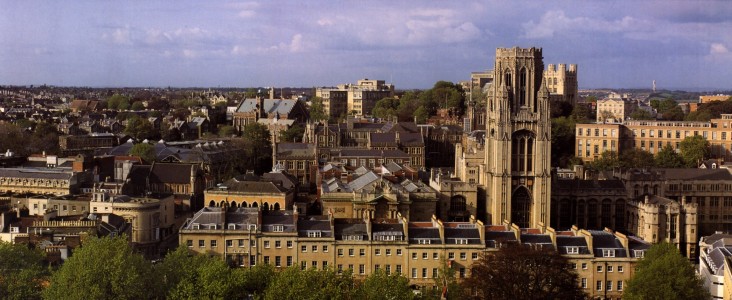
Bristol, the largest city in the South West, has played a unique and important role in England's history. Once England's second city, the prestige of Bristol is reflected in splendid architecture, a rich maritime heritage, a wealth of attractions and beautiful estates and parkland.
In Anglo-Saxon times a settlement grew up between the Rivers Avon and Frome. Known as Brig-stow or 'the place of a bridge' and trading with Ireland and the ports of South Wales, the settlement grew in importance after the Norman Conquest of 1066 when a castle was built on what is now Castle Park.
Bristol's trading activity increased and the existing port soon became inadequate so, in 1239 a cut was excavated to divert the course of the River Frome. Trade started to flourish. Wealthy merchants built large houses near the quays and churches were embellished.
Bristol's trading activity increased and the existing port soon became inadequate so, in 1239 a cut was excavated to divert the course of the River Frome. Trade started to flourish. Wealthy merchants built large houses near the quays and churches were embellished.
By the 17th century Bristol was becoming an important centre for non-conformism. Quakers erected a meeting house in 1670 and John Wesley, the Methodist leader, had a chapel, or 'New Room' built in 1739. It remains today the oldest Methodist building in the world.
The city continued to expand and much original architecture remains including the area around King Street, Queen Square, Christmas Steps and St Michael's Hill. Beautiful houses were built throughout the city from the proceeds of Spanish shipping plundered of the coast of the Americas, funded by Bristol merchants.
To its discredit, the 18th century also saw the rise of Bristol's involvement in the slave trade and, as a result, ships returned to Bristol laden with goods from the New World, including cane sugar, tobacco, rum and cocoa.
In the late 18th century the elegant suburb of Clifton began to expand as merchants built houses away from the docks area. The Theatre Royal opened in King Street in 1766 and the city entered a more elegant and cultured era. Many of the Romantic Poets of this period spent time in the city.
By the late 18th century the harbour was starting to become a problem. The huge rise and fall of the Avon caused ships to become dangerously marooned at low tide. Work began on a Floating Harbour but the cost was so high that dock dues forced shipping to other ports. In addition, the bends of the Avon made navigation more and more difficult for the increasingly big merchant ships. Bristol, as a port, began to decline and the city suffered violent riots in 1831 which saw the destruction of many buildings.
The great Victorian engineer Isambard Kingdom Brunel is responsible for some of Bristol's best-loved features. Bits of Brunel's Bristol include the Clifton Suspension Bridge, his great iron ship, the ss Great Britain and Temple Meads old station, terminus for the Great Western Railway. New docks were built at the mouth of the Avon in the 1870's and Bristol continued as an industrial centre. The construction of aircraft, including Concorde, at Filton became an important post-war industry. Bristol is also the home of Rolls Royce. Today, Bristol is a large commercial centre, one of the most popular cities for business relocation and a major focus for media industries. Bristol offers a quality of life far above many other major cities. The harbour area continues to be developed, the old city is substantially restored and Clifton remains charming and elegant.
 |
 |
 |
 |
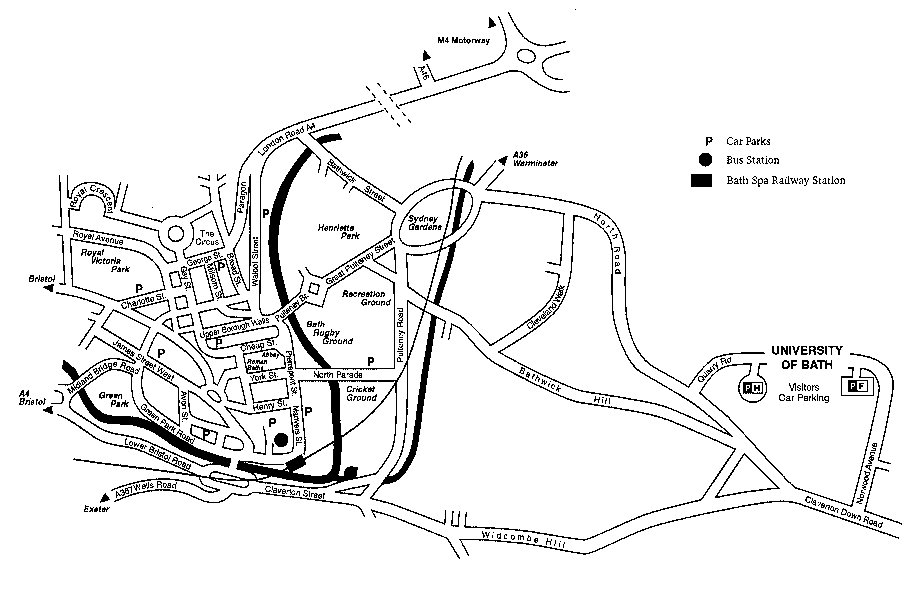 |
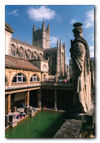
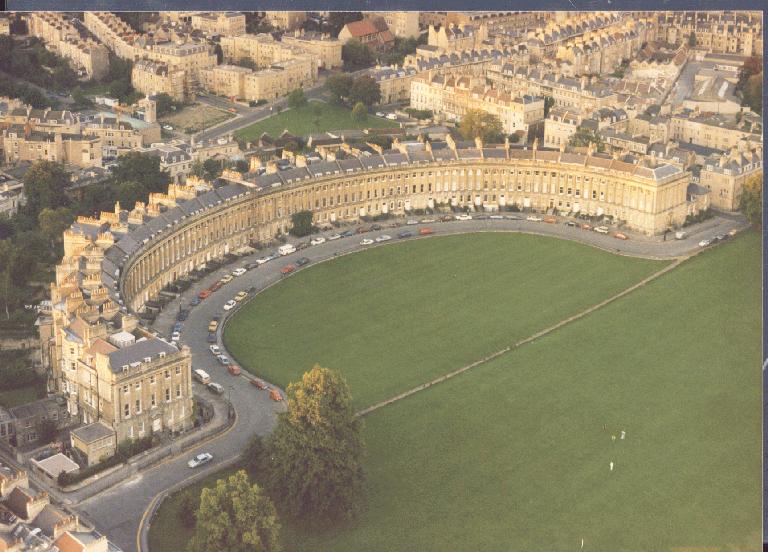
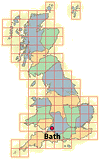
Bath is a spectacularly beautiful city which stands on the River Avon among the hills of England’s West Country. The city’s compactness and striking architecture - Roman baths and sweeping Georgian terraces - combine to produce one of the most elegant sights in Europe. The ancient Celts, who first inhabited this area, believed that Bath’s hot springs were sacred, but it was the Romans who built the temple and the famous baths - now restored to their original grandeur.
In the early eighteenth century, under the direction of the socialite, Beau Nash, Bath became England’s premier spa town, where the rich and celebrated members of fashionable society gathered to ‘take the waters’ and enjoy the town’s theatres and concert rooms. During this period the renowned architect, John Wood, laid the foundations for a new Georgian city to be built using the honey-coloured stone that gives Bath its mellow and indefinable quality.
However, Bath is far from being a fossilised museum piece. Besides the annual Bath Festival - now recognised as one of the most prestigious in Europe - there are countless other Arts activities spread over the year. Art is permanently on show at the Victoria Art Gallery, at the University-run Holburne Museum and at many other, more intimate, galleries and shops. Bath is also home to the gallery of the Royal Photographic Society and to museums of Naive Art, East Asian Art, and Costume.
London is only one hour and a quarter from Bath by InterCity (trains run hourly during peak periods) and Bristol is only fifteen minutes away. For those seeking quieter retreats, Bath is surrounded by beautiful countryside, with the Cotswolds to the north, the Mendips to the south-west and - just across the Severn Bridge - the Wye Valley and the Forest of Dean. The coast at Weston-super-Mare or South Wales is also within easy reach.
Back to Travel
Copyright © 2000. All Rights Reserved. This page is protected under the copyright laws. Please do not copy any of the content of this page for commercial use. Please e-mail me at [email protected]
Last updated October 29, 2001