PICTORIAL HISTORY of VIVISECTION 2nd C |
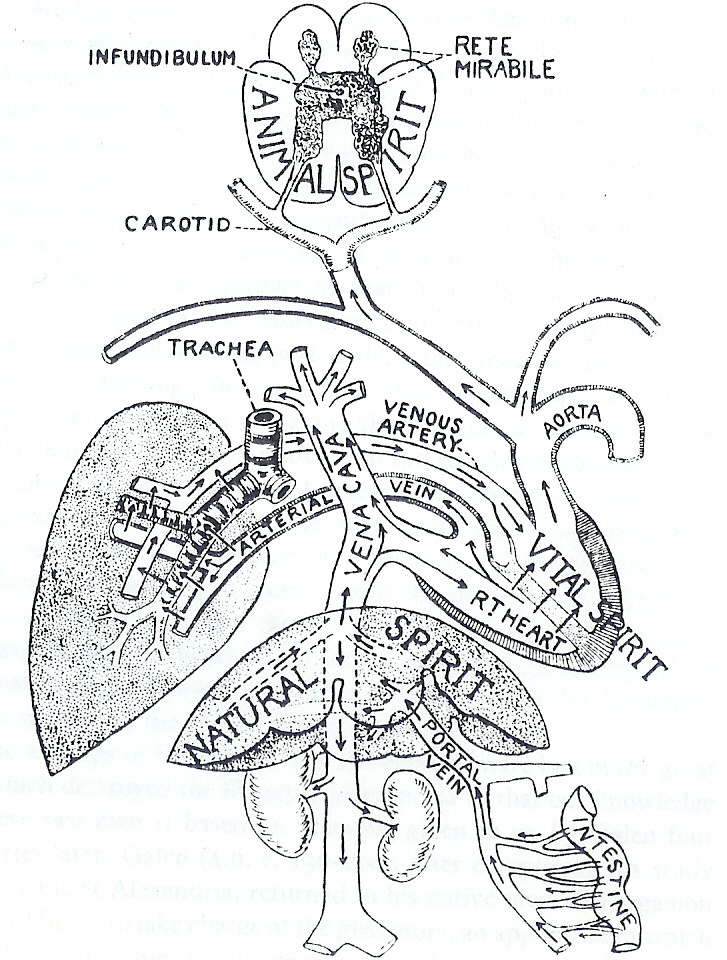
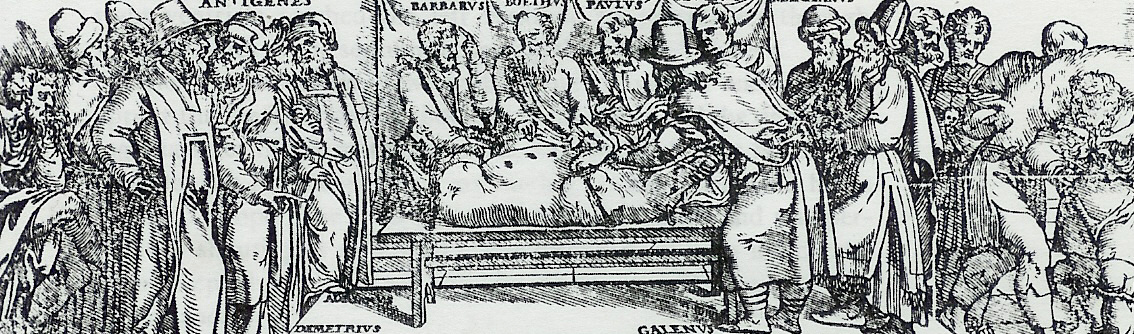
c160: Galen experimented on pigs, apes and other animals - relating the findings directly to humans. Galen stated that humans had a five-lobed liver, a double bile duct, two uterine cavities, an intermaxillary bone in the skull between the two bones which form the upper jaw. woodcut. 17thC. Galen experimenting on pig. Vesalius, in 1543, dissected human cadavers - correcting Galen`s wrong theories. Galen believed that blood ebbed and flowed like the tide. Miguel Servatus, in 1537, studied human cadavers - contradicting Galen. Galen believed that the purpose of repiration was to cool the heart and movements of the chest acted as a way of inducing air for generating "vital spirits". Miguel Servatus, in 1545, dissected human cadavers and proved Galen was wrong. Galen`s concept of anatomy Galen believed that cancer was caused by an excess of black bile built up in the lips, breasts, or tongue. Veslius, in 1540, studied human cadavers and his failure to find black bile helped end Galen`s wrong theory. Galen believed that diabetes was a "weakness of the kidneys which cannot hold back water". Thomas Cawley, in 1778, showed by autopsy studies of human diabetics that diabetes may result from damage to the pancreas. |
 |
 |
PICTORIAL HISTORY of VIVISECTION INDEX - click arrow |
 |
PICTORIAL HISTORY of VIVISECTION 16th C - click arrow |
 |
 |
 |