|
Definition of Salat:
Next to Kalima Tayyiba the second pillar of Islam is Salat
(Prayers). In Arabic Salat means prayer and in the terminology
of Shari’ah, Salat is a specific manner of worship which the
Holy Prophet (PBUH) has told to the believers. Salat is the
most important pillar of Islamic Ibadat (worship). It is an
obligation for every rich or poor, old or young, man or woman,
ill or healthy.
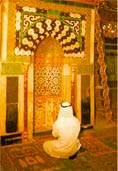 Importance of Salat:
The Holy Quran and Hadith
have greatly emphasized the observance of Salat. The Holy Quran says:
"Oh Prophet
(PBUH) say to My servants who believe that they should establish
prayers." (Abrahim 31)
"And
establish prayers and pay the Zakat and go down with those (Muslims) who
bow." (Baqra 43)
It is
said in Hadith:
"The Holy
Prophet (PBUH) said, "O Ma’az, for me your great obligation is Salat."
So much importance of
Salat is due to this reason that Namaz is an expression of the servant’s
humbleness and subordination through heart, tongue, and hands and feet in
the presence of their Lord. It is the paying of the gratitude for the
countless blessings and fervors. It is a praise of the Creator of the
universe, and admission of His great supremacy and Tauheed of oneness.
Salat is the subordination of heart and mind before their Lord, and
consolation of troublesome spirit; and a prayer of a dishearted heart.
Salat keeps away evils. It creates the remembrance of God in the heart,
and realizing the purpose of creation.
The condition
governing Namaz
>The fulfilling of the following
conditions is necessary.
>Purification of body. If there is
any impurity then remove it.
>The purity of clothes.
>The purity of
place.
>Covering the groin: The groin of man is between the navel and
the knee, and for woman is the whole body except the face, two palms and
feet.
>Punctuality.
>Facing towards Qiblah.
>Intention for Salat.
Azan and Iqamah
For observing the collective
prayers, azan and iqamah are essential.
Prayer Timings
The Morning Prayer (Fajer):
From dawn to the rising of sun.
The Noon Prayer (Zuhr) From the
inclination of sun to the west until the shadow of every thing becomes
double than the shadow at noon.
The
Afternoon Prayer (Asr): From the departure of the time of Zuhr to the
setting of the sun.
The
Sunset Prayer (Maghrib): From the sunset till the disappearance of the
clouds(light)in the horizon.
The Night Prayer (Isha): From
the disappearance of the red clouds in the horizon until dawn.
No Namaz can be observed
before its time. If it is missed then it can be said qaza(just before the
next prayer).
Steps of Five Prayers
After fulfilling the
preliminary conditions, stand facing towards Qiblah. First intend to
perform the prayer. Intention is called the willingness of heart.
Utterence of the words by mouth is suggested but not compulsory. Then by
raising the hands upto the ears, say takbir (AllahuAkbar-God is the
greatest) and place the hands one over the other on the navel. Then after
Sana, Ta’awaz and Tusmiyya, recite surah Fatiha, and either some verses of
the Holy Quran, or a small Surah (It is not permissible to attach the
verses of the Holy Quran in third and fourth rak’ats). After saying the
Takbir bend for Ruku. Say Takbir (glorification) of Ruku three times and
rising from Ruku say the words of qomah (rising from Ruku ). By saying
Takbir, go down far Sajdah (Prostration) and say Tasbih of Sajdah. Then
after saying the takbir sit down erect, and perform the second Sajdah, and
saying the words of tasbih and Takbir stand up upright. Then start the
second rak’at and perform it like the first one. After rising from Sajdah
in second rak’at recite Tashahud (bearing witness). In the last rak’at
recite Tushahud with Darud and prayers: After it performs the Salam.
Benefits of Namaz
The believer confesses
the supremacy of Allah ta’ala and his humbleness in Namaz. By placing the
hands one upon the other, he stands with great respect in Divine Court,
then he bends down in Raku, and in the performance of Sajdah he puts the
best and excellent part of his body i.e. forehead on the ground. This
presentation of a humble believer is in fact, the meeting with Allah, the
Truthful, and is a Miraj (ascent).
Namaz is
the best means of creating a discipline in the nation, or group. What
practical lesson Muslims take in five daily prayers by standing behind the
Imam, in obedience, is surely the demonstration of military discipline.
The performing of the prayers
collectively is not only the obeying of the command of God but also the
knowing the affairs of one another. The five daily prayers, Friday Prayer
and the Prayers of Eids provide the best and pious opportunities to solve
the collective problems of Muslims, and of extending cooperation too.
Namaz teaches the lesson of sympathy, love, equality and unity, By
collective prayers the distances of high and low, weak and strong, scholar
and illiterate, king and beggar, rich and poor, and ruler and ruled are
diminished; and the feelings of brotherhood are created. They all
constitute one group:
"Servant
and master, needy and generous become one Present in Your court they all
become one." (Iqbal)
By virtue of Namaz the
physical cleanliness is attained and piety of soul too. Therefore Namaz is
the heart of Islamic life.
Though Namaz the repeated
presence in Divine Court, salutation and promise of faithfulness remove
the evils and indecency. Therefore the Holy Quran throws light on the
philosophy of Namaz.
"Undoubtedly, the prayer forbids one from indecency and evil thing."
(Al-Anqabut 45)
|


