SOWING THE SEEDS
Somewhere between the sushi and green tea, the idea of cultivating Malaysian art music was born.
-
Options, The Edge, Mar 2003
 Malaysian art music - is there such a thing? Our cultural landscape is alive with theatre, dance, visual arts, film and even underground pop music. But when it comes to "serious" music (a useful though questionable term) it is either Mozart or Mak Yong with little in between. The problem is not unique to Malaysia, other more cultivated states struggle to make sense of Western art music in their own context, and most often it results in museum music for the elite few. For one who spends years and thousands in music tuition perfecting the art of sawing at a violin it's got to be dead or German, preferably both. People often forget that in Mozart's time, audiences came to hear what he had just written, not the "classics". Malaysian art music - is there such a thing? Our cultural landscape is alive with theatre, dance, visual arts, film and even underground pop music. But when it comes to "serious" music (a useful though questionable term) it is either Mozart or Mak Yong with little in between. The problem is not unique to Malaysia, other more cultivated states struggle to make sense of Western art music in their own context, and most often it results in museum music for the elite few. For one who spends years and thousands in music tuition perfecting the art of sawing at a violin it's got to be dead or German, preferably both. People often forget that in Mozart's time, audiences came to hear what he had just written, not the "classics".
And I argue that if anywhere, Malaysia would be the place where audiences would go to a concert to hear what someone had just written, for isn't that what a sparkling new concert hall and a world class orchestra, installed at the heart of Kuala Lumpur in 1999, ought to be for? We certainly have all the right ingredients for a thriving, living musical community - a melting pot of cultures with a history that stretches from Ramayana to Rock and Roll and a people keenly in touch with their past and their present.
Yet our art music scene has suffered a long and painful gestation, lying at the end of the last millennium in stillbirth despite the creation of the Malaysian Philharmonic Orchestra (MPO), which soon after its premiere looked destined to become no more than an expensive high-culture showpiece, as foreign to our soil as the repertoire we would hear. For a country with no shortage of talent and musical intuition, the lack of infrastructure, funds and a real interest in the art was kept us in the dark ages of musical culture.
All that is set to change on 30 March when the inaugural concert of the MPO-led Malaysian Composers Forum crowns Phase I of the competition. From Bayan Lepas to Brussels, thirty hopefuls from the Malaysian diaspora submitted their scores to a panel consisting composers Sunetra Fernando, Fraser Trainer and Gerard Brophy. Six survivors made it to Phase I to prepare their short work for 16 instruments for the concert. On that fateful evening two will not make it to Phase II, where we will hear four new symphonic works. The eventual winner earns an automatic place in the planned MPO International Composers' Competition, a biennial event.
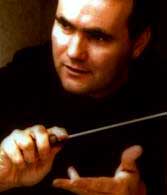
In all, we are promised a lot of new homegrown music, and lots more to come. I asked the man behind the creation of the Forum, MPO Associate Conductor and Director of the Forum Kevin Field, why it took the MPO so long to get round to Malaysian music.
"As eager as we all were to get something akin to the Forum off the ground in the late nineties, we also had to be sure the artistic environment was in place to support such a venture. The positive reaction and resulting success of the new music series and all its activities - some 70 news works in four years, commissions and related education and outreach projects - provided a more than suitable foundation."
Field is a real modern man in terms of orchestral repertory who was responsible for bringing, from early on, the sounds of Varese, Boulez and Ligeti as well as local works by Sunetra Fernando (Wayang for mixed ensemble and gamelan), Chong Kee Yong (The Echoed Dream) and Tazul I Tajuddin (Nadian Warna - Tenunan III) to the Dewan Filharmonik. The response to Fernando's composition was so positive that Field scheduled it twice, an honour most new works do not receive (you may recall me griping about Singapore veteran composer Leong Yoon Pin's magnificent 2nd Symphony, which still awaits a second performance after its premiere in Singapore in the 70s).
The nurturing of new music to an audience for whom Bach is as new as Boulez may not be difficult at all. In fact, it might be the best place to start such a venture. Field says the idea for the Forum first took place, like all good ideas, on a napkin. "It was over lunch with Gerard Brophy, when during the sushi he mentioned that he was an ex-ACOF (Australian Composers Orchestral Foundation) candidate and that he had coached on it since. It just so happened that I was currently working (in Perth) with the West Australian Symphony and ACOF. Cue light bulb on top of the head, and there it was: three years of new music concerts and good houses [at the Dewan], together with a few commissions on the horizon - now seemed as good a time as any. So I wrote "MPO Forum" on and around the oyster sauce-stained napkin. This was November 2001! It takes that long to plan something of this nature and put it into the system."
Petronas eventually okayed Field's proposal, and the first general meeting took place in March 2002. A year later and six new works have been composed, awaiting adjudication. "Everything just slotted in together quite easily - so far! We all see the importance and potential of such an outreach project. The jigsaw came together because of the points I mentioned earlier [on the new music series]," says Field.
We may be fortunate to have Field at the helm of the birth of our very own art music scene, as ACOF has been very successful Down Under in establishing an Australian repertoire far beyond Peter Sculthorpe and Carl Vine. The plans for the Forum are ambitious. Field sees at least 10 consecutive two-year programmes over twenty years and 10 international composers competitions that will equal other international programmes and awards.
"In the short-term, my vision for the Forum is to provide an invaluable opportunity to Malaysian composers, for them to reap the benefits of one-to-one tuition and a 'free' orchestra on which to practice over the two-year programme! To expose them to international audiences and music publishers and to nurture and support them as best we can. Further, I would very much like to see a future MPO composer-in-residence appointed from the Forum who would support our Education & Outreach team, our new music series and write a specific series of new works for the orchestra, say over a 2 or 3 year period."
The kind of commitment that the Forum promises in really bringing Malaysian artists into the creative life of a symphony orchestra is impressive. Field has achieved what any new orchestra will find hard to achieve in such a short time. Just looking across the Selat Tebrau, I am reminded of the immense struggle that composers have faced just to get into the thirty-year old Singapore Symphony's repertoire. Ultimately it will be up to the performers themselves, who will make or break a new composition.
Did the MPO put up any resistance to the idea of switching from Chopin to Chong?
"I selected the 18 or so players who will be involved in the Forum (next year is the full orchestra - ask again then!) and they are those whom I know will enhance the whole process for the benefit of the 6 finalists. There has not been any resistance from them - yet! In fact, their response was a little like your first question: why has it taken this long? Those that play in the new music concerts do so on a semi-voluntary basis, and more often that not they are the people who actually want or desire to play in the first place - this helps tremendously and provides for a better performance [of the new work]."
Field says that support for the Forum has been strong, consistent and constructive, whether it be mention in a website in Holland or interest from a publisher in Australia, support of the local press, or support or advice from other orchestras. Field adds wickedly in afterthought, "I can interpret the individuals whom I know working in the local film and theatre scene in Malaysia who did not apply as silent resistance, I guess!! Other than that, I am delighted by the response and standards thus far and know that we are offering something extremely vital to the 6 and to the local and, eventually, global music scene as a whole. That's why we are here!"
Field started his career as a percussionist, which probably explains his penchant for the new (who needs Rossini's drum rolls?) and perhaps his penchant for the East. Before joining the MPO in February 1999 Field had been heading Bournemouth's new music ensemble Kokoro. Asked if he had ever listened to Malaysian composers, Fields says, "Composers, no. Gamelan, Chinese and Indian classical music, yes. I grew up in Leicester after all!" That's close enough. I grew up in KL, and I'd never heard any Malaysian composers either, although there were close calls (Valerie Ross, I would still love to hear Cycles). And no, P Ramlee doesn't count. After all, he's Lagenda.
Putting a style or a genre on the six new works will be tough. Field himself is not sure what to expect. "I am excited by the prospect of what we will discover - giving the [finalists] the opportunity to write their wildest dreams is a rare event and I am sure they will make the most of it. As to how they will sound I do not know; some are requesting the use of Malaysian instruments, and gamelan in particular is leading the way. But this is a positive cultural fusion by default, not an East (them) meets West (me) project. Will it sound Malaysian? Do local Rock 'n' Roll, jazz and boy bands sound Malaysian? If required, local instruments will be used as part of the ensemble, an inclusive timbre if you like. Otherwise they have absolute freedom."
But he assures us that the chosen six are "varied and individual voices of very high standard, all with a thorough working knowledge of the medium. Style varies according to experience, and appeal is a matter of opinion." To ensure that the selection was fair, Field deleted all the names and left out the biodata from the submissions so that the panel had only the scores to make their decisions from. Field adds, "I deliberately left the selection to the panel, as some of the applicants were/are already known to me. They - the panel - selected 12 initially, then shortlisted
eight, and then painfully extracted two; this from a list of 30 from all over the world." Field entertains a possibility of that we may yet hear from those who did not make the finals when the Forum is concluded. And he assures us that all sessions will be taped so that our first step into art music history will not go unrecorded.
That, hopefully, will be the starting point of TV and radio broadcasts of our Malaysian concerts playing Malaysian music, the way the BBC broadcasts of the Proms and other festivals have helped British composers gain exposure. After all, it was FM radio's classical hour that hooked me to Stravinsky and Bernstein in the 70s, for me Mozart's Bassoon Concerto was no different from Bernstein's Symphonic Dances from West Side Story, it was all new and exciting, and I lived off those tapes for years.
Field similarly hopes to bring more local awareness, acceptance and understanding that Malaysian music means more than being purely commercial in sound, and that parents realise that music is a genuine career option. Last words to budding composers? "Listen! Listen!! Listen!!! Don't ignore anything: Bach and Radiohead both matter. Go to as many concerts of all manner of styles as often as possible. Look at other music scores by composers - living and dead! Decide who you like and who you don't; ask yourself, why? Don't be afraid of being original. Sing, play the piano,
have some understanding of percussion; learn to conduct!! Study is something: experience is everything! Write it: perform it: record it: assess it. Find a composer you like and start e-mailing!! Work abroad then come home."
I don't know much Bach but I love Radiohead (not Madonna, as the Editor is fond of saying), which is probably a good start. We are on the threshold of our own Bachianas Bandarlieras perhaps, or at the very least we might start taking back our musical heritage from others who have mined our cultures for their own artistic endeavours. Glass, Riley, Britten, Poulenc, move over. Colin McPhee, it's time to retire, your good work is done. Let's write our own Tabuh Tabuhan. May our own musical voice one day be standard repertoire at the Dewan Filharmonik and abroad. Okay, it's all very Mighty Handful but hey, like Mussorgsky and Russian music, we all have to start somewhere.
Related articles:
- Brand New Beat - the birth of Malaysian art music survives the riot police
- Murder They Wrote - CH goes behind the barlines of six new Malaysian compositions
|