There are many different sizes and variations to American Movie Posters. There are 30x40's, Door Panels, Half Sheets, Banners, huge Bus Stop and Billboard posters, Three Sheets, Six Sheets, Twenty Four Sheets and Lobby Cards, to name a few. The 4 most common posters are the One Sheet, Insert, Double Sided and 40x60 (two sheet). Below, I have made a table defining the 4 most common types of U.S. movie posters.
Click on the "Name of the poster" section of the table for a description and examples of different types of American Movie Posters.
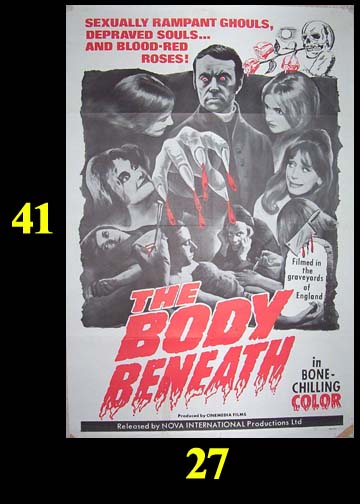
The "one sheet" is the most common and widely used form of paper advertising for any film's advertising campaign. The size 27x41 means the poster is measured 27 inches in width by 41 inches in height or lenght, and usually printed on light weight, dull or glossy paper.
The "one sheet" was derived from the late 1900's and is still used today. The only difference being the size and look of the "one sheet". Prior to the late 1980's the one sheet was typically sent off the printing press folded amd shipped out to your local movie theatre. It is not uncommon to find a "one sheet" prior to 1988 rolled. Rolled "one sheets" did escape the folding presses. Some collectors can argue that an original rolled poster may be more valuable that a folded one. I just happen to like either variation. Folded or rolled I like them both.
"One sheets" were then displayed in theatre lobbys and entrance ways in each movie house. Many were torn down and destroyed, but many also made it into the hands of movie aficionados. Because of the very limited supply of them, these posters, through the years, have become very collectible.
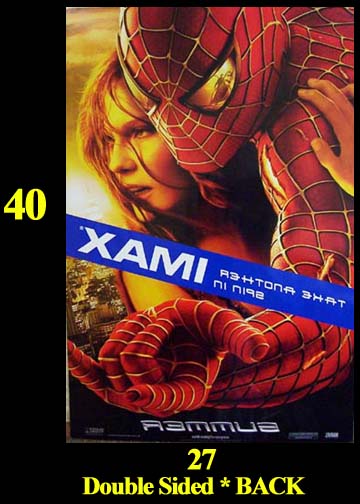
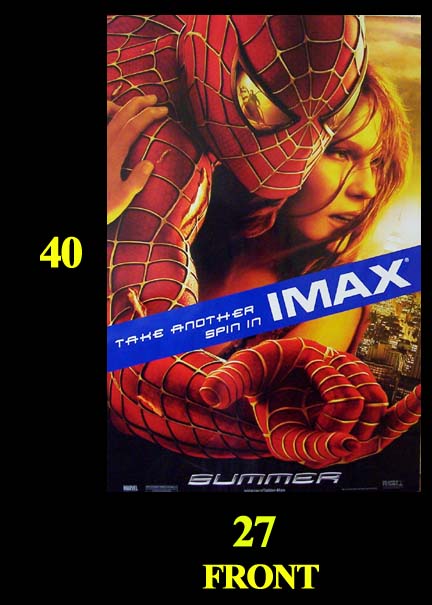
The double sided poster is a type of printing technology studios adapted sometime in the late 1980's. It is a process in which a poster is printed with the image on the front and the same image reversed on the back.
The poster is meant to be displayed in a "light box" at most movie houses. The double sided look gives the poster a false "depth" once displayed in a "light box."
Most common to find these after 1988.
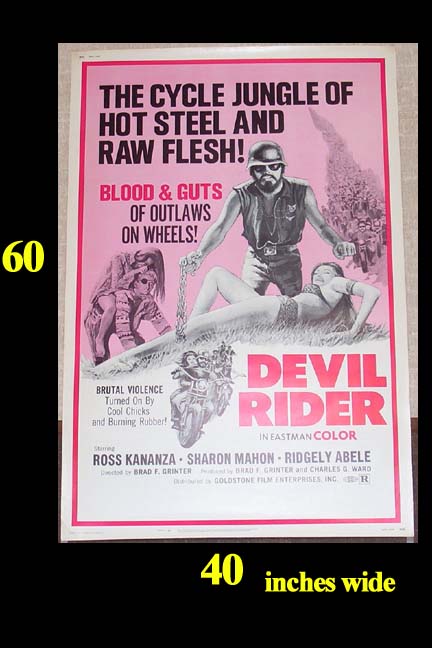
Film studios used 40x60's to advertise on Billboards, Subway stations and walls leading into indoor and outdoor (drive-in) movie houses.
Drive-ins used 40x60's because the poster grabbed your attention when driving into the entrance. These posters were printed on a heavy card stock paper and usually shipped out rolled. 40x60's were distributed from the late 30's till the mid to late 80's. Currently the 40x60 card stock poster has been changed to a 40x60 poster printed on a vinyl material.
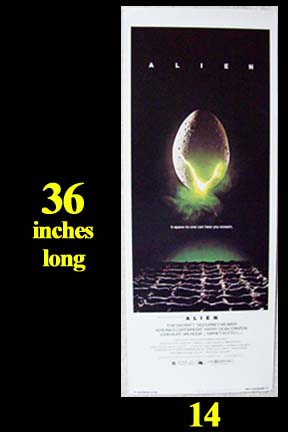
The 14' x 36' insert card was one of the most popular size created because it was small enough to fit almost anywhere in a theatre lobby. Inserts were first introduced in the 1920's and died out mid-1980's. The artwork on an insert was typically different than the one sheet because, more detail and art had to be fit into a smaller poster size.

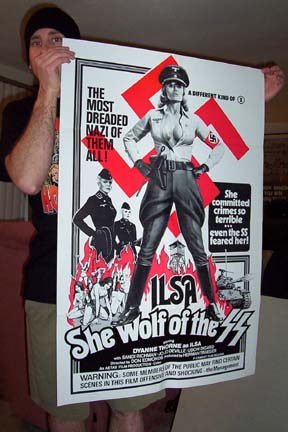
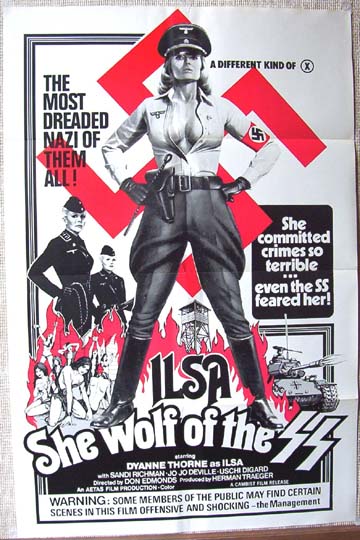 ILSA SHE WOLF OF THE SS
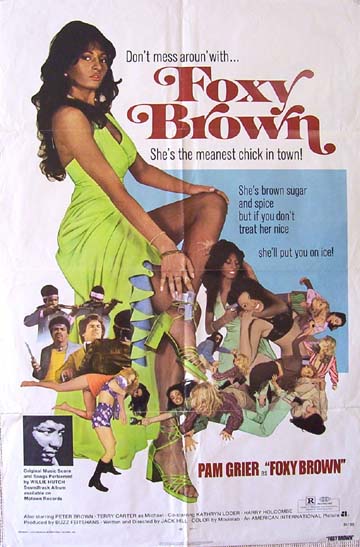 FOXY BROWN
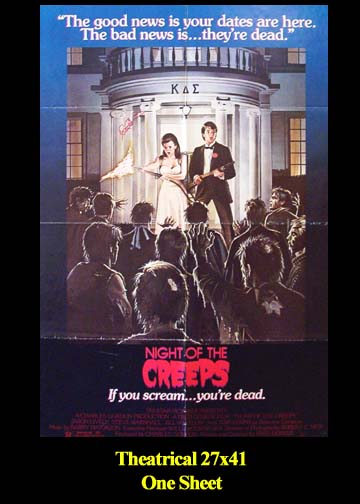 NIGHT OF THE CREEPS
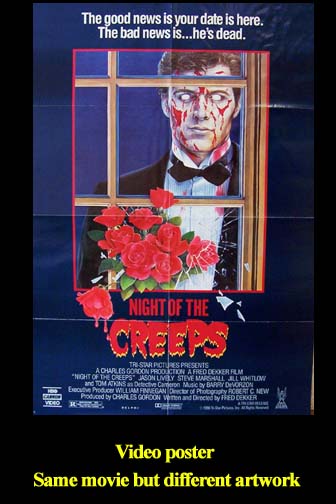 NIGHT OF THE CREEPS