2.9 5.1 0.03

| The lowest few vibrational frequencies of a sphere of the anisotropic cubic crystal silicon are calculated from its bulk elastic constants. |
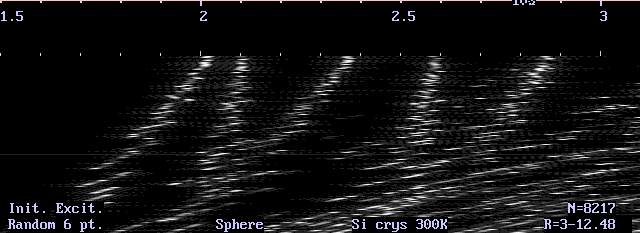
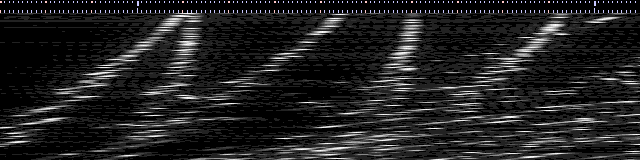
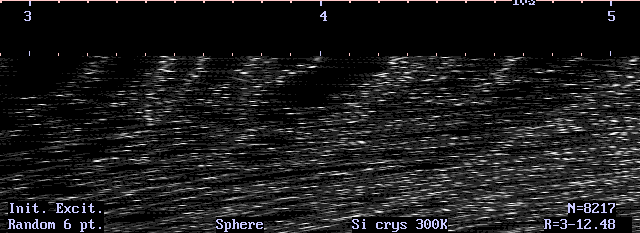
| Figure 1. Fourier transforms of lattice simulations of silicon spheres are shown. The initial disturbance of the lattice is random. For each plot, the horizontal axis is η = ω R/CS100. The vertical axis is 1/R, with infinite R at the top. R at the bottom is 3. The maximum radius and number of atoms, N, used is shown at the lower right. | |
| (a) siran13.gif cc3bmod.cpp | |
| (b) N=210000 cc4g13.c width=0.03 ET=2 random MT=5 Si YROWS=160 siranc1.gif | |
| (c) siran35.gif cc3bmod.cpp | |
| (d) 15f.gif cc4g16.c N 210000 2.9 5.1 0.03 | |
| Figure 2. Fourier transforms of lattice simulations of Silicon spheres are shown. The initial disturbance of the lattice is a velocity field corresponding to a vibrational mode of an isotropic elastic sphere. These modes can be spheroidal or torsional. For each plot, the horizontal axis is η = ω R/CS100. The vertical axis is 1/R, with infinite R at the top. R at the bottom is 3. The maximum radius and number of atoms, N, used is shown at the lower right. (C++ program cc3bmod.cpp ) | |
| (a) sitor2.gif | 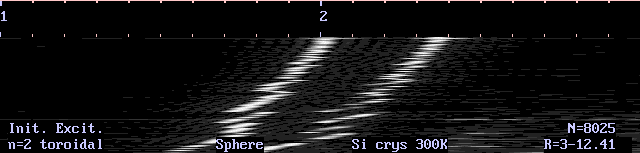 |
| (b) sisph2.gif | 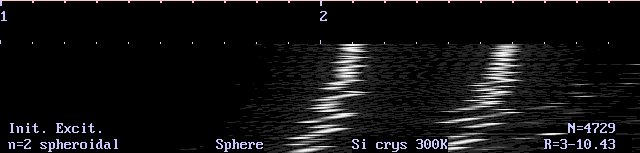 |
| (c) sisph0.gif | 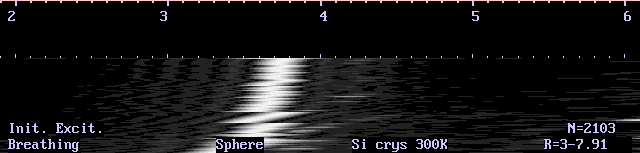 |
| (d) sisph1.gif | 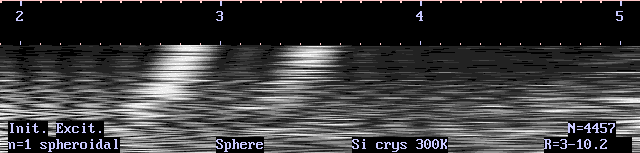 |
| (e) sisph3.gif | 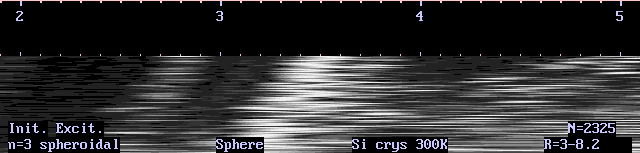 |
| (f) sitor3.gif | 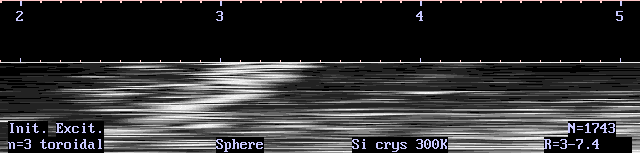 |
| (g) sitor1.gif | 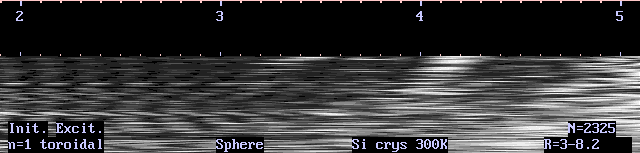 |
| (h) 15a.gif | 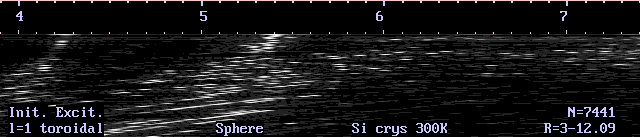 |
| (i) 15b.gif | 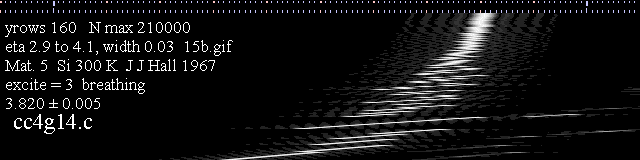 |
| (j) N=210000 cc4g15.c width=0.05 YROWS=160 15e.gif | 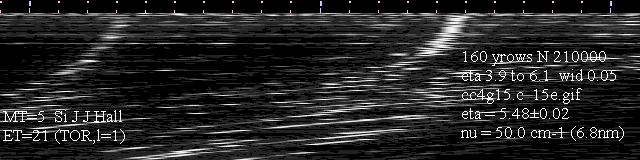 |
| (k) cc4b16.cpp 15i.gif | 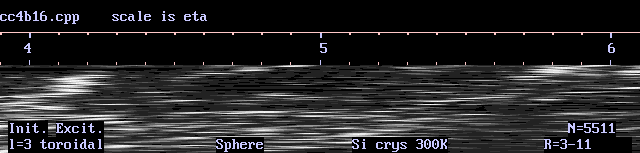 |
| (l) cc4b16.cpp 15h.gif | 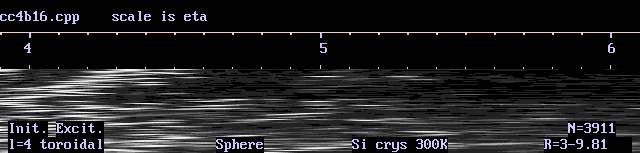 |
| Table I. Lowest vibrational frequencies of a silicon sphere, (at room temp. and press.) from lattice simulation | |||||
| type | l | η | ω R |
ν (cm-1) (2R=10 nm) | notes |
| tor | 2 | 2.125 | 12420 | 13.18 | N=210000 cc4g13.c width=0.03 siranc1.gif |
| sph | 2 | 2.130 | 12450 | 13.21 | |
| tor | 2 | 2.480 | 14490 | 15.39 | |
| sph | 2 | 2.61 | 15250 | 16.19 | |
| sph | 1 | 2.96 | 17300 | 18.36 | |
| sph | 0 | 3.825 | 22350 | 23.73 | N=210000 cc4g14.c width=0.03 15b.gif |
| tor | 1 | 5.48 | 32020 | 34.00 | N=210000 cc4g15.c width=0.05 15e.gif |