| World Art |
| Perhaps the most common misconception about Biblical art is that it descends entirely from European influences; while a vast quantity of religious art originates from European painters, specifically during the Renaissance period, as well as from modern American artists, it is important to recognize the wealth of such artwork extending from other areas of the globe, specifically those of Latin American, Aboriginal, and Asian genesis. |
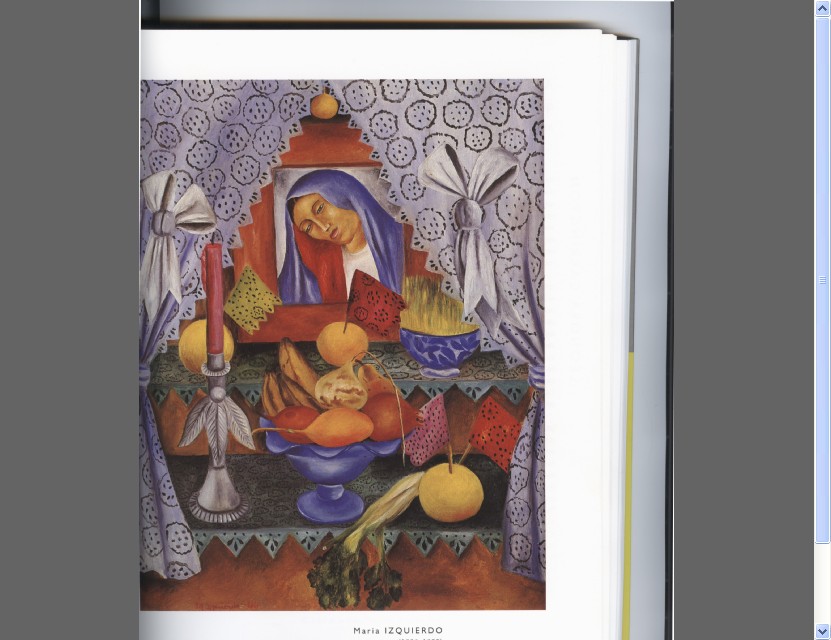
| Latin America is bursting with fine examples of religious art derived solely from the artists' interpretation of Biblical text. Here I have chosen the work of a female artist, Maria Izquierdo, who belonged to the first generation of Mexicans following the Mexican revolution. Rather than embracing European influences, she drew on the indigenous cultures of Mexico as well as contemporary Christian pueblos for inspiration. Her painting "Altar de Dolores" (of the Altar of Dolorosa Madonna) c. 1946 is a still-life portrait of Mary which bares many striking resemblances to Mexico's own Virgin of Guadalupe. From a Biblical perspective, this artwork portrays the Sorrowing Mary in her traditional colors of red and blue. From an ethnic perspective, Izquierdo's painting presents a wealth of cultural features with which Mexicans past and present can relate: it shows the traditional Marian altars present in almost every Mexican home and adorned with paper lace borders and offerings of food. Likewise, the Virgin herself is dark-skinned and dark-haired in conformity with the identity of the Mexican people. |
| Latin America: |
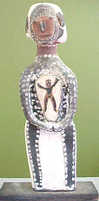
| Going now from the vibrant imagery of Latin American religious art to the more subdued earth tones of aboriginal Australian religious art, we come upon a sculpture by George Mung Mung (c. 1983). Entitled "Mary of Warmun", this wooden icon of the pregnant Mary was carved by an aboriginal man from Western Australia using an old car spring and an ordinary knife. Mung Mung reflected upon both his strong aboriginal roots as well as his deep Catholic faith to create this work: we see a young, unmarried, and pregnant aboriginal girl (not unlike the young, unmarried, and pregnant Mary) whose body is painted in traditional designs, the womb being in the shape of a shield. Mung Mung says of his own art: This young woman she's a young woman, his one. The spirit of the little baby comes in a dream to his mother. Proper the little one, his mother says. The babe grows and he might be ready at Christmas time. He says, Mother, I'm ready now. And the old woman take her away and the little one is born down in the river here. |
| Australia: |
| Asia: |
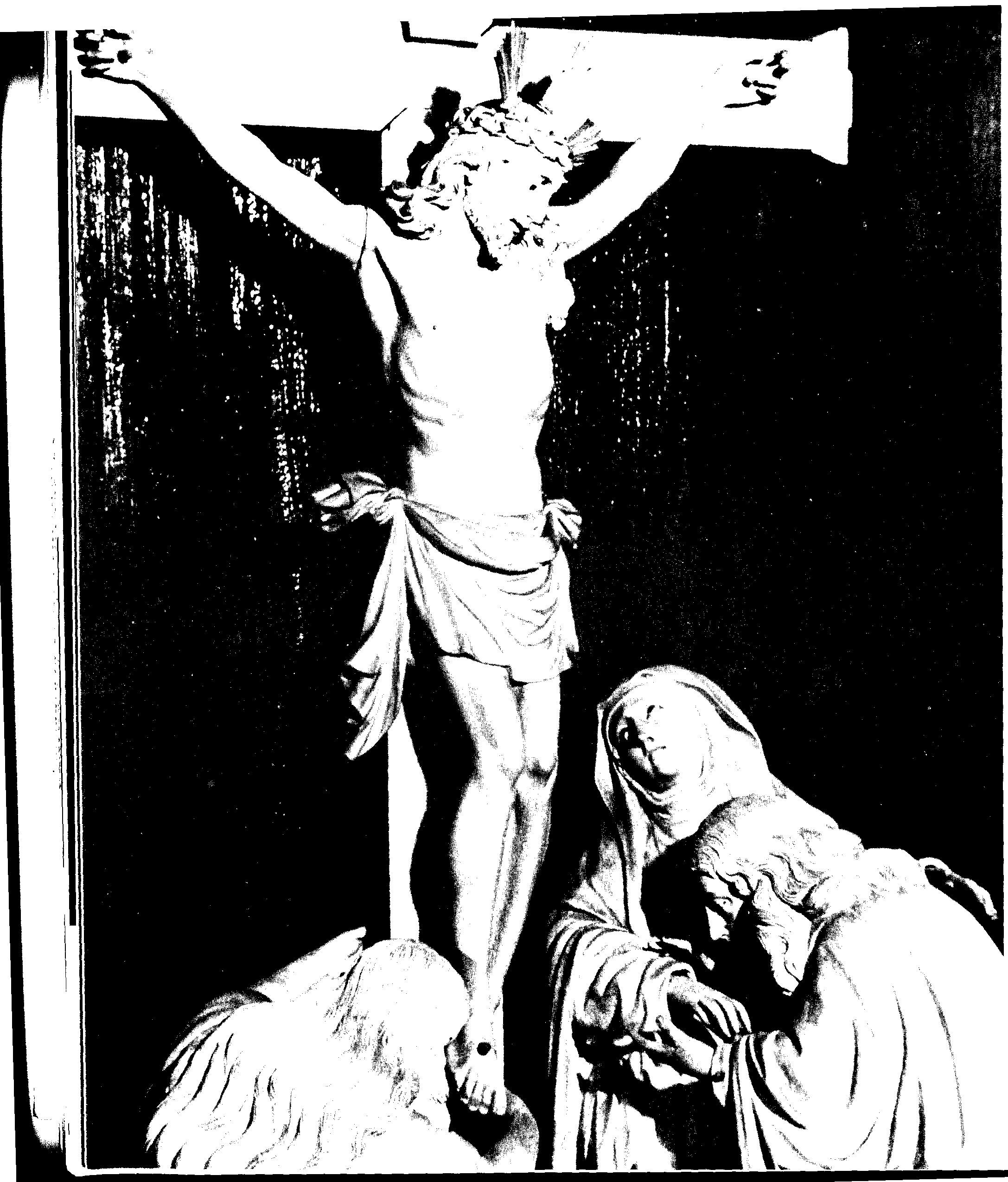
| One final aspect of international religious art I would like to examine is that of Asia, specifically in the predominately Catholic Philippines. Some of the earliest religious images made in the Philippines were crafted by Spanish missionaries or produced by skilled Chinese. The vast majority, though, of existing Filipino religious art originated from the Filipinos themselves and reflects a fusion of Spanish, Chinese, and Philippine influences. |
 |
 |
 |
| From the book: "Beyond Belief: Modern Art and the Religious Imagination" by Rosemary Grumlin. Published by the National Art Gallery of Victoria, Melbourne, Australia, 1998. |
| From the book: "Phillipine Religious Imagery" by Fernando Zobel de Ayala. copyright 1963. |