Classic Europa: Designer Notes
Home Europa Games Legion of Honor Designers' Notes CE Group Rules
Europa Games:
Game Mechanics and Related Topics:
WW2 History:
Other:
Abbreviations:
JMA: John M. Astell
GS: Gary Stagliano
Europa Games

House Rules and More (GS & JMA)
The following represent work and suggestions by Gary Stagliano, the designer of A Winter War, and John M. Astell. Items labeled "GS Note" are taken from what Gary Stagliano thought about the item.
1. CD Combat Strengths (experimental rule adapted from SF Optional Rule
43G3). Coast Defenses in a hex (any hex, not just ports) have a defense strength
for ground combat and overrun purposes equal to half their CD level (Do not
round fractions). If the hex's CD has a defense strength of 1 or greater, it is
treated the same as a 1-RE field artillery unit for purposes of ground combat
and overruns.
If this optional rule is used, remove the Finnish 0-1-0 artillery unit from the
order of battle.
GS Note: "Try this optional rule suggestion."
2. Restricted Replacements.
Soviet. The Soviet player may replace only a limited number of units of certain unit types:
- Only one RE of artillery may be replaced per month.
- Only one NKVD political troops RE may be replaced per month.
- Only one airborne/para-infantry may be replaced per three month six turn period.
- Only one combat or assault engineer RE may be replaced per month.
- Only three RE of winterized units (including all winter capable units) may be replaced/rebuilt per month.
- Only one RE of armor may be replaced per month.
Finnish. The Finnish Player may not replace any artillery units
until Mar I 40.
GS Note: Gary considered this "additional AWW errata and modifications."
3. Western Intervention. In TEM 61, Gary introduced some
changes to the Western Intervention rules in AWW. A die roll of 3 (on 2D6)
results in Western Intervention (which I will call "full Western
Intervention"), although the Soviet strategic reserve is not released until
a Western ground unit leaves the Arctic. (This prevents the cruel [for the
Finns] situation of an early Western intervention resulting in hordes of Soviets
swamping Finland.)
Also new is what I call "limited Western Intervention," in which a
die roll of 2 results in two Western air units joining the Finnish air force.
All this is fine and good. I have two suggestions/house rules for this:
3A. Give the Finnish player a little more control over intervention.
If limited intervention is rolled, the Finnish player can decline it and continue to
roll for Western Intervention in later turns (obviously in the hopes that full
intervention might be rolled later).
If full intervention is rolled, the Finnish player can accept it, change it to
limited intervention, or decline it. If declined, Western Intervention cannot
occur for the rest of the game.
The reason for this suggestion is that Western Intervention depended upon the
attitude and cooperation of Finland. Although the Allies had their own goals
(separate from Finland) for intervening, such as shutting down iron ore shipments
to Germany via Narvik and even occupying the Swedish iron ore mines, their plans
required Finland to invite an intervention force. Thus, when Mannerheim appealed
for aid on 29 Jan. 1940, this revived Anglo-French interest in intervention and
put in motion a process that would have dispatched a force to Scandinavia had not
the Allies took so long to organize it that the war ended in the meantime.
GS note on 3A: "Excellent suggestions."
3B. The rule on not releasing the Soviet strategic reserve until a Western ground
unit leaves the Arctic is too much of a sure thing. Certainly it will cause the
Finnish player to preferentially have Western units take over for the Finns in the
Arctic as much as possible, thereby releasing Finnish units to go south.
Make the release of the strategic reserve conditional on a die roll at the start
of each Soviet initial phase once full Western Intervention has occurred. Roll
two dice; the strategic reserve is released on a roll of 13 or greater. Modify the
roll as follows (modifiers are not cumulative; simply use the biggest modifier that
applies):
+1 if there are any Western units in the Finnish Arctic.
+2 if there are any Western units in the Finnish Arctic adjacent to Soviet units.
+5 if there are any Western units in Finland south of the Arctic.
+8 if there are any Western units in Finland south of the Arctic adjacent to Soviet units.
GS note on 3B: "I agree here, I do not like sure things..."
4. Order of Battle. Ongoing OB research indicates that the 1-6
engineer forces in the Soviet 8th and 9th Armies were accounted for in the
engineer reinforcements.
Remove the two 1-6 Eng lll 8 and 9 from the initial order of battle and place
them in the strategic reserve. These two units are released on Dec II 39.
The Dec II 39 Eng lll 13 now arrives on Feb I 40 with the rest
of the 13th Army's auxiliary troops.
GS Note: Gary considered this "additional AWW errata and modifications."
5. Additional Soviet Deployment Restrictions for the 8th and 9th Armies.
Except for Winter-Capable and NKVD units, Soviet units may only deploy in or adjacent
to hexes containing a road or rail line. Winter-capable and NKVD units may deploy
anywhere in their army's deployment zone.
GS Note: Gary considered this "additional AWW errata and modifications."
Fire in the East/Scorched Earth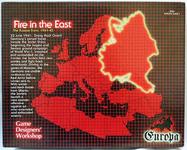
German Player Attack Tactics, 1941 (JMA)
Which is better for the Germans in 1941, one 6:1 attack or two 3:1 attacks?
Surprising for many players, two 3:1 attacks usually help the Germans better than one 6:1
attack in good weather in 1941. A 6:1 is guaranteed not only to take the hex (we're ignoring
things like die roll modifications for this discussion) but also to give a good chance of
inflicting enemy losses without taking any losses yourself. A 3:1 isn't guaranteed to take
the hex and runs the chance of the attacker taking losses. Nevertheless, two 3:1s are usually
better!
Let's do the numbers first. For illustration purposes, the German player has forces totaling
48 attack strength points. He can use all 48 points to attack one hex with 8 Soviet defense
points in it (48:8, one 6:1) or can make two 24-point attacks, each on a different hex with
8 Soviet defense points in it (24:8, two 3:1s).
A 3:1 attack has the following possible results:
Chance
Result
DL
ACH
AL
1/6
EX
8
Yes
8
1/6
AS
0
No
0
1/6
HX
8
Yes
4
2/6
DR
0
Yes
0
1/6
DH
4
Yes
0
(DL: Defender strength losses if result occurs; ACH: Attack captures attacked hex; AL: Attacker strength losses)
On average for one 3:1:
The defender will lose 8/6 + 8/6 + 4/6 = 20/6 = 3.33 points.
The attacker will take the hex 5/6 (83.33%) of the time.
The attacker will lose 8/6 + 4/6 = 12/6 = 2 points.
The net defender losses will be 3.33 - 2 = 1.33 points.
But, two 3:1s occur: On average for the total of these attacks:
The defender will lose 6.67 points.
The attacker will take 1.67 hexes.
The attacker will lose 4 points.
The net defender losses will be 2.67 points.
A 6:1 attack has the following possible results:
Chance
Result
DL
ACH
AL
2/6
DR
0
Yes
0
1/6
DH
4
Yes
0
3/6
DE
8
Yes
0
On average:
The defender will lose 4/6 + 24/6 = 28/6 = 4.67 points.
The attacker will take one hex 6/6 (100%) of the time.
The attacker will lose no points.
The net defender losses will be 4.67 points.
Now, let's apply this to the game:
Summer 1941: In general, take two 3:1s instead of one 6:1. This causes higher
overall losses to the defender (6.67 vs. 4.67) and gains more territory (1.67
hexes vs. 1 hex). The higher defender losses will strain the Soviets more, as
the Red Army is at its weakest state in 1941. Perhaps at least as important as
inflicting losses on the enemy, the more territory you gain in combat makes
it the more likely your c/m forces can break out and exploit, moving east or
pocketing enemy forces.
The potential drawback is that the attacker incurs a fair amount of losses.
While absolute defender losses are higher (6.67 vs. 4.67), net defender losses
are lower (2.67 vs. 4.67). In other words, the Germans are pursuing an
attritional strategy. This is quite possible in the summer of 1941, for the
Germans are at their strongest. If the strategy works, they might win. However,
to make this work, the Germans shouldn't just go around making random 3:1
attacks, as then they are incurring the attrition without sufficient gain.
Instead, the Germans should deliberately adopt an attritional strategy and
maximize their play for it.
Winter 1941/42: Poor weather limits mobility and hence exploitation
possibilities. If the Red Army is neither seriously hurt nor in a bad position
by winter, it seems best to abandon the attritional strategy, concentrate on
defensive measures, and inflict overall greater losses. This implies taking
one 6:1 vice two 3:1s, inflicting greater net losses on the Soviets (4.67 vs.
2.67), at no cost (0 losses) for the Germans. On the other hand, if the Soviets
are already hurting, it's best to continue the attritional strategy.
Thereafter: Good weather returns in summer 1942, but the strategy to follow
depends upon how well things have gone up to this point. If the Red Army is
weak, then a return to the attritional strategy can do it in; otherwise it can
do the Germans more harm than good.

Hints for Playing 2-Week Turn FTF (JMA)
The Europa boilerplate says things like: "Each individual Europa game deals with a specific campaign in detail. To provide detailed historical accuracy or playability, individual games may use differing unit scales, time scales, or specialized rules."
FTF follows this tradition by using 3-day turns instead of 2-week turns.
However, the game is playable using 2-week turns (and historically most of the
action occurs in two turns at this scale). The original Case White contained
some hints on how to convert the game to two-week turns, and here are a
corresponding set of hints do the same for FTF.
Turns: Turns represent 2 weeks, not 3 days. The game starts with the Sep I 39
turn.
Movement and ZOCs: There is no cost to enter ZOCs. Use ZOC rules/costs
from a 2-week-turn game like Second Front or Balkan Front. Do not
use the FTF c/m exploitation limit (1/2 movement in exploitation phase).
Rail Capacities:
- Poland 20
- Germany 60. However, only 20 may be used for entirely on-map rail movement. The remainder can't be used except for transfers to/from the Westwall.
- USSR 15
Clearing Rail Lines: This rule is not needed at the 2-week-turn level.
Supply: Use the FTF supply rule, except use the supply effects
portion from SF or BF instead.
Construction: Use the construction engineer rule from SF or BF.
Unit Breakdowns: Allow units to break down; use an appropriate rule from SF
or BF.
Weather: Use the weather rule from SF or FITE/SE (but not
BF, since it doesn't cover the correct zones or seasons for FTF).
The weather for Sep I 39 in zones C and D is automatically clear.
Surprise Offensive: Use a surprise turn for the Germans at the start of the
game, immediately prior to their Sep I 39 turn. Use the rules for such a turn
from BF or FITE/SE (i.e., like a regular player turn except without an
exploitation phase). Only the following Germans forces get to use the surprise
turn: AG North, AG South, 7th Flieger Division, Luftflotte 1, and Luftflotte 4.
During the surprise turn, these forces may operate only in Poland, Slovakia,
and eastern Germany (which you can define as the WKs in which these forces
deploy, which I believe are WK I, II, III, IV, VIII, XVII, XVIII, and Bohemia-Moravia).
French Intervention: Check for French intervention each game turn starting
with Sep II 39 (instead of FTF turn 4). Use the regular intervention modifiers,
except ignore those for FTF turns 4 and 5. Instead, use a -1 for Sep II 39.
Game Length: End the game on Dec II 39. The game can end sooner:
- If the German Westwall strength reaches 0, the game ends immediately (and the Polish player wins a decisive victory).
- If at the end of any game turn the Polish government has been evacuated or captured AND there are no Polish units remaining in play on the map, the game ends at that point.
Victory Chart: Ignore the German VP awards for the Polish government being
evacuated on FTF turns 1-4, 5-7, 8-10. Instead, use:
Polish government is evacuated Sep I 39: +30
Polish government is evacuated Sep II 39: +10
Polish government is evacuated Oct I 39: 0
Polish government is evacuated after Oct I 39: -15
Change the +2 Polish VP award for each supplied Polish RE on the map at the end
of the game to +10.
The victory conditions for the 2-week-turn game are untested. If they need
balancing, the central idea is that the longer the Poles hold out AND/OR the
more German casualties they cause, the bigger the victory they win, while the
Germans win by having a quick, low-casualty campaign.
OBs, Replacements, etc.: Use the Europa (not FTF) OBs for 1939
Germany, Poland, and Slovakia. Use the FTF OB for the Soviets. Use a replacements
rule from SF or FITE/SE.
Since the Soviets don't have a replacement rate in the FTF OB, give
them 5 inf and 3 arm RPs a turn starting Nov I 39. Since neither the Germans nor
the Soviets have resource point reinforcements specified, give the Germans 3 and
the Soviets 1 each I turn starting Oct I. The Soviets, however, cannot get
replacements or resource point reinforcements before they intervene or on the
turn of intervention. Note also that the Soviets start with no resource points.
Use the special replacements rules from SF or FITE/SE.
All forces get special replacements; the Poles get them at the same rate as the
Germans.
Final Note: There's probably some points I missed and there's some effort
involved to use SF or BF rules in the game, but these hints should
be enough to get you going.

Operation Compass: Western Desert and War in the Desert
War in the Desert handles Operation Compass a bit differently than the original Western Desert did. A.E. Goodwin and I (with suggestions from Frank Watson) reworked the Operation Compass setup to:
- Recreate the gap in the Italian fortified camps between the Sofafi group of camps and Nibeiwa. This gap is not really a whole Europa hex wide, as WITD shows. It is, however, well over half a hex wide, so just a minor reposition of Italian forces creates this gap at Europa level. O'Connor's forces drove through this gap in their surprise attack, both to attack the forward camps from the rear and to reach the coast behind the Italians at Sidi Barani.
- Give the Italians reduced ZOCs initially, to show their negligent patrolling and reconnaissance efforts as well as their slow ability to react to developments. This allows O'Connor's forces, particularly the 7th Armoured Division, to push up to the Italians and through the gap.
- Set O'Connor's forces further back, closer to Matruh, in initial deployment. This thus recreates their actual drive across the desert on the nights of 7/8 and 8/9 December 1940 (they attacked early on 9 Dec.).
- Add an Italian demoralization rule, so that cut off Italian forces defend poorly (a rule amply justified by what actually occurred).
- Use up the Allied rail capacity, so that all those brigades in the Delta don't rail up and hit Sidi Barani like they did in Western Desert. (This was the most ahistoric aspect of the older game.) Overall, the Allies in WITD have fewer forces for Compass but the Italians are weaker due to the demoralization rule.
All this means the Operation Compass forces deploy further back in WITD than in
WD. This does leave the Allied attack supply sitting a couple hexes forward of
the attack force, but to move it back too would have required adding special SMP rules
for the first turn (so that it could move far enough forward), a step I didn't want to
take. It may look slightly odd on the map, but in reality it is actually still behind
the British lines, even if it does not appear to be at Europa scale. The British had
various patrol and recon forces forward, watching the Italians, but most of these simply
do not show up at Europa scale (but see the sidebar below). The net effect was that the
Italians had no effective control or intelligence over much territory in front of their
camps -- the British controlled it.
Sidebar: One Europa-scale unit did operate for a while in the forward area.
A crucial component of the Operation Compass plan was that the Italians shouldn't
patrol or station forces in the gap between the camps, as they might then have
sufficient time to react when the British attack forces arrived there. To discourage
the Italians from entering the gap, on 19 November 1940 the support group of 7th
Armoured Division entered the gap and chased out the small Italian patrolling forces
there. If it sounds incredible that a brief British incursion between the camps would
DISCOURAGE the Italians from guarding the gap, then I fully agree with you -- this
just goes to show how low the Italians' initiative was after sitting in camp for months,
and how well the British judged and exploited it.
Q: It thus looks like you can't expect to recreate Compass if you start the game
with Graziani's advance into Egypt in September 1940. Correct?
A: Sensible players will not voluntarily do what the Italians did. If loaded down
with idiot rules to try to force them to follow history, the players will do the
minimum to meet the rule and the maximum to optimize their position. And, I
don't see how even the most heavy-handed rule would force the players to move
their forces so that they could be surrounded.
In a greater Europa context, however, I don't see this as much of a problem, for
two reasons:
- The Italian player will try to do better than history, but so will the British player. Operation Compass was conceived as a big raid on the Italians and only turned into a major offensive after its initial success was so overwhelming. As a British player, I would increase my forces facing the Italian as much as possible and when I hit them I'd hit them hard. Better Italian play with better British play probably all works out OK in the end.
- If the above is not enough, Operation Compass is one of those few occasions in the war that could justify an in-campaign surprise turn.
Operation Torch
Q: One thing I like about Europa is that you rarely have preordained events occurring during the game that you historical counterparts would not know about. For example, in SF, the Axis doesn't know if D-Day is going to occur in June 1944 or at some other time, in Normandy or somewhere else, or even at all. However, in WITD, both sides know from the start that the Allies are going to storm ashore in French North Africa on Nov I 42 and can play the game accordingly. I realize there's no easy way around it, given the structure of WITD, so I'm not complaining. However, will there be better options available in larger campaign games in Europa?
A: Yes, indeed. The Allies will be able to invade when and where they want,
based on their available forces.
I looked at making Torch a variable event in WITD, somewhat along
the lines of the Axis special operations forces (a pool of forces available for
use in specified time periods). However, this was difficult to do in the context
of the game -- the OB would change constantly, for one example, and a fair portion
of the Axis OB would also have to be conditional, in response to when Torch occurred.
Another factor was the timing of the invasion. Torch was decided upon in the
summer of 1942 as a large-scale, joint US-British invasion, requiring lots of
planning, training, and assembly of forces. One crucial bottleneck was shipping
for the US forces, including among other things the conversion of
"conventional ships to assault vessels" (see The Decision To Invade
North Africa (TORCH) at http://www.army.mil/cmh-pg/books/70-7_07.htm).
[I mention this specifically because you may occasionally see the claim advanced
that troop transports were a significant limiting factor for the
Allies, separate from shipping. However, conventional shipping can be converted
to troop transports, so the true underlying limit is the overall state of the
Allied shipping resources.] Despite Roosevelt wanting the invasion to occur in
October (see Timing of Torch at http://www.army.mil/cmh-pg/books/wwii/Sp1941-42/appC.htm),
the US Navy found that the earliest everything could be ready for the invasion
was 7 Nov. 1942 (and the invasion actually occurred on 8 Nov.). So, an earlier
landing on the scale of Torch seemed out of the question in the context of WITD.
I could also see no strong reason why the Allied player would want to
delay Torch to a later time, like 1943 or even Nov II 42. So, for WITD,
having Torch hardwired for Nov I 42 worked and was the simplest solution,
despite the valid objection that players know its coming from the start of the game.
WITD Q&A
Q: WITD has no rules for "Bombers as Air Transports". Why not?
A: Bombers were not used as emergency transports to any significant extent in
this theater of the war. So, I didn't include the rule in this game. You can use
it if you wish, and I believe Wavell's War includes it as an optional rule.
Q: What would be the game effects on the Allies if the Axis took Gibraltar (such
as by a successful airborne assault), as unlikely as that would probably be?
A: Ignoring any highly debatable morale or political effects should Gibraltar
fall (such as forces on Malta fighting poorly, Vichy France granting the Axis
transit through Tunisia, or Spain doing more for the Axis), it would depend on
whether the Axis were able to establish significant air and naval forces at
captured Gibraltar. If they could, this would discourage the British from
operating in that area, in particular passing through the Straits of Gibraltar.
In this case, the main effect on the British would be to make Malta harder to
reinforce and supply. Ships bound for Malta would now have to sail around Africa
and then make the run from the Suez Canal rather than from Gibraltar -- likely a
3-4 week delay.
The longer run would also strain already-tight Allied shipping resources. A ship
could easily make two or more runs to Malta from Britain via the Straits than it
could by going around Africa. Since Malta was very important for the North African
campaign, shipping to lesser-priority places would have been affected, likely slightly
weakening the Allied position in those places.
Since almost all shipments to Egypt are already going around Africa, the fall of
Gibraltar should not impose additional difficulties on the British forces in the
Middle East.
Axis control of Gibraltar would make any Allied Operation Torch-style landing
in Northwest Africa considerably more risky, as Axis airpower from Gibraltar could
threaten the invasion fleet. It is conceivable that the Allies would judge it too
risky to try to invade the Mediterranean coast of NW Africa, just like they
historically rules out landings in eastern Algeria and Tunisia because of Axis air
power on the nearby islands of Sardinia and Sicily. The Allies might choose to
land on the Atlantic coast of Morocco. However, the greater distance from there to
Tunisia would likely mean the Germans would have more time to establish stronger
defenses in Tunisia and nearby regions.
Taking just Gibraltar, of course, does not seal off the Mediterranean from the Allies.
The Axis really have to grab both Gibraltar and the Suez Canal to do this.
With a neutral Spain, it is not clear that the Axis could hold Gibraltar after
seizing it in an airborne operation. Its distance from Axis airbases measns that
the Axis might have trouble getting their short-range, single-engine fighters there,
but these would be necessary for its defense. Conceivably, the British could concentrate
their carriers and get air superiority over Gibraltar. This would allow the Royal Navy
to operate in the area, with the likely effect of driving out any Italian naval forces
that tried to operate there. (The British, however, would be operating far from their
closest safe naval bases in Britain, which would tend to diminish their power.)
All this would represent a considerable diversion in the naval war for the
British, which might have repercussions elsewhere.
Q: The Libyan Fantasy must take place in 1941 and costs 4 Italian arm RPs. The
Italians in WITD receive no arm RPs for all of 1940 or 1941. Do the
Italians have to rely on German foreign aid?
A: Don't forget that you can also disband and scrap Italian units to get the RPs
you need. When you count up the number of Italian armor RPs in units that start
the game in Africa or go there in 1941, the Italians can easily build up armor
enough for the Libyans unless they take losses. For example, just counting tank
battalions, the Italians start with three 1-6s and get another three on Dec II
40-Jan I 41, so in theory the Libyan armored division can be formed as soon as
Jan I 41!
Q: Second Front's extended range air rules allow fighters to fly extended range
missions. WITD's do not. Why? No drop tanks in 1939-1943?
A: Well, there were some, but they weren't available for most fighters for most
of the period covered in WITD like they were for SF. Overall, the
game work simply and acceptably accurately by excluding drop tanks totally than
including them for everyone at all times. See Fighter
Extended Range.
Game Mechanics and Related Topics
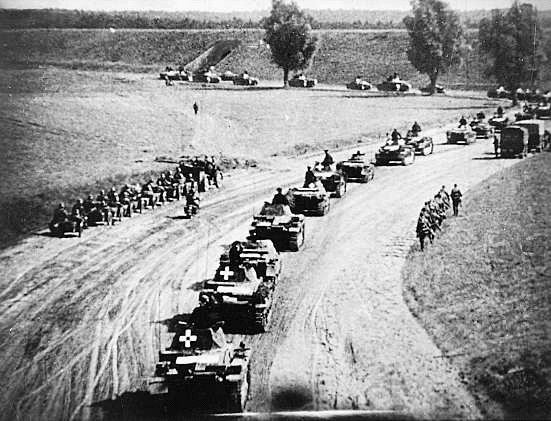
Q: When should a force be given the benefit of a surprise turn? For example War in the Desert gives a surprise turn to Operation Torch but not to other amphibious landings.
A: In general, a force can get a surprise turn when its plans and preparations
greatly outstrip those of its opponents. If the opponents have serious
preparations for a countermove, they can get a reaction phase between the
surprise turn and the regular player turn, like the French and British do in The
Fall of France. Otherwise, there's no reaction phase, like what happens when
the Germans smash into Yugoslavia in Balkan Front.
The start of the campaign is usually when a force gets a "plans and
preparations" jump over the enemy, and the more military proficient and
professional the army, the more likely they are to get it, especially against
the less proficient and professional. (In the early war years, this means the
Germans can get it often but the Italians, for example, are unlikely to -- no
surprise turn for the Italian invasion of Greece!) Other considerations are
whether or not the opponent is at war or mobilized, whether forces are in
contact or not, etc.
Some campaigns:
- Poland 1939: The Germans get a surprise turn. The Poles are mobilizing but are not at war and not in contact with German forces; no reaction phase.
- Finland 1939: The Soviets in effect expect a surprise turn (the rank and file of the Red Army, for example, expected the Finns to give in without fighting) but the Finns, not Soviets, have much higher military proficiency and hence no surprise.
- Denmark and Norway 1940: The Germans get a surprise turn. Neutral Norwegians and Danes don't get a reaction phase. (Yes, I know Storm Over Scandinavia handles things differently. I'm looking at this from a wider Europa context.)
- France 1940: German forces not in contact with Allied forces (i.e., forces north of the French-German border) get a surprise turn. Neutral Belgians and Dutch do not get a reaction phase. French and British forces, planning for such a German move, do get a reaction phase (and it was their tough luck historically that they used it to put their reacting forces where they could be cut off).
- Egypt 1940: The Italians do not get a surprise turn in September. Later, British forces out of contact with Italians may well get a surprise turn; the less-that-proficient Italians flub getting a reaction phase.
- Greece 1940: The Italians do not get a surprise turn.
- Greece & Yugoslavia 1940-41: The Italians do not get a surprise turn in 1940. The Germans get a surprise turn when they intervene. The neutral Yugoslavs don't get a reaction phase. You can argue either way whether the Greeks and British should get a reaction phase or not.
- Syria 1941: The British don't get a surprise turn against the Vichy French.
- USSR 1941: The Germans get a surprise turn. The Soviets historically got a reaction phase but botched it by trying to implement an unrealistic counterattack plan rather than actually reacting to the situaiton on the ground. (FITE/SE handles this by simply ignoring a Soviet reaction phase; I'm not allowed to say at this time whether Total War will handle things differently when it comes out).
- North Africa 1942: The Allies get a surprise turn. The neutral Vichy French don't get a reaction phase.
- Sicily, Italy, Normandy, etc. 1943-44: The Allies don't get a surprise turn in their amphibious invasions.
Now, you can argue endlessly whether or not one side or another achieved a surprise turn at
various times within campaigns, such as Operation Typhoon in 1941, parts of AG South vs.
the Soviets in summer 1942, the Soviets in Operation Bagration in summer 1944, etc.
I've experimented with an in-campaign surprise rule at times but I am reluctant to include
it in any single game because it tends to be a lot of work for an event that doesn't occur
much or at all in the game. I'm sure Europa can have a working rule for this if we really need it.
Q: The special replacements rule lets you make hopeless attacks with unisolated units that otherwise are doomed to be isolated and destroyed. This lets you generate some replacement points you otherwise would not get. For example, I played a 2-week turn version of First to Fight using the Polish early mobilization option. At the end of the German Sep I 39 regular player turn, there were some stray Polish units that German forces had bypassed. These were going to get isolated, overrun, and defeated anyway on the Sep II 39 turn and would not help the Poles at all by awaiting their fate. (The main German forces were already way past them.) I moved them so that they would not be isolated in the combat phase and then attacked adjacent German units at hopeless odds, hoping for AH or AE to get their special replacements. Is this tactic abusive?
A: There are always marginal edge effects in complicated games. While historically
cut-off Polish units did launch desperation attacks to try to break out or at least
disrupt the Germans however slightly, your tactic is somewhat different. However,
I would not seek to add more rules to special replacements to handle such infrequent
edge effects.
Instead, Europa will probably have some form of an "abandon equipment"
rule, as there are several situations during the war that this comes up (even
though for any one campaign it seems the rule is more work than it's worth). By
abandoning equipment, the men of the unit historically often had a better chance
of escaping a pocket or other hopeless situation. Had FTF such a rule, I'm
sure you'd try abandoning equipment (which might get out half the infantry RP cost
of the unit) rather than trying for special replacements.
Q: Would a variation of the disbanding rules cover this situation? (I know the
disbanding mechanic really tries to represent something different. I seem to
recall that most games won't let you disband a unit if it's isolated or in an
enemy ZOC.)
A: There's some similarities between abandoning equipment and disbanding, but
the differences are significant, too. Disbanding occurs in "safe"
areas and where all of the manpower and equipment is available (100% RP recovery).
Abandoning equipment means a units is discarding everything that can slow it down, in
the hopes that the mobility can get it to safety. (Also, there's much less need to
maintain a cohesive unit organization, so that unburdened men can split into small groups
that can more easily pass through enemy lines.)
Some rules I've looked at in this regard require you track inf RPs gained by abandoning
equipment as "unsupported inf RPs." Such RPs can be used for replacing unsupported
units or for no more than half the replacement cost of supported units.
Q: Doesn't abandonment of equipment, in a sense, shows up in The Fall of
France emergency evacuation rule? In that game, however, once the units
evacuate, they are permanently out of play.
A: Yes. In that game, the Allies (especially Britain) lacked the stockpiles of
equipment to reequip such manpower and quickly return them to action.
Q: Would you consider an abandoning equipment rule for a "France fights on
in 1940" scenario? The army does what DeGaulle and others want, evacuating
en-masse.
A: Yes, I think such a rule would be very useful for such scenarios.
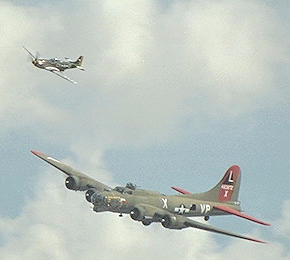
Q: Basically every game of the series except Second Front do not allow fighters to use extended range. I suppose disposable extra fuel tanks (drop tanks) were introduced in great scale at some moment in 1943? In an scenario covering a longer time frame when would you allow appliying this rule to fighters? And, will every country's air force have this ability at roughly same time ?
A: By the Second Front time period, most of the major air forces could
use drop tanks to extend figher range. Drop tanks were developed earlier,
sometimes much earlier, by some air forces. For example, the German Luftwaffe
had drop tanks for some Me 109s in the Battle of Britain, while the Soviets
developed drop tanks in the 1930s and supposedly started using them during the
Russo-Finnish War. However, the early German drop tanks were troublesome to use
and were dangerous to the fighter in combat situations, so they were not used much.
Soviet drop tanks, as far as I've found, were not produced in sufficient
quantities in the early war period to warrant representation. So, giving the Germans
or Soviets fighter extended range in 1940 would be inaccurate.
The simplest and perhaps best way to do this is to is to pick one "magic
date" (Jul I 43 is a good choice) and let all fighters fly extended range
from then on. An alternative scheme I've considered is to have a separate magic
date for each nation. When the majority of the fighters of that nation are
equipped for drop tanks and are routinely using them, that nation gets fighter
extended range. This alternative, however, is likely to be difficult to use,
since you'd have to check which air force can do what all the time. If it was
just for fighter extended range, it might not be so bad. However, there will be
a set of magic dates for various aspects of air power. For one example, as I
recall, the ratings penalties for using fighters as bombers drop over the course
of the war.
Question: Is the War of Resistance guerrilla system applicable to the Balkans? Obviously China has different conditions than the Balkans. However, the WOR faction system may be applicable to Europa, particularly in reducing the multilateral situation of the Yugoslav guerrilla war (many separate factions that can be roughly organized into 3-5 different groupings) into a system applicable for a two-player game.
As a quick overview, in China the Communists (CCP, Chinese Communist Party) would
identify a remote, rural region where a political vacuum existed. Units of the
CCP Red Army would be sent into a region and would set up a base. WOR
focuses on the military aspects of a base.
Lowest Tier: The bases organized village militia, which essentially consisted of part-time soldiers. WOR shows this tier similar to partisan activity in SF, with each base getting a number of sabotage attempts.
Middle Tier: As bases grew they raised regular regional militia units. WOR shows this tier as actual guerrilla units which can be placed on map and can operate within the base's region.
Top Tier: Finally, the Red Army would recruit the best of the regional militia units as reinforcements or replacements to their own conventional army ranks. In WOR, on-map guerrilla units can be used to replace regular CCP forces (or rebuild cadres to full strength).
A: At one level, the CCP 3-tier base system is similar to what went on in some
guerrilla movements in Europe, but in other ways it isn't. The similarity is
that, ideally, active guerrillas in Europe would move from harassing the Axis to
exerting varying levels of control over the countryside (in inaccessible areas)
and eventually would build up strength to drive the occupiers out, either by
themselves in conventional or semi-conventional operations or in conjunction
with friendly regular forces entering the area.
The dissimilarities, however are large:
- The CCP was not only resisting the Japanese invaders/occupies, they were trying to seize control of as much as they practically could from the legitimate but weak KMT government of China.
- China then was mainly a pre-industrial agrarian society -- while there were large cities, the great majority of the population lived in the countryside mostly as impoverished, uneducated, heavily-exploited peasantry. (Exploited in the senses that a) their excess agricultural output, if any, was appropriated in various ways to feed the cities -- with people other than the farmers mainly profiting by this, and b) the corrupt warlordism typically meant the peasants stoically endured whoever was currently "ruling" them, rather than feeling any national loyalty to the remote central government.)
- This goes to say that the CCP, when taking control of an area, had to set up basic political and economic infrastructure to secure an area in any lasting way, and consequently the CCP's military strength was rather immobile -- the first two tiers are essentially tied to their bases.
- Add on top of this the large size of China and the rather low force levels the Japanese used to secure their occupied areas, and the CCP could invest in building up bases in remote areas which the Japanese were unlike to bother about.
Guerrilla wars in Europe varied from the above factors:
- Few major guerrilla movements were trying to resist the Axis occupiers and gain control of the country from the legitimate government. The big exception to this, Tito's Partisans, did not face a legitimate government with conventional forces in place in the country -- the Yugoslav government itself was in exile, and its conventional military forces had been routed. The Partisans thus contended against various guerrilla forces that professed varying degrees of loyalty to the legitimate government but mainly were not controlled by the government (witness the occasional cooperation of Mihailovic's Chetniks with the Axis against the Partisans). Elsewhgere, most other major guerrilla forces were loyal to varying degrees to their country's legitimate government. (The pro-Communist Polish guerrillas looked to Moscow and not to the Polish government in exile in London, but they were a small movement, dwarfed by the pro-government Polish guerrillas. Similarly, other communist guerrillas elsewhere, such as in France, were not per se particularly loyal to their governments, but given the USSR's need for western aid and for western troops to open other fronts against the Germans, Moscow was hardly going to order western European communists to try to take over western European countries like France.)
- Hardly any place in Europe was a pre-industrial agrarian society, except for Albania. (Many places in North Africa and the Middle East were, however.) Instead, they were either mixed semi-industrial/agrarian societies or industrial societies. Overall, urbanization was greater and education of the populace better than that of China's peasantry, control of the country by the central government was much greater, and most people had a sense of nationalism (although this varied greatly among Soviet ethnic groups, and Yugoslav ethnic groups felt loyalty to their group more than to Yugoslavia). Even in countries with large peasant populations (peasants almost always being the least educated), you had a population more nationalistic, more loyal to their government (or ethnic group), and thus less accepting of foreign occupation.
- Many European guerrilla movements tended to be rather mobile. The basic infrastructure was already in place to support guerrillas (essentially a population willing to hide them and not turn them in, while supplying them with food and information about the occupiers), so they didn't have to build up bases in the CCP sense. They did have "bases" where they could, but these were more HQs for guerrilla forces rather than political-economic entities. When circumstances demanded, usually because of Axis anti-partisan operations, the guerrillas would simply abandon their current area and move on to a new one. The guerrilla's success in getting away depended on how tightly the Axis had sealed in the guerrillas with reliable troops. (It is true that Soviet guerrillas tended to stay in the same location for most of the time, but this I believe was due to the lack of German forces to flush them out of an area and not an inability to move.
- Many areas of Europe were much more constrained in size than China. Although guerrillas typically operated in the most inaccessible terrain they could, they typically weren't remote from Axis forces, which correspondingly could fairly quickly go over to anti-partisan operations when the need arose. This varied throughout Europe -- less so in the USSR, where the Germans would go after guerrillas astride communication routes but often not those in remote forests and swamps, more so in places like Yugoslavia, where the Partisans had to flee back and forth across the country several times in 1941-43 to escape anti-partisan operations.
Accordingly, for Europa, I think a version of the current partisan rule from
FITE/SE will work well. For a wide Europa context, there probably needs
to be three levels of guerrilla activity, none of which is tied to CCP-style bases:
- Resistance or Inactive Level: This is "resistance" warfare, with potential guerrilla forces being organized but not used much (the men remain in the civilian occupied economy rather than taking to the hills and forming guerrilla bands). Intelligence gathering goes on, as does sabotage, but probably nothing shows up at Europa level (no rail breaks or airbase hits). Instead, the guerrilla forces are building up strength slowly and occasionally appear as actual guerrilla units for Europa-level operations. The 1939-44 Polish Home Army (before the Warszawa Uprising) and 1940-44 French Forces of the Interior (before the liberation of France) are at this level, with very few forces in actual guerrilla operation at Europa level but many men preparing for "the Day."
- Guerrilla or Active Level: The guerrillas are in the field, organized in small bands, and engaging in various unconventional warfare operations. This level corresponds to the FITE/SE partisan rules. Soviet and Yugoslav guerrillas are mostly at this level from their appearance in 1941; a portion at least of the French Forces of the Interior go to this level around D-Day (the cities don't activate much but various countryside forces do); the Polish Home Army activates and concentrates at Warszawa in 1944.
- Conventional Level: Instead of operating as dispersed, small bands, the guerrillas concentrate and operate as conventional military units. I believe I outlined how this would happen in an "Inside Europa" column in The Europa Magazine some time ago. Soviet guerrillas mainly do not convert to conventional units (but instead mostly are disbanded and absorbed as replacements in the Red Army), so this level is not really needed in FITE/SE. Tito's Partisans convert to conventional forces in 1944, and the Warszawa Uprising might possibly be represented by Home Army guerrillas converting to conventionals at Warszawa (although alternately the uprising might be represented by the Polish player moving lots of guerrilla-level partisans into Warszawa and the Germans doing anti-partisan operations against them).
Now, these three levels do bear some level of similarity to WOR's three tier
guerrilla bases, but there are sufficient differences to prevent it from being directly
applicable.
WW2 History
Copyright 2005, John M. Astell.
It is a common misperception that the United States simply sat on the sidelines during the early part of World War II, ignoring the plight of the countries fighting the Axis powers, until the Japanese attack on Pearl Harbor in December 1941 finally roused the US. In actuality, the situation was much different. Once the war broke out in Europe, the US, although remaining neutral, consistently and increasingly committed its resources and forces to help countries threatened by the Axis. As the Axis threat grew when Germany conquered country after country, the US responded with increased assistance and aid to the beleaguered Allies.
In 1939-41, a neutral US changed its laws so that Allied nations could readily
obtain US military equipment. Prior, US law required a mandatory arms embargo
for all countries at war ("belligerents"), a mandatory ban on loans to
belligerents, and a cash-and-carry requirement for any trade in non-embargoed
goods with belligerents (the belligerents had to pay up front and had to
transport the goods without using US merchant ships). Days after the German
occupation of Czechoslovakia in 1939, the US president, Franklin Delano
Roosevelt, started trying to change the law so that the US could aid other
countries. The proposed revisions died without passage in Congress in the
summer of 1939.
Then the Germans invaded Poland in September 1939. Roosevelt again attempted to
get the law revised, and this time Congress passed it. Although the provision
banning loans to belligerents remained intact, the arms embargo portion was
repealed, as long as trade in arms was "cash and carry". This change,
however, was quite significant, and both Britain and France immediately took
advantage of it, placing orders for military equipment and weapons at US firms,
such as orders for hundreds of badly-needed combat aircraft. Significant deliveries
of this equipment had begun in the spring of 1940, unfortunately about the time
the German blitzkrieg knocked France out of the war.
As France tottered in June 1940, Roosevelt circumvented the Neutrality Act
by declaring that many artillery pieces and millions of round of ammunition
were "surplus" to US needs and thus could be disposed of as the president
ordered -- and he ordered them sent to Britain. In actual fact, of course, these
were not surplus, as the US actually did not have sufficient military equipment
for its needs in case of war.
After the fall of France in June 1940, the US stepped up its efforts to aid
countries fighting the Axis. By executive order, in September 1940, Roosevelt
proclaimed the "Destroyers for Bases" deal with Britain. Britain and
Canada acquired 50 older US destroyers (43 to the Royal Navy, 7 to the Royal
Canadian Navy). In return, the US received 99-year leases for various naval and air
bases on British possessions in the western hemisphere, including Newfoundland (then
a British colony and not part of Canada), Bermuda, the Bahamas, and the Caribbean.
The destroyers were ex-World War I ships that the US had recommisioned in 1939 and
1940 for US neutrality patrols. The British used them for many duties, especially
convoy escort. Most famous of these destroyers perhaps is HMS Campbeltown
(ex USS Buchanan), which was packed with explosives and blown up to destroy
the St. Nazaire dry-dock during the famous Commando raid of 1942.
Roosevelt also allowed British pilots to train in the US and British ships to be
repaired in US ports. Later, Roosevelt transferred US Coast Guard ships to
Britain and allowed British Royal Navy ships to refuel and repair in US ports.
By late 1940, it became clear that Britain lacked the cash to purchase all the
arms it wanted from the US, so the Lend-Lease bill was proposed. Congress passed
it in March 1941, with billions of dollars allocated to it. The US also seized
Axis ships present in US ports and used them for Lend-Lease shipments.
In 1941, the US sent forces to guard Greenland and Iceland. The
US hemispheric security zone was extended eastward, so that Greenland and Azore
Islands were included in it. US Navy ships begin to attack German U-Boats they
encountered.
US Navy aircrew went to Britain to help train British aircrew on
using US-acquired naval aircraft. In May 1941, the Bismarck was spotted by a
British PBY Catalina that was made in the US and was being flown by a US pilot.
Also that month, Roosevelt declared an "unlimited national emergency"
to ready US forces against attack by Axis belligerents and to increase US
military production. Soon thereafter, the US seized foreign merchant ships in US
ports to use for transporting goods overseas.
In June 1941, after the German invasion of its former
semi-ally, the Soviet Union, the US released previously-frozen Soviet funds in
the US.
In August 1941, the Atlantic Conference between Roosevelt and
Churchill occurred. The public result was the Atlantic Charter, which eventually
lead to the creative of the United Nations. Secret agreements covered the
conduct of the war against the Axis by the US and Britain, including no separate
peace deals, US defense of British possessions, opening a second front in
Europe, and scientific cooperation over building an atomic bomb.
In September 1941, the undeclared naval war between the US and
Germany ratcheted up, with the USN being issued "shoot on sight"
orders.
In October 1941, the US extended Lend-Lease to the USSR and
quickly committed to deliver over a 1000 tanks and 2000 aircraft in the first
six months. The bulk of Lend-Lease, however, continued to go to Britain and the
Commonwealth. By late October, Lend-Lease appropriations authorized by Congress
reached 13 billion dollars (by some calculations, this is equivalent to 165
billion dollars in 2004).
Rather than sitting around in 1939-41, it is clear that the US
consistently took substantive steps to aid countries fighting the Axis and in
1941 was neutral only in name but fully committed to helping Britain and the
Commonwealth.
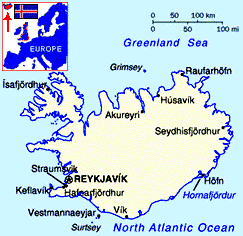
Iceland's status in WW2 is interesting. Denmark ruled Iceland from the 14th Century to 1918, whereupon it became a "free and sovereign" state under the Danish monarchy. Denmark continued to handle Iceland's foreign relations, even after WW2 started. Note that "free and sovereign" is not the same as "independent," and in April 1940, when Denmark was invaded and occupied by Germany, Iceland declared its temporary independence from Denmark and asserted its neutrality. In 1944, this temporary status became permanent when Iceland declared itself an independent republic.
So, in Europa terms, is Iceland an independent country in 1939? Good question.
It was less of an independent country than the Dominions of the British
Commonwealth (which had the British monarch as their own monarch), but more of
one than most possessions of the British Empire (these were under the British
monarch but were not necessarily part of the UK itself). Overall, the best
indicator is that the Icelandic home government felt it necessary to declare
independence (temporary at that) in 1940, so Iceland should start as an
autonomous part of Denmark but can subsequently become independent.
Iceland has another ambiguous status in WW2: In May 1940, British forces landed
in Iceland against the wishes of the Icelandic government. Following the German
occupation of Denmark, Britain offered to protect Iceland, which declined. The
landing and occupation meet no armed resistance, but Iceland issued a formal
protest against the action. Certainly Churchill's view that "Small nations
must not tie our hands when we are fighting for their rights and freedom,"
which he first stated in regard to Norway in 1939, also applied to Iceland.
So, did Britain invade Iceland? While you can argue it either way, perhaps the
most telling point is what the Icelandic government actually did after issuing
its protest: nothing. The occupation not only was not contested, but the
Icelandic prime minister called Britain a friendly nation and requested that
Iceland's inhabitants treat the occupation forces as guests. Later, in 1941,
when the still-neutral USA offered to take over protection of Iceland (so that
British forces there could be used elsewhere), the US required a request for
protection from the Icelandic government before sending any forces. The
Icelandic government, which indeed had in July 1940 discussed with the US being
placed under US protection under the Monroe Doctrine, issued a cautiously worded
request for protection.
Q: Did WW2 Iceland have any kind of local defense forces at all?
A: Iceland supposedly never has had any military forces in the modern sense (it
certainly had heavily armed warriors running around when it was first settled).
It did have a small coast guard, but probably nothing that'd show up at Europa
level forces. On land, I believe the police handled internal security, but they
were by no means militarized.
Q: Did Denmark in the 1930s ever station any forces in Iceland?
A: Off hand, I'm not sure, but I suspect no ground forces were stationed there.
Denmark was responsible for Iceland's defense, but probably no forces were
needed or wanted.
Q: What if Denmark actively resisted the German invasion and its government went
into exile. How would Iceland be affected?
A: It's hard to tell. Icelanders from the little I know tended NOT to regard
Denmark as the "mother country" the way many citizens of the Dominions
regard Britain. (Indeed, Iceland originally was independent, then became part of
Norway, then became part of Denmark after Norway and Denmark became a united
kingdom, and then stayed under the Danish monarchy when Denmark had to cede
Norway to Sweden near the end of the Napoleonic Wars.) I suspect Iceland would
have sought to remain neutral.
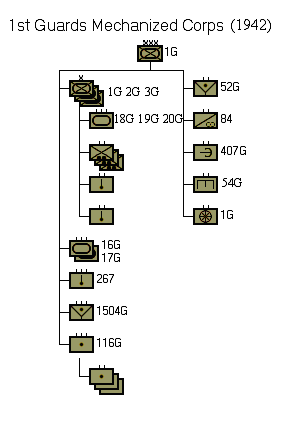
During the Great Patriotic War (the Soviet's name for their part of World War II), the Red Army used the term "corps" for two very different types of military ground-force organizations: "command" corps and "combat" corps. (Command and combat are terms I use to distinguish the two and are not official Soviet terminology.)
At the start of the war in June 1941, the Red Army had numerous command corps,
which were headquarters to control ground forces, like in most other armies in
WW2. For example, rifle corps controlled several rifle divisions (plus other
units), similar to a German infantry corps; mechanized corps controlled two tank
and one mechanized divisions (plus other units), somewhat similar to a German
panzer corps; and cavalry corps controlled cavalry divisions (plus other units).
The impact of the German invasion quickly showed the inefficiencies and
ineptness of the Red Army. One problem that emerged was, due to Stalin's purges,
many Red Army officers lacked the experience or competence to handle large
formations. Most of the mechanized corps were smashed in battle and disbanded
during the summer of 1941. At the same time, the Soviet abolished rifle corps in
their command structure: army headquarters directly controlled the rifle
divisions (plus other units). While this theoretically reduced the flexibility
of army HQs, in practice it allowed the Soviets to have their most competent
senior officers handle large formations effectively without having to filter
their orders through less-competent corps HQs. Not all command corps were
abolished (cavalry corps, for example, were used extensively), and the Soviets
gradually brought back rifle corps in 1942 as the abilities and experience of
their officers increased.
Combat corps appeared in 1942. A combat corps was not a command headquarters to
which various units could be attached as the situation demanded. Instead, it was
an exact equivalent of a division, with a fixed, standardized organization of
subunits. For example, a rifle division would have three rifle regiments, an
artillery regiment, and various smaller subunits, while a tank corps would have
three tank brigades, one motorized rifle brigade, and various smaller subunits.
So, if a combat corps was equivalent to a division, why did the Soviets use
different terminology? I believe (I do not have a definitive reference on this)
that the distinction between combat "corps" and "divisions"
in the WW2 Soviet Army was due to a very traditional approach to nomenclature: A
combat division was composed of regiments. A division could not be composed of
brigades. However, by 1942, the basic tank unit was a tank brigade. Not only
were the mechanized corps smashed and disbanded in 1941, almost all the tank
divisions suffered the same fate. (In the main theater of war, the few that
survived to December 1941 typically were greatly understrength and either were
redesignated brigades or were disbanded.) Instead of tank divisions, which were
intended for large-scale mechanized operations, the Soviets raised numerous tank
brigades that were better suited to provide armored support for the rifle
forces.
In 1942, many of these tank brigades were grouped into division-sized
formations, to start rebuilding the Red Army's ability to conduct mechanized
operations. However, since a division could not control brigades but a corps
could, these new formations were called tank corps. Later in 1942, an improved
tank corps, called the mechanized corps, also containing brigades, was
organized.
If you are familiar with Soviet wartime organization, you may be aware that the
late-war Soviet artillery divisions were composed of several artillery brigades.
Doesn't this violate the divisions-must-have-regiments theory? Not really! The
artillery divisions were first organized in 1942 and contained artillery
regiments. It was only later in the war that the Soviets reorganized their
artillery into brigades.
Finally, I note that soon after the war ended, the Soviets redesignated their
mechanized and tank corps as divisions, with the former component brigades being
reorganized as regiments. So, I believe the wartime combat corps was a
terminology expediency the Soviets adopted due to circumstances and abandoned as
soon as practical.
Other
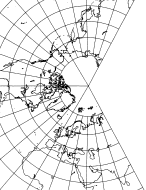
Q: As you are no doubt aware, it is impossible to exactly represent the curved surface of the Earth on a flat map surface. For example, on some flat maps, the land masses on the northern and southern hemispheres become greatly enlarged, such as Greenland seeming to be as big (or bigger) as South America. So, how is this handled in Europa?
A: High-latitudes enlargement is an aspect of the Mercator projection. In
reality, as you know, Greenland (circa 840,000 square miles or c. 1,350,000 sq.
km) is only 12% the size of South America (c. 6,880,000 sq. mi. or c. 11,080,000
sq. km). Mercator is useful for marine navigation because a line connecting two
points on the map gives the true direction between them (although calculating
the distance can be difficult, since the scale changes based on latitude). The
Mercator projection became widely used, even for purposes for which it is not
well suited, such as in primary schools. Fortunately, Europa does not use the
Mercator projection.
Mercator is just one of over a dozen major projections. Each projection has its
strengths and weaknesses in mapping a sphere onto a flat map. Some try to
preserve shape, some distances, some area, some direction, some try to preserve
a bit of everything. Some good overviews of map projections are:
http://www.geography.hunter.cuny.edu/mp/mpbasics.html
http://www.colorado.edu/geography/gcraft/notes/mapproj/mapproj_f.html
Europa uses the Lambert conformal conic projection, which is based on two
standard parallels. (Beware! There are several different Lambert projections,
one of wich being the popular Lambert equal area projection, an azimuthal one
that is quite useful but distorts the shape of landmasses distant for the center
of the map.) The Lambert conformal conic projection helps avoid shape
distortions of landmasses. True direction is not preserved. Typically, a central
line of longitude will be a straight north-south line corresponding to the
"top" and "bottom" of the map, but the further east or west
you get from this line, the less "straight up" on the map corresponds
to true north. (The map at the upper right is a Lambert conformal conic
projection and illustrates this point.)
In Europa, the central line of longitude is in east-central Europe. For play
convenience, all Europa maps define north as the top of the mapsheet, as it
would be very hard to play if the direction of north varied from mapsheet to
mapsheet. In reality, however, when you are operating in western Europe around
France, true north is actually to the northeast of map north, and vice versa
when deep in the east around the Volga.
I used the post-war 1:1,000,000 scale USAF Operational Navigation Charts for
things like coastlines, city locations, and rivers, correcting things that
differed in WW2, such as the Caspian coastline. I also used many other maps of
various projections for information such as forestation, rail lines, etc., but
the underlying projection of the Europa maps is Lambert conformal conic. Or,
perhaps I should say "was" Lambert conformal conic -- I’m not
certain if HMS still uses this projection for their maps, although it does look
like it.
If you’ve looked at the above links, you know that some distortion is
inevitable in any flat map. In Europa, the distorted areas were, as much as
possible, "pushed" into sea areas rather than land areas. Usually,
that works out fine, as you want the least distortion on the land areas when the
ground war is the most important component of the conflict, as in the European
theaters of the war. Occasionally this causes some problems -- the North Sea was
originally a dumping ground for distortion, with the result that Britain ended
up a bit farther away from Norway than it should have been. This was only a few
extra hexes but was enough to make British air operations between Britain and
Norway in 1940 difficult to represent. I understand that this distortion will be
pushed further west out into the open Atlantic when the TFH-era maps of Britain
are revised.
Q: The game series is Europa. But, how is "Europa" pronounced?
A: Yoo-ROE-pah, the American English pronunciation, is how the people at GDW (who founded the series) and Winston’s GRD pronounced it.
In German, it would be pronounced something like OY-ROH-PAH. I suspect (I do not
know for sure) the series name comes from the German word for Europe, since the
first two games in the series had German titles, Drang Nach Osten
(approximately, "Drive to the East") and Unentschieden
("Stalemate"). (The intended but not-published third GDW Europa
eastern front game, however, was to have had a Russian title, Na Zapad,
"To the West".)
"Europa" is perhaps the most common name for the continent among the
languages of the peoples living there (see below). Also, it sounds intriguing in
English (while a "Europe" series just doesn't have much oomph in
English).
If it was selected from German, please note per above that people at GDW did not
use the German pronunciation, even thought they did (or at least tried to) use
the German pronunciation for their game titles that did come from German.
I once compiled a list of names for "Europe" in various languages
(mostly European and nearby areas):
- Europe in English, French
- Europa in Basque, Breton, Byelorussian (the second letter uses a special Byelorussian Cyrillic character, which transliterates as u -- this character is not present in other Cyrillic alphabets, such as for Russian), Catalan, Danish, Dutch, Flemish, Galician, German, Italian, Norwegian, Polish, Portuguese, Romanian, Slovene, Spanish, Swedish
- Európa in Hungarian
- Euroopa in Estonian
- Eurooppa in Finnish
- Europos in Lithuanian (although I’ve also seen Europa)
- Evrópa in Icelandic
- Evropa in Azeri, Czech, Bulgarian, Russian, Macedonian, Serbo-Croatian, Slovak, Ukrainian
- Evropë in Albanian (although I have also seen Europa claimed fro Albanian)
- Ewrop in Welsh
- Eyrope in Greek (the "o" is long; the final "e" is also long and not silent as in English)
- Eyrope in Yiddish (the final "e" is pronounced sort of like "eh" and is not silent as in English)
- Eiropa (Eiropas?) in Latvian
- Eoraip in Erse (Irish Gaelic)
- Jeropa in Frisian
- Avrupa in Turkish
- Ewropa in Kurdish
- ?Erpa in Arabic (maybe)
I may have missed diacritical marks in some languages.
Addendum from Peter Robbins: I always thought that the game series was named
after the mythical Europa, who was abducted by Zeus (in the form of a white
bull) and taken to Crete. Europa was the mother of Minos, and according to some
versions of the legend, the Minotaur as well. Later on, King Minos imprisoned
Daedalus (and his son Icarus) in a high tower, but Daedalus made his escape
using wings made of feathers and wax. Icarus, of course, was not so lucky.
So what does Greek mythology have to do with wargaming? Well, all kinds of
warfare are wrapped up in that story:
- Amphibious operations (the white bull swam to Crete).
- Air operations (Daedalus was the first man to fly, and Icarus was the first to crash).
- Fortifications (Daedalus was a master craftsman and builder of the the Labyrinth, as well as the tower in which he was imprisoned).
- Armor vs infantry (a divine bull would definitely have AECA against unprepared infantry).
|
I built the Classic Europa website as tribute to Winston Hamilton. I worked with Winston with Game Research/Design and have designed many of the Europa games for Game Designers' Workshop and GRD. Check out the Europa Games pages as I flesh them out for my personal look at the games. I've also written columns and articles on Europa and on WW2 history for The Europa Magazine and other publications.
The following list my Europa game work, as either designer (often in collaboration with other designers) or developer. Game Designers' Workshop:
Game Research/Design:
--John M. Astell |
 |
Copyright 2005 Classic Europa