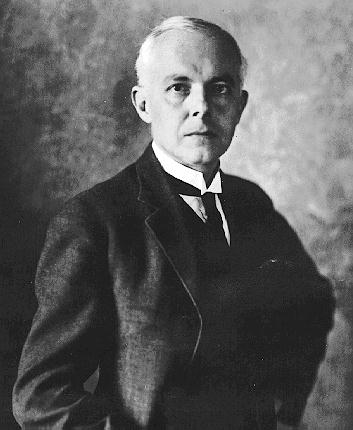
Bartók, Béla
(1881-1945)
Hungarian composer, one of the most original figures in 20th century music. Born March 25, 1881, in Nagyszentmiklós, Hungary (now Sînnicolau, Romania). Bartók studied in Pressburg (now Bratislava, Slovakia) and in Budapest, where he taught piano at the Royal Academy of Music (1907-1934) and worked with the Academy of Sciences (1934-1940).
In 1940 Bartók immigrated to the United States. He did
research at Columbia University (1940-1941) and taught music in New York City,
living in financial stress. He died of leukemia in New York City on September
26, 1945.
Bartók acknowledged his musical debt to the Hungarian composer Franz Liszt and the French composer Claude Debussy, and his tone poem Kossuth (1904) shows the influence of the German composer Richard Strauss.
About 1905 Bartók realized that what generally passed as
Hungarian folk music was actually gypsy music arranged according to conventional
Central European standards. With his friend the Hungarian composer Zoltán
Kodály, Bartók systematically collected and analyzed Hungarian and other
folk music, a collaboration that resulted in 12 volumes containing 2,700 Magyar,
3,500 Magyar-Romanian, and several hundred Turkish and North African folk songs.
Bartók rarely incorporated folk
songs into his compositions; rather, he assimilated into a powerful personal
style the scales and melodic contours and the driving, often asymmetrical
rhythms of Balkan and Hungarian folk music. His music always has a tonal center,
but this is usually established in personal, only partially traditional ways.
A brilliant pianist, he wrote many
teaching pieces for the piano. The six-volume Mikrokosmos (1935), consisting of 150 progressively graded piano
pieces, constitutes a summary of his development, as do his six string quartets,
considered among the most important string quartets since those of Beethoven.
Bartók's other works include the eight Romanian Dances from Hungary (1915), for piano (also orchestrated and arranged for various instruments); the Allegro barbaro (1911) for piano; the opera Duke Bluebeard's Castle (1911); the ballets The Wooden Prince (1914-1916) and The Miraculous Mandarin (1919); three piano concertos (1926, 1931, 1945); Music for Strings, Percussion, and Celesta (1937); and Concerto for Orchestra (1943). Also notable are his violin concerto no. 2 (1938), Music for Two Pianos and Percussion (1937), and his viola concerto, unfinished at his death and completed by the viola player Tibor Serly.


