
Catholic Digest Magazine - September 2004
�The culture is probably my biggest problem,� says Fr Andras.
And that means counseling child brides, getting accustomed to the musical funerals, and the party atmosphere surrounding the baptismal, which no matter how hard Fr. Andras resists still manages to spill into the church where the patient priest too often finds himself competing with a bottle of brandy being passed around the baptistery.
�They have a very strong kind of faith,� adds religion teacher Agnes Koczka. �It is a mix between faith and superstition. In fact they fear God more than they love Him.�
Today approximately 20 million trace their roots to the Roma. More than half of that number resides in the European states with the largest single population found in Romania. Their practicing religion primarily depend on the majority of where they settled, however over the last few years there has been an increasing number of Gypsy conversions towards new more modern reformed Protestant churches.
Many blame the material substances that these churches offer their converts though Florin Moisa, from The Resource Center for Roma adds another point of view. �The Roma are more receptive to the style of these new religions and they like the way they greet one anther as �brother,� he says. �In most cases these groups set up local pastors, someone from inside and it gives them the sense that it is their church.�
Before Mary Queen of the World Church went up in the city of Saint George in central Romania a growing number of Gypsies were turning away from Catholicism. At the time those who wished to attend services needed to make the long journey out of their beggarly communes along the edge of the city into the center. Fr. Andras explains that they felt like outsiders inside the cathedral where they were looked down upon by the well dressed city people who had plenty of pocket money to fill the collection plate.
At Mary Queen of the World Church you won�t see anyone passing a collection plate.
It�s a small and simple triangular church and steeple which sits out on the boarders between the impoverished Gypsy commune and the noticeably non-Gypsy neighborhood
On the next street over and where the pavement ends is the Catholic school which fights the daily struggles of illiteracy that infects the Gypsy community and which many Roma experts say is the number one cause of Gypsy problems across the world.
Just down the street and within ear shot of the loud children being let out of classes lives their priest. Though he chose to live at their doorstep he laughingly complains that they come all day and night for confessions.
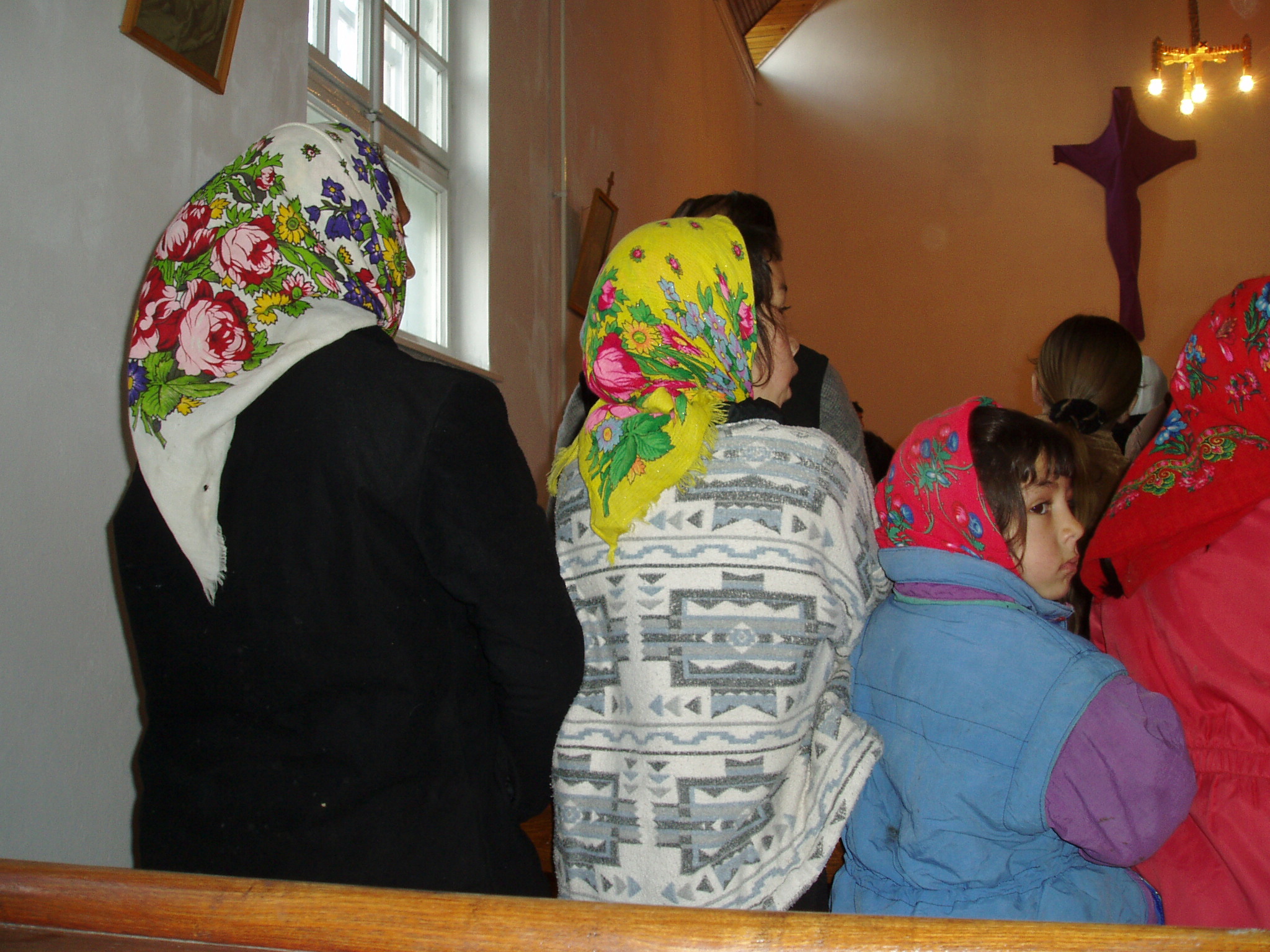
During service the church becomes a colorful meadow of flowery Gypsy headscarves dotted by the familiar white and aqua blue striped habits worn by the four resident nuns from Mother Theresa�s Missionaries of Charity who assist the community. Over the altar hangs a mystifying purple shrouded cross