
Still Struggle Against Poverty and Persecution
National Catholic Register............April 4-10, 2004
by CHUCK TODARO
Register Correspondent
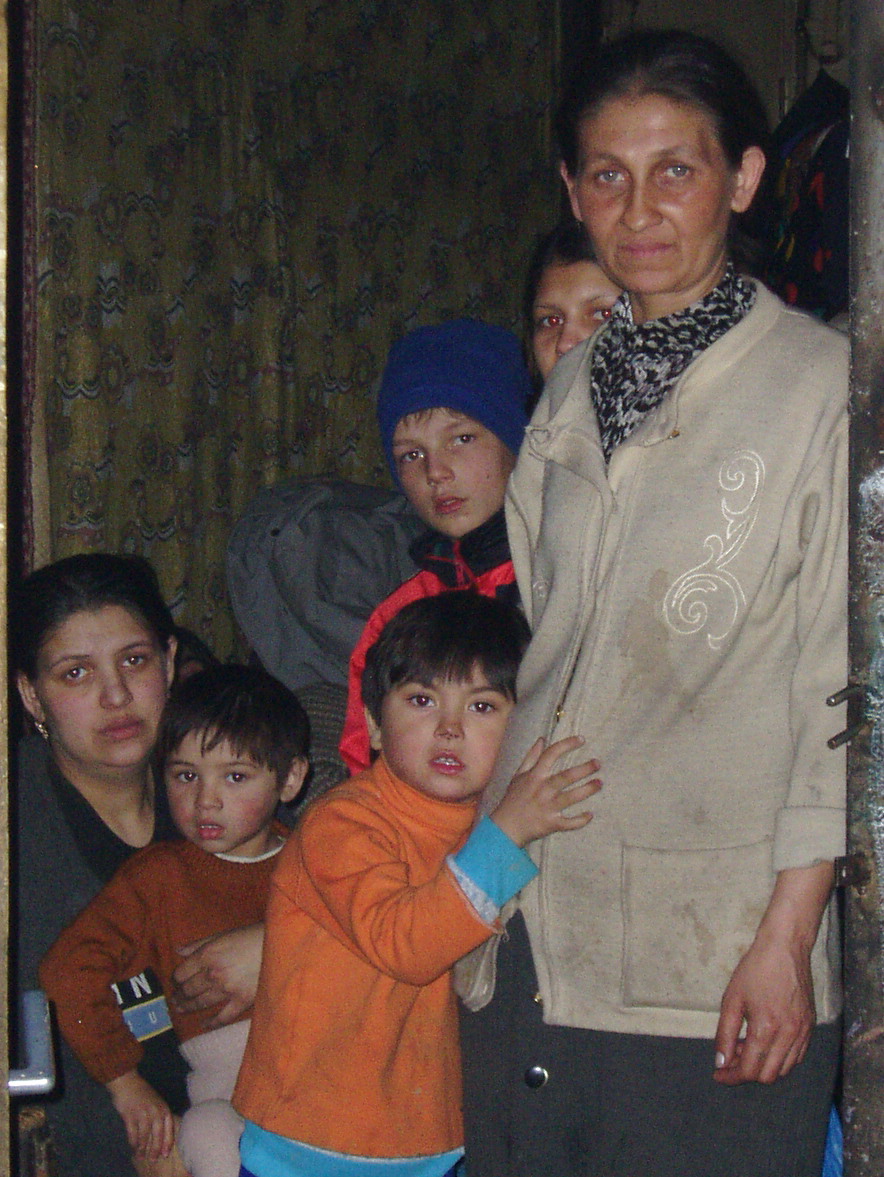
Scraps of linoleum and cardboard cover a dirt floor that Eva Elekesh says is �ice� in the winter and becomes �mushy� during the spring thaw.
For warmth the family burns plastic and other flammable materials scavenged from garbage. An iron stove leaks noxious fumes. Without electricity, light is supplied from a wick dipped in animal fats, which leaves its mark on the blackened ceiling and in the deep coughs of the Elekesh children.
Two years ago the nine families lived in the center of the city, where they held jobs and worshipped at the local Catholic parish. After a suspicious fire in the middle of the night robbed them of their homes and possessions, municipal authorities transported them here, alongside the railroad tracks just a couple hundred yards from the city dump.
In contrast, the nearby Catholic church no longer offers services because only three elderly Catholics live in the area, said Rose Marie Stolz, director of the local Catholic Charities.
Gypsies (or Roma, as they are more correctly known) are negatively regarded across Europe as beggars, thieves and loveless parents, and are seldom viewed as good Christians.
A century and a half after Gypsy emancipation in Romania, discrimination is still a problem affecting many Roma in their daily lives, in employment, education and worship.
Pope John Paul II has often spoken out against Gypsy persecution.
�It is necessary to overcome ancient prejudice that leads you to suffer forms of discrimination and at times undesirable marginalizing of the Gypsy population,� he said in May 1997 at services honoring Ceferino Jimenez Malla, the first Gypsy elevated to beatification.
Yet few in Romania seem to be listening. Recent polls show that more than 75% of Romanians believe Roma to be criminals, and nearly half support segregation and the right of local authorities to expel Gypsy communes.
Fifteen years after freedom of religion returned to the ex-communist country, 5% of the predominantly Orthodox nation now belongs to Protestant religions. Adventists, Pentecostals and Baptists are today equal in number to Catholics, and many of the Cluj-Napoca Roma have turned from their Catholic faith to the welcoming new Protestant religions.
Manara Gabor, an Adventist convert, claims she now has a closer link to Christ.
�I was baptized Catholic by the priest, but who is the priest?� she said. �He is a man. As an Adventist I am married to Jesus, not with the priest.�
Florin Moisa, an official of the Resource Center for Roma Communities in Cluj-Napoca, said the Roma�s relationship with the Catholic Church often depends on the local priest and his sensitivity toward their needs.
�The Roma are more receptive to these new religions,� Moisa said, �and in most cases these groups set up local pastors, someone from inside. They feel it is their church.�
THIS ARTICLE