|
|
|
MAIN MENU |
| Home |
| Civil War Battles |
|
TIMELINE |
| 1860 |
| 1861 |
| 1862 |
| 1863 |
| 1864 |
| 1865 |
|
VETERANS |
| Honor A Veteran |
| View Veterans |
| Women In The War |
|
MUSIC |
| Union |
| Confederate |
|
UNIFORMS |
| Union |
| Confederate |
|
WEAPONS |
| Union |
| Confederate |
|
CONTACT US |
| Guestbook |

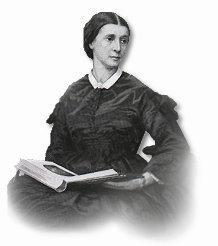
WOMEN IN THE CIVIL WAR - Rose O'Neal Greenhow
Biography:
Rose O'Neal Greenhow was born in 1817 in Port Tobacco, Md., as Maria Rosatta O'Neale. Orphaned as a child, she lived with her Aunt in Washinton, D.C. She was introduced to important people through her Aunt's boarding house at the Old Capitol Building. As a young woman, Rose was considered beautiful, stylish, educated, loyal, and compassionate. Nicknamed "Wild Rose", many people were surprised when she accepted Dr. Robert Greenhow's proposal of marriage.
The couple resided in Washington, D.C., and produced four daughters - Florence, Gertrude, Leila, and little Rose. Unfortunately, tragedy struck Rose's family. Shortly after the birth of little Rose, her husband died suddenly. After his death, Rose's oldest daughter, Florence, moved west. Not long before the Civil War began the next daughter, Gertrude, died.
Rose's sympathy for the Confederate cause grew deep after the death of her husband. She was strongly influenced by her friend John C. Calhoun. Her loyalty to the Confederate cause was noted by those with similar sympathies in Washington. Soon she was recruited as a spy.
Twice Rose passed secret messages on to Confederate General P.T. Beauregard, once on July 9, 1861, and again on July 16, 1861. The messages contained critical information regarding the First Battle of Bull Run, and the plans of Irvin McDowell. Confederate President, Jefferson Davis, credited Greenhow's information with securing victory at Manassas for the Confederate Army.
Knowing that many in Washington knew of her activities, and fearing for the safety of her daughters, Rose sent daughter Leila to France. Allan Pinkerton, head of the newly formed Secret Service, was suspicious as well. Pinkerton apprehended Rose Greenhow on Aug. 23, 1861, and placed her under house arrest. While searching her home for evidence, Pinkerton and his men found maps of Washington fortifications and notes on military movements.
On May 31, 1862, Rose Greenhow and her daughter were released from prison. She was then deported to Richmond, Va. Hailed as a hero by Southerners, Greenhow was welcomed home by Confederate President Jefferson Davis. Soon after, he enlisted her as a carrier to Europe. From 1863 through 1864, she traveled through France and Britain on diplomatic missions for the Confederacy. While in France, Rose was received in the court of Napoleon III at Tuileries. She had an audience with the Queen of England on her trip to Britain. She also became engaged to Granville Leveson-Gower, 2nd Earl Granville. She wrote her memoirs, "My Imprisonment and the First Year of Abolition Rule at Washington", two months after her arrival in London. The book sold well in Europe.
In September, 1864, Rose left Europe to return home to the South. She traveled home on the Condor, a British blockade runner. On October 1, 1864, the Condor ran aground at the mouth of the Cape Fear River in Wilmington, N.C. A Union gunboat, the USS Niphon, had been pursuing the Condor. Fearing capture and reimprisonment, Rose, weighed down with $2,000 worth of gold from her book royalties intended for the Confederate treasury, drowned. Rose O'Neal Greenhow received a full military burial in Oakdale Cemetery, Wilmington, N.C. Her coffin was draped in the Confederate flag, and her epitaph reads, "Mrs. Rose O'N. Greenhow, a bearer of dispatches for the Confederate Government."
|