|
|
|
MAIN MENU |
| Home |
| Civil War Battles |
|
TIMELINE |
| 1860 |
| 1861 |
| 1862 |
| 1863 |
| 1864 |
| 1865 |
|
VETERANS |
| Honor A Veteran |
| View Veterans |
| Women In The War |
|
MUSIC |
| Union |
| Confederate |
|
UNIFORMS |
| Union |
| Confederate |
|
WEAPONS |
| Union |
| Confederate |
|
CONTACT US |
| Guestbook |

WOMEN IN THE CIVIL WAR - Dr. Mary Edwards Walker
Military Record:
Dr. Mary E. Walker - Rank and organization: Contract Acting Assistant Surgeon (civilian), U. S. Army. Places and dates: Battle of Bull Run, July 21, 1861 Patent Office Hospital, Washington, D.C., October 1861 Following Battle of Chickamauga, Chattanooga, Tennessee September 1863 Prisoner of War, Richmond, Virginia, April 10, 1864 - August 12, 1864 Battle of Atlanta, September 1864. Entered service at: Louisville, Kentucky
Biography:
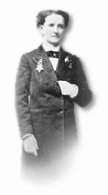
Dr. Mary Edwards Walker was born November 26, 1832 in Oswego, N.Y. Her father, a doctor, was a free thinking participant in many of the movements of the early 1800's. He believed strongly in education and equality for his five daughters, and one son. He also believed they were hampered by the tight fitting clothes of the day.
In June of 1855, Mary, the only women in her class, graduated from Syracuse Medical College, the nation's first medical school and one which accepted both men and women.
Wearing trousers and keeping her own name, Mary Edwards Walker married fellow doctor Albert Miller in 1856. They set up a medical practice together in Rome, N.Y. The public wasn't ready to accept a female doctor, and their practice soon floundered. They were divorced 13 years later.
When the Civil War began she went to Washington, D.C. and tried to join the Union Army. Denied a commission as a medical officer, she volunteered anyway, serving as an assistant surgeon. She was the first female surgeon in the U.S. Army. In 1862, Dr. Mary Walker went to Virginia to provide medical care to the wounded soldiers. In 1863 she was briefly made surgeon in an Ohio regiment.
In the summer of 1864, she was taken prisoner by Confederate troops and imprisoned in Richmond, Va. She remained a prisoner of war for 4 months until she and 2 dozen other Union doctors could be exchanged for 17 Confederate surgeons.
In September of that year she was hired as an acting assistant surgeon with the Ohio 52nd Infantry, however she spent the remainder of the war working at a Louisville female prison and an orphan's asylum in Tennessee. She was paid a sum of $766.16 for her wartime service. Later, she got a monthly pension of $8.50, which was later raised to $20.00, however it was still lower than many widow's pensions at that time.
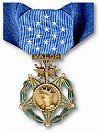
On November 11, 1865, Dr. Mary Edwards Walker made history when she became the first woman to ever win our nation's highest medal, the Congressional Medal of Honor - pictured above - for her work during the Civil War. In 1917, her name was removed from the honor list of awardees, along with 900 other people, when the terms used to designate eligibility were changed. When asked to surrender her medal she refused, and continued to keep wearing it for the rest of her life. In 1977, long after her death in 1919, President Jimmy Carter restored her medal posthumously citing her, "distinguished gallantry, self-sacrifice, patriotism, dedication and unflinching loyalty to her country, despite the apparent discrimination because of her sex."
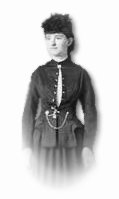
In the mid 1900's, clothing for women became a central issue in the struggle for women's rights. Feminist argued that tight fitting corsets and long heavy skirts were bad for women's health. One woman who changed things was Amelia Bloomer, a campaigner for women's rights and a publisher. She took to wearing homemade dress and trouser combination that provided greater movement and comfort. This became known as the "Bloomer Costume", and was quickly taken up by other feminists of the time, like Mary Walker. Dr. Walker wore this mode of dress until late 1870 when she began dressing in men's clothing.
In 1866, she was elected President of the National Dress Reform Association. She prided herself for being arrested several times for wearing full male dress, including wing collar, bow tie and top hat. She was definitely a woman before her time. Later in life she wrote extensively, including a combination biography and commentary called Hit and a second book - Unmasked, or the Science of Immortality.
Dr. Mary Edwards Walker died February 21, 1919 in Oswego, N.Y. She is buried in the Rural Cemetery on the Cemetery Road. Despite the controversy surrounding her life, Dr. Mary Edwards Walker was proud of her accomplishments as a physician and an advocate for women's rights. As she said in 1897, "I am the original new woman...Why, before Lucy Stone, Mrs. Bloomer, Elizabeth Cady Stanton, and Susan B. Anthony were - before they were, I am. In the early '40's, when they began their work in dress reform, I was already wearing pants...I have made it possible for the bicycle girl to wear the abbreviated skirt, and I have paved the way for the girl in knickerbockers."
|