|
|
|
MAIN MENU |
| Home |
| Civil War Battles |
|
TIMELINE |
| 1860 |
| 1861 |
| 1862 |
| 1863 |
| 1864 |
| 1865 |
|
VETERANS |
| Honor A Veteran |
| View Veterans |
| Women In The War |
|
MUSIC |
| Union |
| Confederate |
|
UNIFORMS |
| Union |
| Confederate |
|
WEAPONS |
| Union |
| Confederate |
|
CONTACT US |
| Guestbook |

WOMEN IN THE CIVIL WAR -
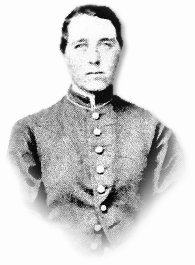
Jennie Irene Hodgers/Albert Cashier
Jennie Irene Hodgers/Albert Cashier
Biography:
Jennie Irene Hodgers was born in 1844, in Clogher Head, Ireland. She was the oldest daughter of Patrick and Sallie Hodgers. There are several accounts as to how she got to America, but what is documented is that in 1862 she was living in Belvidere, Illinois.
On August 3, 1862, dressed in men's clothing, Jennie Hodgers walked into the recruiting office to volunteer for service. She walked out of the recruiting office as Albert Cashier. The physical examination inducting men into the Army consisted of nothing more than a tap or two to the chest, with a quick look in the eyes and ears. No undressing, not even stripping to the waist. She was assigned to the 95th Illinois infantry regiment, Company G. From that day forward, Jennie Hodgers was no more. Passing the pre-induction examination would turn out to be the simplest part of her whole masquerade.
Jennie arrived with the other men at Camp Fuller in Rockford, Ill. on September 3, 1862. The training was long and hard. During the day there were squad drills, company drills, battalion drills, dress parades. At night they had special schooling. In late October of 1862 they received orders to leave for Columbus, Ky. where they would serve under General Ulysses S. Grant. The 95th Illinois left Rockford on November 4th and arrived at its destination 2 days later, where it was attached to the 1st Brigade, 6th Division, Left Wing of the 13th Army Corps.
During the next three years the 95th Illinois moved, most of the time on foot, over some 9,960 miles of Southern soil, each man carrying his own equipment and provisions on his back and about his waist. The 95th Illinois took part of some of the bloodiest battles of the war such as Vicksburg, the Red River Campaign, and the fierce fighting at Guntown, Mississippi. During an expedition at the siege at Vicksburg, Jennie was captured by Rebel soldiers. She may have been small in stature, but she more than made up for it in battle. She was feisty and fearless, and during her capture she was able to grab a gun from the guard and escape back to her unit.
On June 10, 1864, at the battle of Guntown, Miss., the men in the 95th had no idea a woman was fighting along side them. In this battle, the 95th was almost annihilated. According to Regimental History, enlisted men, as well as officers, "were falling thick and fast from right to left of the regimental line; the ammunition was fast giving out, and none arrived from the rear to replete the empty cartridge boxes." Of the 1674 men in the 95th, 743 were either killed, wounded or reported missing. On August 17, 1865, the 95th Illinois Infantry Volunteers were mustered out.
The living conditions during the Civil War were of the poorest kind, with very little clean drinking water available. The lack of clean drinking water was probably the main cause of an illness report on Jennie - a.k.a. - Albert Cashier. While at Vicksburg, Jennie suffered from chronic diarrhea. The newspapers reported that Cashier normally enjoy rigorous health and that coupled with his abandon, made him one of the first soldiers selected when "dependable men were absolutely necessary." The scarcity of good water and the action of battles gave men little opportunity to bath or change their clothes. Some men would go for weeks without changing their clothes. This allowed Jennie the opportunity to keep her sex a secret. In fact years later when men from her unit were questioned, they unanimously agreed they had no women in their unit.
After the war Jennie continued to live as Albert D.J. Cashier. She moved to Saunemin, Illinois and worked as a farm hand for Joshua Chesebro. She did odd jobs, and herded cattle for Chesebro for several years before she moved into the village of Saunemin. She found work in town at Cording's Hardware store doing odd jobs. She was paid a small salary and had her meals with the Cording's in their home. After the store closed at night, Jennie would clean the building, then bed herself down on the floor for the night. In time Jennie's first employer, Joshua Chesebro, bought a small lot and built Jennie a one room cabin. It wasn't much, just a cot, a table and chair, and a small stove, but it was home for Jennie. A place where she could shut the door, have some privacy, and be herself. Fearing her secret would be uncovered, Jennie installed several locks on her door. If she were to be away for any length of time she'd nail her windows shut.
Jennie held a variety of jobs over the 40 some years she lived in Saunemin. She'd worked as a janitor at the Christian Church, where she cleaned the building and mowed the lawn. She worked at the cemetery for a while. She also worked as a lamplighter. Each evening she'd carry a ladder and kerosene through the streets at dusk, lighting the lamps. Then retracing her steps at 10 pm when she'd put out each street lamp.
One of her dearest possessions was her uniform of the Grand Army of the Republic. She would wear it proudly as she marched through the streets, head held high, during the Decoration Day parade. (now known as Memorial Day). There was good and bad to be said about living her life as a man. As a man she was able to vote, it wouldn't be until 1920 when women were first allowed to vote. As a man he was able to use tobacco. Women of the time never used tobacco - at least publicly.
In 1910 Jennie worked for Senator I.M. Lish, doing odd jobs and such. On October 10, 1910, she was in the driveway picking up sticks, when the Senator backed down his driveway. Not seeing the little man bent over he hit Jennie, sending her sprawling. Dr. C.F. Ross was called and he examined Jennie's leg discovering it was broken, he discovered more than that, he also discovered Albert was a woman. Albert pleaded with the doctor not to reveal what he'd discovered, and the doctor decided there was no reason to let on what he knew about Jennie. However the doctor did think Albert would be better off living at the Sailors and Soldiers Home in Quincy, Ill. Dr. D.M. Landon, a surgeon at the Home agreed. On May 5, 1911, Jennie left her home in Saunemin and went to live in the Home as a man. Dr. Ross and Senator Lish requested the secret be kept about Albert's identity and that he was like any other male patient.
In 1913, authorities committed Jennie to Watertown State Hospital for the insane. By the time his identity had been found out his mind was gone. He was housed in the woman's ward, and required to wear a dress. His mind long gone, he had no idea people knew he was no longer a man. He'd pin his dress between his legs in order to make "pants". On October 10, 1915 the little soldier died at Watertown State Hospital. Dressed in the uniform he was so proud of, he was laid to rest in Sunnyslope Cemetery in Saunemin, Illinois with full military honors. Inscribed on his tombstone it simply says: Albert D.J. Cashier, Company G, 95th Illinois Inf.
|