Civitas Ducalis A.D. 2004
Le tracce del passato:Tradizioni , Storie e Leggende.

CIVITAS DUCALIS HOME , TOTA CIVITAS UNA , PRO LOCO , LE MOSTRE , TRACCE DEL PASSATO |
 PARCO
dei FLAVI: villa di Vespasiano, terme o luogo di culto?
PARCO
dei FLAVI: villa di Vespasiano, terme o luogo di culto?
Tracce di Margherita D'Austria a Cittaducale
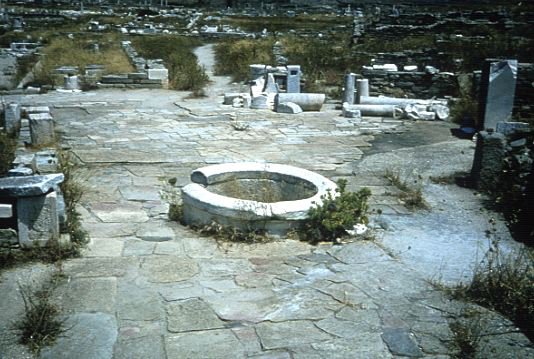
Oracolo dell'isola gallegiante e Umbilicus italiae (analogie tra Cutilia e Delos)
 Calcariola
Fonte S.Lorenzo: un'antico acquedotto
Via Salaria: l'antico percorso e i
tratti ancora visibili.
Il peschio del Principe.
IL colle dello speziale.
IVBILÆVM 2000
(Iubilaeum 2000):in occasione del Giubileo, nella Valle Santa Reatina, visitate anche Cittaducale,oltre ai conventi Francescani .Itinerario consigliato:
centro storico, chiesa di S.Maria di Sesto
mura della Città e Cassero di S.Magno
villa di Vespasiano a Caporio
lago di Paterno e villa di Tito Vespasiano,resti della via Salaria
| Passeggiate ed escursioni |
| febbraio 2000 | Fonte S.Lorenzo | antico arco, resti di tubazioni cilindriche in terracotta con consistenti incrostazioni |
| aprile 2000 | Caporio | Proseguendo oltre la zona restaurata si possono notare ulteriori resti di antiche strutture:un locale con un'urna triangolare, un pozzo circolare,la roccia "del lupo",l'ingresso di una grotta... |
| aprile 2000 | Casale Micone | dopo una lunga passeggiata da fonte S. Lorenzo, non siamo riusciti a trovarlo...alla prossima??? |
| aprile 2000 | Petescia | vicino a un dirupo resti di costruzione in pietra |
| dicembre 2000 | Castel S.Angelo | peschio del Principe |
 MITI & SITI
ORACOLO sull' ISOLA GALLEGGIANTE e OMBELICO della TERRA.
Analogie con l'oracolo di Delphi (Delos): il luogo era indicato come "ombelico del mondo", perchè vi era nei pressi una sorgente e soprattutto vi erano delle fessure del terreno da cui fuoriuscivano esalazioni gassose.
Queste esalazioni inducevano nella persona che faceva l'oracolo uno stato semi-ipnotico che le faceva dire frasi che erano interpretate come profezie.
L' oracolo sembra legato al concetto di umbilicum, il luogo potrebbe essere :
il lago di Paterno, non l'attuale posizione ma una fossa nei pressi dell' antica "villa di Tito" chiamata "fosso secco" ...
la zona intorno alla chiesa della Madonna di sesto, così detta perchè posizionata al sesto miglio sulla via Salaria. All' interno della chiesa è conservata una lapide che cita umbilicum italiae ...
la zona delle terme di Vespasiano (in particolare una fessura triangolare potrebbe essere l'apertura da cui uscivano esalazioni gassose)
Sembra strano il riferimento ad un' isola galleggiante, ma nella letteratura classica si hanno citazioni riguardo ad insolite isole galleggianti: ...
(il tutto legato al mito dell' oracolo dell' isola galleggiante e dell' umbilicus italiae) secondo Varrone nel lago di Cutilia era sorta un'isola galleggiante ed il luogo era considerato umbilicus italiae
L' oracolo di Delfi
Archaeological excavation has shown that a Mycenaean cult center existed at Delphi under the later temenos of Athena Pronaia, but there is no clear evidence for continuity into the 8th century B.C. nor for the identity of the original deity. Tradition and myth, however, report that the site at Delphi, originally called Pytho, was first sacred to Poseidon and Ge (Mother Earth) and that an oracle presided near a cave inhabited by Python, the serpent son of Ge.
In the 8th century B.C. the cult of Pythian Apollo developed and shortly thereafter, according to tradition, priests arrived from Knossos and introduced the cult of Apollo Delphinios (dolphin) which effected the sanctuary's change in name.
In the 8th and 7th centuries the sanctuary prospered, in large part, because the oracle played an important role in advising the Greek cities on colonization ventures. Numerous buildings, including the first ashlar temple of Apollo, were added to the sanctuary and dedications and wealth accumulated. The fame of the Delphic oracle spread throughout the civilized world.
L'isola galleggiante:floating island , da Herodotus
The History of Herodotus- Book II (fonte: The Internet Classics Archive)
This, as I have said, was what astonished me the
most, of all the things that were actually to
be seen about the temple. The next greatest marvel
was the island called Chemmis. This island lies in the middle of a broad and deep lake close by the temple, and
the natives declare that it floats. For my own
part I did not see it float, or even move; and I wondered
greatly, when they told me concerning it, whether there be really
such a thing as a floating island. It has a
grand temple of Apollo built upon it, in which
are three distinct altars. Palm trees grow on it in great abundance, and many other trees, some of which
bear fruit, while others are barren. The
Egyptians tell the following story in connection with this island, to explain the way in which it first came
to float:- "In former times, when the
isle was still fixed and motionless, Latona, one of the eight gods of the first order, who dwelt in the
city of Buto, where now she has her oracle,
received Apollo as a sacred charge from Isis, and saved him by hiding him in what is now called the floating island.
Typhon meanwhile was searching everywhere in
hopes of finding the child of Osiris." (According to the Egyptians, Apollo and Diana are the
children of Bacchus and Isis, while Latona is
their nurse and their preserver. They call Apollo, in their language, Horus; Ceres they call Isis; Diana,
Bubastis. From this Egyptian tradition, and
from no other, it must have been that Aeschylus, the son of Euphorion, took the idea, which is found in
none of the earlier poets, of making Diana the
daughter of Ceres.) The island, therefore, in consequence of this event, was first made to float. Such at
least is the account which the Egyptians give.
Lydia tota fremit, Phrygiaeque per oppida facti
rumor it et magnum sermonibus occupat orbem.
Ante suos Niobe thalamos cognoverat illam,
tum cum Maeoniam virgo Sipylumque colebat;
nec tamen admonita est poena popularis Arachnes
cedere caelitibus verbisque minoribus uti.
Multa dabant animos: sed enim nec coniugis artes
nec genus amborum magnique potentia regni
sic placuere illi, quamvis ea cuncta placerent,
ut sua progenies; et felicissima matrum
dicta foret Niobe, si non sibi visa fuisset.
Nam sata Tiresia venturi praescia Manto
per medias fuerat divino concita motu
vaticinata vias: “Ismenides, ite frequentes
et date Latonae Latonigenisque duobus
cum prece tura pia lauroque innectite crinem.
Ore meo Latona iubet.” Paretur, et omnes
Thebaides iussis sua tempora frondibus ornant
turaque dant sanctis et verba precantia flammis.
Ecce venit comitum Niobe celeberrima turba,
vestibus intexto Phrygiis spectabilis auro,
et, quantum ira sinit, formosa: movensque decoro
cum capite inmissos umerum per utrumque capillos
constitit; utque oculos circumtulit alta superbos,
“quis furor, auditos” inquit “praeponere visis
caelestes? aut cur colitur Latona per aras,
numen adhuc sine ture meum est? mihi Tantalus auctor,
cui licuit soli superorum tangere mensas,
Pleiadum soror est genetrix mea, maximus Atlas
est avus, aetherium qui fert cervicibus axem;
Iuppiter alter avus socero quoque glorior illo.
Me gentes metuunt Phrygiae, me regia Cadmi
sub domina est, fidibusque mei commissa mariti
moenia cum populis a meque viroque reguntur.
In quamcumque domus adverti lumina partem,
inmensae spectantur opes. Accedit eodem
digna dea facies. Huc natas adice septem
et totidem iuvenes et mox generosque nurusque.
Quaerite nunc, habeat quam nostra superbia causam,
nescio quoque audete satam Titanida Coeo
Latonam praeferre mihi, cui maxima quondam
exiguam sedem pariturae terra negavit.
Nec caelo nec humo nec aquis dea vestra recepta est:
exsul erat mundi, donec miserata vagantem
‘hospita tu terris erras, ego’ dixit ‘in undis’---------------------------------------( isola galleggiante ?)
 DELOS
DELOS
instabilemque locum Delos dedit. Illa duorum
facta parens: uteri pars haec est septima nostri.
Sum felix: quis enim neget hoc? felixque manebo:
hoc quoque quis dubitet? tutam me copia fecit,
Maior sum, quam cui possit Fortuna nocere,
multaque ut eripiat, multo mihi plura relinquet.
Excessere metum mea iam bona. Fingite demi
huic aliquid populo natorum posse meorum,
non tamen ad numerum redigar spoliata duorum,
Latonae turbam: qua quantum distat ab orba?
Ite, satis, propere ite, sacri est laurumque capillis
ponite.” Deponunt et sacra infecta relinquunt,
quodque licet tacito venerantur murmure numen.
Indignata dea est summoque in vertice Cynthi
talibus est dictis gemina cum prole locuta:
“En ego vestra parens, vobis animosa creatis,
et nisi Iunoni nulli cessura dearum,
an dea sim dubitor perque omnia saecula cultis
arceor, o nati, nisi vos succurritis, aris.
Nec dolor hic solus: diro convicia facto
Tantalis adiecit vosque est postponere natis
ausa suis, et me, quod in ipsam reccidat, orbam,
dixit et exhibuit linguam scelerata paternam.”
Adiectura preces erat his Latona relatis:
“desine!” Phoebus ait: “poenae mora longa querella est.”
Dixit idem Phoebe: celerique per aera lapsu
contigerant tecti Calmeida nubibus arcem.
da Ovidio la metamorfosi della donna che si trasforma in serpente e diventa
l'oracolo dell'isola galleggiante
OVID :Metamorphoses-
Book the Sixth
Caeus the Titan's vagrant progeny;
To whom, in travel, the whole spacious Earth
No room afforded for her spurious birth.
Not the least part in Earth, in Heav'n, or seas,
Would grant your out-law'd Goddess any ease:
'Till pitying hers, from his own wand'ring case,
Delos, the floating island, gave a place.
There she a mother was, of two at most;
Only the seventh part of what I boast.
My joys all are beyond suspicion fix'd;
With no pollutions of misfortune mix'd;
Safe on the Basis of my pow'r I stand,
Above the reach of Fortune's fickle hand.
Lessen she may my inexhausted store,
And much destroy, yet still must leave me more.
Suppose it possible that some may dye
Of this my num'rous lovely progeny;
Still with Latona I might safely vye.
Who, by her scanty breed, scarce fit to name,
But just escapes the childless woman's shame.
Go then, with speed your laurel'd heads uncrown,
And leave the silly farce you have begun.
UMBILICUS ITALIAE
La statua d' oro della torre di Castel S' Angelo....si racconta che sulla torre che domina Castel S.Angelo fosse posta, in epoca remota, una statua d'oro dell'Arcangelo Gabriele.Durante un violento temporale un fulmine cadde sulla torre facendone crollare la parte superiore:la statua dell'Arcangelo non fù più trovata tra le macerie. Sarà ancora sepolta all'interno della torre?
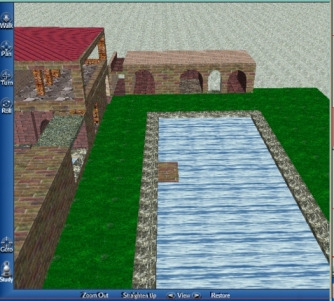
Link ad una vista 3D delle Terme di Vespasiano,
anzi bisogna parlare di Santuario o luogo di culto, secondo le più recenti ipotesi illustrate dalla Prof.ssa Spoletini durante la recente visita guidata.
Proseguendo oltre la zona restaurata si possono notare ulteriori resti di antiche strutture:un locale con un'urna triangolare, un pozzo circolare,una roccia "del lupo",l'ingresso di una grotta...
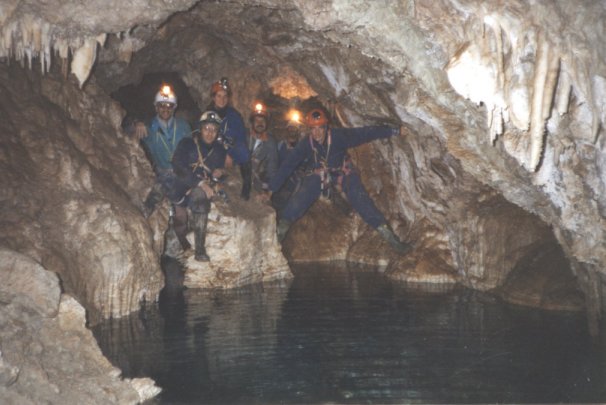
Attività del gruppo speleologico "Le Talpe" (coordinato da Paolo Monaco).

 Il mio indirizzo è [email protected]

© 1997-2004 MS

This page hosted by  Get your own Free Home Page

Data ultimo aggiornamento: 27/11/04