

which causes widespread pain and profound fatigue, as well as a variety of other symptoms. Its effects are felt primarily in muscles, tendons, and ligaments throughout the body. Unlike arthritis, however, no inflammation accompanies fibromyalgia, and the joints of the body are not directly affected.
The pain of fibromyalgia syndrome is usually described as aching or burning and is unpredictable in nature. Its severity varies from day to day, and different parts of the body tend to be affected at different times. In some people, FMS pain can be very severe and disabling, while in otheres it may cause only mild discomfort. Likewise, the fatigue which often accompanies fibromyalgia syndrome ranges from a mild, tired feeling to all-consuming exhausation.
SYMPTOMS
In addition to pain and fatigue, individuals with FMS usually experience some of the following symptoms:
Sleep Disturbance
Despite getting adequate amounts of sleep, FMS patients may awaken feeling unrefreshed, as if they've barely slept at all. They may also have difficulty falling asleep or staying asleep.
Stiffness
Body stiffness is a significant problem experienced by most patients. It can occur upon awakening or remaining in one position for prolonged periods. It can also accompany weather changes.
Increased Headaches or Facial Pain\
Headaches are a common complaint for many with FMS. They may be caused by referred pain from tender neck and shoulder areas, or they may be associated with pain in the muscles and other soft tissues around the temporomandicular joint, or TMJ, which is located where the jaw meets the ear. In the latter case, jaw or facial pain is usually present, too.
Additional Discomfort
FMS-related symptoms include digestive disturbances, abdominal pain and bloating, constipation, and diarrhea. As a whole, such symptoms are known as Irritiable Bowel Syndrome
Irritable Bladder
Fibromyalgia patients may notice an increase in urinary frequency or experience a greater urgency to urinate, infection is present.
Numbness and Tingling
Aslo known as paresthesia, symptoms usually involve a pricklin or burning sensation, particularly in the extremities.
Chest Pain
Persons with FMS sometimes experience a condition called costochondralgia whcih involves muscular pain at the spot where the ribs meet the chest bone. Since costochondralgia mimics cardiac symptoms, it is always a good idea to check with a physician if chest pain occurs.
Cognitive Disorders
Frequent complaints, which vary from day to day, include difficulty concentrating, spaciness, memory lapses, word mix ups when speaking or writing, and clumsiness or dropping things.
Dysequilibrium
FMS patients may also experience dizziness and balance problems. Typically , there is no classical, spinning vertigo.
Enviromental Sensibility

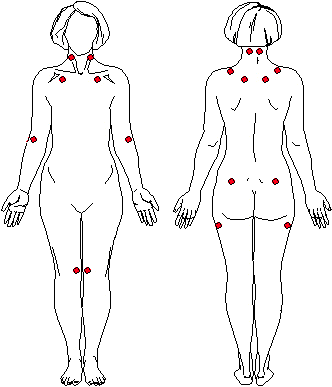

BREAST PAIN
BUCKLING KNEE
CHRONIC DRY COUGH
DARK SPECKS IN VISION
DIZZINESS
ESOPHAGEAL REFLUX
BODYWIDE ACHINESS
BRUXISM
CHEST TIGHTNESS
CLUMSINESS
DIFFICULTY CLIMBING STAIRS
ELECTROMAGNETIC SENSITIVITY
FATIGUE
FIBROFOG
FOOT PAIN
HEAT AND COLD SENSITIVITY
IRRITABLE BOWEL AND BLADDER
JAW PROBLEMS
JUMPY MUSCLES
NIGHT DRIVING DIFFICULTIES
MUSCLE CRAMPS
RESTLESS LEG SYNDROME
RUNNY NOSE
SHIN SPLINTS
ALLERGIES
STIFF NECKS
THICK MUCUS SECRETIONS
WEAK HAND GRIP
BIG TOE PAIN
BURNING INNER THIGH
URINATION INSOMNIA
SLEEPING DIFFICULTIES
FLUCTUATION BLOOD PRESSURE
HAIR LOSS
FOOT SLAP
FLUCTUATION BODY WEIGHT
FROZEN SHOULDER
HIATAL HERNIA
ITCHINESS
LOW BACK PAIN
MID SHOULDER PAIN
NAUSEA
RAPID HEARTBEAT
RINGING IN EARS
SCIATICA
SHORTNESS OF BREATH
SWALLOWING DIFFICULTIES
WEAK ANKLES
YEAST INFECTIONS
LOW-GRADE FEVER
LIGHT SENSITIVITY
NUMBNESS AND TINGLING
CARBOHYDRATE CRAVINGS
THE SHAKES
SLEEP APNEA
STIFFNESS


Polymyalgia rheumatica(PMR) is a long sounding name for a disease which primarily affects the shoulders and hips. It is in the class of disorders termed as "collagen vascular diseases." *Collagen vascular diseases are a group of diseases in which the body begins to attack it own tissues. The prototypye is rheumatoid arthritis, where the attack is on the joint fluid, but many organ systems can be involved. The exact cause of most of the diseases is unknown, but viruses, foods and even bacterial infections may be involved.
In PMR, the areas affected are the shoulders and the hips(the back and chest are also commonly involved). Muscles are painful, with a stiffness relieved by movement, but are rarely tender to the touch. PMR usually affects people in their 50s adn 60s , but not always, being a bit more common in women. The diagnosis is made by your symptoms and by a blood test for inflammation called an ESR(sedimentation rate).
An unusual complication of PMR is the development of Temporal Arteritis(TA). In TA, the blood vessels of the temple (sides of the forehead) are inflamed. This can lead to headaches, jaw pain, and loss of vision. TA is a medical emergency. It needs to be diagnosed with a biopsy of the temporal arteries and treated with high dose prednisone.
Treatment includes:
*depressing the body's immune response, either by medicines (antiinflammatories, steroids, antibiotics0,
* food avoidance (or even fasting),
* or rest (from physical and emotional stressors),
* PMR low dose Prednisone: 10 mg.per day or every other day
Symptoms to look for include recurrent infections and fevers, sun sensitive rashes, mouth ulcers, dry mouth/eyes, hair loss, joint or chest pains, difficulty swallowing, swollen glands, or fingers/toes that get overly cold when exposed to the cold.