| A visit to Dachau |
 |
 |
 |
 |
 |
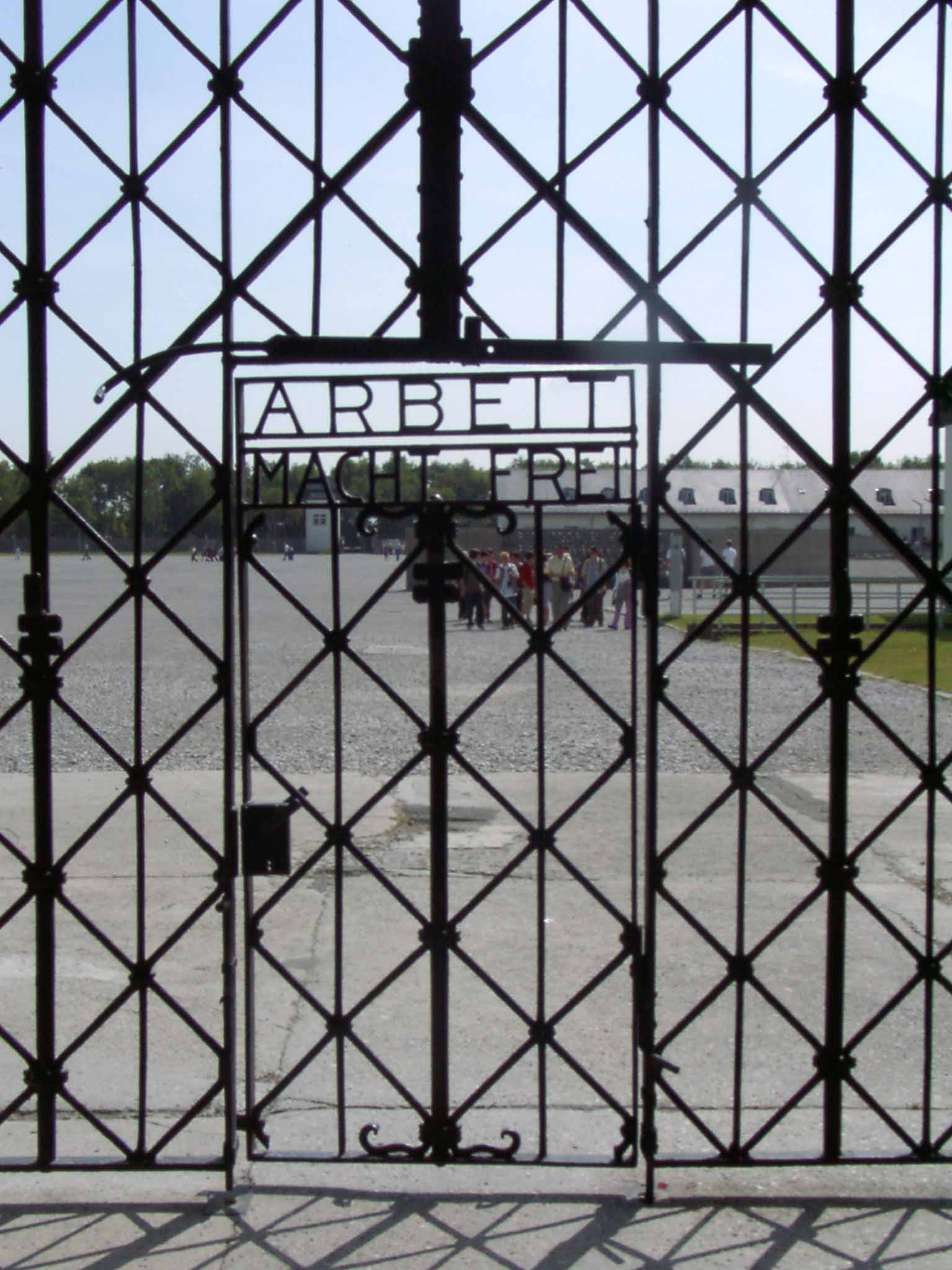
| Dachau, the first Nazi concentration camp, is located about an hour from Munich, Germany. The camp opened on March 22, 1939, on the grounds of an old ammunition factory. Between the years 1933-1945, the camp held 206,000 registered prisoners, including political opponents, Jews, clergy, homosexuals, gypsies and citizens from over 30 nations. Many more prisoners were held at the camp without ever being registered so the exact number is unknown. The picture on the right shows the entrance to the camp. Prisoners who knew German would have known that the saying said, "Work will make you free". This was not a true statement for most people who passed through the gate. |
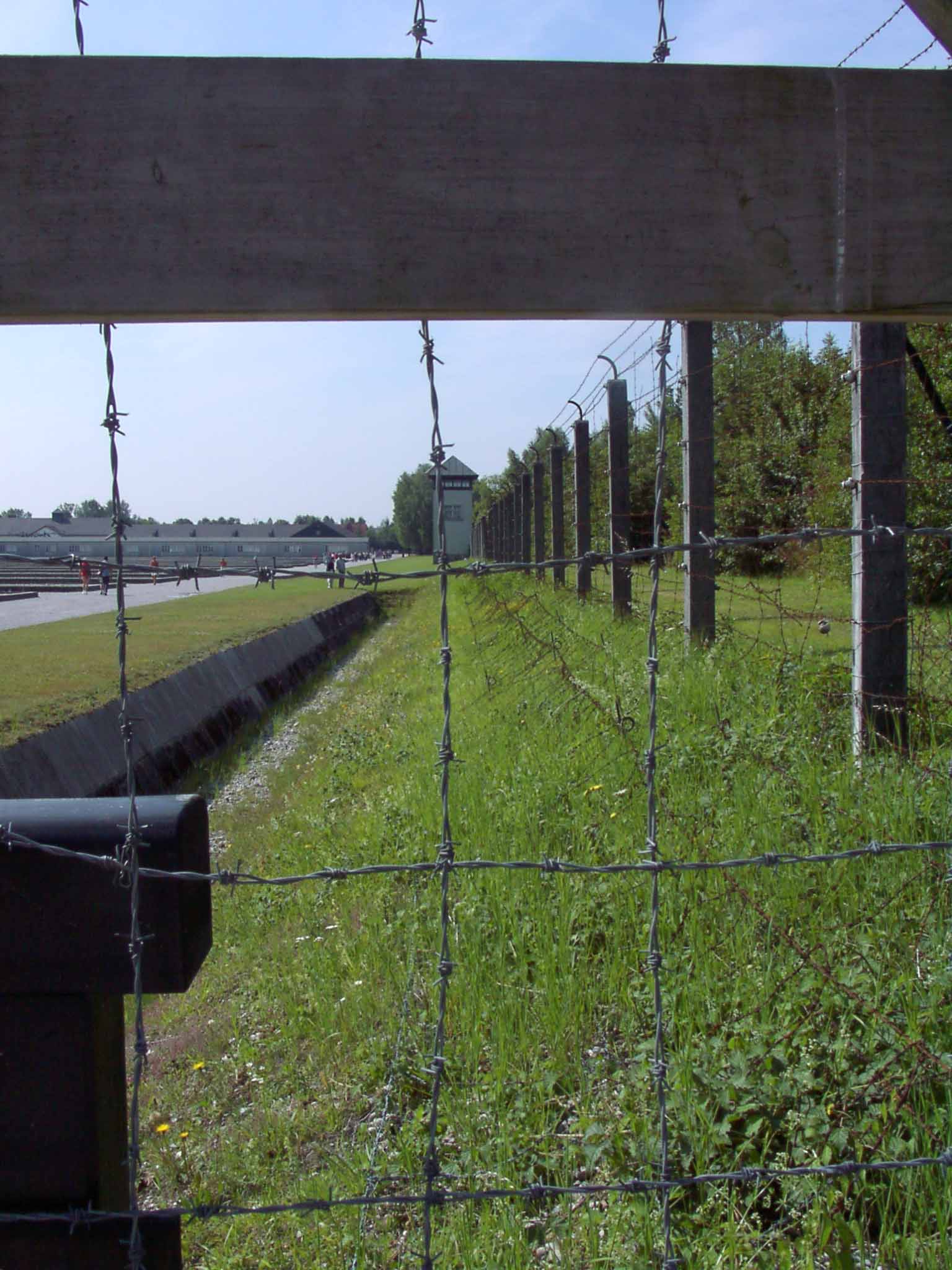
| Inamtes were used as slave laborers and conditions in the camp worsened as the years went by. The prison camp was surrounded by electrified barbed wire and guard towers. If a prisoner made the mistake of stopping on the grass on either side of the ditch, the SS guards in the guard towers would shoot without warning. Various forms of tourture were carried out in the open area in front of the barracks. |
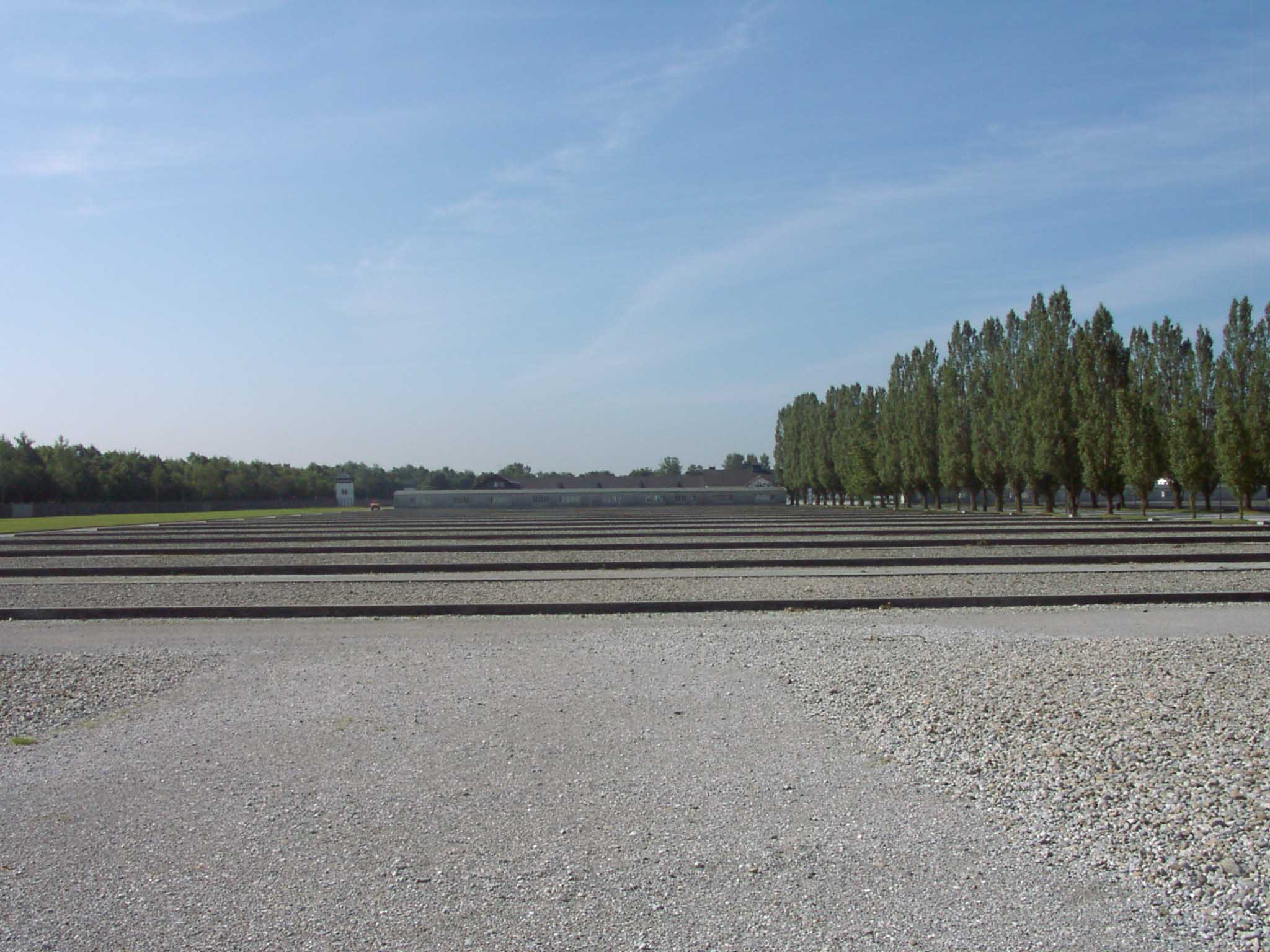
| The long building in the background of the picture is a reconstructed barracks. The long lines in front of that are the foundations of the original barracks. The barracks were created to hold 208 prisoners. At one point the camp became so overcrowded, there were 1,600 prisoners living in each barracks. Food and clean water were scarce and disease and sickness were common. Every morning and evening the prisoners had to appear for roll call "appellplatz". If anyone had escaped or caused a problem, the whole group would be punished. Often they were forced to stand for a full night and half day. |
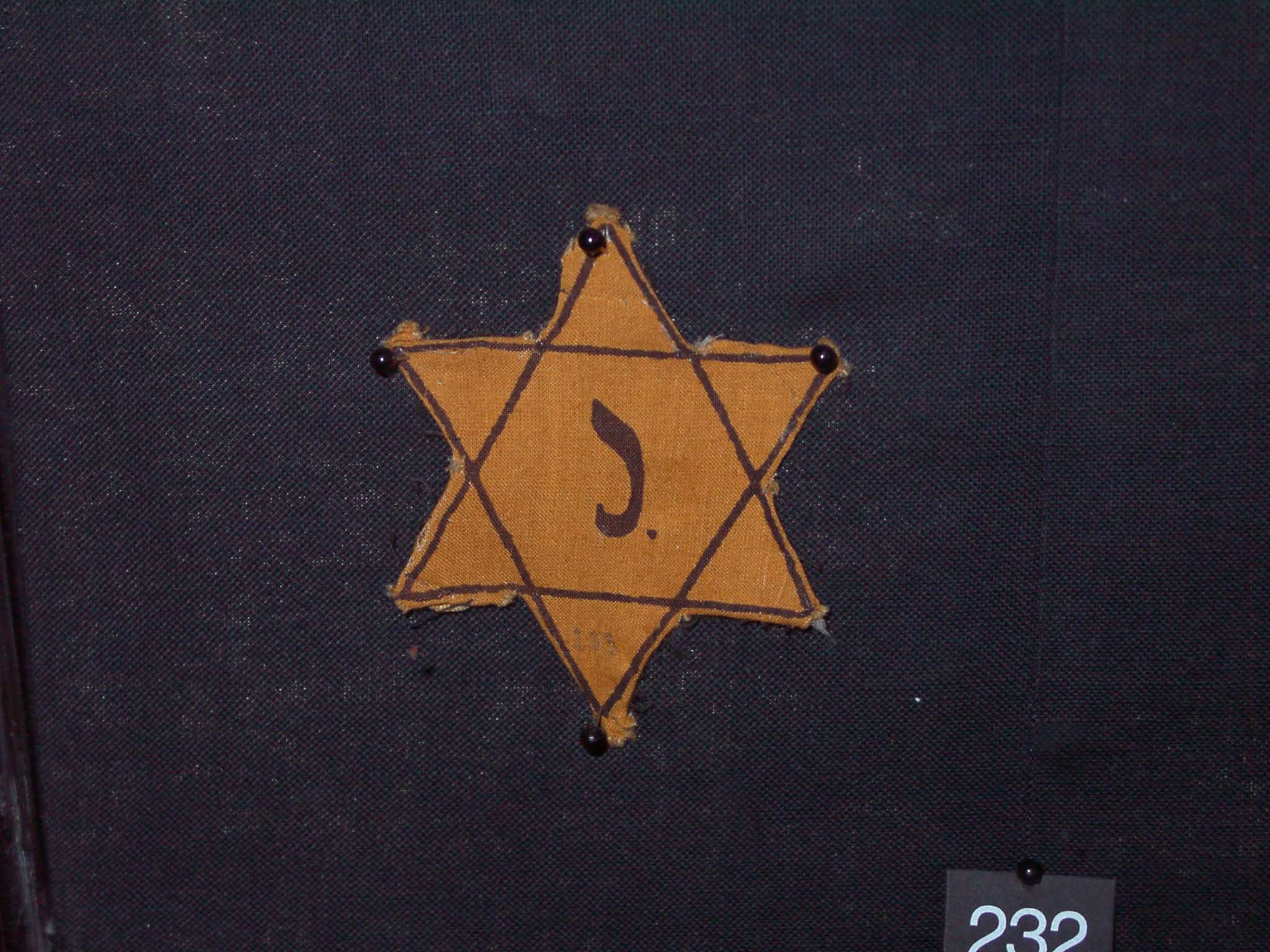
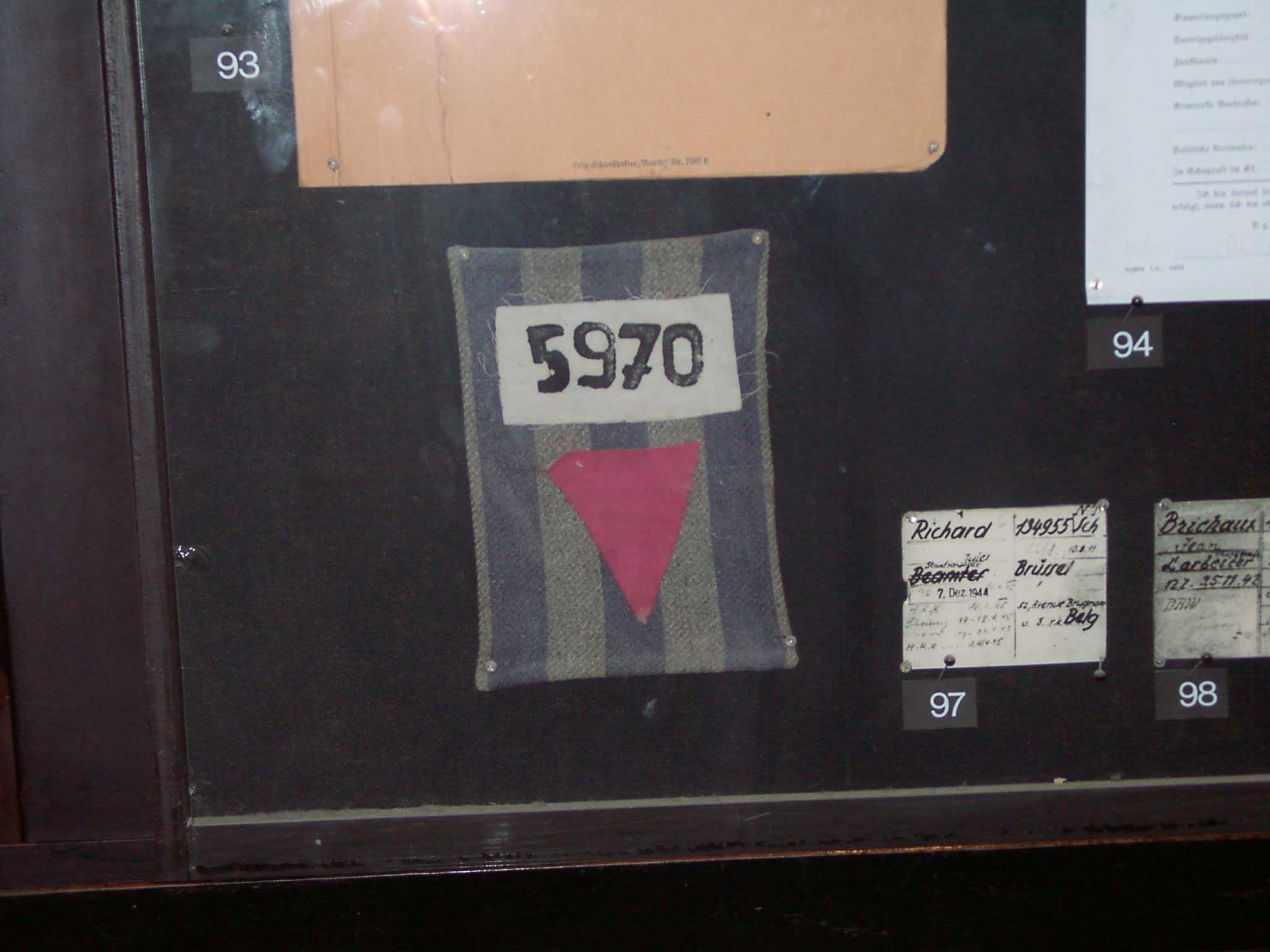
| Inmates wore striped prison uniforms, and they were given wooden clogs, a banket, food bowl, and a spoon. Each uniform included a symbol and a number. The picture to the left identifies a Jewish prisoner, and the one below identifies a political prisoner. |
| Inmates were used in medical and physical experiments. In one block prisoners were exposed to high pressure and boiling and freezing water. In another area inmates were infected with malaria and bio-chemical agents. Many of these experiments resulted in the death the people involved. |