 |
 |
 |
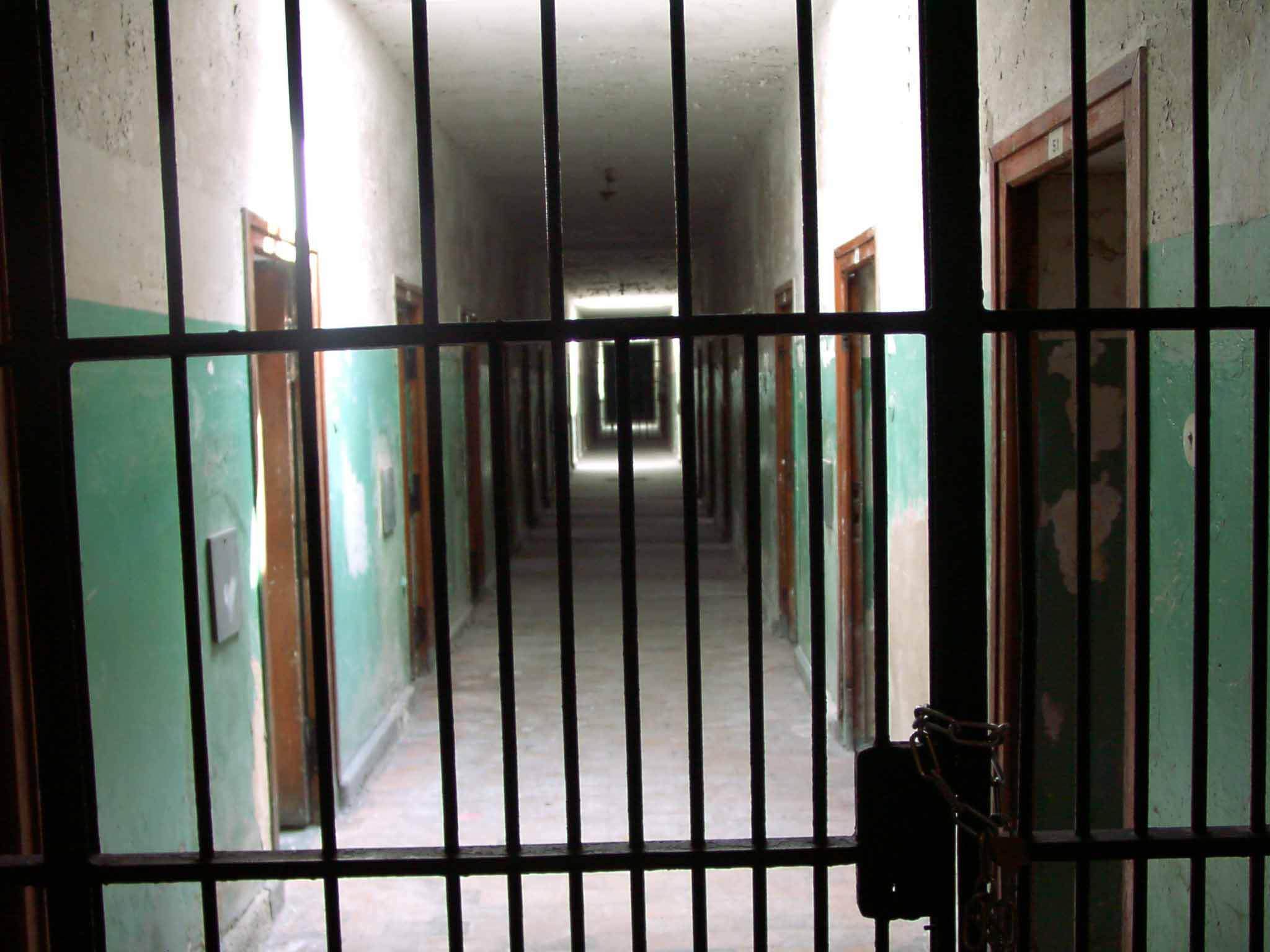 |
| Dachau was the "home" of many special prisoners. The picture to the left shows Block 26 known as the Priesterblock because members of the clergy were kept here so they could not mix with the others. The man who tried to assassinate Hitler was kept in one of these small prison rooms before he was killed. The SS guards also interrogated people in the rooms. A set of rooms was set aside for a heinous type of torture where inmates were forced to stand for 36 to 48 hours without a break. These torture rooms were divided into small one foot by two foot squares, and the prisoners were forced inside without food or water. |
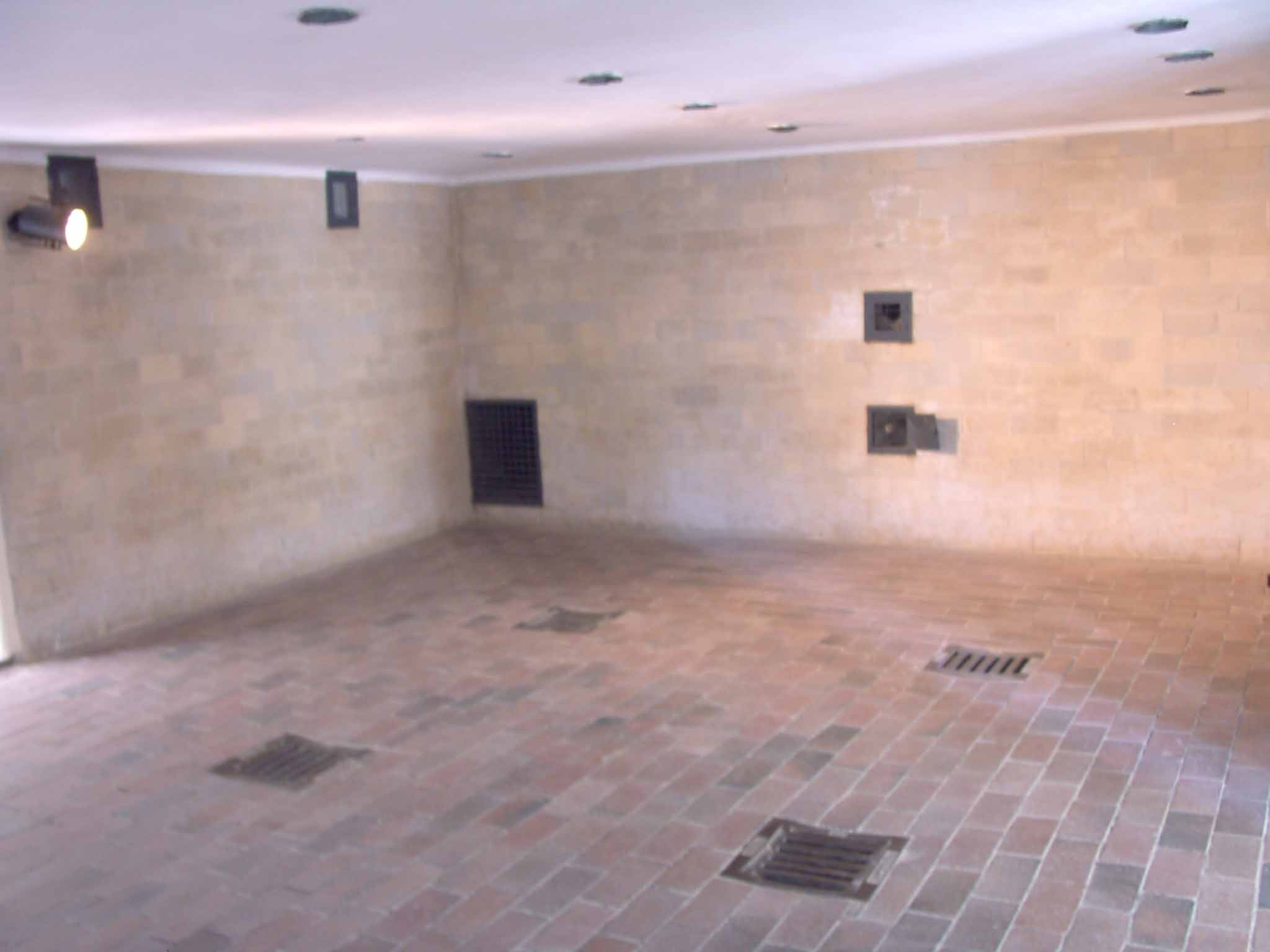
| In 1942 on orders from the SS office in Berlin, a gas chamber was installed in Dachau. Like the gas chambers in other concentration camps, this one was disguised as a shower. Unlike other gas chambers, this one was never used. Prisoners selected for gassing were transported to other camps or to the Hartheim Castle near Linz, Austria. |
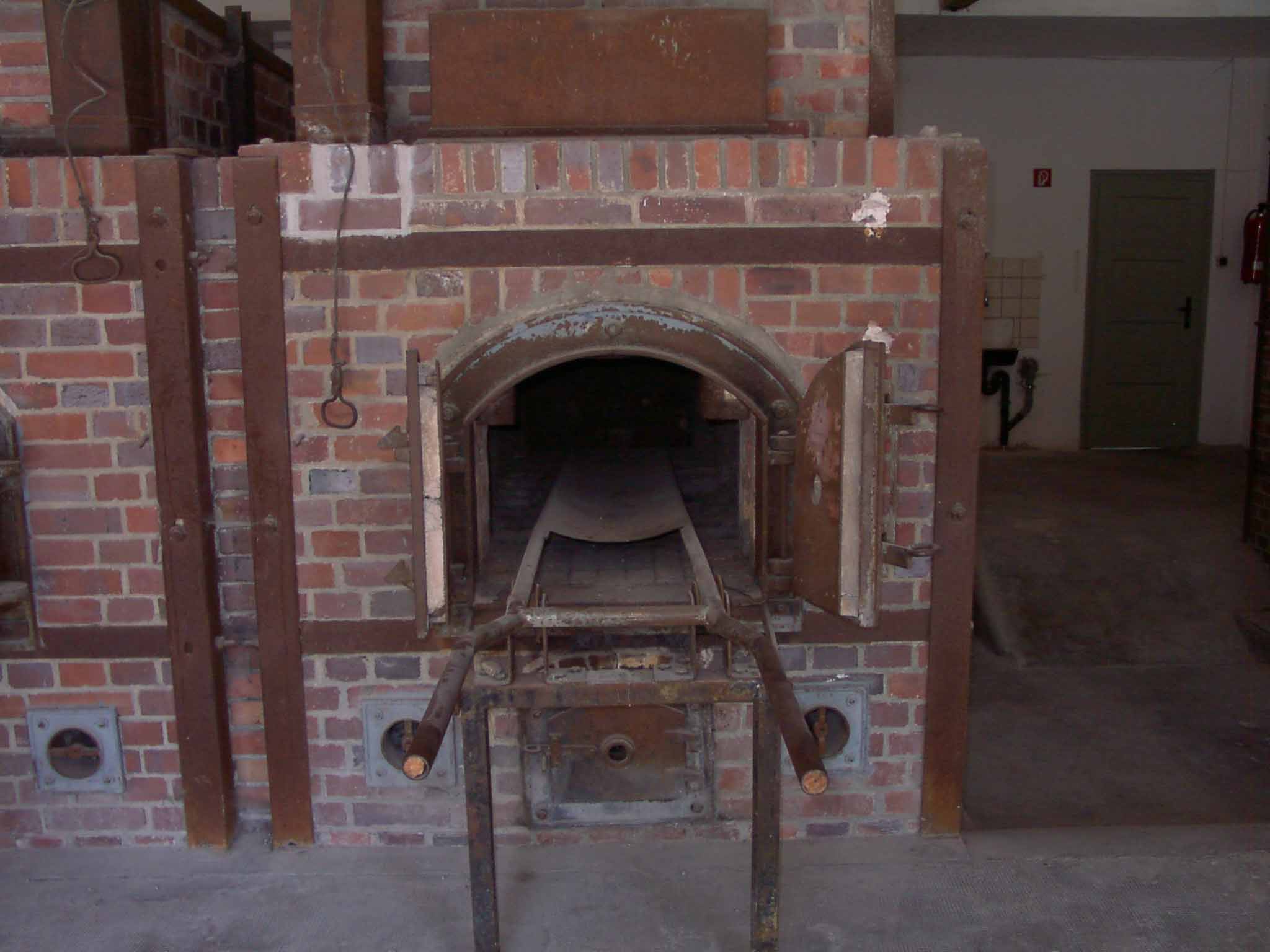
| To the left is one of six crematoriums I saw at the camp. The mortality rate at the camp was greatly increasing so the crematories were used to dispose of the bodies. Officially 31,591 people died in Dachau. This includes four British women who worked as spies in France. Unofficially, many more unregistered inmates were shot. This includes over 6,000 Soviet prisoners of war. Even though these have not been used in over 55 years, I could still see ashes left in the bottom. |
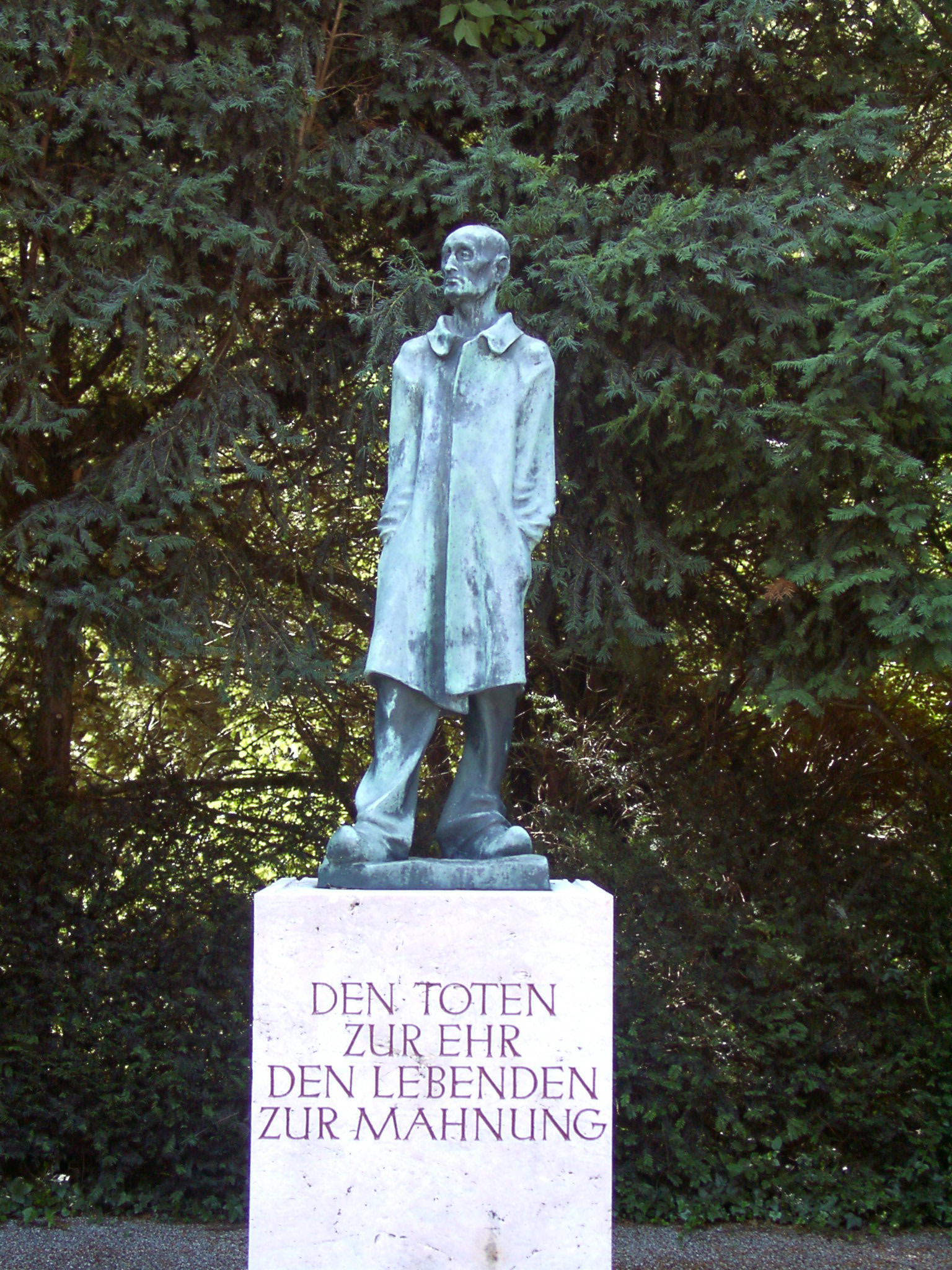
| This statue is outside of Baracke X where the crematorium and gas chamber are located. The man on the top represents the typical prisoner. Notice he is wearing wooden clogs and his head is shaved. The notation underneath the statue roughly translates to, "In honor of the dead, a warning to the living". |