|
|
|
|
|
|
|
|
|
|
|
|
|
|
|
|
|
|
|
|
|
|
|
|
|
|
|
|
|
|
|
|
|
|
|
|
|
|
|
|
|
|
|
|
|
|
|
|
|
|
|
|
|
|
|
|
|
|
|
|
|
|
|
|
|
|
|
|
|
|
|
|
|
|
|
|
Chinese Martial Arts and Meditation Instruction |
|
|
| * Yang Style Tai Ji Quan (Tai Chi)� Authentic traditional Yang Style Tai Ji Quan provides many health benefits. It increases longevity, vitality, flexibility, harmony, balance, resistance to disease, and promotes healing of injuries. The graceful flowing movements increase the flow if qi (life energy), nourish the spirit, and integrate body and mind. Although it is the most complex and effective martial art in existence, it can also be practiced solely for its health improvement benefits. |
|
|
| ** Qi Gong (Energy Work)� Qi Gong Meditation increases energy, stamina and mental functions. It can be used for self-healing and produces dramatic results when practiced regularly. It is particularly known for its effectiveness on injuries and disease that do not respond to conventional western medical treatment. |
|
|
| ** Nei Gong (Internal Work)� Working with your internal energies, Nei Gong cleanses bone marrow which in turn produces healthier blood. Since most chronic disease originates in the blood it is believed that Nei Gong practice can prevent or fight off cancers and boost the immune system for better health. |
|
|
| Chan (Zen) Meditation Chan (Ming Xiang) Meditation provides almost endless benefits. It reduces stress, anxiety, nervousness and fatigue. It promotes a calm yet aware state of mind. It increases mental toughness and patience. Daily meditation helps the practitioner to better control their mind and thoughts which enables one to be more satisfied, calm and relaxed in any situation. |
|
|
| * Tai Ji Quan is considered an "internal" or "soft" style as opposed to "external" or "hard" styles such as Shaolin Gong Fu (Kung Fu), Karate, Tae Kwon Do, etc. Consistent practice of "hard" styles eventually leads to deterioration of health and ability. "Internal" styles such as Tai Ji Quan can be practiced an entire lifetime and the practitioner will experience rejuvenation of health, and an increase in ability and prowess. |
|
|
| ** Tai Ji Quan (Tai Chi) is a type of Qi Gong and Nei Gong combined. So, in other words, when you are practicing Tai Ji you are also practicing a blend of Qi Gong and Nei Gong. The Qi Gong and Nei Gong as they are mentioned here are additional practices. |
|
|
|
 |
|
|
 |
|
|
|
|
|
|
|
|
|
|
|
|
|
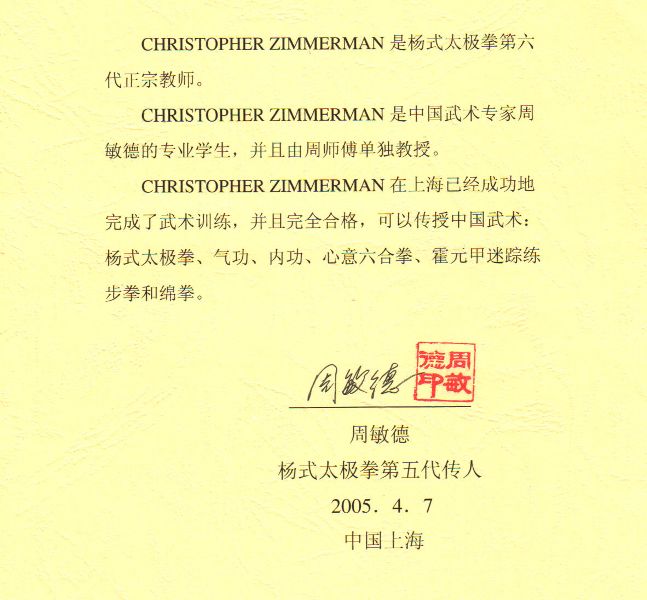
MASTER ZIMMERMAN'S TEACHING CERTIFICATE (CHINESE) |
|
|
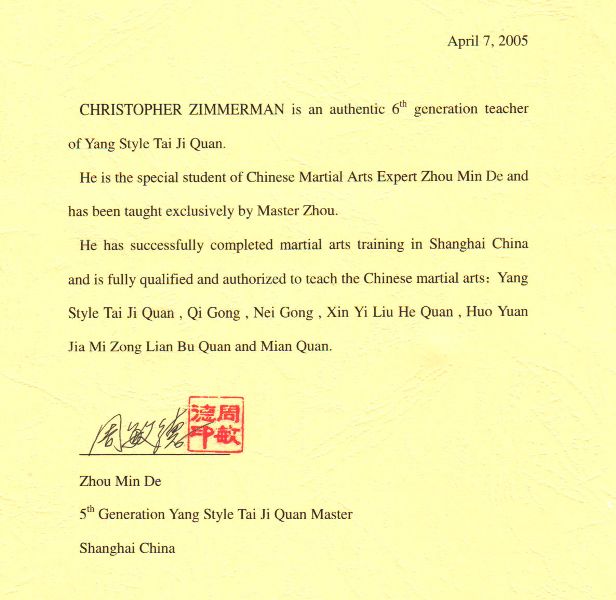
MASTER ZIMMERMAN'S TEACHING CERTIFICATE (ENGLISH) |
|
|
|
|
|
|
|
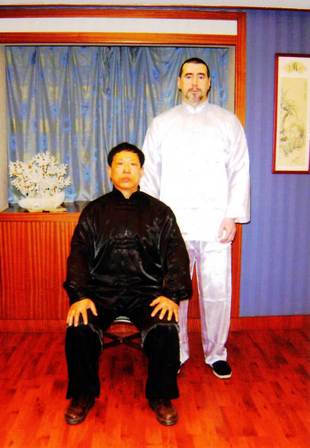
ZHOU MIN DE & CHRIS ZIMMERMAN |
|
|
|
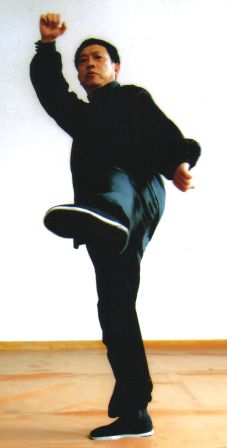
CHRIS ZIMMERMAN |
|
|
6th Generation Yang Style Tai Ji Quan Master |
|
|
|
�� Zimmerman Shi Fu was born 1961 (year of the ox) in Pittsburgh, Pennsylvania. Aside from Chinese Martial Arts, he is accomplished in Muay Thai (Thai Kickboxing), Brazilian Jui-Jitsu (ground-fighting), sword, and long stick. He has trained in Chinese Martial Arts (wu shu) exclusively for over 10 years. He lived in Shanghai, China where he trained diligently and received his certification to teach Yang Style Tai Ji Quan, Qi Gong (energy work / self-healing meditation), Nei Gong (internal work), Xin Yi Liu He Quan (mind-intention 6 combination fighting style), Mi Zong Lian Bu Quan (Huo Yuan Jia esoteric fighting style), Mian Quan (secret "cotton" fighting style), and Chan (zen) Meditation. |
|
|
| � His teacher Zhou Min De was born 1943 (year of the sheep) in a small shipping town north of Shanghai. He is one of the most famous and respected living martial artists in China. Zhou Min De is a 5th generation Yang Style Tai Ji Master. Chris Zimmerman was Zhou Min De's first American student. He was taken under Zhou Min De's wing as his tu di (special student, like a family member) and entrusted with the core and secrets of Zhou Min De's 50 years plus experience. Zimmerman Shi Fu was taught the traditional Chinese Martial Art styles with the agreement that he would teach the styles intact and as accurately as possible so that these great traditions of Chinese culture would be represented in America and not lost to future generations. Learning authentic traditional Yang Style Tai Ji Quan ensures that you obtain the maximum benefits Tai Ji practice has to offer as opposed to learning a simplified, altered and/or improperly taught variation or style which offers little health benefit. |
|
|
| � Zimmerman Shi Fu currently lives in his hometown Pittsburgh and also has a home in Shanghai, China where his wife Kang Fei and their son Alexander await immigration to the USA. He often travels back to his home in China to be with his wife and son. During these visits he meets with his master Zhou Min De and receives additional martial arts instruction and fine-tuning at the Shanghai Jing Wu (Chin-Woo) school located in the pu xi (west) section of Shanghai. |
|
|
| � Zimmerman Shi Fu is known for his disciplined yet gentle teaching style. His approach is personalized and aimed at helping each individual student become the best that he or she can be. Competitiveness with others is not encouraged, rather, challenging and improving one's self is the ultimate goal to achieve balance and harmony of the body / heart / mind / spirit. By way of the Chinese tradition and his teacher Zhou Min De, he is bound by oath to only teach students who are relatively pure of heart and will not misuse the teachings in any way. |
|
|
| � Politeness, a humble disposition, an open mind, respect towards the teacher and fellow students is expected from each student. �All that Zimmerman Shi Fu asks is that these basic rules are adhered to and that each student tries his or her best. He strives for a relaxed learning atmosphere in class, but the rules are strictly enforced. Student's physical ailments, injuries, disabilities, incapacities and personal limitations are all considered and taken into account. Each student is given 100% teaching effort to assist in their progress. |
|
|
| �Zimmerman Shi Fu is the only known direct descendant of traditional Yang style Tai Ji Quan who currently teaches in the mainland United States. Although the famous Cheng Man Ching was a disciple of Yang Cheng Fu and taught Tai Ji Quan in the United States for some time before his death, he had altered the system (as some great masters do) to his own style and did not teach the traditional Yang family style to his American students (of whom which some eventually became teachers). |
|
|
|
YANG FAMILY STYLE TAI JI QUAN LINEAGE CHART |
|
|
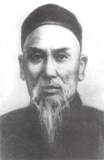
YANG LU CHAN (1799 - 1872)��� ����������� 1st Generation (founder of Yang Style Tai Ji Quan)
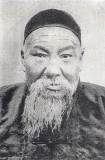
YANG JIAN HOU (1839 - 1917) 2nd Generation
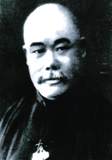
YANG CHENG FU (1883 - 1936) 3rd Generation
FU ZHONG WEN (1903 - 1994) 4th Generation
ZHOU MIN DE (1943) 5th Generation
CHRIS ZIMMERMAN (1961) 6th Generation |
|
|
|
 |
|
|
|
 |
|
|
|
|
 |
|
|
YANG LU CHAN |
|
|
|
|
|
YANG JIAN HOU |
|
|
|
|
|
YANG CHENG FU |
|
|
|
|
|
|
|
|
 |
|
|
 |
|
|
|
|
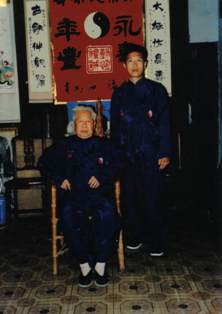
FU ZHONG WEN & ZHOU MIN DE |
|
|
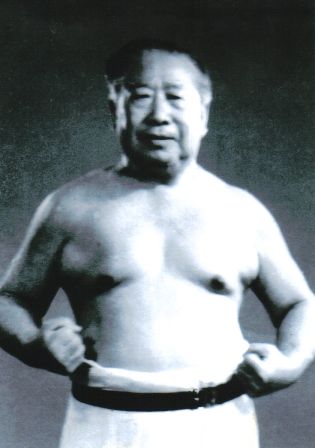
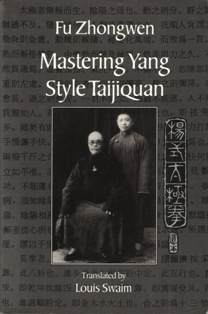
YANG CHENG FU & FU ZHONG WEN ON THE COVER OF FU ZHONG WEN'S CRITICALLY ACCLAIMED BOOK "MASTERING YANG STYLE TAIJIQUAN" |
|
|
|
|
|
|
 |
|
|
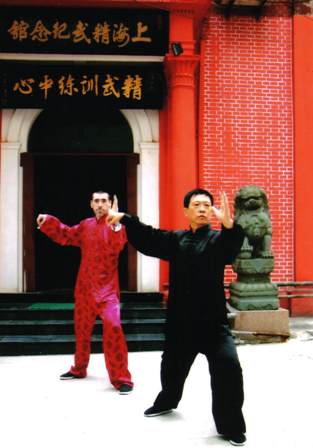
CHRIS ZIMMERMAN & ZHOU MIN DE PRACTICING THE TAI JI POSTURE "SINGLE WHIP" OUTSIDE THE JING WU (CHIN WOO) ATHLETIC FEDERATION TRAINING FOCO IN SHANGHAI, CHINA |
|
|
| THE CURRICULUM FOR ZIMMERMAN SHI FU'S TAI JI QUAN CLASSES |
|
|
| ~ Yang style Tai Ji Quan 85 postures |
|
|
| � Along with in-depth class instruction, a complete illustrated manual is provided free of charge to assist the student in learning the 85 basic postures and their interconnecting movements as a complete routine. The beginning student should bear in mind that many of the postures are repeated in the routine while some of the interconnecting movements differ. Students who are incapacitated in some way or merely have no time to practice the entire 85 posture routine are encouraged to learn a manageable number of postures and practice them when possible. To achieve the maximum health benefit of Tai Ji, if a student cannot learn the entire 85 posture routine correctly because of a disability, health restriction, lack of free-time or whatever, then it is much better to learn only a manageable number of postures. In other words, doing a small number of postures correctly is much better than trying to learn many postures and performing them incorrectly. Students are expected to do only what is personally best for them, their situation and their lifestyle. |
|
|
| ~ Tai Ji Tui Shou (push hands) |
|
|
| � Tai Ji Tui Shou (push hands) practice begins after students have a good understanding of the first 14 Tai Ji postures. There are a variety of Tai Ji Push Hands routines including "single-step" (ding bu), "active-step" (huo bu), "loop-step" (tao bu), and "four-corner shoulder-stroke" (da lu or si lu si kao). Students are paired off and work together towards learning to listen to energy (ting jing), and the more advanced concept of understanding energy (dong jing). Tai Ji Push Hands practice helps develop balance, mind / body harmony, energy awareness, relaxed alertness, and provides an outlet for practical applications thereby furthering the student's understanding of the Tai Ji system. |
|
|
| ~ Yang Style Tai Ji Jian (sword) |
|
|
| � Selected accomplished students may receive additional private instruction in Yang style Tai Ji Jian (sword) after they have achieved basic proficiency in the 85 postures and Tai Ji Tui Shou (push hands). |
|
|
|
A NOTE ABOUT THE VALUE OF WHAT ZIMMERMAN SHI FU TEACHES |
|
|
| � Yang style Tai Ji Quan is the most popular Tai Ji system in the world and has been perfected for generations upon generations. Although the historical accuracy is unclear, many say that the origins of Tai Ji began many hundreds of years ago. Yang style Tai Ji Quan has been tested and perfected for many years by practitioners who devoted their entire lives to mastering and advancing the art. By taking lessons from Zimmerman Shi Fu you are given the chance to learn authentic Yang style Tai Ji Quan. |
|
|
| � The original "master with no equal" Yang Lu Chan learned Tai Ji Quan from the Chen family who were the originators of the first documented Tai Ji system. After many years of relentless practice and testing he improved upon the Chen system and developed his own style which eventually became known as Yang style Tai Ji Quan. His son Yang Jian Hou devoted his entire life to what his father taught him and faithfully carried on the teachings to his son Yang Cheng Fu. Cheng Fu was a man of extraordinary talent. He was an excellent teacher and became very famous. His modifications in perfecting Yang style Tai Ji Quan became the standard for Yang Tai Ji Quan as we know it today. |
|
|
| � Yang Cheng Fu's student Fu Zhong Wen was an exacting man and learned the system meticulously from his teacher. During the latter part of his life Fu Zhong Wen was popularly known as "one of the greatest living treasures of China". Fu Zhong Wen authored the book "Mastering Yang Style Taijiquan" which is considered the authoritative book on the subject. Fu Zhong Wen accurately transmitted the teachings to his student Zhou Min De. Now over 60 years old, Zhou Min De is one of the most famous martial arts legends in China. He appears regularly in documentaries on the BBC, Chinese television and newspapers. |
|
|
| � Zhou Min De faithfully transmitted his knowledge to his student Chris Zimmerman with the hope that the great Chinese Martial Arts would be spread intact to the USA. Now Zimmerman Shi Fu spends most of his time here in the United States fulfilling his Master's wish. The potential student should bear in mind that training of this type and quality is not available anywhere else in the USA at any price. One can clearly see that the chance to receive these teachings is an immeasurably valuable opportunity for anyone interested in learning authentic Chinese Martial Arts. |
|
|
|
 |
|
|
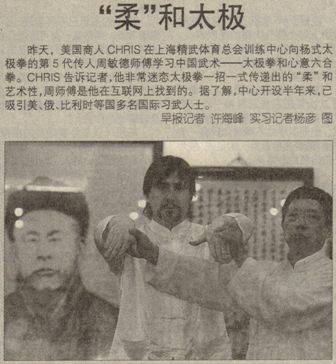
CHRIS ZIMMERMAN & ZHOU MIN DE
(NEWSPAPER ARTICLE FROM THE ORIENTAL MORNING NEWS) |
|
|
|
 |
|
|
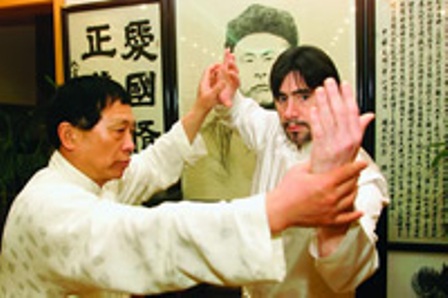
ZHOU MIN DE & CHRIS ZIMMERMAN
(NEWSPAPER ARTICLE PHOTO FROM THE SHANGHAI STAR) |
|
|
|
Instruction available in the Pittsburgh, Pennsylvania area |
|
|
|
FOR MORE INFORMATION CALL CHRIS ZIMMERMAN
PHONE: 412-337-0047
LEAVE VOICEMAIL
EMAIL: [email protected] |
|
|
|
 |
|
|
|
CLICK HERE TO VISIT THE STUDENT RESOURCE AREA |
|
|
|
FREQUENTLY ASKED QUESTIONS |
|
|
|
|
|
|

|
|